hit counter

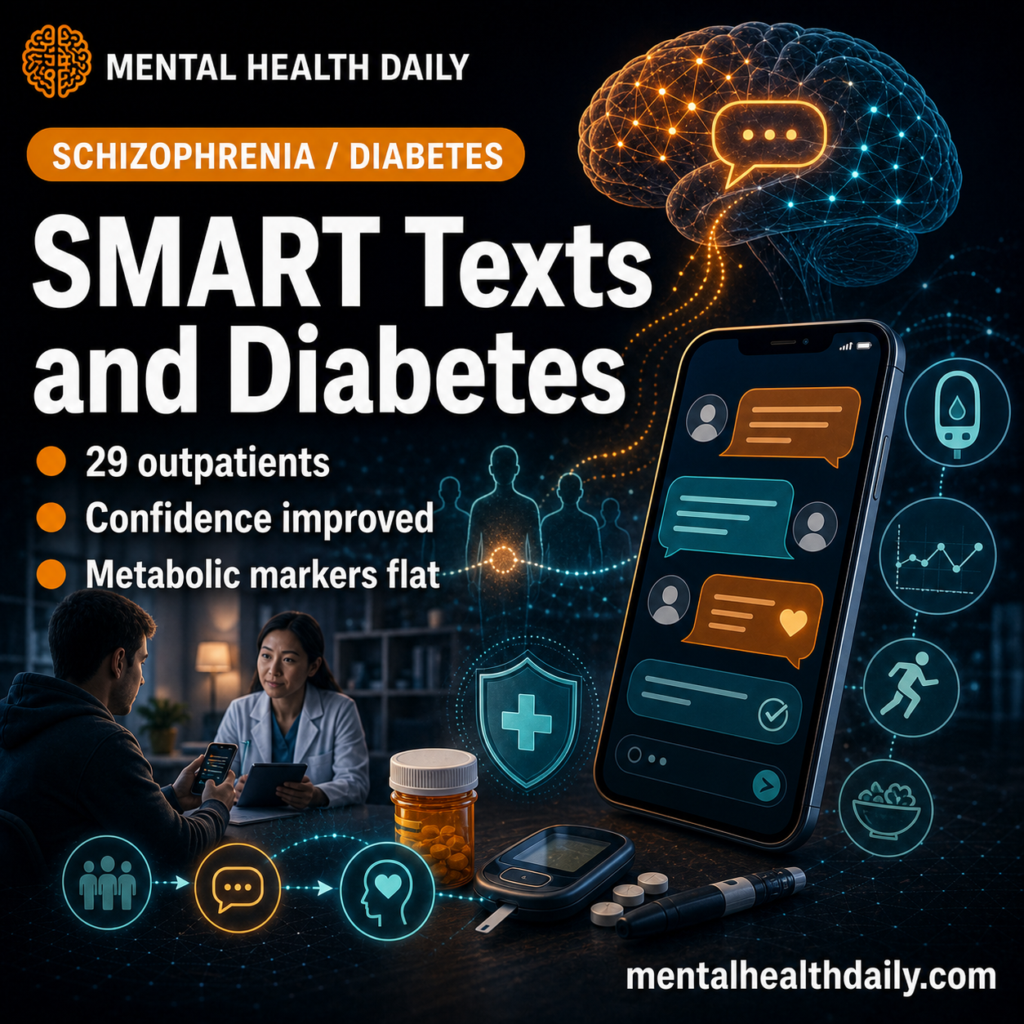
SMART Texts Raised Diabetes Confidence in Schizophrenia

MHD featured image for SMART text messages and diabetes self-management in schizophrenia.

A 12-week text-message intervention for people with schizophrenia spectrum disorders improved diabetes self-management confidence and patient activation, but it did not yet move weight, HbA1c, physical activity, or psychiatric symptoms. SMART looked feasible and psychologically useful in this uncontrolled pilot; cardiometabolic outcomes need a full-scale randomized trial with longer follow-up.1 Research Highlights SMART was tested …

Read more

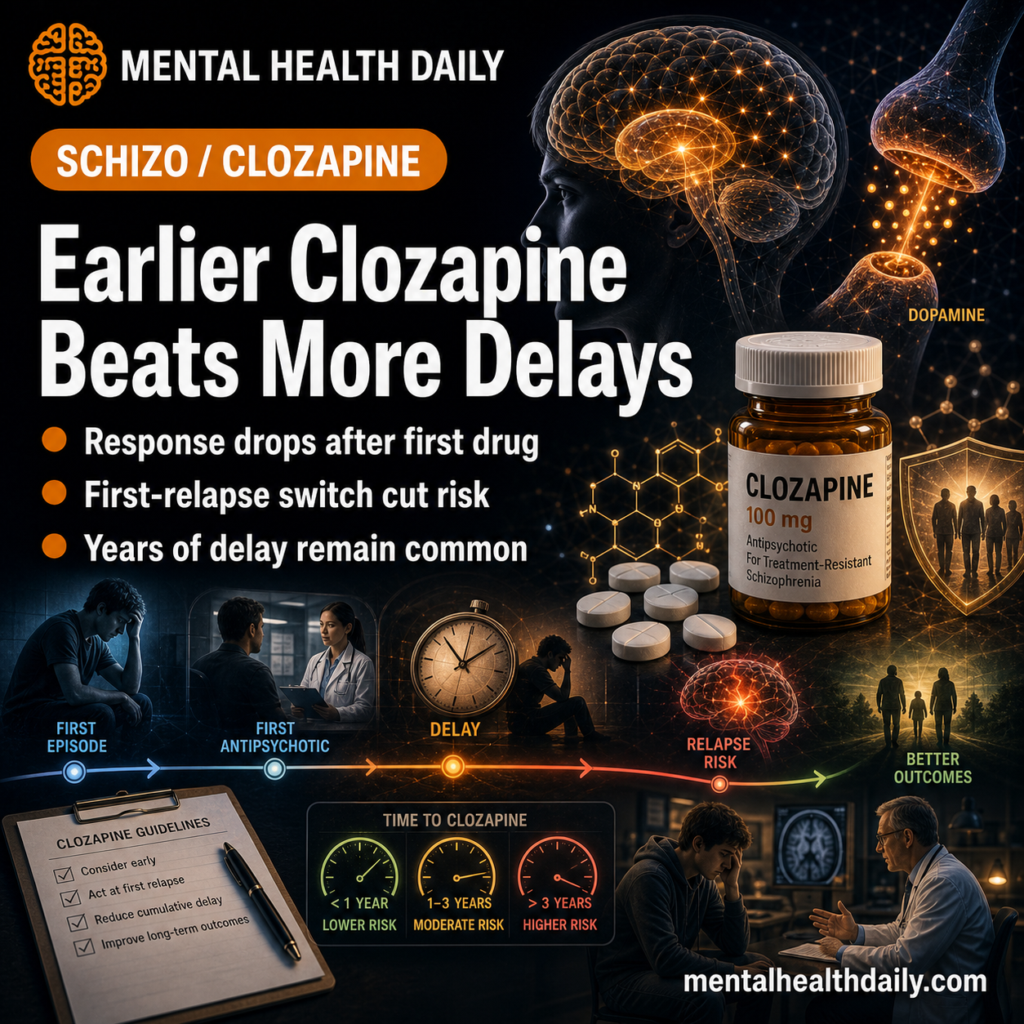
Early Clozapine in Schizophrenia: 34% Lower Relapse Risk

Stylized illustration of a stopwatch overlaying schizophrenia treatment-stage icons, representing the multi-year delay before clozapine is offered to patients who already meet treatment-resistance criteria.

Clozapine has been the most effective antipsychotic in schizophrenia for almost 40 years, yet it is still routinely held back until patients have failed multiple alternatives over many years — a “third-line, after years of failure” default that a 2026 Current Opinion review by Davani et al. argues is no longer supported by the evidence.1 …

Read more

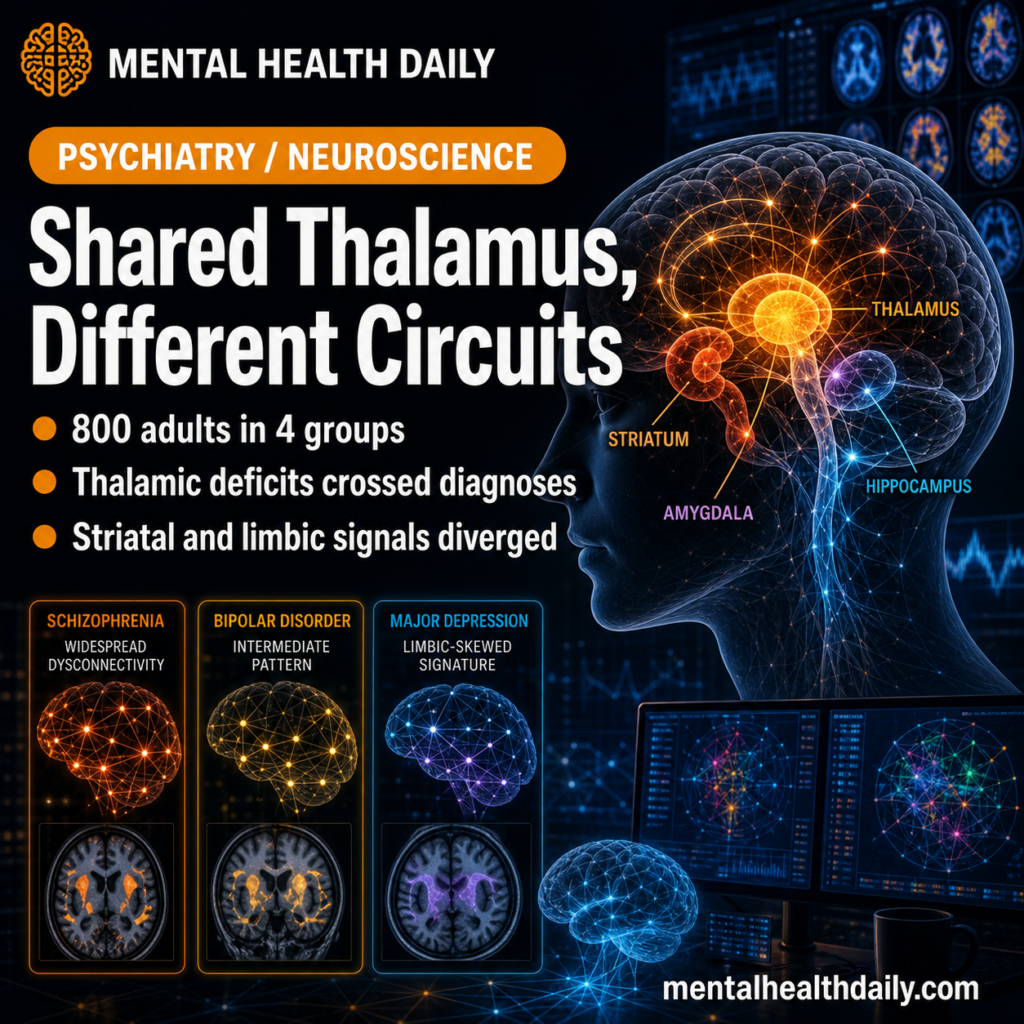
Subcortical Connectivity Differs in Schizophrenia, Bipolar, Depression

MHD featured image for subcortical connectivity patterns across schizophrenia, bipolar disorder, and depression.

A 2026 resting-state fMRI study of 800 adults found intra-thalamic hypoconnectivity across schizophrenia, bipolar disorder, and major depression, but schizophrenia showed far broader subcortical dysconnectivity than bipolar disorder or depression.1 The calibrated read is that these diagnoses may share a thalamic vulnerability while diverging in striatal and limbic circuitry. Research Highlights Shared thalamic deficit: In …

Read more

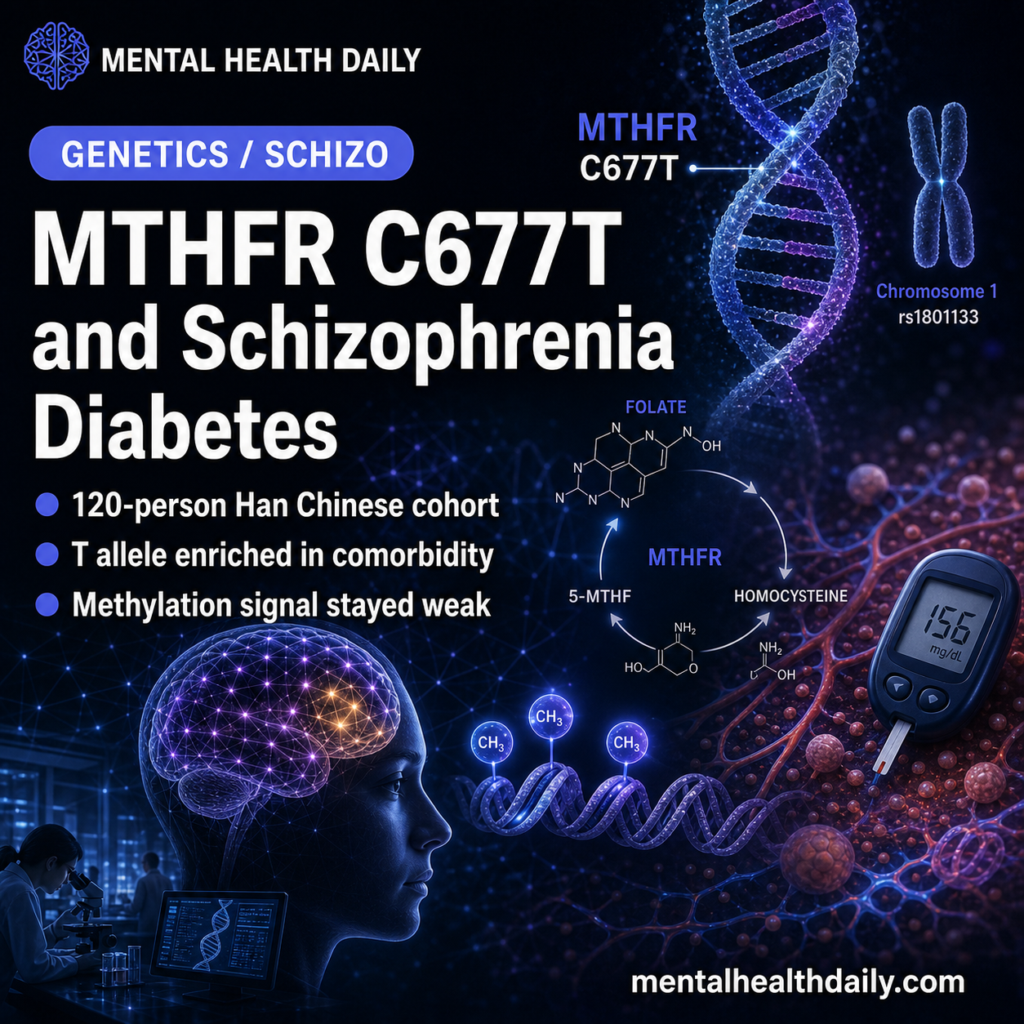
MTHFR C677T Linked to Schizophrenia With Type 2 Diabetes in Han Chinese

Editorial card showing MTHFR genetics, folate metabolism, schizophrenia, and type 2 diabetes signals in a Han Chinese cohort.

A 2026 Han Chinese case-control preprint linked the MTHFR C677T variant to schizophrenia with type 2 diabetes: the 677T allele appeared in 81.67% of alleles in the comorbid group vs. 60.00% in controls (p = 0.009), while MTHFR promoter methylation was nearly saturated in both groups (95.00% vs. 90.00%; p = 1.000). Research Highlights Genetic …

Read more

Right OFC rTMS Improves Memory in Early Schizophrenia

Editorial card showing a coronal brain section highlighting the right orbitofrontal cortex with a TMS coil, illustrating the first RCT of OFC stimulation in first-episode schizophrenia.

Cognitive impairment in first-episode schizophrenia (FES) is the symptom that does the most work blocking employment, relationships, and independent living — and the symptom current antipsychotics barely move. A 2026 RCT by Hu et al. in Psychological Medicine tested whether 20 sessions of low-frequency rTMS targeting the right orbitofrontal cortex (OFC) could improve cognition where …

Read more

Cognitive Reserve in First-Episode Psychosis: Education PRS Adds 4.2%

Photoreal illustration of brain with strengthening neural networks suggesting reserve and protection against cognitive decline.

A 2026 analysis of 174 people with non-affective first-episode psychosis found that cognitive reserve was tied to 3 signals available near illness onset: age at onset, family history of psychosis, and polygenic liability for educational attainment. Adding the education polygenic score raised the model’s adjusted R² from 13.5% to 17.7%, a real but modest gain …

Read more