hit counter

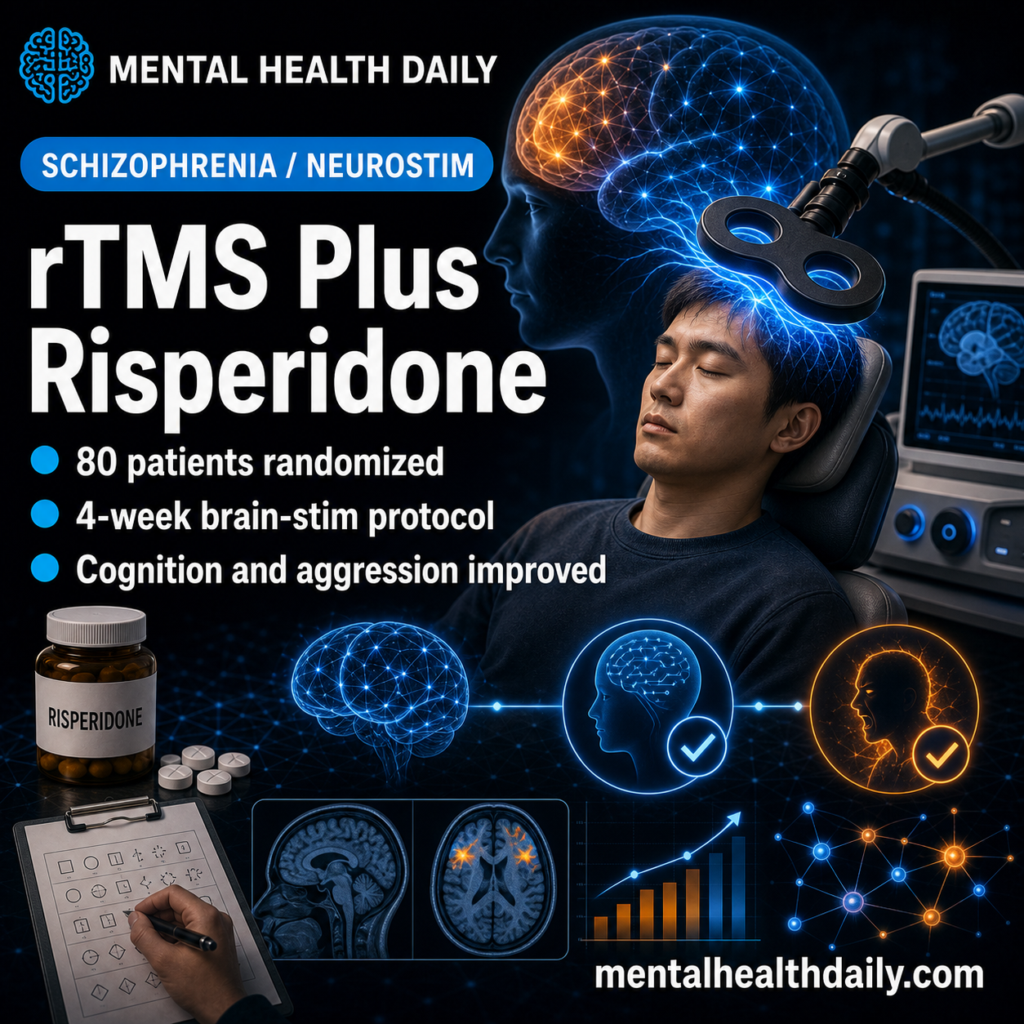
rTMS Plus Risperidone Improved Schizophrenia Cognition

A 2026 randomized study involving 80 people with schizophrenia found that adding high-frequency repetitive transcranial magnetic stimulation to risperidone improved PANSS cognitive-factor scores and aggressive-behavior ratings more than risperidone alone over 4 weeks.1 Research Highlights Design was randomized but short: 80 patients were assigned to risperidone alone or risperidone plus rTMS, 40 per group, with …

Read more

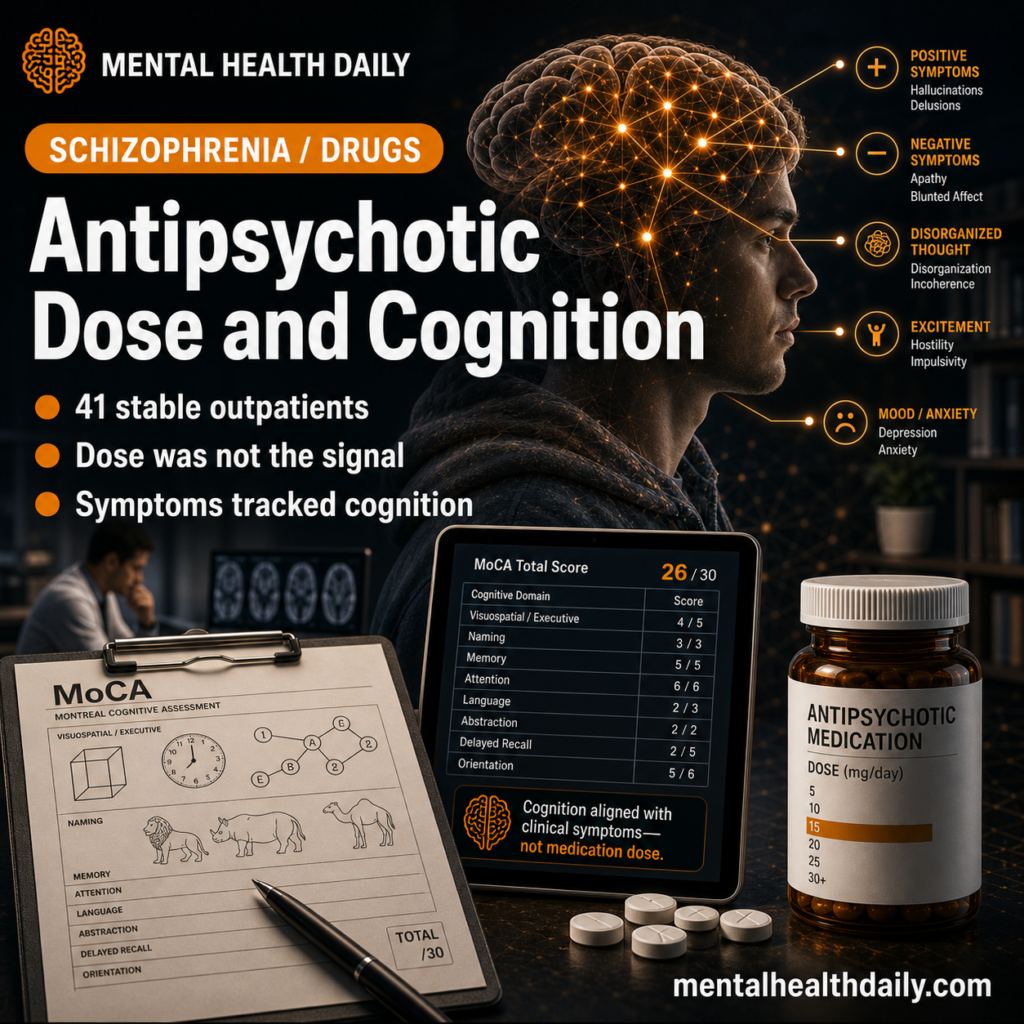
Antipsychotic Dose Was Not Linked to MoCA in Schizophrenia

A 2026 cross-sectional schizophrenia study found no meaningful association between antipsychotic dose and Montreal Cognitive Assessment (MoCA) performance in young, clinically stable outpatients. Cognitive scores related more strongly to symptom burden, illness duration, education, and age at diagnosis than to daily or 1-year cumulative antipsychotic exposure.1 Research Highlights Daily dose was not linked to MoCA: …

Read more

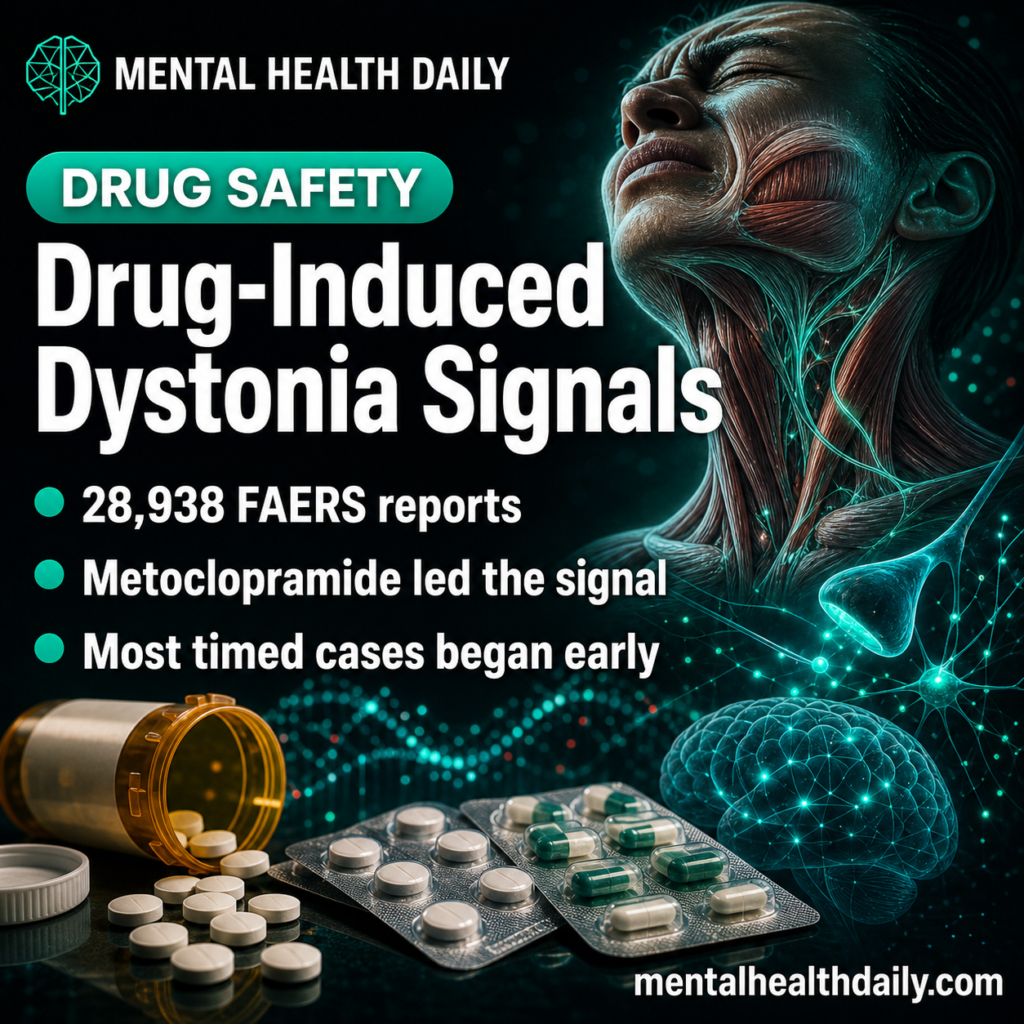
Drug-Induced Dystonia: Metoclopramide and Antipsychotics Lead FAERS

MHD featured image for drug-induced dystonia signals involving metoclopramide and antipsychotics.

A 2026 FAERS pharmacovigilance study of 28,938 dystonia reports found the strongest reporting signal for metoclopramide, while antipsychotics dominated the high-volume psychiatric medication signal and most timed cases began within 30 days of drug exposure.1 Research Highlights 28,938 dystonia reports: Chen et al. analyzed 27,618 patients represented in FAERS reports from Q1 2004 through Q3 …

Read more

Apple Cider Vinegar for Psychotropic Weight Gain: 11 Cases

MHD featured image for apple cider vinegar capsules, psychotropic weight gain, metabolic side effects, and gut microbiome changes.

An 11-person case series tested delayed-release apple cider vinegar capsules in young adults who had gained weight while taking psychotropic medications, and metabolic markers carried more signal than weight loss. Research Highlights Feasibility was the strongest result: 11 of 12 enrolled participants completed the study, 10 of 11 completers missed 5 or fewer doses, and …

Read more

Early Clozapine in Schizophrenia: 34% Lower Relapse Risk

Stylized illustration of a stopwatch overlaying schizophrenia treatment-stage icons, representing the multi-year delay before clozapine is offered to patients who already meet treatment-resistance criteria.

Clozapine has been the most effective antipsychotic in schizophrenia for almost 40 years, yet it is still routinely held back until patients have failed multiple alternatives over many years — a “third-line, after years of failure” default that a 2026 Current Opinion review by Davani et al. argues is no longer supported by the evidence.1 …

Read more

Aripiprazole Oculogyric Crisis in Tourette Tics: 2 Cases at 20-30 mg

MHD featured image for aripiprazole-related oculogyric crisis in Tourette tic treatment.

A 2026 Neurological Sciences brief communication added 2 Tourette syndrome cases of aripiprazole-related oculogyric crisis — sustained, involuntary upward eye deviation from extraocular-muscle dystonia — after titration to 20 mg and 30 mg daily, with remission after dose reduction.1 Research Highlights 2 new Tourette cases: Cavanna et al. reported oculogyric crisis in females aged 16 …

Read more

Risperidone in Dementia Raised Stroke-Related Events 4.11x by Week 4

MHD featured image for risperidone adverse events in dementia.

A 2026 individual participant data meta-analysis of 1,721 dementia trial participants linked risperidone to cerebrovascular adverse events, HR 4.11 (95% CI 1.77 to 9.51), and major cardiovascular adverse events, HR 2.00 (95% CI 1.23 to 3.26).1 The timing signal is the practical warning: median first cerebrovascular event appeared at 4.3 weeks, and median first major …

Read more