hit counter

Female Body Size Judgments Depend on Lower-Body Visual Cues

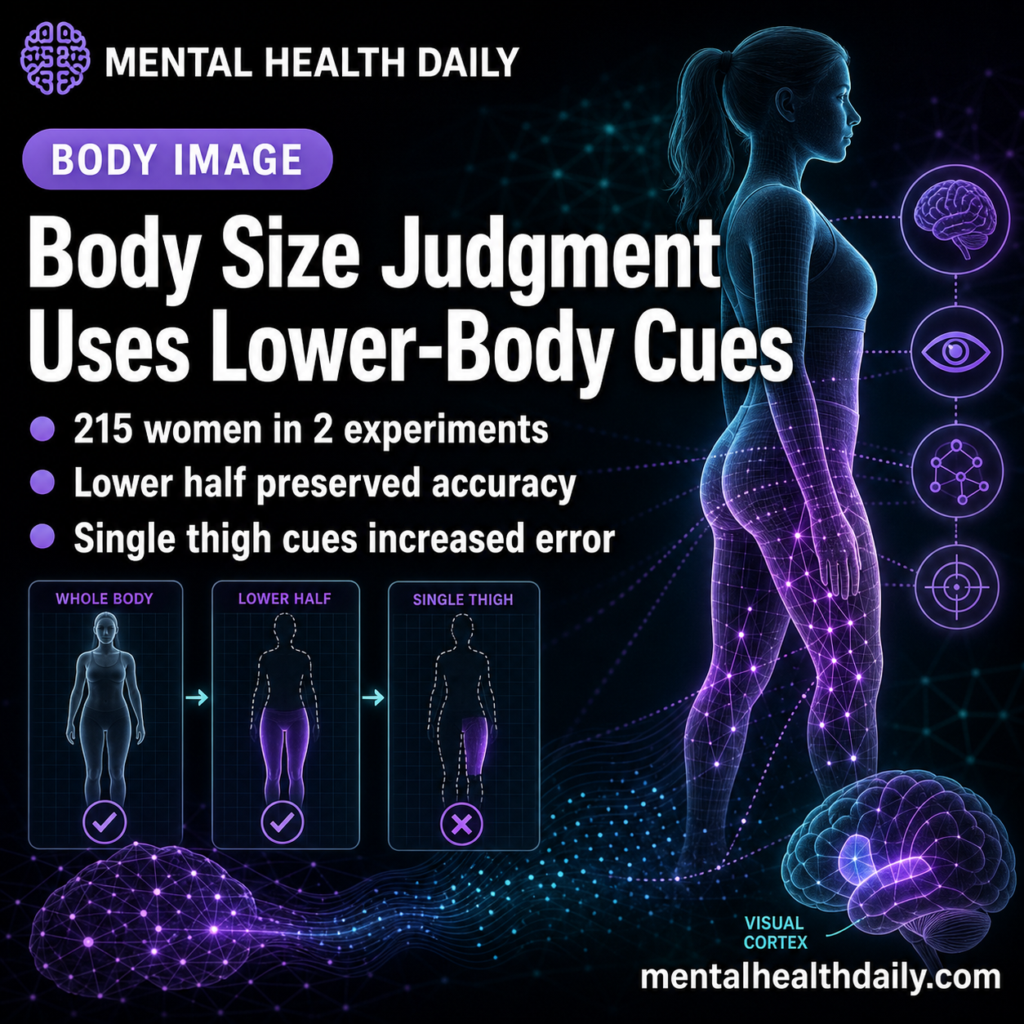
MHD featured image for female body-size judgment, lower-body visual cues, and body-image perception.

A 2-experiment BMC Biology study found that female body-size judgments did not require a full-body view: bottom-half views preserved accuracy in 99 women, while isolated inner- or outer-thigh views produced more perceptual error than whole-body views in a second 116-woman experiment.1 The result is relevant to body-image research because it points to lower-body feature integration, …

Read more

Eating Disorder Hospital Discharge: 70 Clinicians Flag Outpatient Care Gaps

MHD featured image for eating disorder hospital discharge and outpatient care gaps.

A 2026 Australian co-design study found that 70 of 73 surveyed health professionals, plus all 5 people with lived experience and all 6 carers interviewed, described outpatient care after eating-disorder hospital discharge as inadequate. Research Highlights Outpatient care was the main gap: 70 of 73 surveyed health professionals and all 11 interviewed patients/carers said care …

Read more

Sensation Seeking Predicts Disordered Eating in Teens

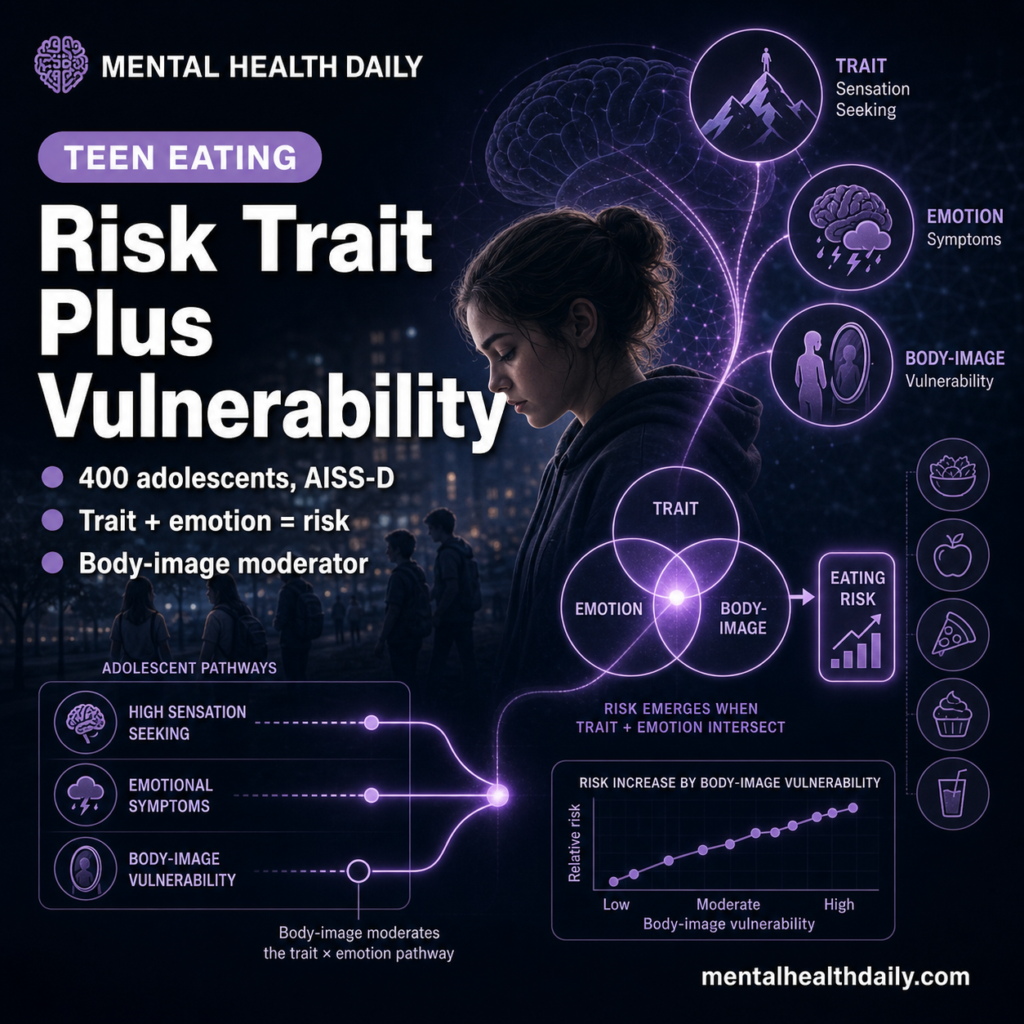
Photoreal illustration of a teenager with overlapping symbols of food and personality traits, conveying sensation-seeking eating-disorder risk.

Sensation seeking has long been linked to risky behaviors in teens, but its role in eating-disorder psychopathology has been mixed. A 2026 study by Bogner and colleagues clarifies the picture in 400 German adolescents: sensation seeking matters for disordered eating, but the effects are moderated by weight status and emotional symptoms.1 Research Highlights Sensation seeking …

Read more

Naltrexone/Bupropion Reduced Food Intake in Binge-Eating Lab Study

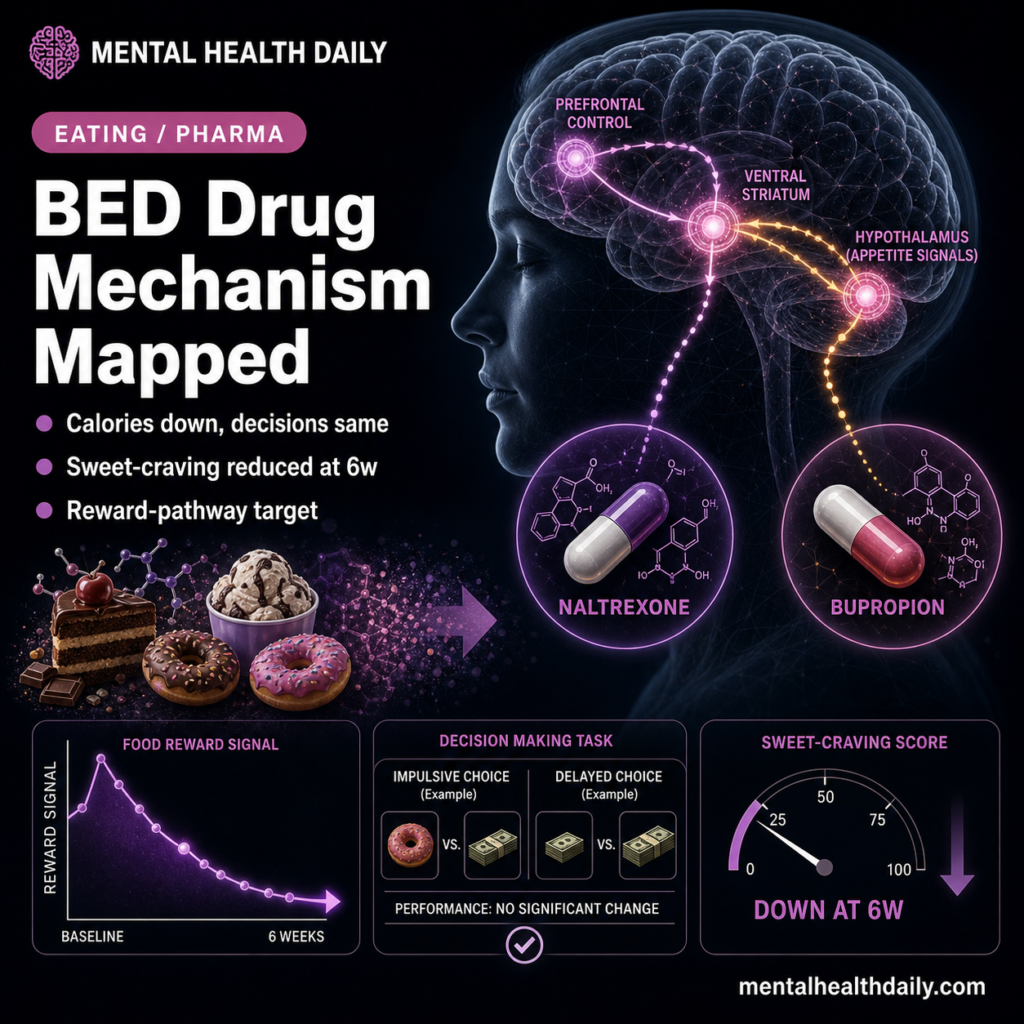
Photoreal illustration of brain reward circuitry overlaid on imagery of palatable food, conveying pharmacological reduction of consummatory reward.

Lisdexamfetamine remains the only FDA-approved medication for binge-eating disorder — a serious condition affecting roughly 1.2% of adults. A 2026 human laboratory study by McKee and colleagues tests whether naltrexone/bupropion, already approved for obesity, reduces the food-reward mechanisms that drive binge episodes.1 Research Highlights Binge-eating disorder (BED) is the most common eating disorder in the …

Read more

Olanzapine for Anorexia: A Promising Treatment Both Systemically & Intranasally (2023 Study)

Anorexia nervosa (AN), a severe mental disorder characterized by an intense fear of gaining weight and a distorted body image, remains a formidable challenge in psychiatric treatment. Recent research has shone a light on the potential of olanzapine, an atypical antipsychotic, in offering new hope through both systemic and innovative intranasal administration methods in animal …

Read more

Lisdexamfetamine (Vyvanse) Changes Brain Connectivity & Activation to Treat Binge Eating Disorder (2023 Study)

Binge-eating disorder (BED), characterized by recurrent episodes of overeating without compensatory behaviors, is a significant global health concern. Lisdexamfetamine dimesylate (LDX), the only drug approved for moderate to severe BED, is showing promise not just in reducing episodes but also in altering brain function in ways previously not fully understood. Through a groundbreaking study, researchers …

Read more

Obesity & Endocrine-Disrupting Chemicals: Bisphenols & Phthalates (2024 Review)

In the quest to understand the alarming rise in obesity rates worldwide, recent research has pointed towards a surprising culprit: endocrine-disrupting chemicals (EDCs), such as bisphenol A (BPA) and phthalates. These chemicals, ubiquitous in our environment, have been linked to significant disturbances in the hormonal regulation of body mass and adipose tissue function. Highlights: Endocrine …

Read more