hit counter

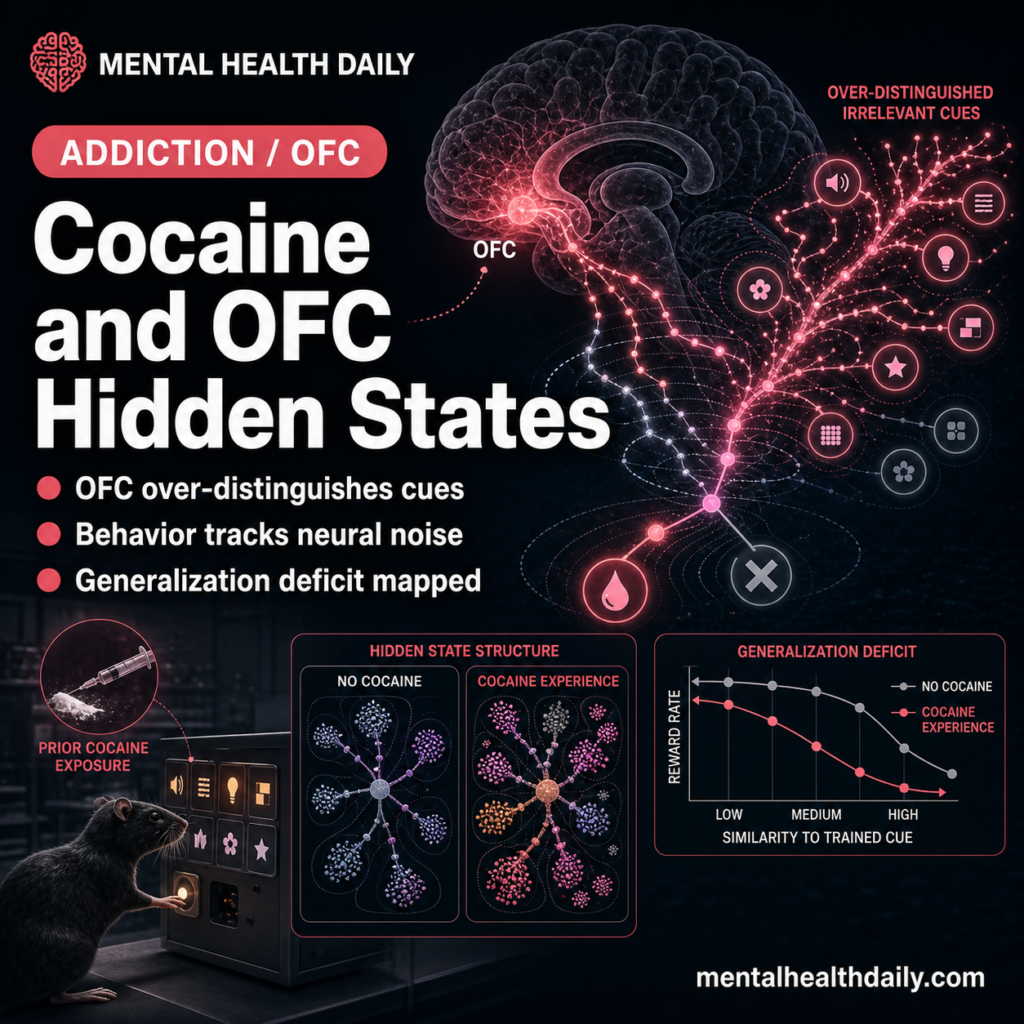
Prior Cocaine Use Disrupts Orbitofrontal Hidden-State Coding

MHD featured image for Prior Cocaine Use Disrupts Orbitofrontal Hidden-State Coding.

A 2026 eLife study recorded 3,881 lateral orbitofrontal cortex units in rats and found that prior cocaine use made the OFC over-distinguish task positions that controls treated as functionally equivalent. The headline result was not gross task failure: cocaine-experienced rats still performed the odor task, but their OFC ensembles showed higher S1-vs.-S2 decoding than sucrose …

Read more

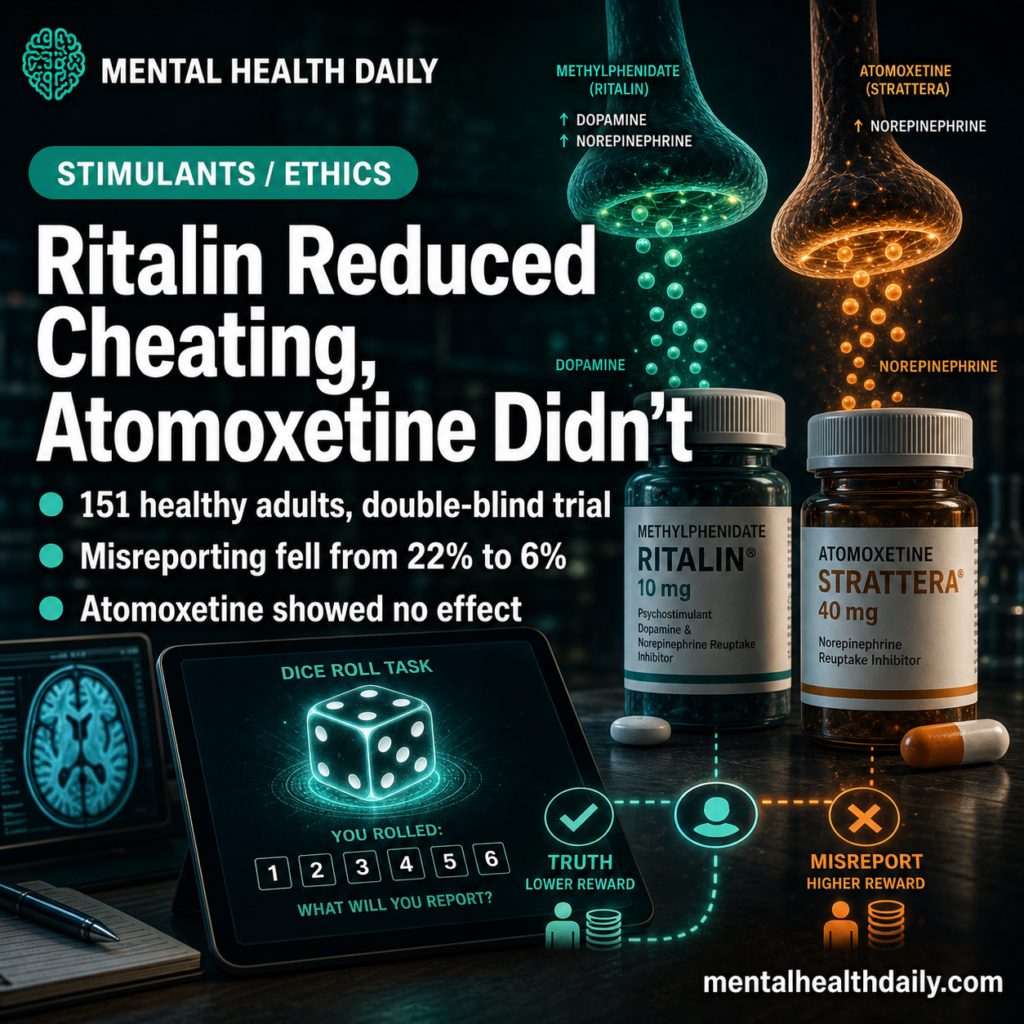
Methylphenidate Reduced Dishonesty and Cheating in 151 Adults; Atomoxetine Had No Effect

Editorial card showing methylphenidate molecular structure beside a die-rolling task, illustrating a counterintuitive randomized-trial result.

A 2026 double-blind randomized controlled trial by Kappes et al. in Psychopharmacology found something the smart-drug users likely wouldn’t have predicted: a single 30 mg dose of methylphenidate reduced dishonest misreporting on a die-rolling task from ~22% of trials in the placebo arm to ~6% (in the methylphenidate arm).1 Atomoxetine, a noradrenergic comparator, had no …

Read more

Lisdexamfetamine (Vyvanse) Changes Brain Connectivity & Activation to Treat Binge Eating Disorder (2023 Study)

Binge-eating disorder (BED), characterized by recurrent episodes of overeating without compensatory behaviors, is a significant global health concern. Lisdexamfetamine dimesylate (LDX), the only drug approved for moderate to severe BED, is showing promise not just in reducing episodes but also in altering brain function in ways previously not fully understood. Through a groundbreaking study, researchers …

Read more

CNQX as a Potential Drug Addiction Treatment via AMPA & Kainate Receptors (Glutamate) (2023 Study)

The journey to overcome addiction is fraught with challenges, not least due to the limited options available for pharmacological intervention. In recent research, the focus has shifted toward understanding the role of glutamate, a key neurotransmitter in the brain, in the development and persistence of addictive behaviors. One compound, CNQX, which antagonizes certain glutamate receptors, …

Read more

Caffeine & Depression: Lower Risk with >90 mg per Day in Adults (2022 Study)

In the quest to understand the intricate links between our dietary habits and mental health, a recent study leveraging data from the National Health and Nutrition Examination Survey (NHANES) 2017-2018 offers new insights into how caffeine consumption correlates with depression. This comprehensive analysis reveals that moderate caffeine intake might have a protective effect against depression, …

Read more

Effects of Coffee & Caffeine on Brain Connectivity in Habitual Drinkers (2023 Study)

Coffee, one of the world’s most consumed beverages, is often lauded for its ability to enhance alertness and cognitive performance. Recent studies utilizing advanced neuroimaging techniques like resting-state functional magnetic resonance imaging (fMRI) have begun to unravel the intricate ways in which coffee, and its key component caffeine, modulate brain activity. This exploration into the …

Read more

Genetics of Tobacco Use Disorder (TUD) & Nicotine Addiction (2024 Study)

Tobacco use is a complex behavior influenced by both environmental factors and genetic predispositions. A recent study leveraging the UCLA ATLAS biobank explored the genetic underpinnings of Tobacco Use Disorder (TUD) and its systemic health effects using a Polygenic Score (PGS). Highlights: Genetic Underpinnings of Tobacco Use: The study used a European ancestry-derived PGS to …

Read more