hit counter

MIND Migraine Study Completed 3,688 Smartphone Cognition Assessments
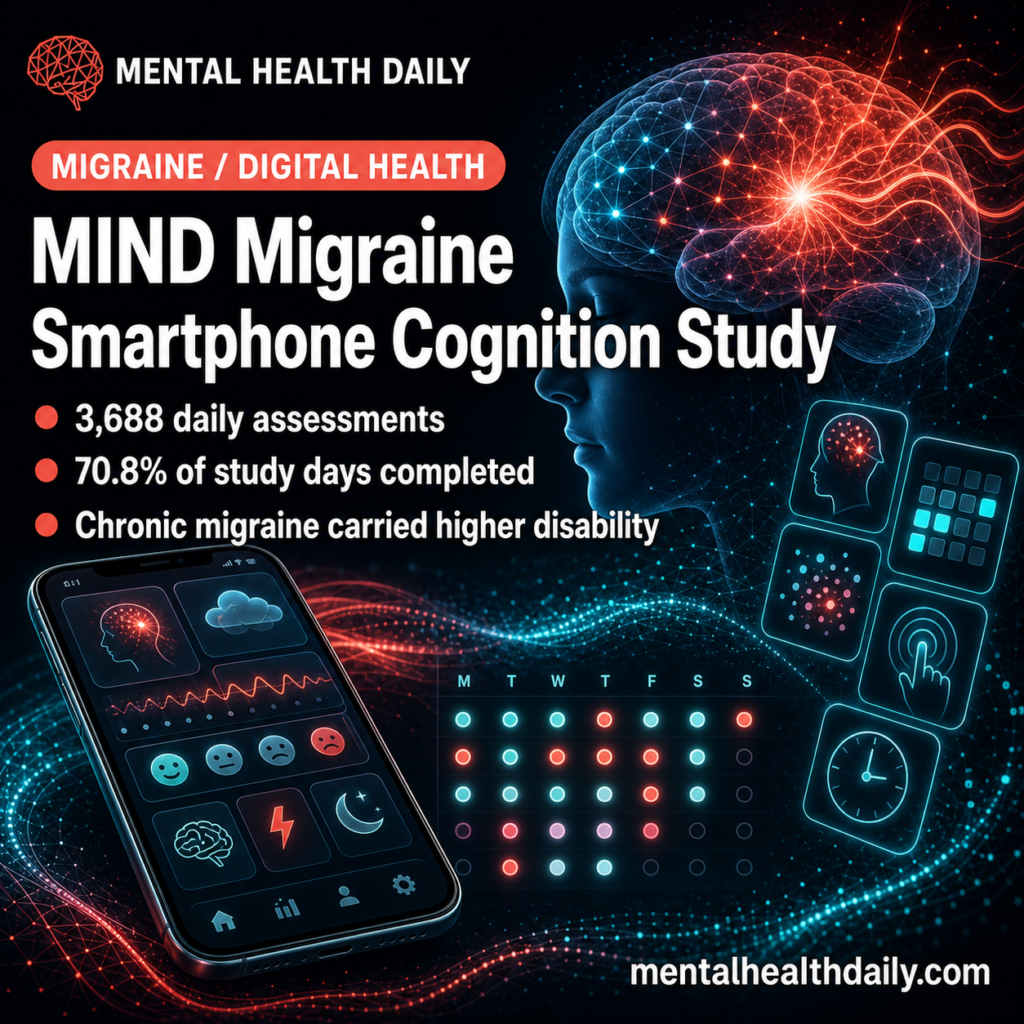
MHD featured image for the MIND migraine smartphone cognition feasibility cohort.

The MIND migraine feasibility study showed that remote migraine-cognition monitoring can produce a large daily dataset: 177 baseline participants completed 3,688 smartphone assessments, covering 70.8% of possible study days.1 The finding supports digital migraine endpoint infrastructure while leaving treatment effects and diagnostic thresholds untested. Research Highlights Daily monitoring was feasible: Participants completed 3,688 daily smartphone …

Read more

Migraine With PFO: Lower Indoleacrylic Acid, 211 Metabolite Changes

MHD featured image for migraine with PFO metabolomics and indoleacrylic acid.

A 2026 iScience metabolomics study found 211 differentially expressed metabolites in migraine patients with patent foramen ovale; in a 220-person validation cohort, lower indoleacrylic acid plus hs-CRP reached AUC 0.722 for distinguishing migraine with PFO from controls.1 Research Highlights Metabolomics found a broad signal: The discovery cohort included 30 migraine-with-PFO patients and 17 controls, with …

Read more

Migraine Linked to Cognitive Impairment in Chinese MR

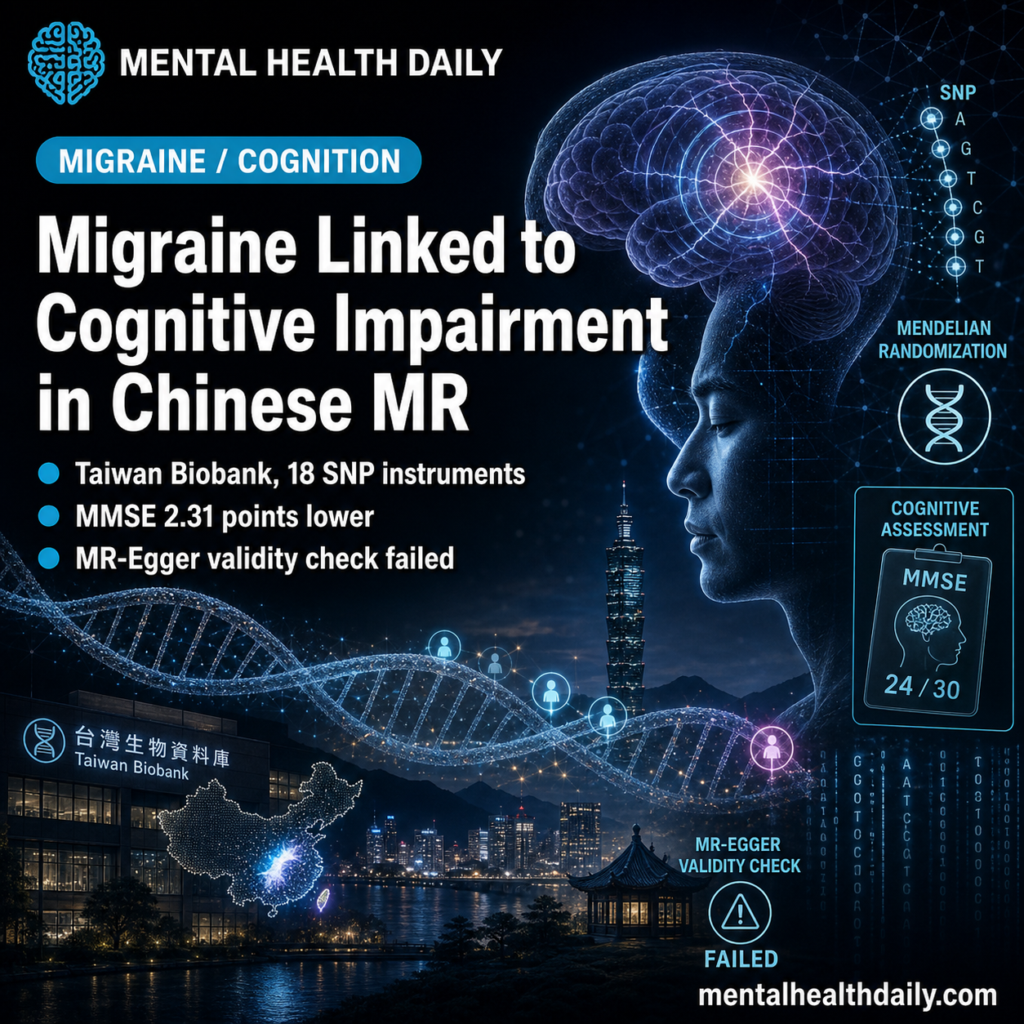
Editorial card showing a brain with migraine pain pathways overlaid on genetic instrument schematic for Mendelian randomization.

A 2026 study by Bai et al. in Dialogues in Clinical Neuroscience uses Mendelian randomization (MR) — inherited genetic variants as a natural experiment to test causality — and concludes that migraines causally lower cognitive performance in a Han Chinese sample.1 The headline conclusion is plausible; the effect-size numbers in the popular MR shorthand (odds …

Read more

GPR30 and Migraine: Estrogen Link Still Lacks Human Trials

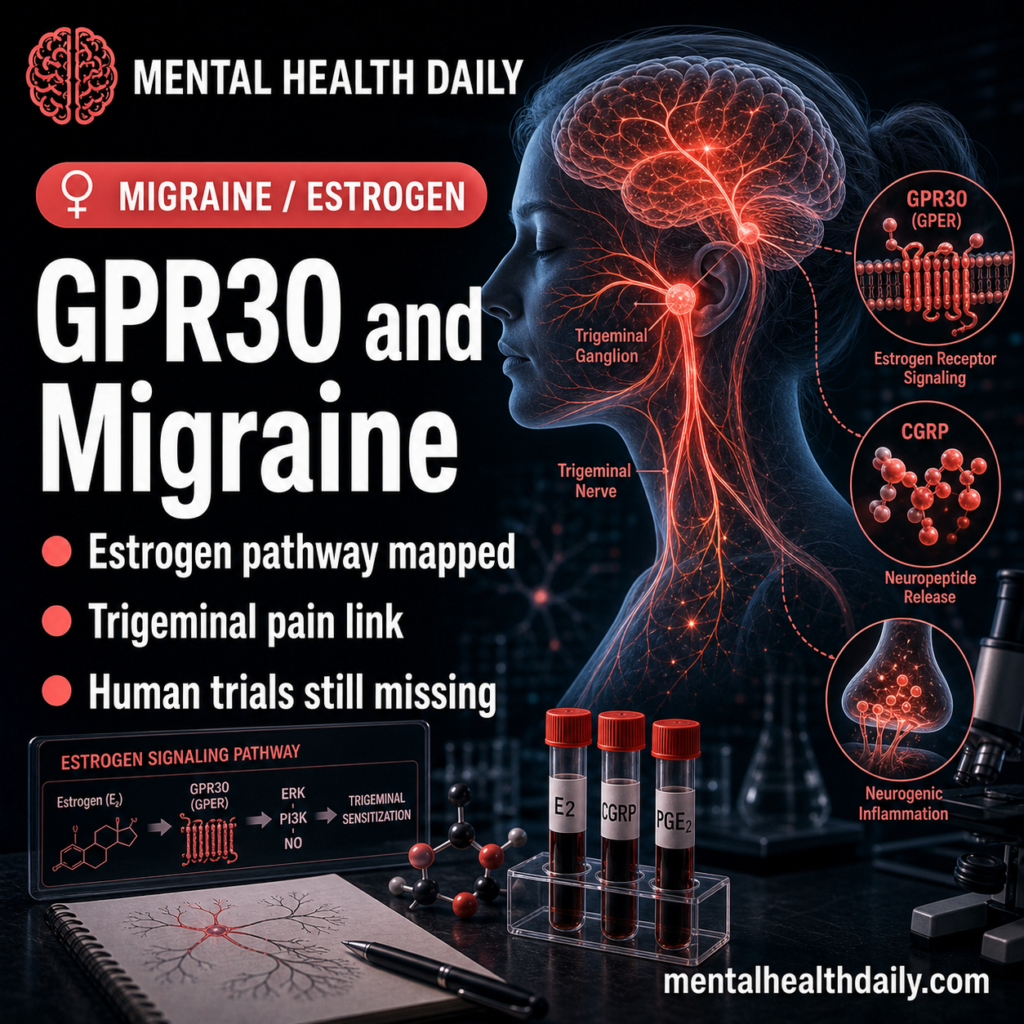
MHD featured image for GPR30, estrogen signaling, trigeminal ganglion biology, and migraine.

A 2026 review argued that G protein-coupled receptor 30 may connect estrogen signaling, trigeminal pain pathways, and migraine biology, but migraine-specific human trials of GPR30-targeted drugs are still missing. Research Highlights The migraine rationale is hormone-linked: women have roughly 2 to 3 times the migraine prevalence of men, and 50% to 60% of women with …

Read more

Anti-CGRP Monoclonal Antibodies to Prevent Chronic Migraine (2023 Review)

Migraine, a primary headache disorder, significantly impacts the quality of life of millions worldwide. In recent years, the focus has shifted toward developing targeted therapies, particularly monoclonal antibodies (mAbs) against the calcitonin-gene-related peptide (CGRP), to prevent chronic migraine attacks. A relatively recent comprehensive network meta-analysis (NMA) evaluated the efficacy and safety of various anti-CGRP mAbs, …

Read more

Does MSG Cause Headaches? Monosodium Glutamate Research Reviewed

Monosodium glutamate (MSG), commonly used as a flavor enhancer, has been controversially linked to headaches for decades. Key Facts: Human studies linking MSG to headaches have inconsistent findings, especially when MSG is consumed with food. Studies in which MSG reportedly causes headaches often have methodological flaws like inadequate blinding due to MSG’s strong taste. MSG …

Read more