hit counter

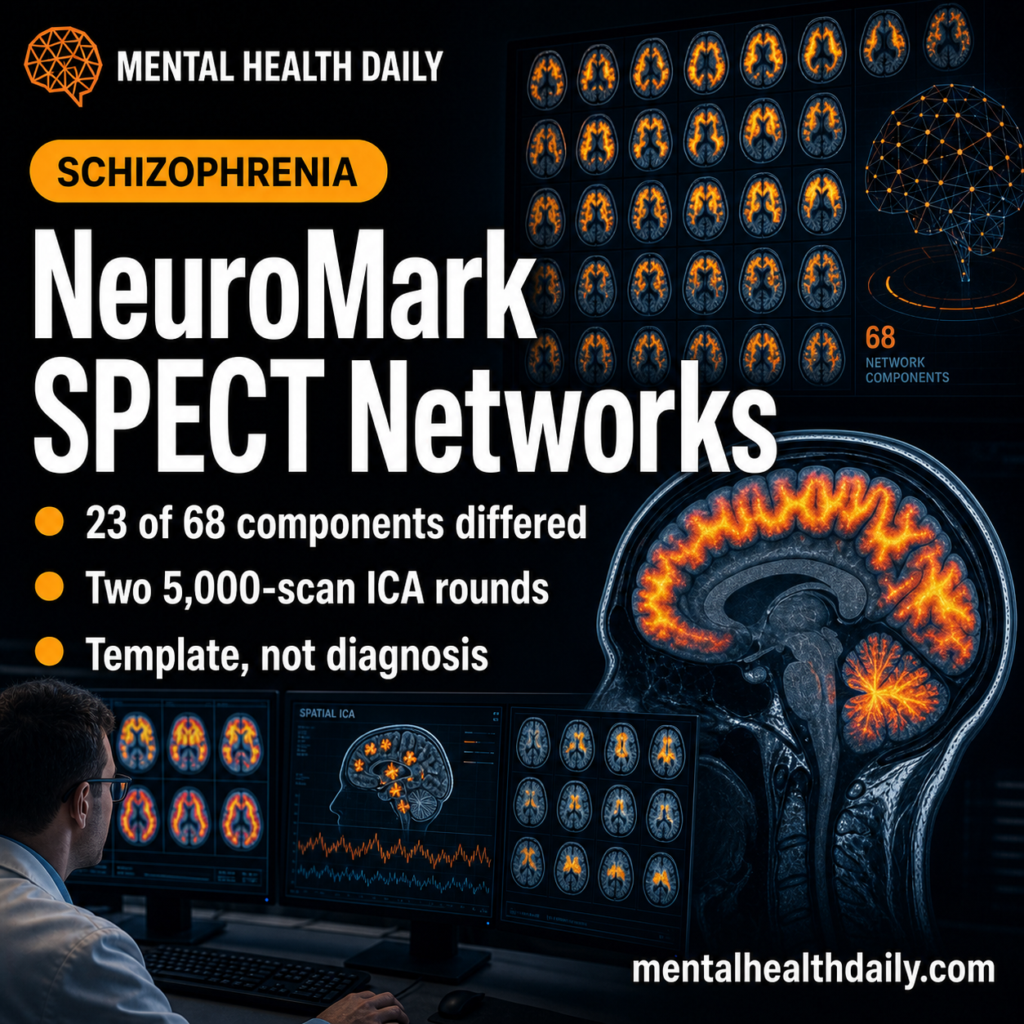
NeuroMark SPECT Found 23 Schizophrenia Perfusion Network Changes

MHD featured image for NeuroMark SPECT schizophrenia perfusion-network research.

A 2026 medRxiv preprint built a reusable NeuroMark SPECT template from 2 large independent component analysis rounds, then applied it to 137 schizophrenia patients and 76 controls; after false-discovery-rate correction, 23 of 68 perfusion components differed between groups.1 Those data support infrastructure for comparing SPECT perfusion networks across datasets, with standalone schizophrenia diagnosis left outside …

Read more

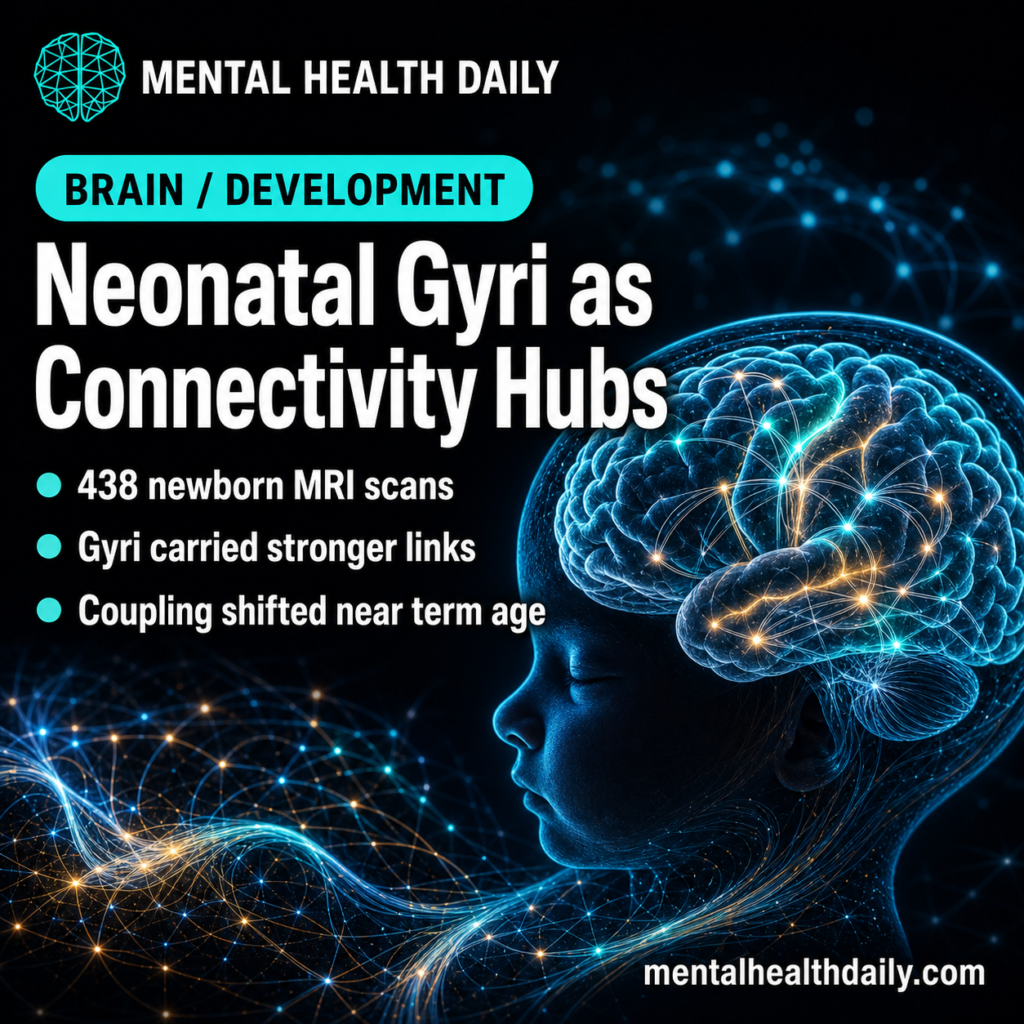
Neonatal Brain MRI Shows Gyri Are Connectivity Hubs by 38-44 Weeks

MHD featured image for neonatal MRI, cortical gyri, sulci, and early brain connectivity.

A 2026 developing Human Connectome Project analysis of 438 full-term neonates found that the newborn cortex already had an adult-like folding hierarchy: gyri connected most strongly to other gyri, sulci connected most weakly to other sulci, and structure-function coupling shifted near 41 to 42 weeks postmenstrual age.1 Research Highlights Gyri were already high-connectivity hubs: across …

Read more

Ethiopia Somali Region Stigma Delayed Mental Health Care

MHD featured image for mental health stigma and care-seeking in Ethiopia's Somali Region.

A 2026 qualitative study from Ethiopia’s Somali Regional State found a harsh care-seeking pattern: mental illness was often recognized only when it looked like visible “madness,” was commonly explained through spiritual causes, and carried stigma severe enough to delay biomedical care.1 Research Highlights 16 interviews shaped the analysis: Warfa et al. interviewed health workers, service …

Read more

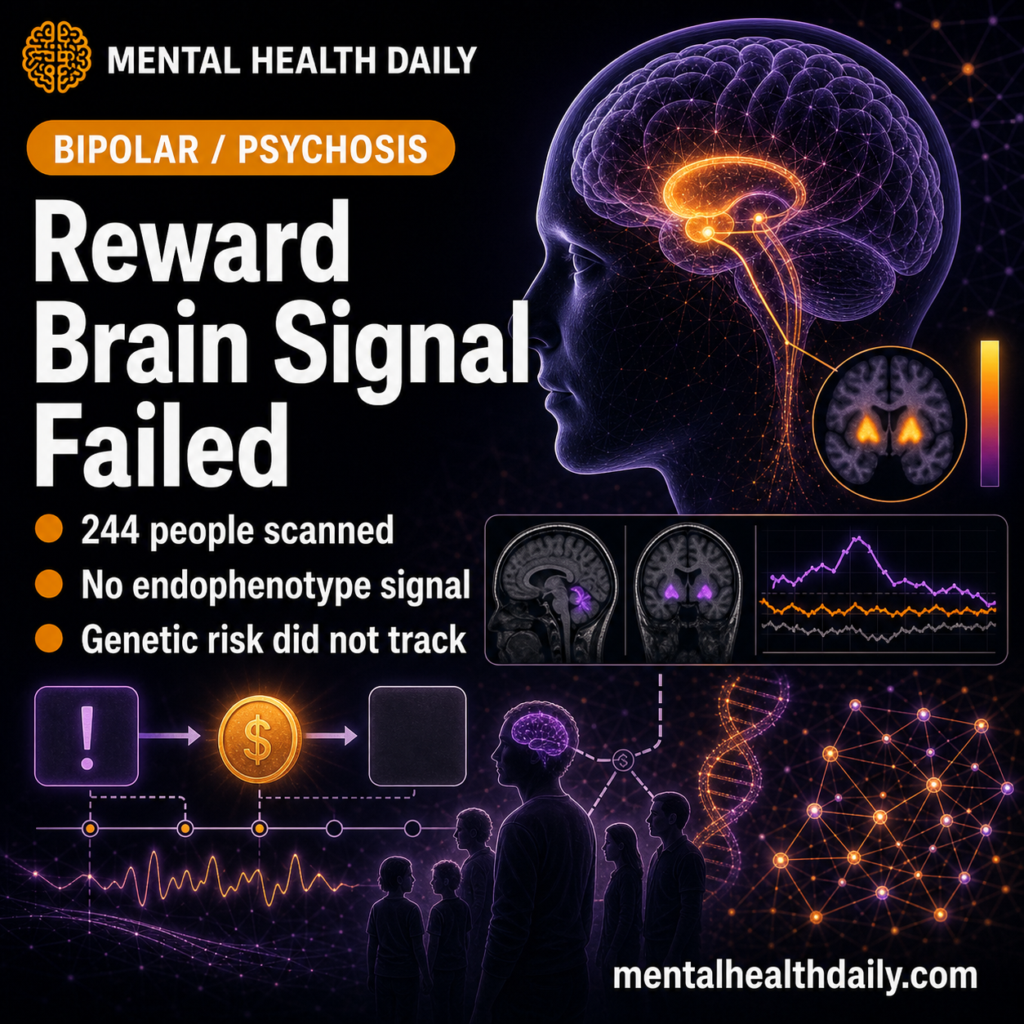
Reward Activation Failed as Bipolar-Psychosis Endophenotype

MHD featured image for reward brain activation and bipolar-psychosis endophenotype testing.

A 244-person functional MRI study found no significant evidence that ventral striatum activation during reward anticipation works as an endophenotype — a measurable trait used to connect inherited risk with diagnosed illness — for bipolar and psychotic disorders. Research Highlights The registered hypothesis failed: Barendse et al. found no significant ventral striatum reward-anticipation difference among …

Read more

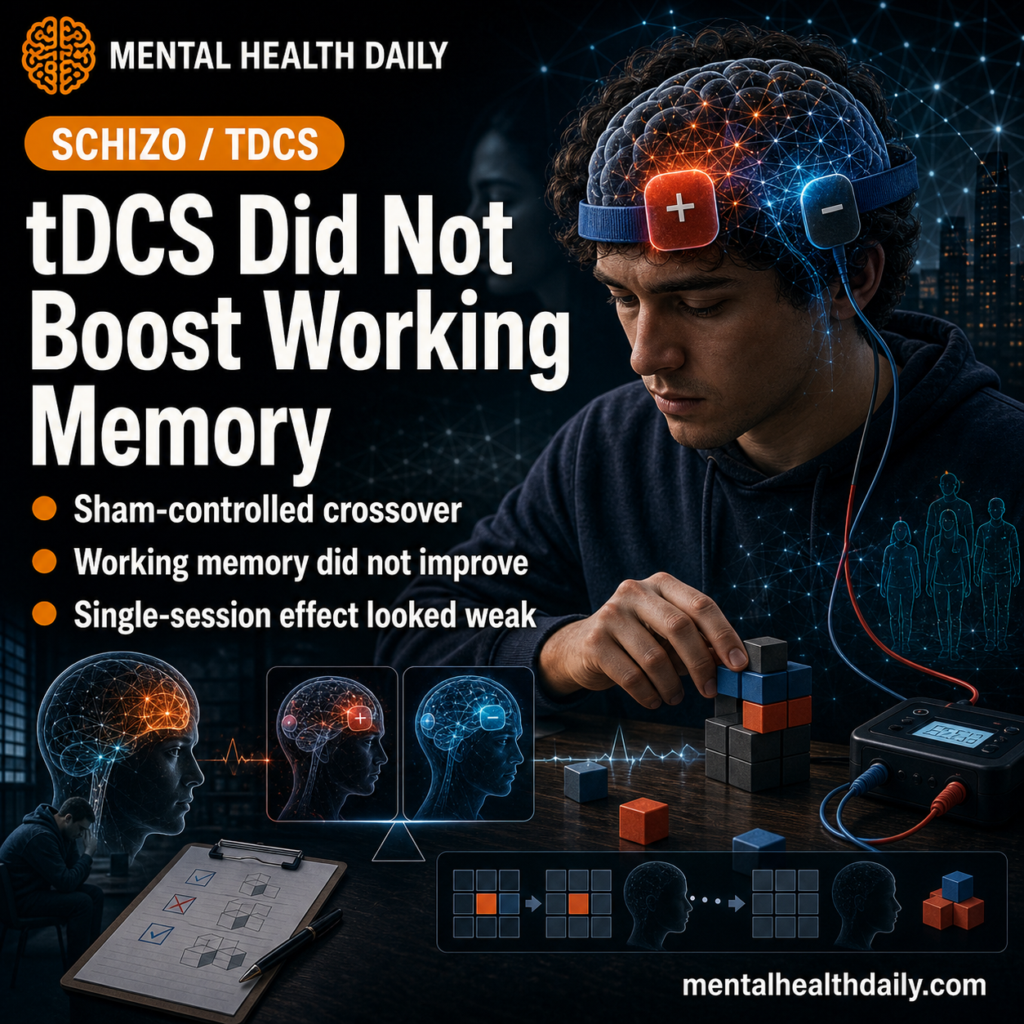
Single-Session tDCS Fails Working-Memory Test in Schizophrenia

Stylized illustration of tDCS electrodes positioned over the right dorsolateral prefrontal cortex on a brain outline, with a pre-post working-memory task in the foreground, representing the null-result trial in schizophrenia.

Transcranial direct current stimulation (tDCS) has been pitched as a scalable cognitive-enhancement tool for schizophrenia, where roughly 98% of patients show working-memory deficits, but a 2026 sham-controlled crossover trial from Ke et al. delivered the standard 1.5 mA anodal protocol over the right DLPFC to 27 stable patients and found no detectable benefit over sham.1 …

Read more

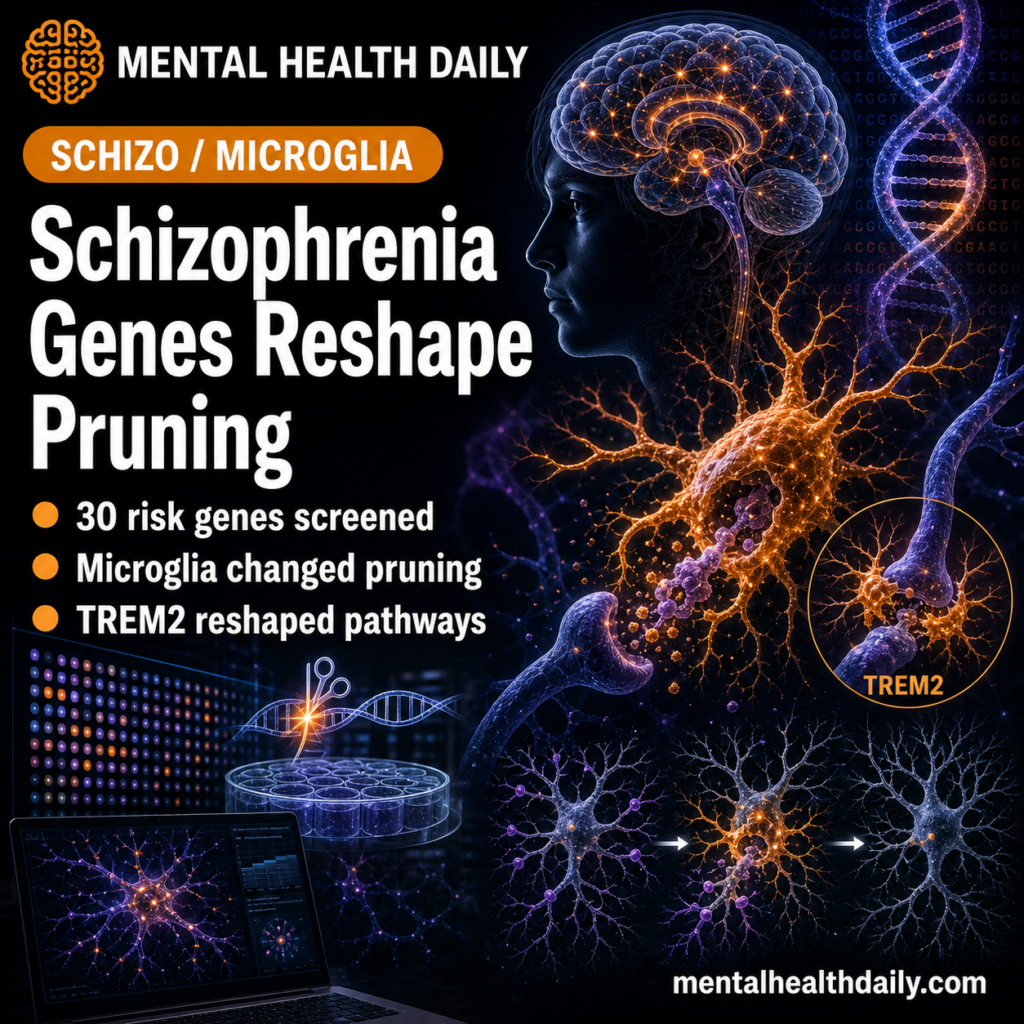
Schizophrenia Risk Genes Reshape Microglial Pruning in CRISPR Screen

Stylized microglial cell engulfing synaptic material with CRISPR gene-editing elements, representing schizophrenia risk genes altering synaptic pruning.

Schizophrenia’s genetic architecture sits awkwardly between neurons and the immune system. A 2026 CRISPR screen of 30 schizophrenia-associated genes in human microglia-like cells found that several risk genes meaningfully alter how microglia engulf synaptic material, supporting the synaptic-pruning model at the functional gene level.1 Research Highlights 30 schizophrenia risk genes were knocked out one by …

Read more

SMART Texts Raised Diabetes Confidence in Schizophrenia

MHD featured image for SMART text messages and diabetes self-management in schizophrenia.

A 12-week text-message intervention for people with schizophrenia spectrum disorders improved diabetes self-management confidence and patient activation, but it did not yet move weight, HbA1c, physical activity, or psychiatric symptoms. SMART looked feasible and psychologically useful in this uncontrolled pilot; cardiometabolic outcomes need a full-scale randomized trial with longer follow-up.1 Research Highlights SMART was tested …

Read more