hit counter

Right OFC rTMS Improves Memory in Early Schizophrenia
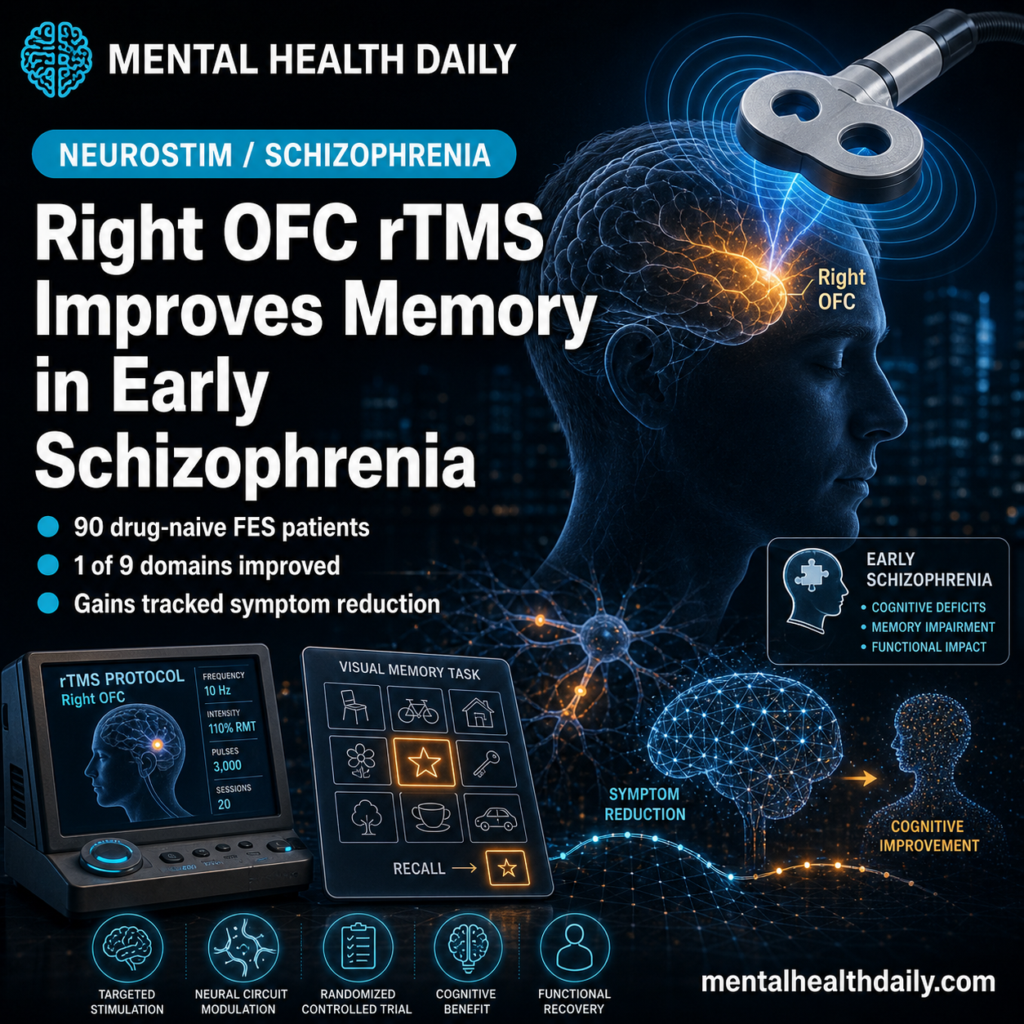
Editorial card showing a coronal brain section highlighting the right orbitofrontal cortex with a TMS coil, illustrating the first RCT of OFC stimulation in first-episode schizophrenia.

Cognitive impairment in first-episode schizophrenia (FES) is the symptom that does the most work blocking employment, relationships, and independent living — and the symptom current antipsychotics barely move. A 2026 RCT by Hu et al. in Psychological Medicine tested whether 20 sessions of low-frequency rTMS targeting the right orbitofrontal cortex (OFC) could improve cognition where …
Read more

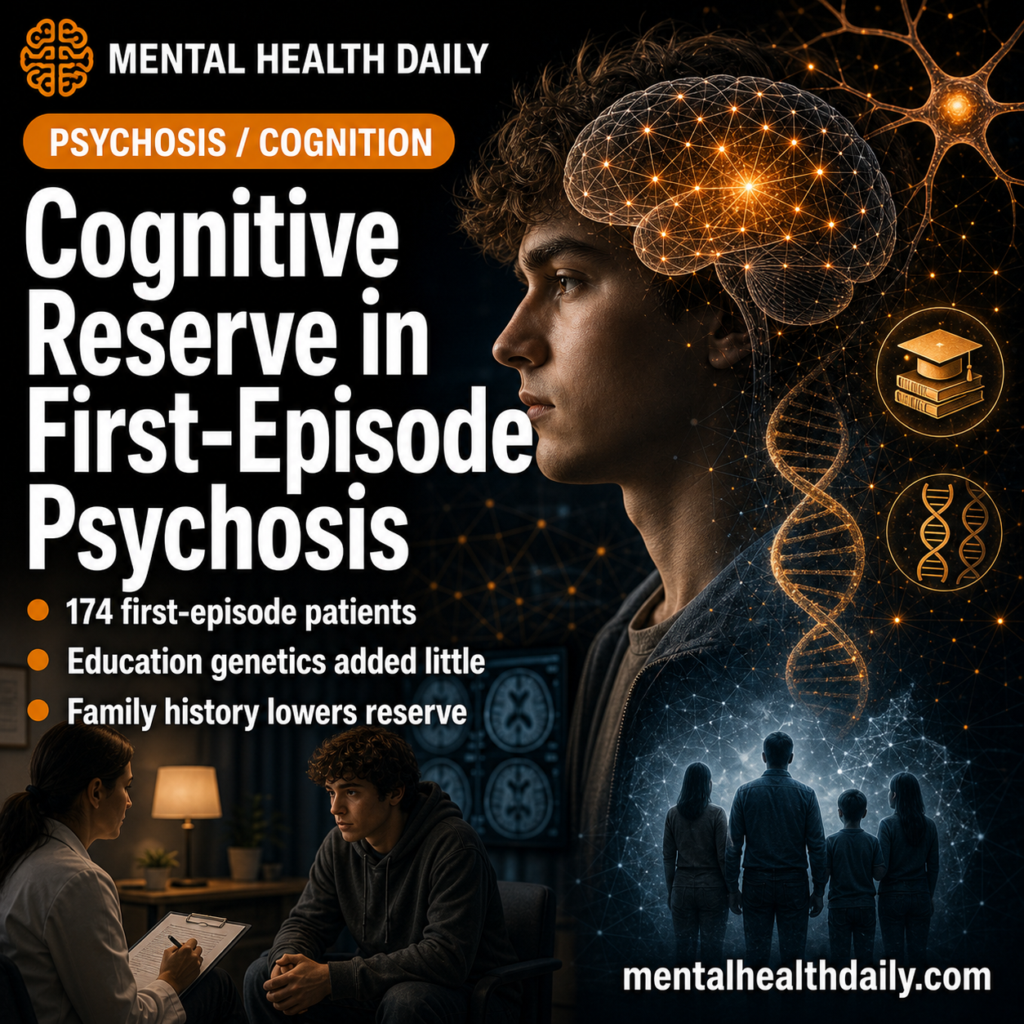
Cognitive Reserve in First-Episode Psychosis: Education PRS Adds 4.2%

Photoreal illustration of brain with strengthening neural networks suggesting reserve and protection against cognitive decline.

A 2026 analysis of 174 people with non-affective first-episode psychosis found that cognitive reserve was tied to 3 signals available near illness onset: age at onset, family history of psychosis, and polygenic liability for educational attainment. Adding the education polygenic score raised the model’s adjusted R² from 13.5% to 17.7%, a real but modest gain …

Read more

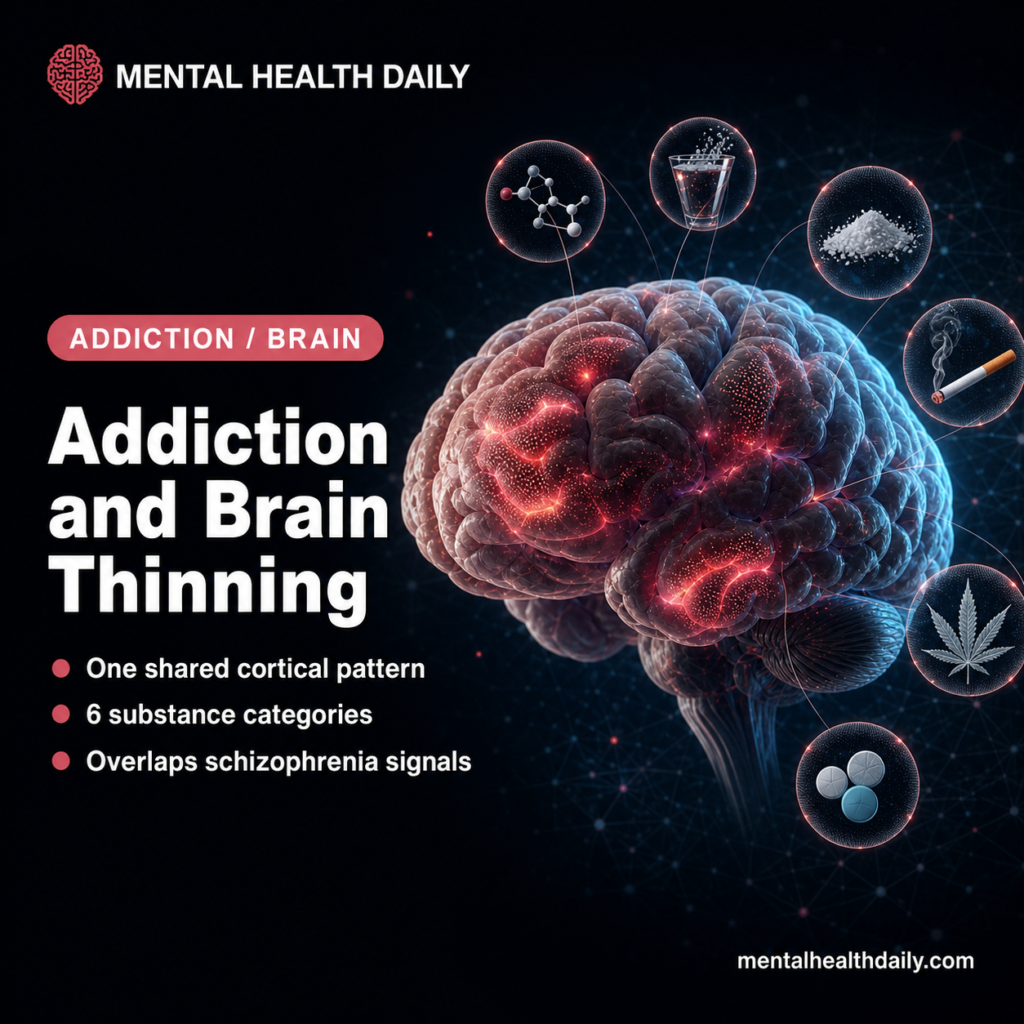
Drug Addiction Linked to Cortical Thinning in 65 of 68 Brain Regions

Photoreal illustration of a human brain with cortical regions highlighted across substance categories, representing the cross-substance morphometric pattern in addiction.

Whether alcohol, cocaine, nicotine, and cannabis damage the same brain regions or different brain regions has been hard to settle in the addiction-imaging literature. A 2026 ENIGMA Addiction analysis by Georgiadis et al. — pooling 4,733 brains across 51 sites — now has an answer. Research Highlights Across 2,782 people with substance use disorder (SUD) …

Read more

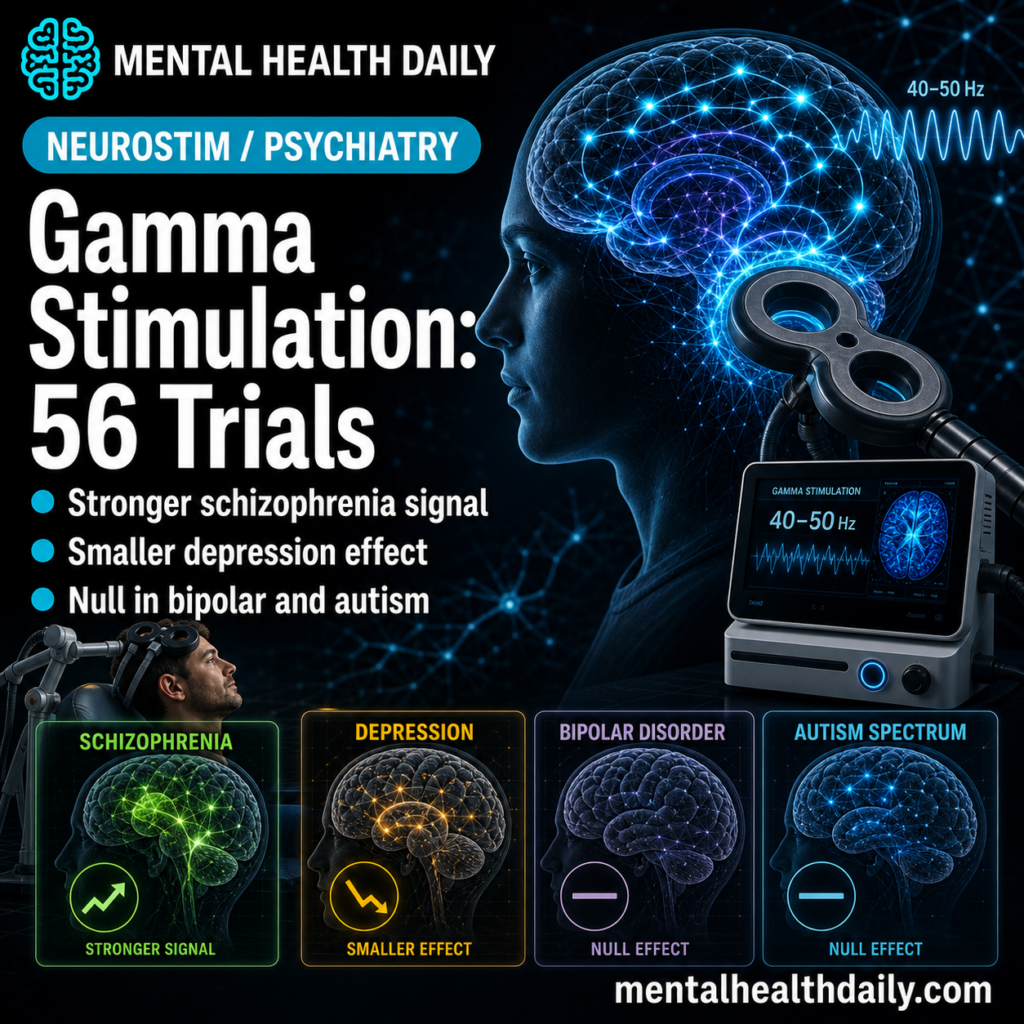
Gamma Brain Stimulation Helps Schizophrenia More Than Depression

Photoreal illustration of gamma-frequency brain stimulation showing TMS coil and oscillation waveforms in 30-50 Hz range over a brain.

A 2026 meta-analysis of 56 controlled trials found the clearest gamma-frequency neuromodulation signal in schizophrenia: overall symptoms improved vs. control (g = −0.46), global cognition improved (g = 0.55), and MDD showed a smaller depression effect than the schizophrenia symptom estimate (g = −0.34). Bipolar disorder and autism stayed directional but nonsignificant, and the paper’s …

Read more

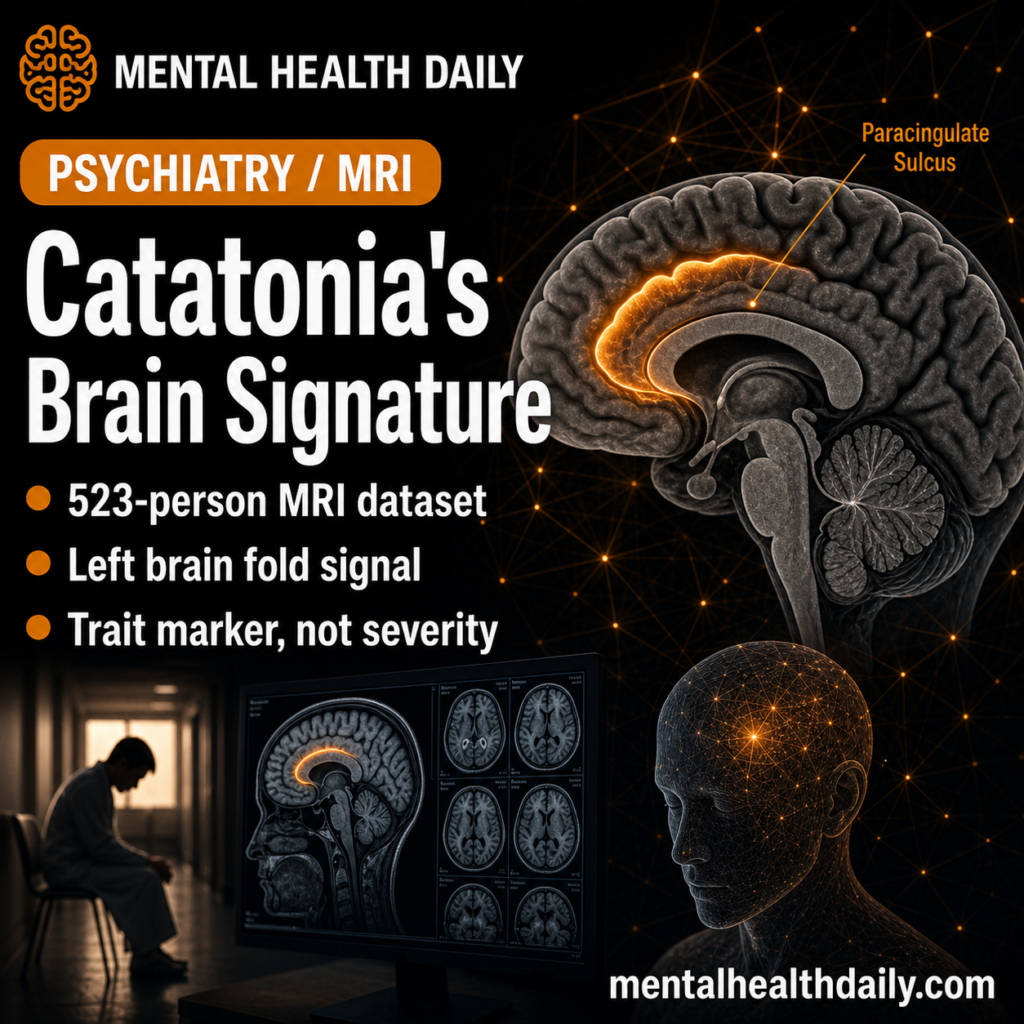
Catatonia Linked to Lower Left Paracingulate Sulcus Rate (28% vs 53%)

Photoreal illustration of a brain with the anterior cingulate cortex highlighted, representing transdiagnostic structural markers of catatonia.

A 2026 hospital MRI study found that the left paracingulate sulcus was present in 31 of 109 catatonia patients (28%) vs. 171 of 323 psychiatric controls without catatonia (53%), a left-hemisphere group effect that survived adjustment for age, sex, scanner, brain volume, benzodiazepines, and antipsychotics.1 Research Highlights Left PCS signal: left paracingulate sulcus (PCS) presence …

Read more

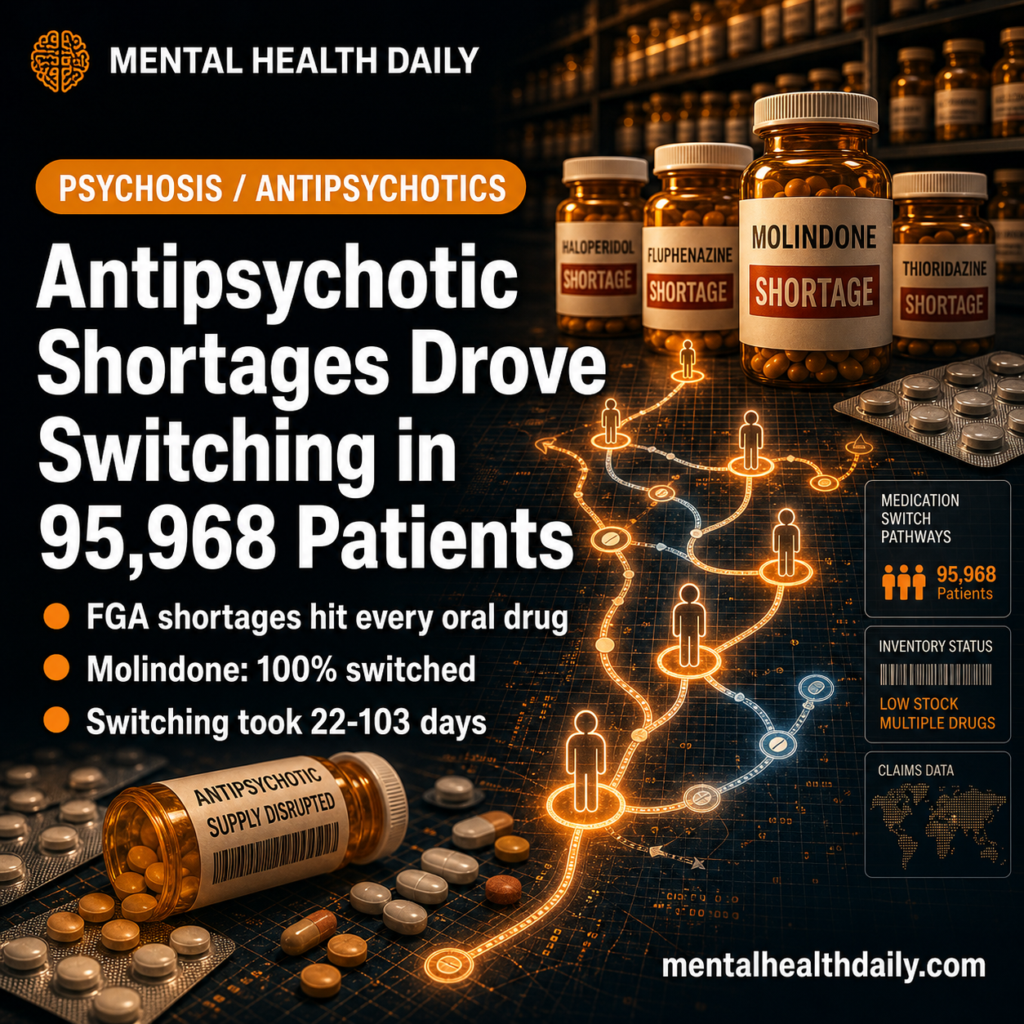
Antipsychotic Shortages Caused Drug Switching: 95,968-Patient Claims Study (2026)

First-generation antipsychotic (FGA) shortages are not just pharmacy annoyances; they force medication changes in people who may have taken years to stabilize on a tolerable regimen. Research Highlights 95,968 patients: Tabah 2026 used Komodo claims data to study people with psychotic-spectrum diagnoses taking shortage-affected first-generation antipsychotics. Switching was not evenly distributed: molindone reached 100% switching, …

Read more