6 Medicine Groups Linked to Fatal Overdoses in Bipolar Disorder
In a Finnish registry study, recent prescriptions for 6 medicine groups were linked to higher odds of fatal poisoning in bipolar disorder. Lithium was not.
Read article Mental Health DailyResearch. Evidence. Perspective.
Published research on Suicide.
In a Finnish registry study, recent prescriptions for 6 medicine groups were linked to higher odds of fatal poisoning in bipolar disorder. Lithium was not.
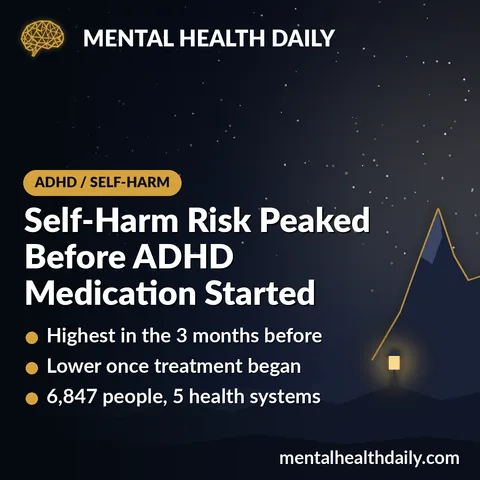
Read articleAmong people prescribed ADHD medication in 5 health systems, recorded self-harm was most common in the 3 months before their first prescription, not after it.1 Risk fell once treatment began…
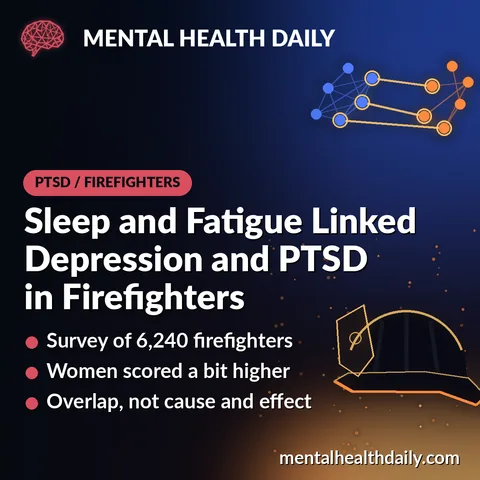
Read articleSleep difficulties and tiredness were among the main symptoms linking depression and PTSD in a 2026 survey of 6,240 Chinese firefighters. Women reported somewhat higher scores for both condi…
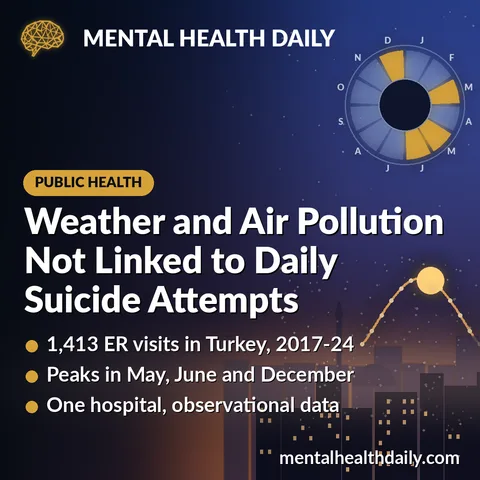
Read articleDaily weather and air pollution were not linked to suicide-attempt visits at a hospital in Balikesir, Turkey, according to an 8-year study of 1,413 emergency presentations from 2017 to 2024.…
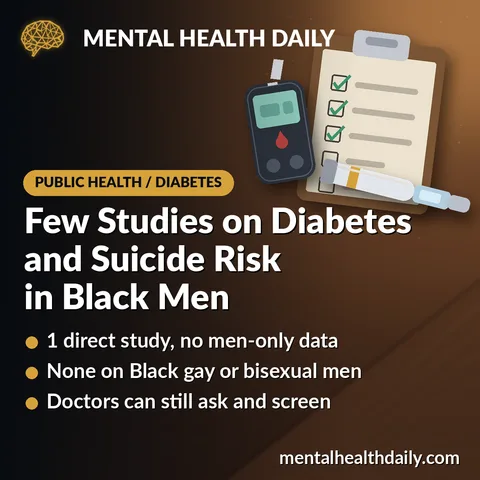
Read articleAlmost no research has measured suicide risk in Black men with diabetes, and none has looked at Black gay, bisexual and other sexual minority men with diabetes, according to a 2026 review. T…
Read articleWhen teens with depression were hospitalized after a suicide attempt, they and their parents described stress moving in both directions, from child to parent and back again. That pattern cam…
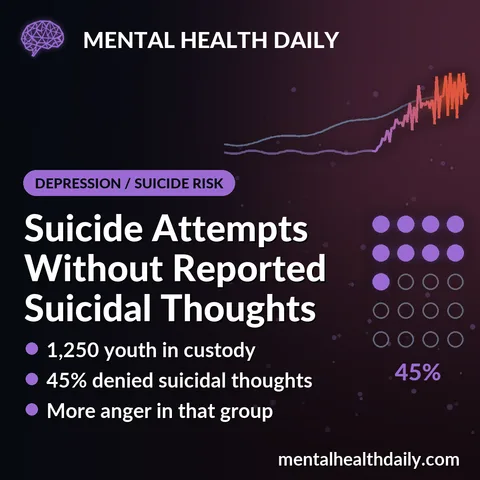
Read articleA 2026 study of 1,250 Florida youth in juvenile-justice programs who had attempted suicide found that 557 (45%) denied serious suicidal thoughts or a plan. Anger or irritability was more com…
Read article