Celecoxib for Depression: 7 Trials, Add-On Benefit Unclear
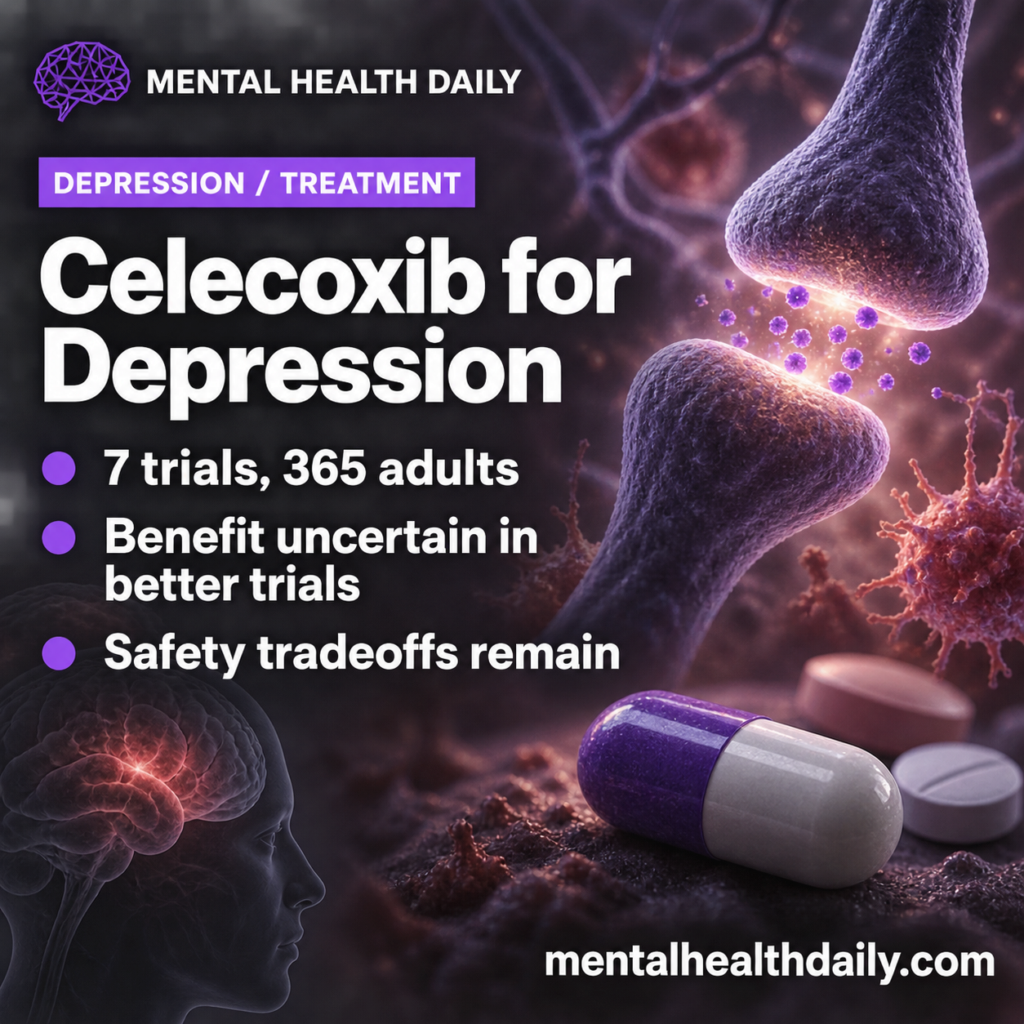
A 7-trial review favored adding celecoxib to antidepressants for depression, but its benefit was not confirmed after 3 high-risk trials were excluded.
A 7-trial review favored adding celecoxib to antidepressants for depression, but its benefit was not confirmed after 3 high-risk trials were excluded.
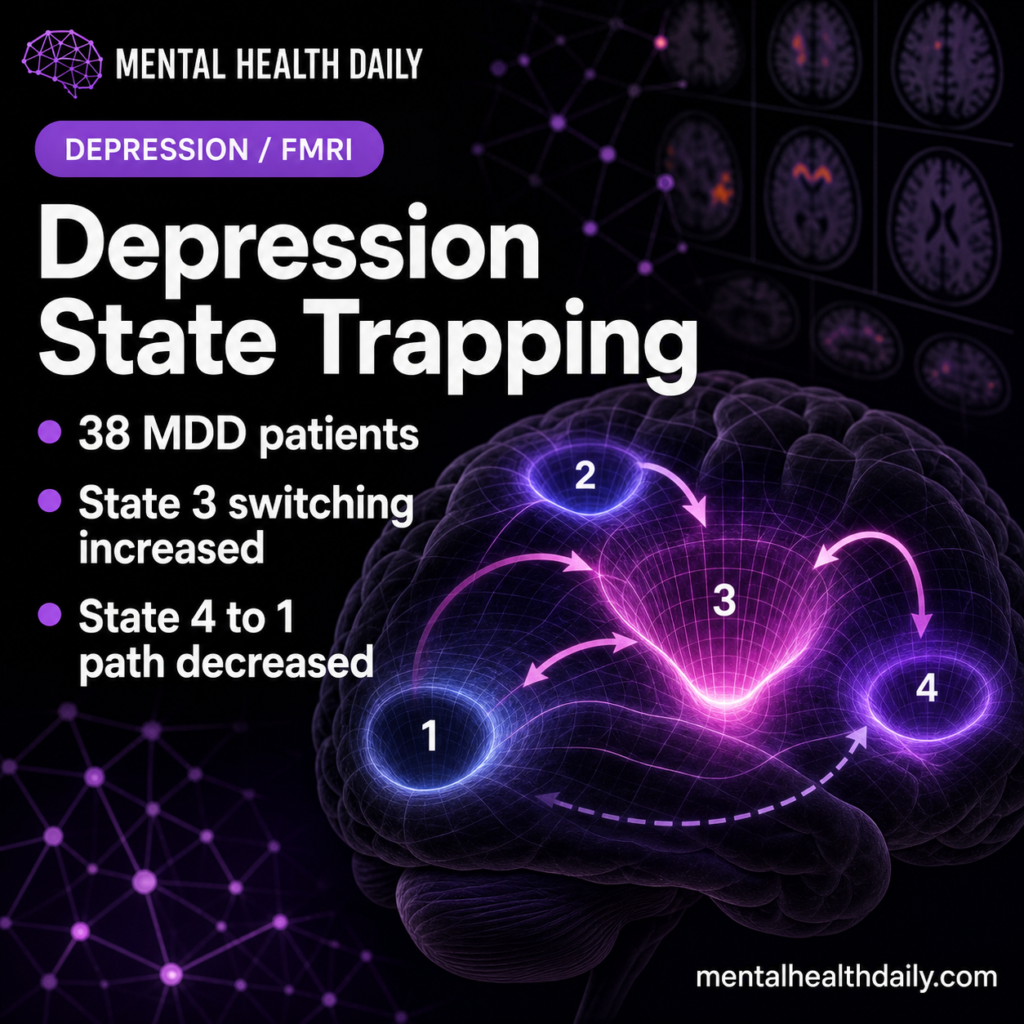
A 76-person Nature Communications fMRI study found that people with major depressive disorder spent a higher share of time in a model-derived State 3 than healthy controls, 27.63 vs. 25.65, p(FDR) = 0.035, and State 3 occupancy correlated with QIDS depression severity, r2 = 0.268, p(FDR) = 0.008.1 The result points to altered brain-state transitions …
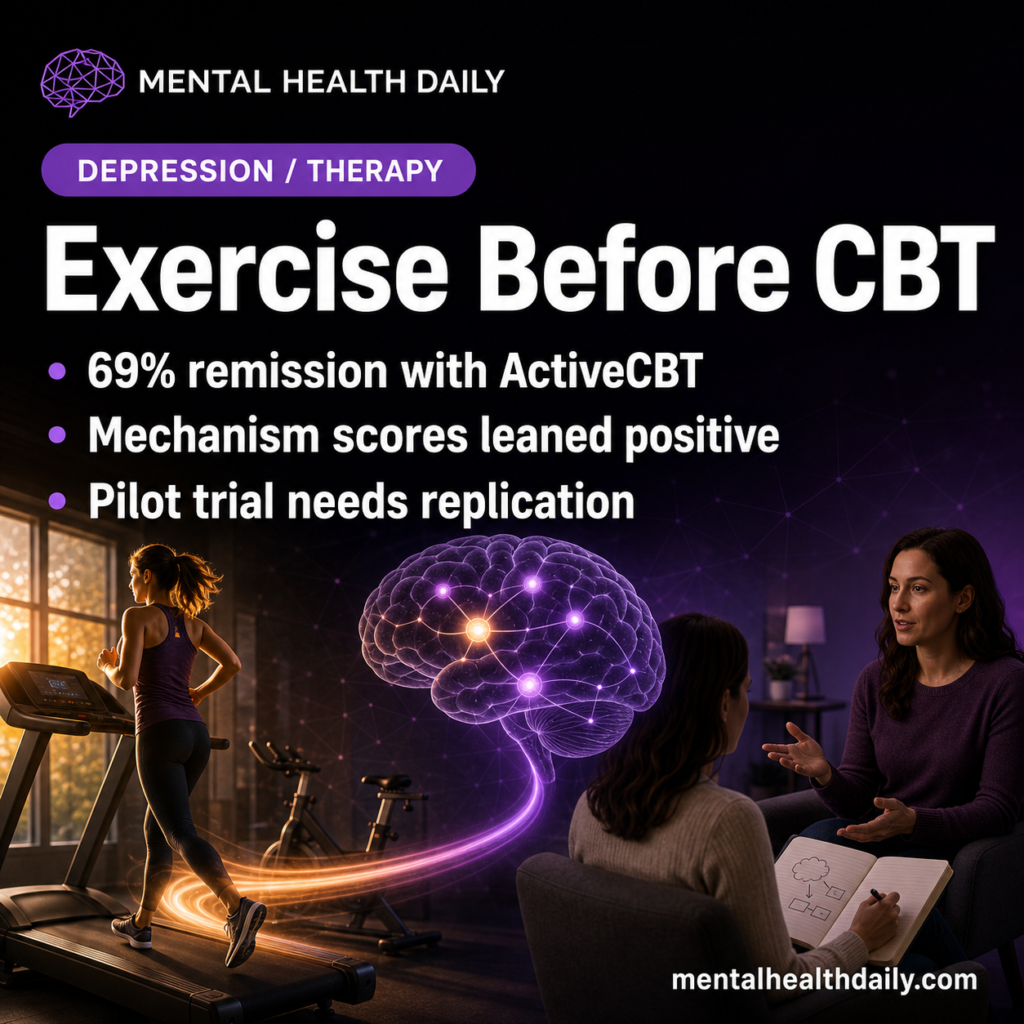
A 40-person pilot trial found depression remission in 69% of adults who did 30 minutes of moderate exercise before individual CBT, compared with 33% of adults who did a calming pre-CBT activity.1 Compared with a broad “exercise boosts therapy” claim, acute exercise is a plausible priming step; the alliance and activation mechanisms still need a …
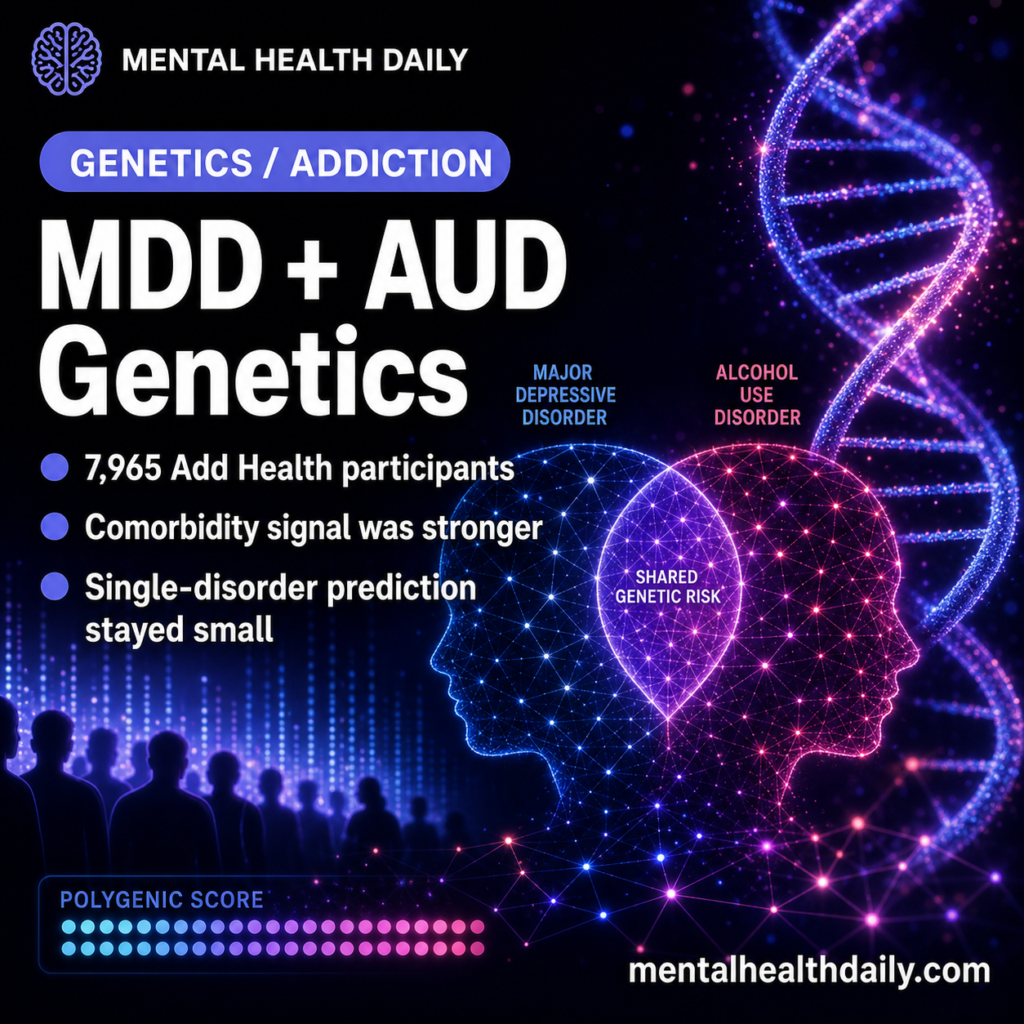
A 2026 Add Health analysis found that combining major-depression and alcohol-use-disorder polygenic scores added 4.88% variance for comorbid MDD-AUD prediction, while same-trait scores added only 0.65% for MDD and 1.52% for AUD alone.1 The genetic signal is strongest where the clinical problem is hardest: depression plus alcohol-use disorder, not either diagnosis in isolation. Research Highlights …
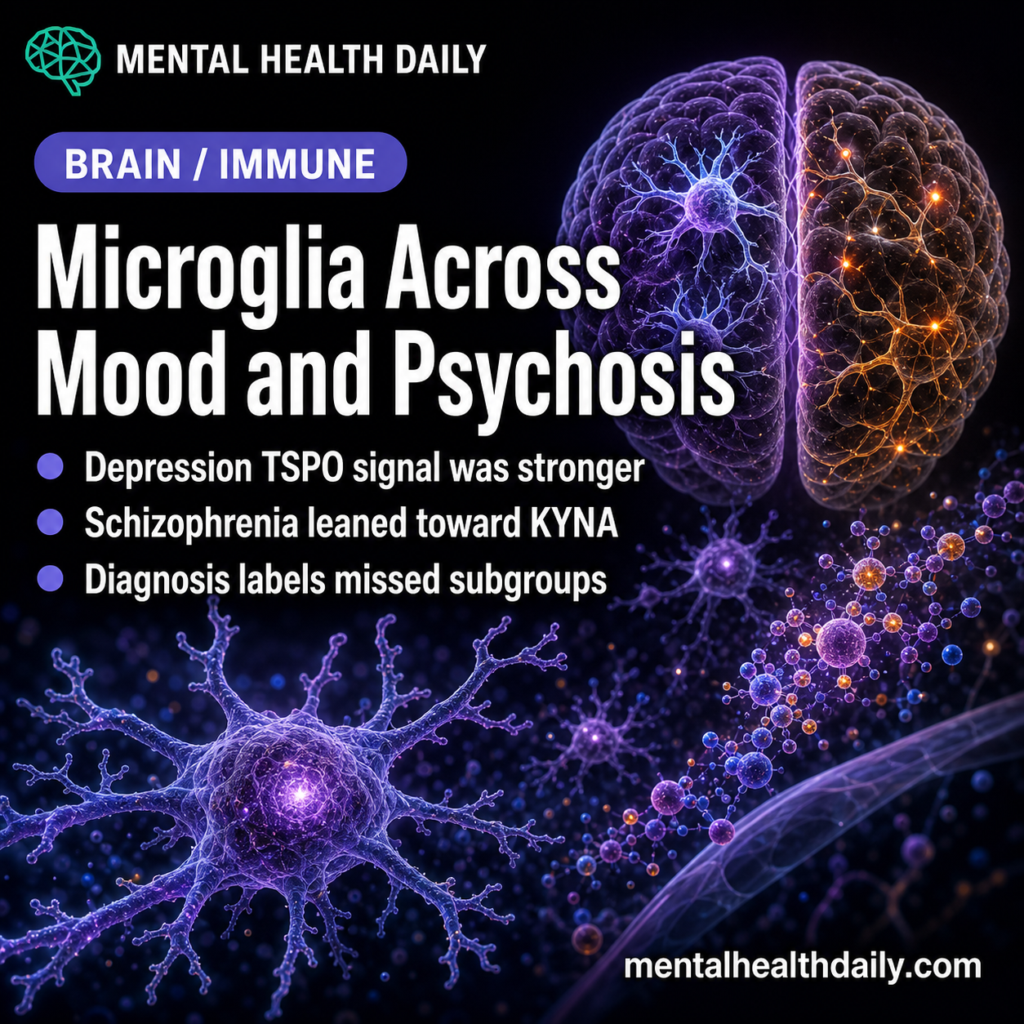
A 2026 systematic review found that microglia-related immune signals do not line up cleanly with psychiatric diagnosis labels: major depression showed frontolimbic TSPO-PET increases, while schizophrenia showed elevated kynurenic acid in cerebrospinal fluid.1 The strongest interpretation is that immune-brain markers may sort subgroups better than DSM categories do. Research Highlights Depression had the clearest TSPO-PET …
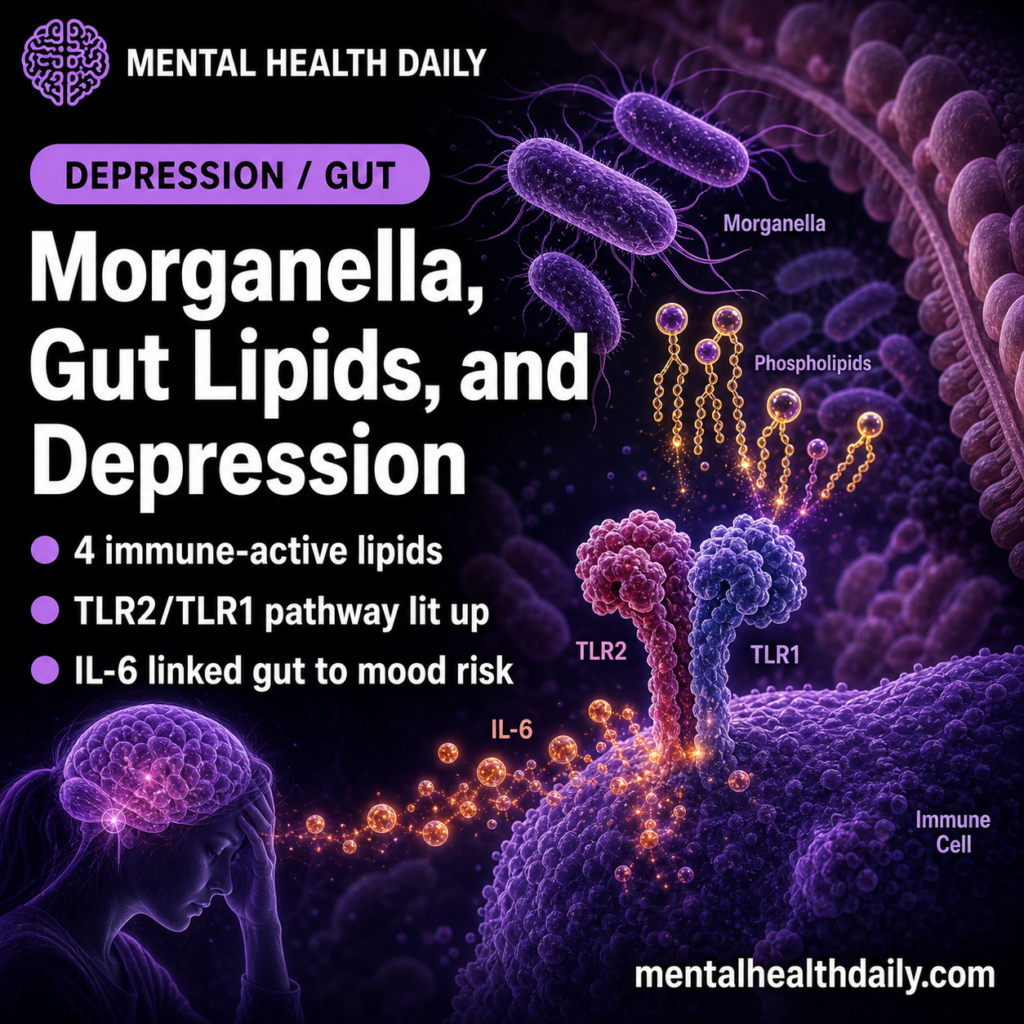
A 2025 Journal of the American Chemical Society study identified 4 unusual Morganella morganii phospholipids that activated TLR2/TLR1 immune receptors and induced inflammatory cytokines, especially IL-6.1 The finding does not prove that one gut bacterium causes depression, but it gives the microbiome-depression field something it often lacks: a named molecule and a receptor pathway. Research …
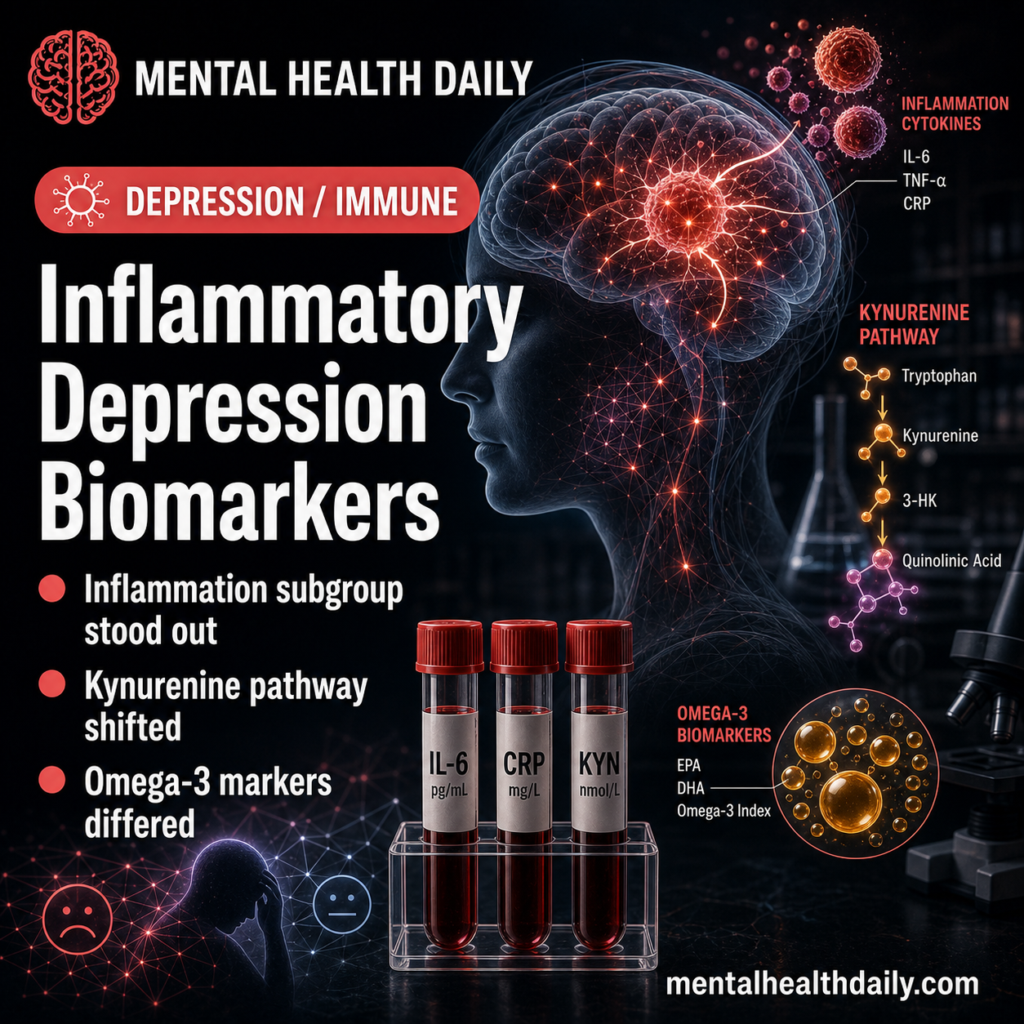
A 2026 biomarker study found kynurenine-pathway activation in inflammatory major depressive disorder (MDD), but not across all depression cases. Compared with non-inflammatory MDD and healthy controls, the inflammatory subgroup had higher pathway metabolites, and omega-3 treatment reduced several of them over 8 weeks.1 Research Highlights Inflammatory depression showed kynurenine activation: people with MDD and high-sensitivity …