hit counter

Severe Infections Predicted Dementia After 27 Comorbidities in Finland
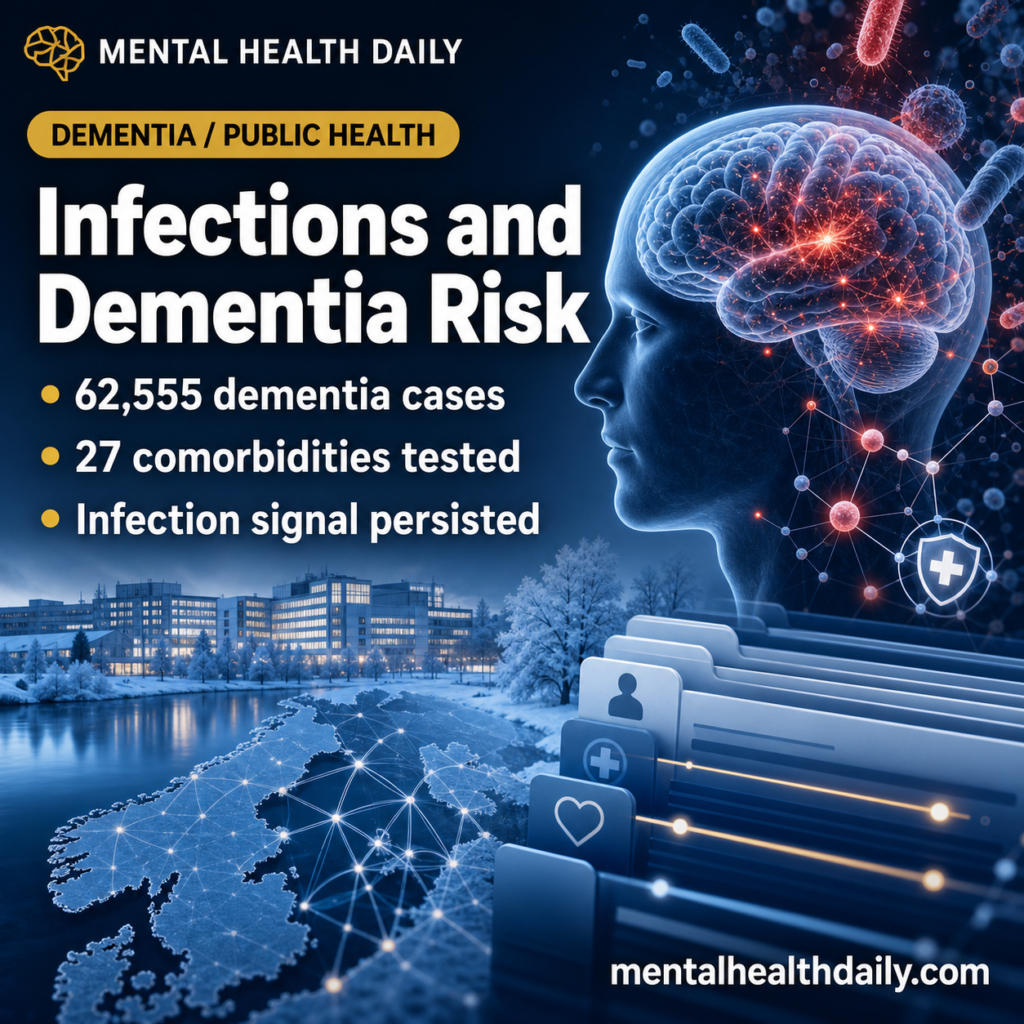
MHD featured image for severe infections, comorbidity, and dementia risk.

A nationwide Finnish registry study found that 2 severe infection categories still predicted dementia after adjustment for 27 noninfectious comorbid diseases.1 Cystitis and bacterial infection of an unspecified site both had adjusted rate ratios of 1.19 after comorbidity adjustment, meaning the infection-dementia association did not disappear when prior hospital-treated illnesses were modeled. Research Highlights The …
Read more

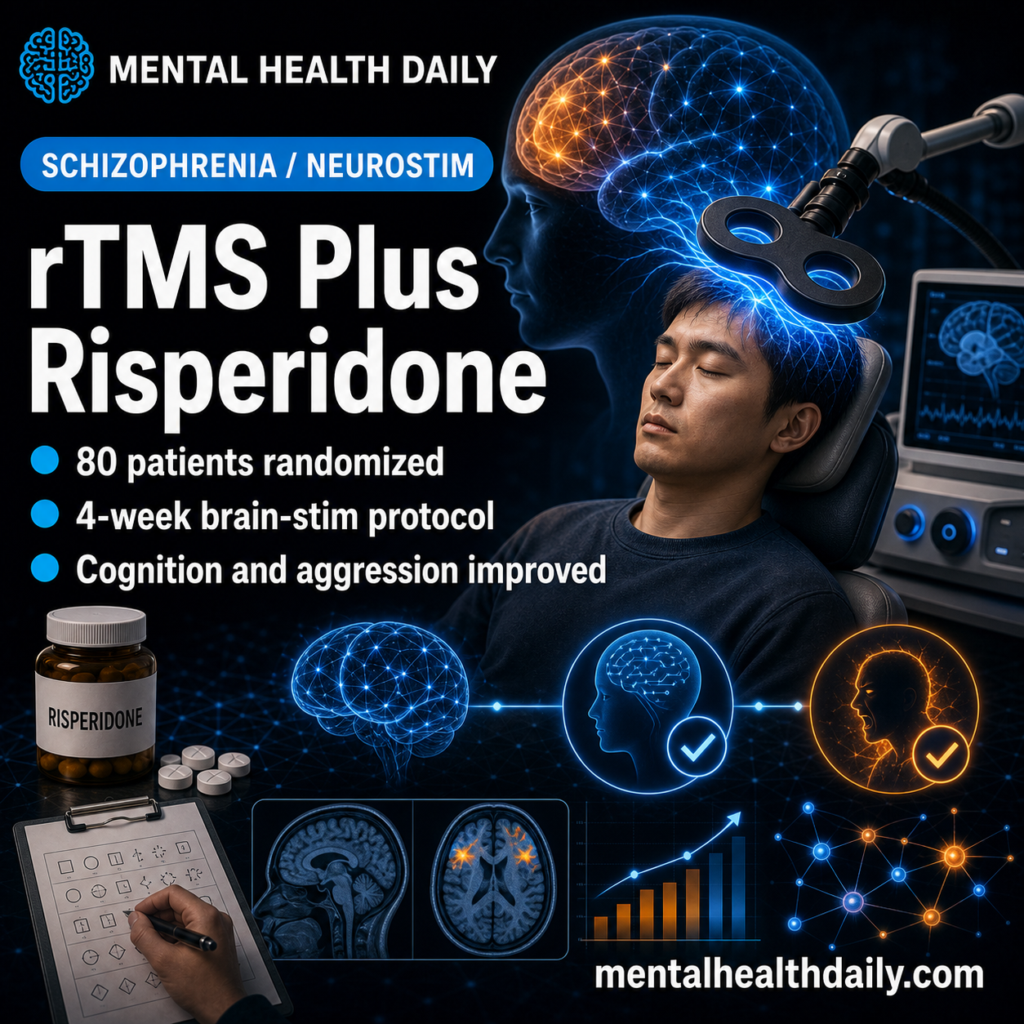
rTMS Plus Risperidone Improved Schizophrenia Cognition

A 2026 randomized study involving 80 people with schizophrenia found that adding high-frequency repetitive transcranial magnetic stimulation to risperidone improved PANSS cognitive-factor scores and aggressive-behavior ratings more than risperidone alone over 4 weeks.1 Research Highlights Design was randomized but short: 80 patients were assigned to risperidone alone or risperidone plus rTMS, 40 per group, with …

Read more

Long COVID Fatigue Was Severe Without Clear Inflammation Biomarkers

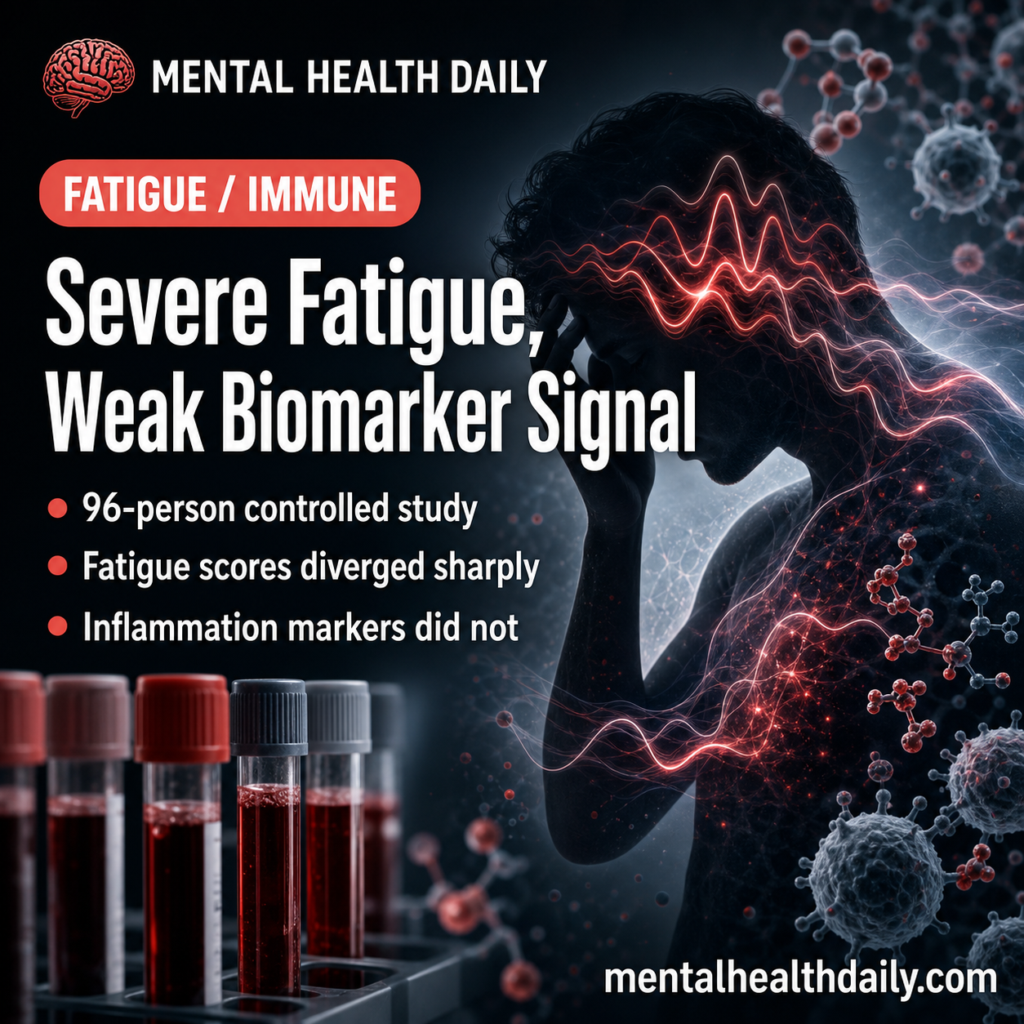
MHD featured image for long COVID fatigue biomarkers and inflammation.

A 2026 controlled study of 96 people found severe long-COVID fatigue across 3 validated fatigue scales, but the tested peripheral inflammation, cellular-stress, neuroprotection, and autoimmunity markers did not significantly differ by group or explain fatigue severity.1 The finding argues against a simple blood-marker story, not against the reality of long-COVID fatigue. Research Highlights Fatigue was …

Read more

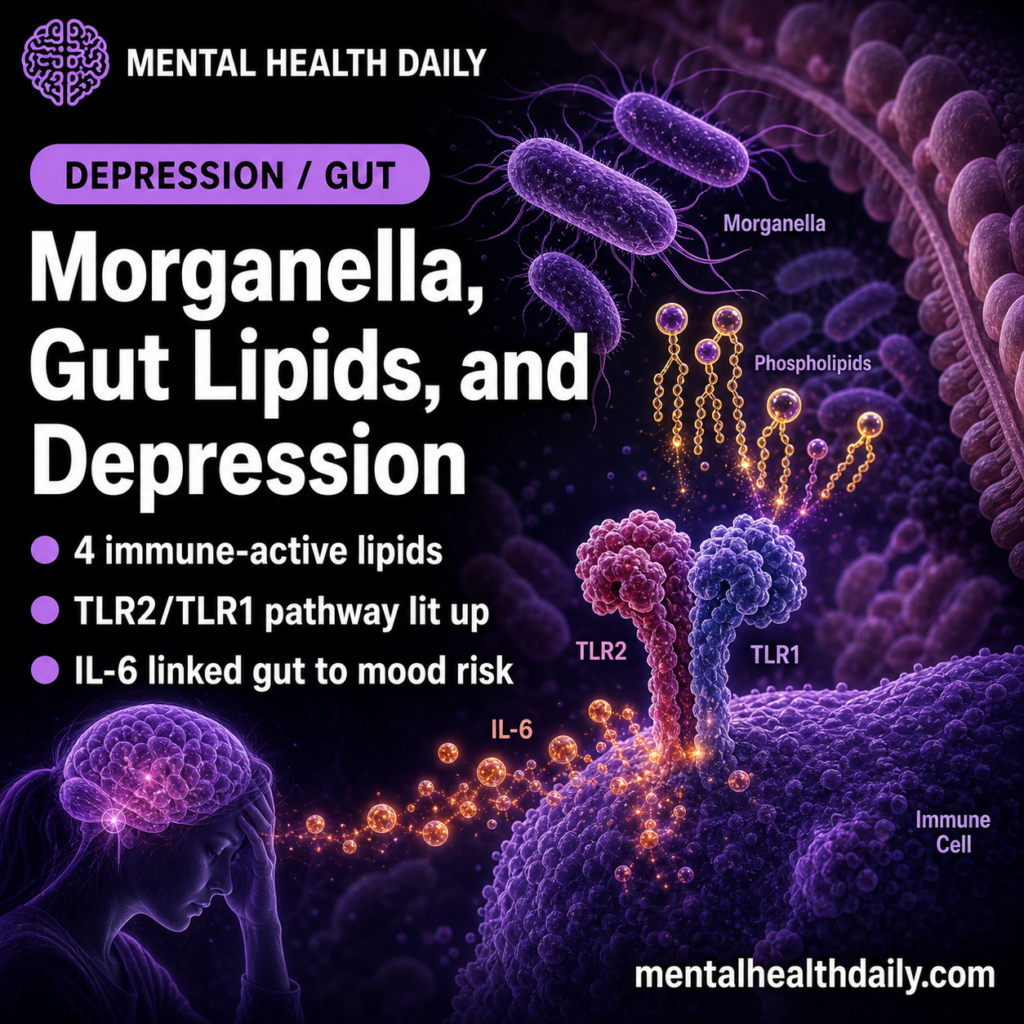
Morganella Phospholipids Triggered IL-6 in Depression Mechanism Study

MHD featured image for Morganella gut bacteria, phospholipids, and depression-related inflammation.

A 2025 Journal of the American Chemical Society study identified 4 unusual Morganella morganii phospholipids that activated TLR2/TLR1 immune receptors and induced inflammatory cytokines, especially IL-6.1 The finding does not prove that one gut bacterium causes depression, but it gives the microbiome-depression field something it often lacks: a named molecule and a receptor pathway. Research …

Read more

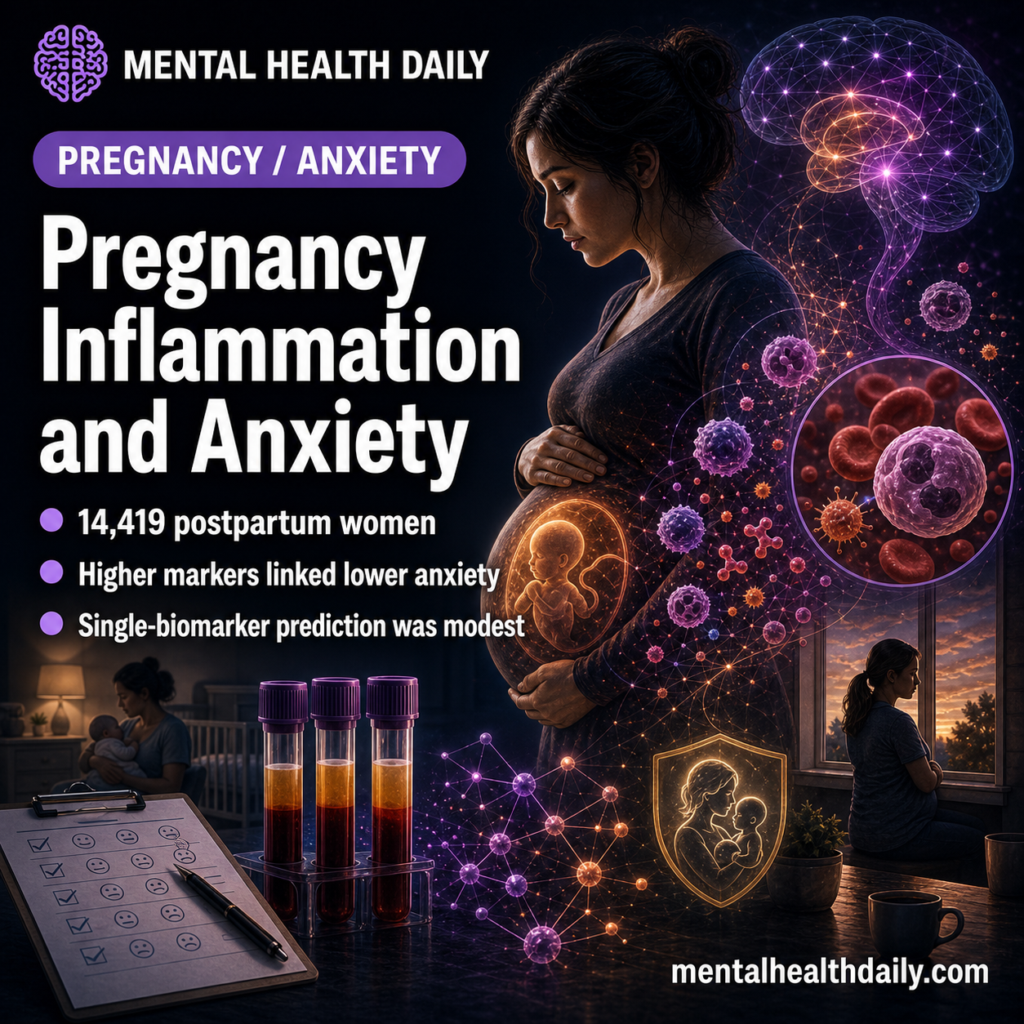
Pregnancy Inflammation Linked to 79% Lower Postpartum Anxiety Odds

Stylized illustration of a pregnant silhouette with overlay of immune cells and a postpartum anxiety questionnaire, illustrating the inverse association between pregnancy inflammation indices and postpartum anxiety risk.

The depression-inflammation literature has firmly established that elevated inflammatory markers track with mood symptoms, but a 2026 study of 14,419 postpartum women from Xie et al. found the opposite pattern for postpartum anxiety: women with higher second-trimester platelet-neutrophil products and related immune-inflammation indices had substantially lower postpartum anxiety risk.1 Research Highlights Higher second-trimester PPN was …

Read more

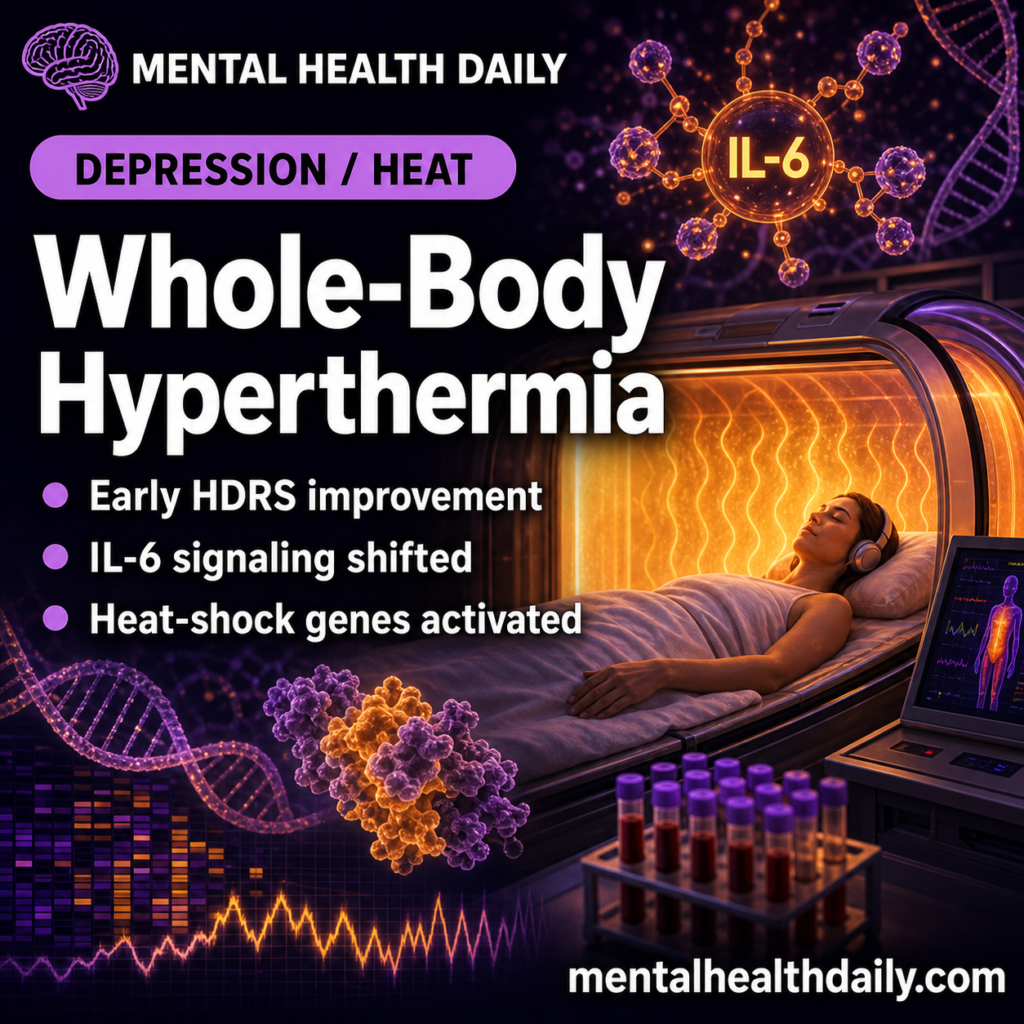
Whole-Body Hyperthermia for Depression: IL-6 Heat Genes

Whole-body hyperthermia looks less like generic relaxation and more like a timed biological stressor: in a small depression substudy, a single session was followed by early Hamilton Depression Rating Scale improvement, heat-shock gene activation, and immune-process enrichment that included interleukin 6 production. Research Highlights Depression scores improved early: in the 18-person RNA sequencing substudy, whole-body …

Read more

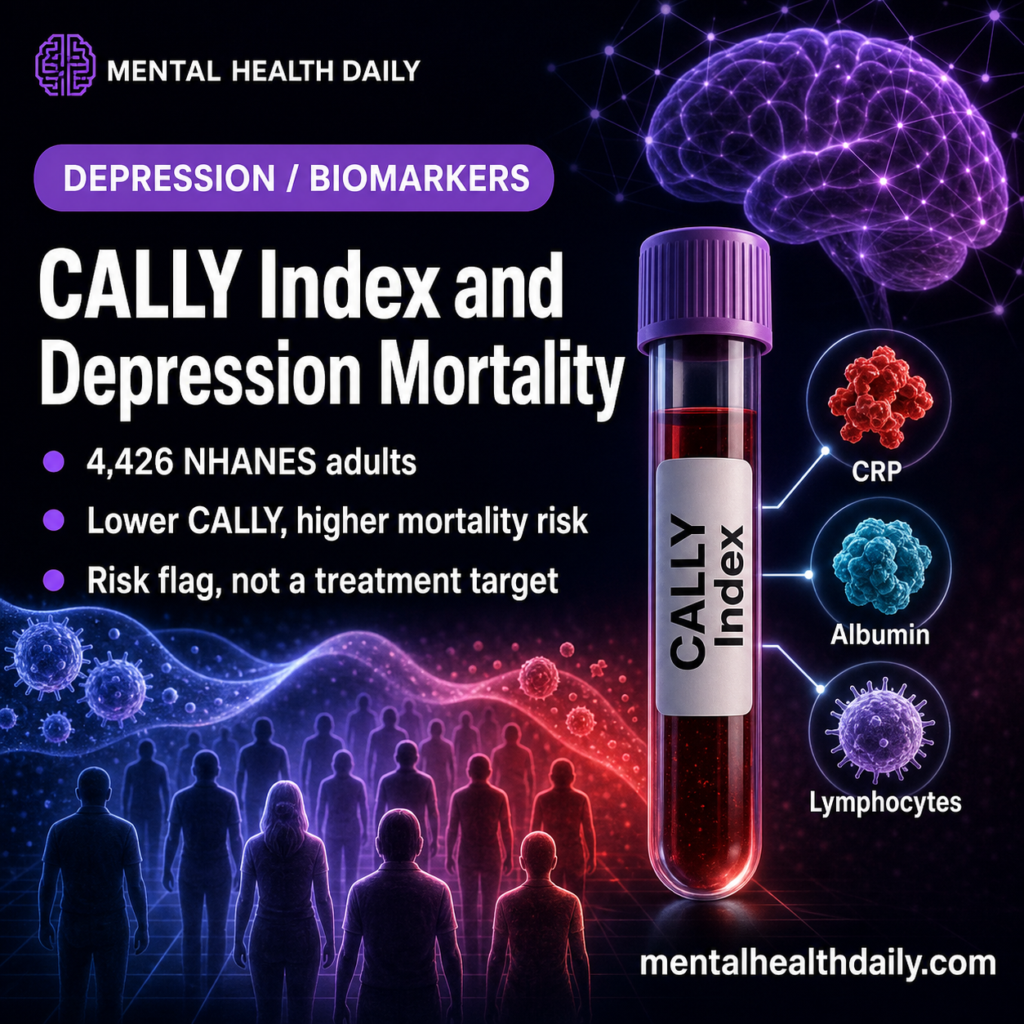
Low CALLY Index Predicted Mortality in Adults With Depression Symptoms

MHD featured image for CALLY index, depressive symptoms, and mortality risk.

A 2026 NHANES mortality analysis found that adults with PHQ-9 depressive symptoms had lower long-term all-cause mortality when their CALLY index was higher: in the fully adjusted model, each 1-unit higher log-CALLY value carried a hazard ratio of 0.59, with a 95% confidence interval from 0.51 to 0.68.1 The useful interpretation is prognostic, not therapeutic: …

Read more