fMRI
Published research on fMRI.
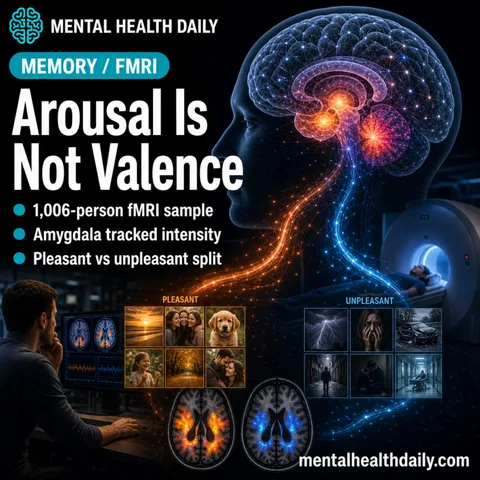
A 2026 fMRI study of 1,006 healthy young adults found that emotional pictures were remembered better than neutral pictures, but the brain signal split after arousal was modeled: amygdala and…
Read article →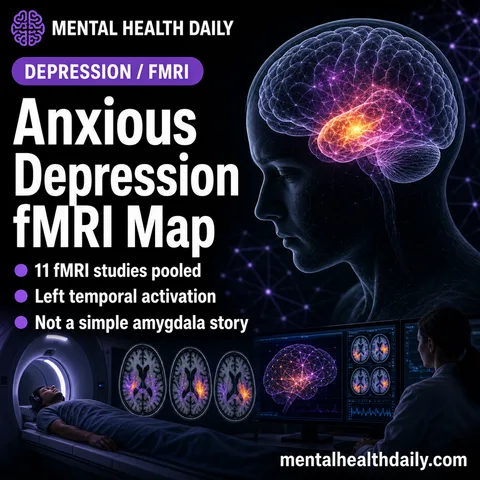
A 2026 fMRI meta-analysis of 11 studies found a narrow anxious-depression signal: 829 anxious-depression patients differed from 681 non-anxious MDD patients in left middle temporal gyrus act…
Read article →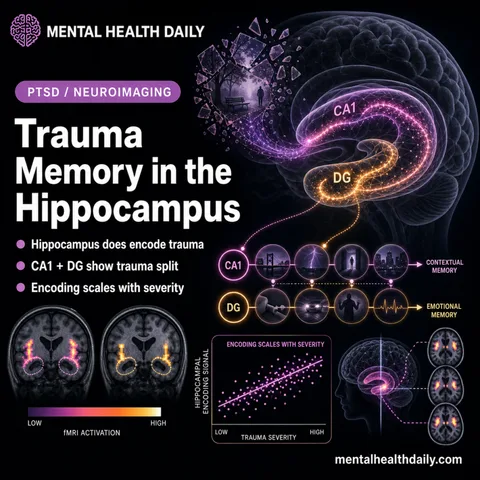
A 2026 fMRI study of 79 women with interpersonal-violence-related PTSD found that the hippocampus does encode the meaning of autobiographical trauma narratives, t(140) = 4.05, p < 0.001, eve…
Read article →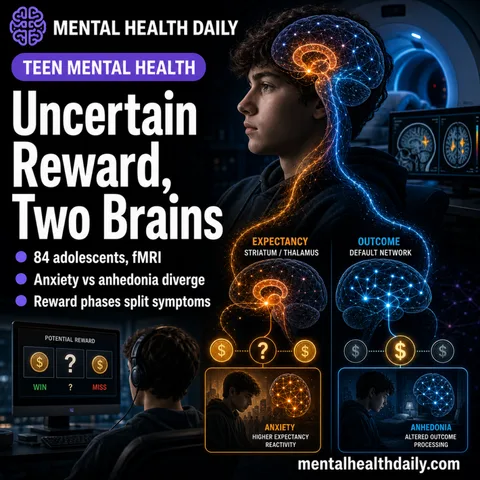
A 2026 fMRI study of 84 medication-free adolescents found that reward uncertainty had its own phase-specific brain pattern: anxiety, depression, and anhedonia separated across different task…
Read article →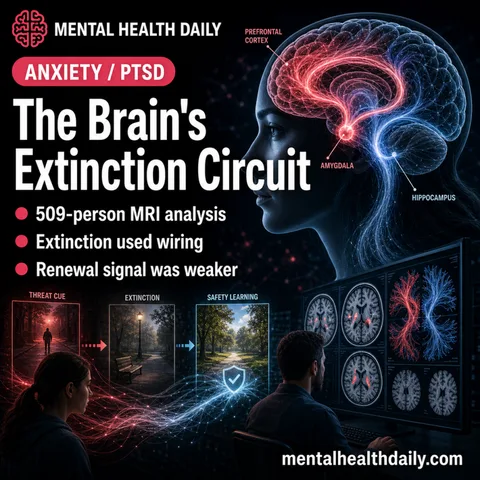
A 2026 multimodal MRI analysis of 509 healthy adults found that fear acquisition, extinction learning, and renewal were not predicted by one generic “fear circuit” score: functional connecti…
Read article →