anterior cingulate cortex
Published research on anterior cingulate cortex.

Autistic young people who also have ADHD showed weaker resting brain connections than autistic peers without ADHD, according to a 2026 brain-imaging study of 69 people.1 Most autism-linked d…
Read article →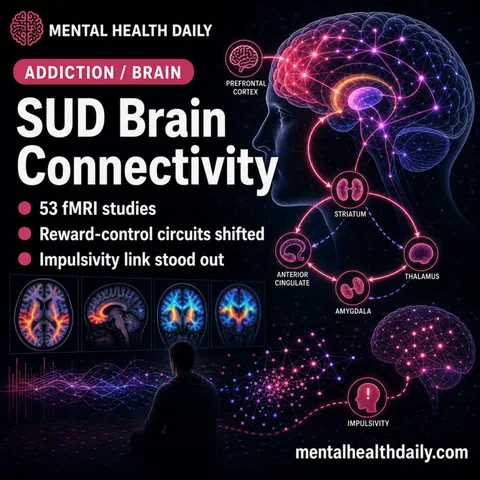
A 53-study resting-state functional magnetic resonance imaging (fMRI) meta-analysis found substance use disorder (SUD) linked to altered connectivity across prefrontal, striatal, thalamic, c…
Read article →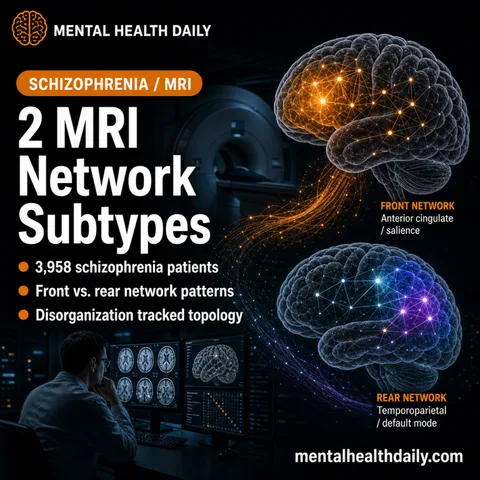
A 2026 ENIGMA structural MRI preprint involving 3,958 people diagnosed with schizophrenia and 5,489 controls found 2 cortical-alteration subtypes rather than 1 uniform brain pattern.1 The re…
Read article →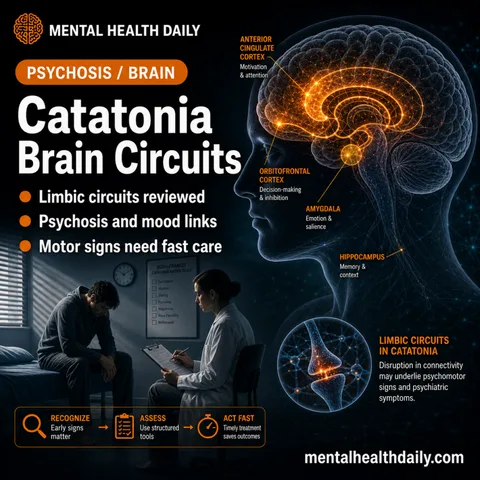
A 2026 systematic review argues that catatonia should be read as a limbic-cortical circuit syndrome, with motor shutdown tied to brain systems for threat, salience, motivation, and emotional…
Read article →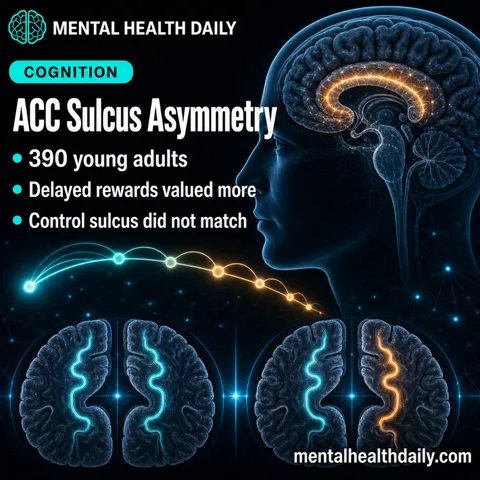
A 2026 Human Connectome Project MRI study linked asymmetric anterior cingulate cortex sulcal pattern to lower delay discounting in 390 healthy young adults: asymmetric ACC morphology predict…
Read article →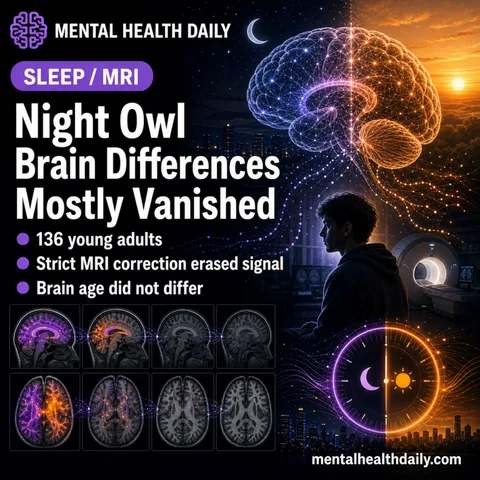
Popular coverage of chronotype neuroimaging usually claims that late chronotypes (evening types, often called “night owls”) show smaller cortical regions and faster brain aging than early ch…
Read article →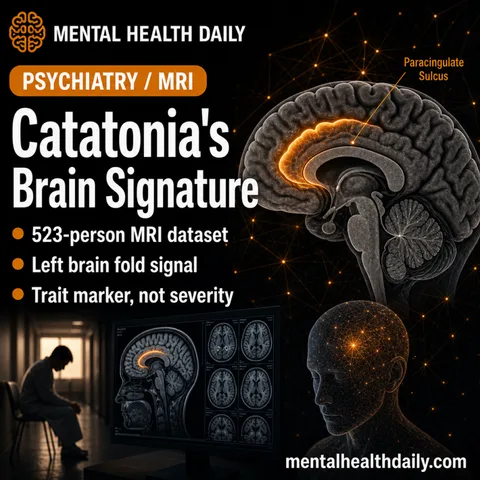
A 2026 hospital MRI study found that the left paracingulate sulcus was present in 31 of 109 catatonia patients (28%) vs. 171 of 323 psychiatric controls without catatonia (53%), a left-hemis…
Read article →