hit counter

DBS for Cerebellar Ataxia: 27 Patients, Weak Evidence
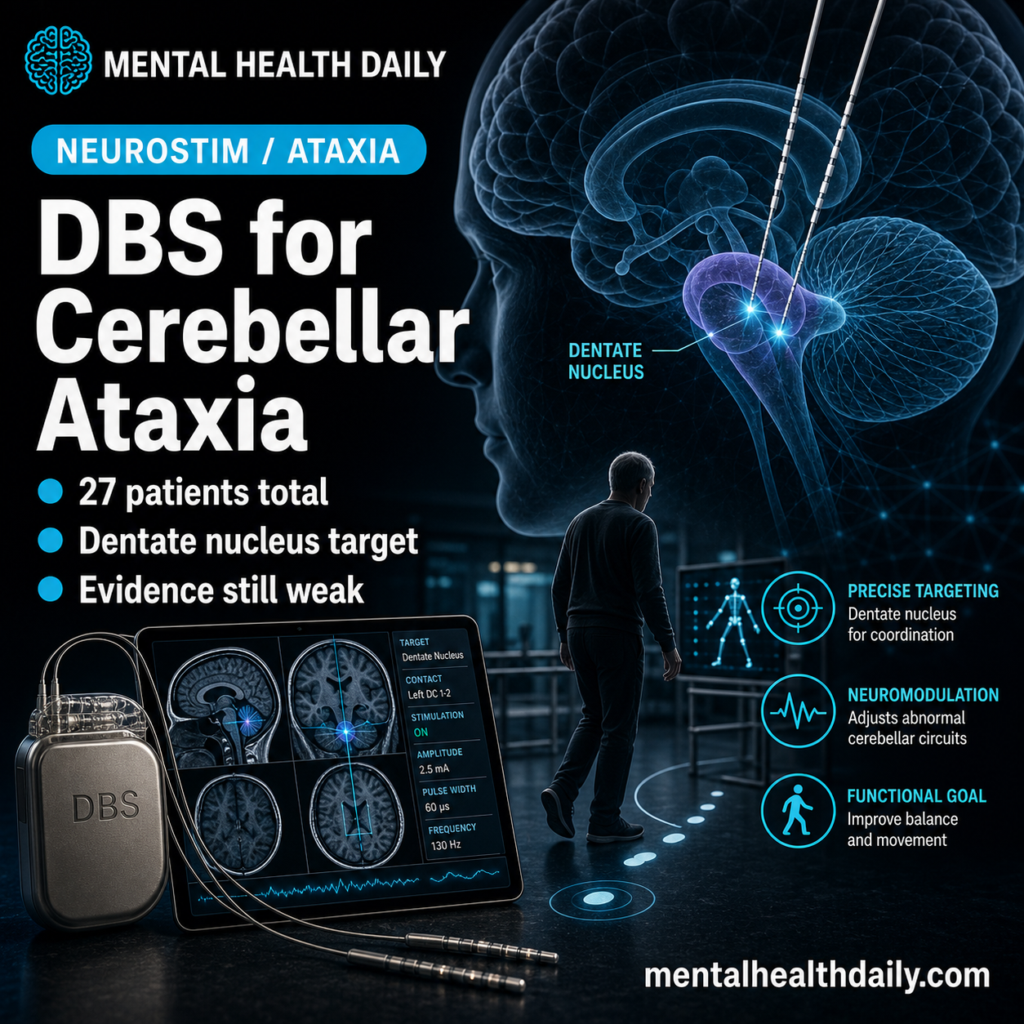
MHD featured image for deep brain stimulation, the dentate nucleus, and cerebellar ataxia.

A 2026 systematic review found 15 clinical reports of deep brain stimulation for cerebellar ataxia, covering only 27 human patients across heterogeneous targets, causes, and outcome measures. Research Highlights The human evidence base was tiny: the review found 27 patients across 15 clinical studies, including 10 case reports, 4 case series, and 1 randomized trial. …
Read more

Single-Session tDCS Fails Working-Memory Test in Schizophrenia

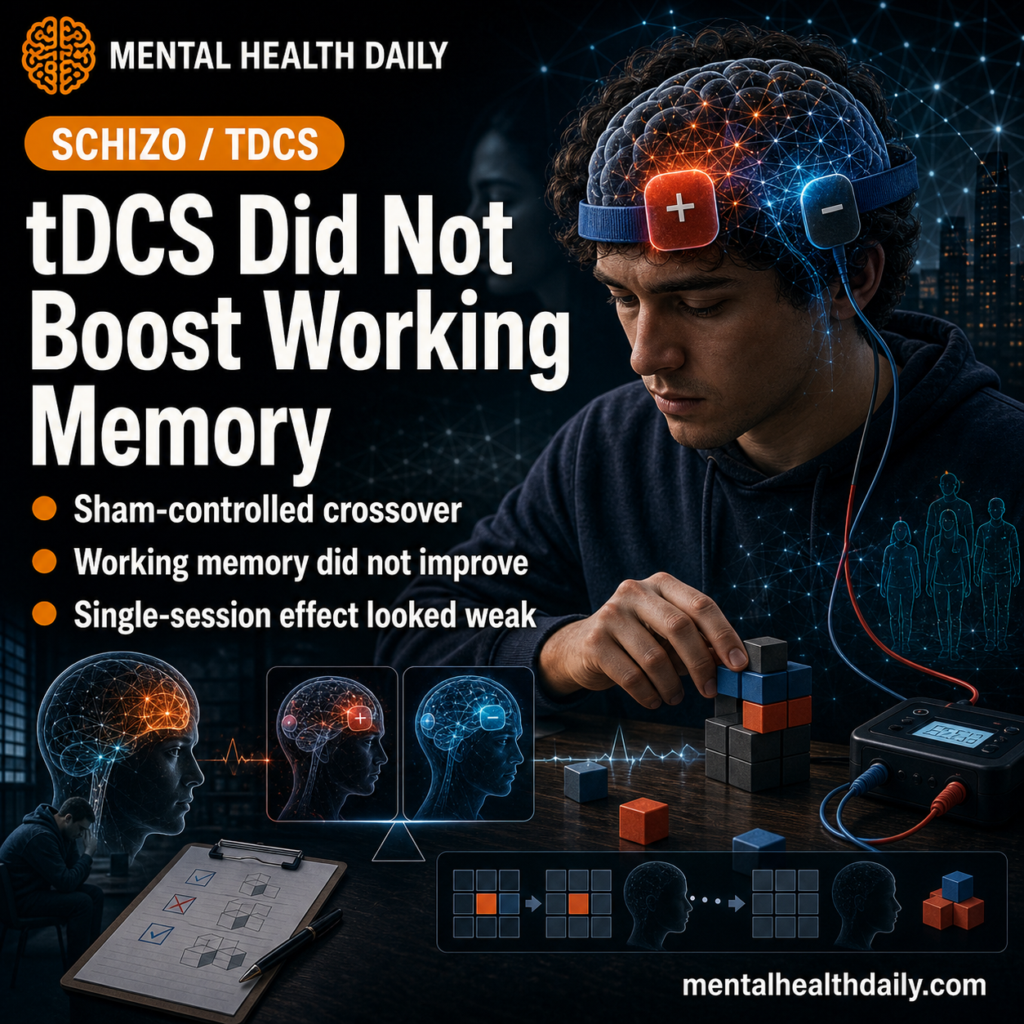
Stylized illustration of tDCS electrodes positioned over the right dorsolateral prefrontal cortex on a brain outline, with a pre-post working-memory task in the foreground, representing the null-result trial in schizophrenia.

Transcranial direct current stimulation (tDCS) has been pitched as a scalable cognitive-enhancement tool for schizophrenia, where roughly 98% of patients show working-memory deficits, but a 2026 sham-controlled crossover trial from Ke et al. delivered the standard 1.5 mA anodal protocol over the right DLPFC to 27 stable patients and found no detectable benefit over sham.1 …

Read more

Subcallosal Cingulate DBS Biomarker Predicted Depression Recovery at 72%

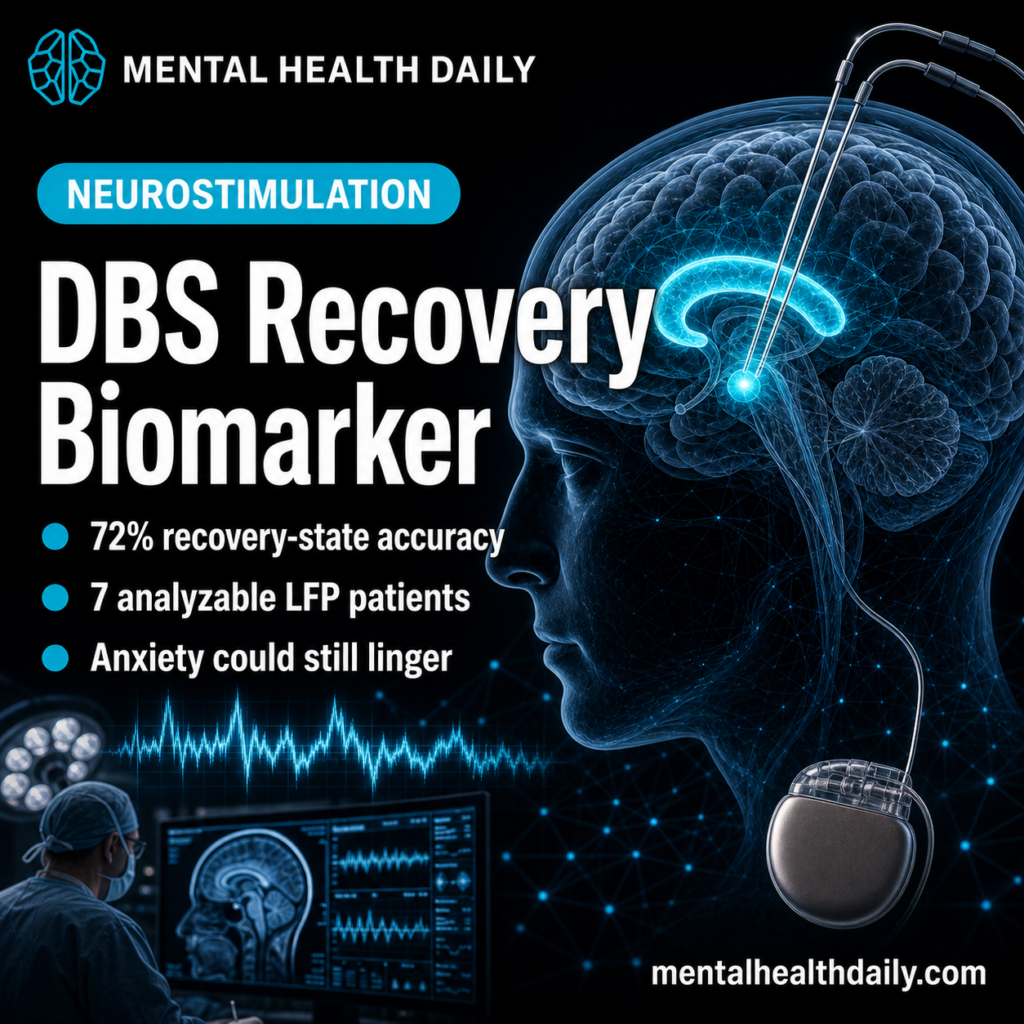
MHD featured image for subcallosal cingulate DBS depression biomarker research.

A 2026 medRxiv preprint reported that an at-home subcallosal cingulate cortex deep brain stimulation (SCC DBS) recording system could track stable recovery in severe treatment-resistant depression: in 7 analyzable patients, the local-field-potential biomarker predicted weekly recovery states with 0.72 ± 0.16 accuracy.1 The useful claim is not that brain recordings can diagnose depression broadly; it …

Read more

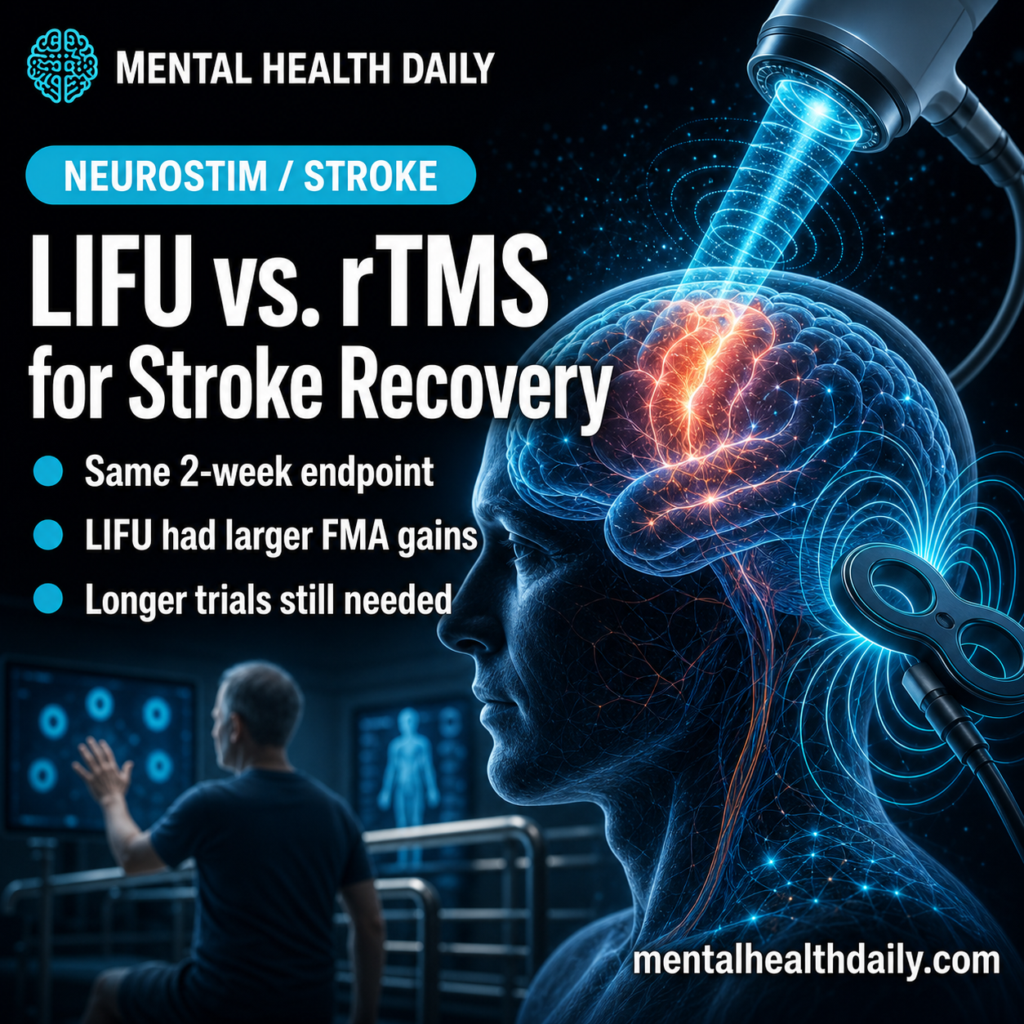
LIFU vs. rTMS for Stroke Recovery: Same 2-Week Endpoint, Larger FMA Gains

MHD featured image for LIFU vs. rTMS in post-stroke motor recovery.

A 2026 secondary randomized-trial analysis found that low-intensity focused ultrasound and repetitive transcranial magnetic stimulation reached statistically similar 2-week post-treatment motor scores after subacute stroke, even though LIFU produced larger median Fugl–Meyer Assessment gains than rTMS: 7 vs. 2 upper-limb points and 3 vs. 1 lower-limb points.1 LIFU therefore carries the recovery-dynamics signal in this …

Read more

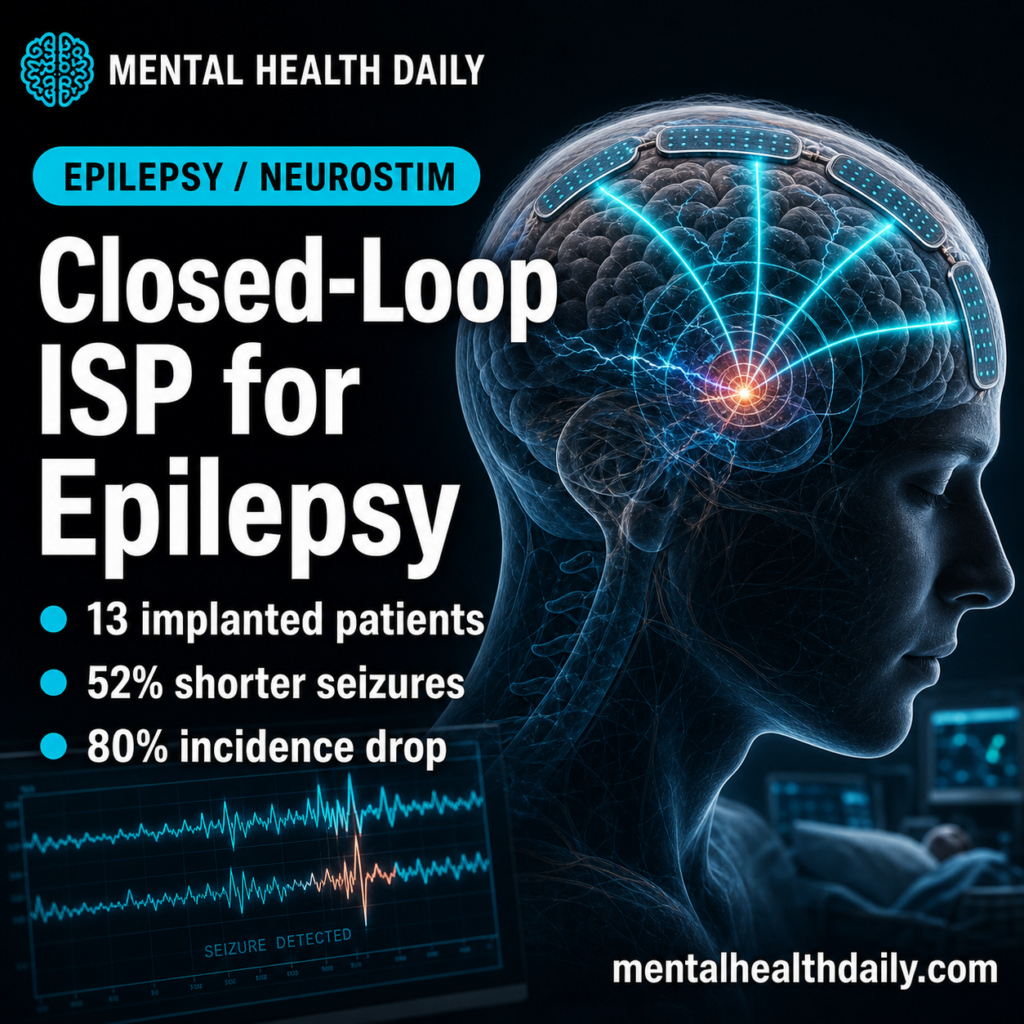
Closed-Loop Subgaleal ISP Reduced Epilepsy Seizure Incidence 80%

Editorial card showing subgaleal electrode strips, closed-loop seizure detection, and focused neurostimulation for therapy-resistant epilepsy.

A 2026 first-in-human medRxiv preprint reported that closed-loop subgaleal intersectional short-pulse stimulation shortened stimulated seizures by 52% on average and reduced seizure incidence by 80.9% after 48 hours in 5 high-frequency therapy-resistant epilepsy patients. The signal is promising because it combines responsive seizure detection with electrode strips placed under the scalp rather than electrodes implanted …

Read more

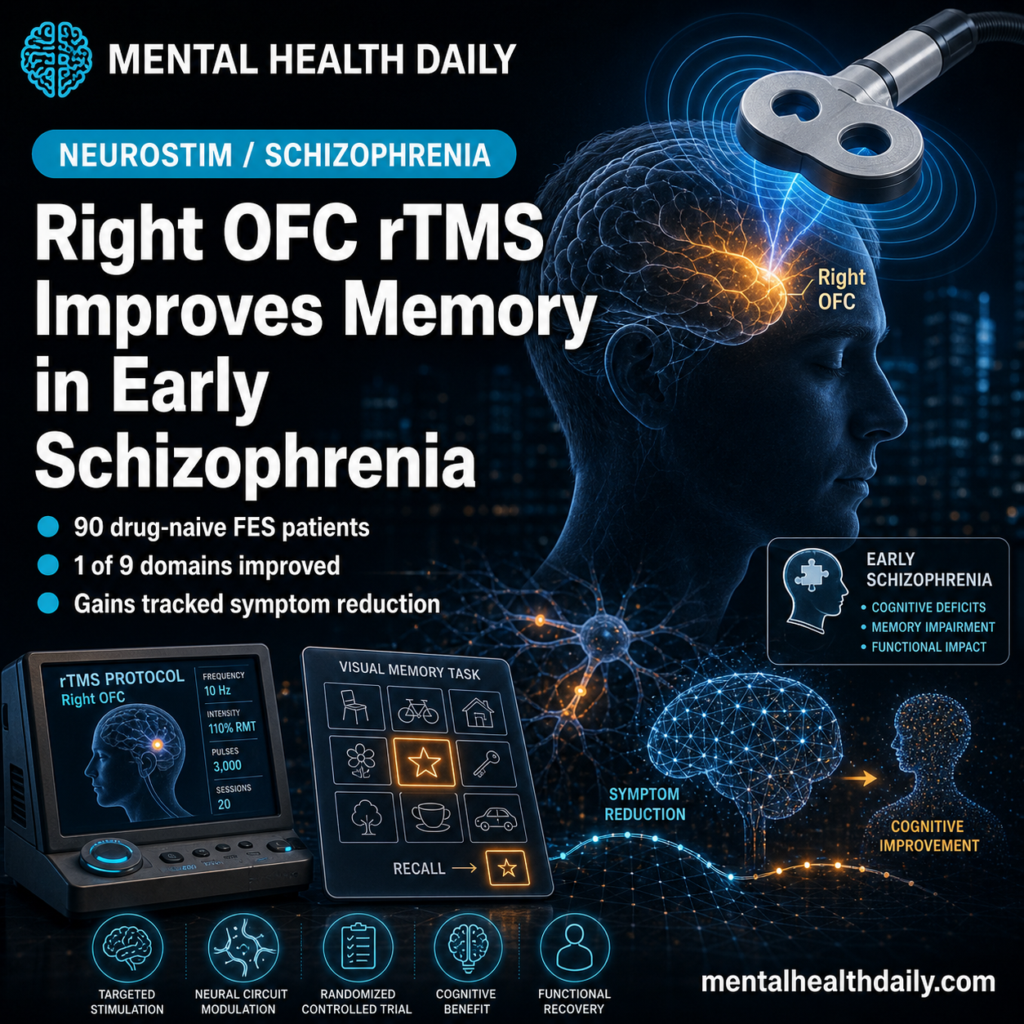
Right OFC rTMS Improves Memory in Early Schizophrenia

Editorial card showing a coronal brain section highlighting the right orbitofrontal cortex with a TMS coil, illustrating the first RCT of OFC stimulation in first-episode schizophrenia.

Cognitive impairment in first-episode schizophrenia (FES) is the symptom that does the most work blocking employment, relationships, and independent living — and the symptom current antipsychotics barely move. A 2026 RCT by Hu et al. in Psychological Medicine tested whether 20 sessions of low-frequency rTMS targeting the right orbitofrontal cortex (OFC) could improve cognition where …

Read more