hit counter

1 mg Guanfacine for Self-Harm Thoughts in ADHD-PTSD-BPD Case
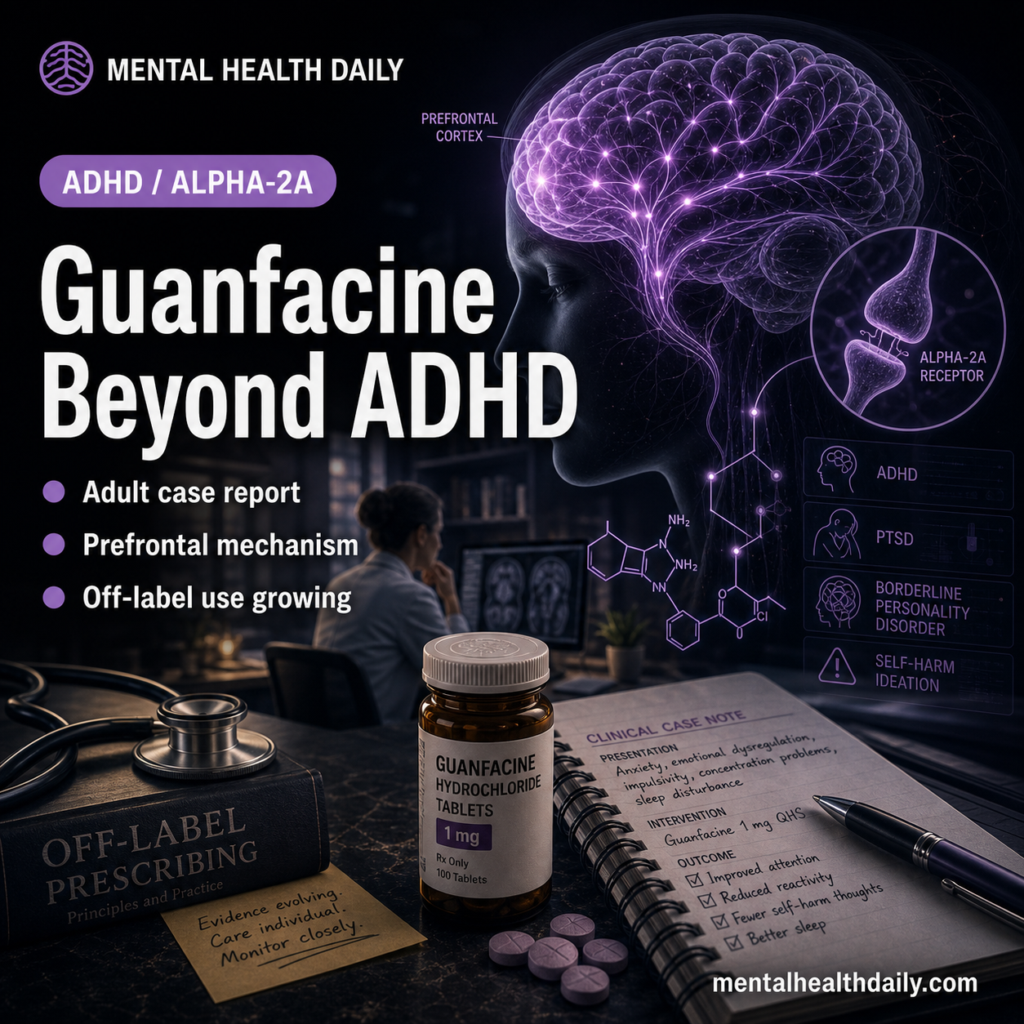
MHD featured image for 1 mg guanfacine and self-harm thoughts in complex ADHD, PTSD, BPD, and ASD comorbidity.

A 2026 case report linked 1 mg nightly guanfacine modified-release to first-ever cessation of intrusive deliberate self-harm thoughts in a 16-year-old with attention-deficit/hyperactivity disorder (ADHD), autism spectrum disorder (ASD) traits, borderline personality disorder (BPD) traits, and post-traumatic stress disorder (PTSD). The same case became more interesting after the patient stopped taking guanfacine and the self-harm …

Read more

Methylphenidate Reduced Dishonesty and Cheating in 151 Adults; Atomoxetine Had No Effect

Editorial card showing methylphenidate molecular structure beside a die-rolling task, illustrating a counterintuitive randomized-trial result.

A 2026 double-blind randomized controlled trial by Kappes et al. in Psychopharmacology found something the smart-drug users likely wouldn’t have predicted: a single 30 mg dose of methylphenidate reduced dishonest misreporting on a die-rolling task from ~22% of trials in the placebo arm to ~6% (in the methylphenidate arm).1 Atomoxetine, a noradrenergic comparator, had no …

Read more

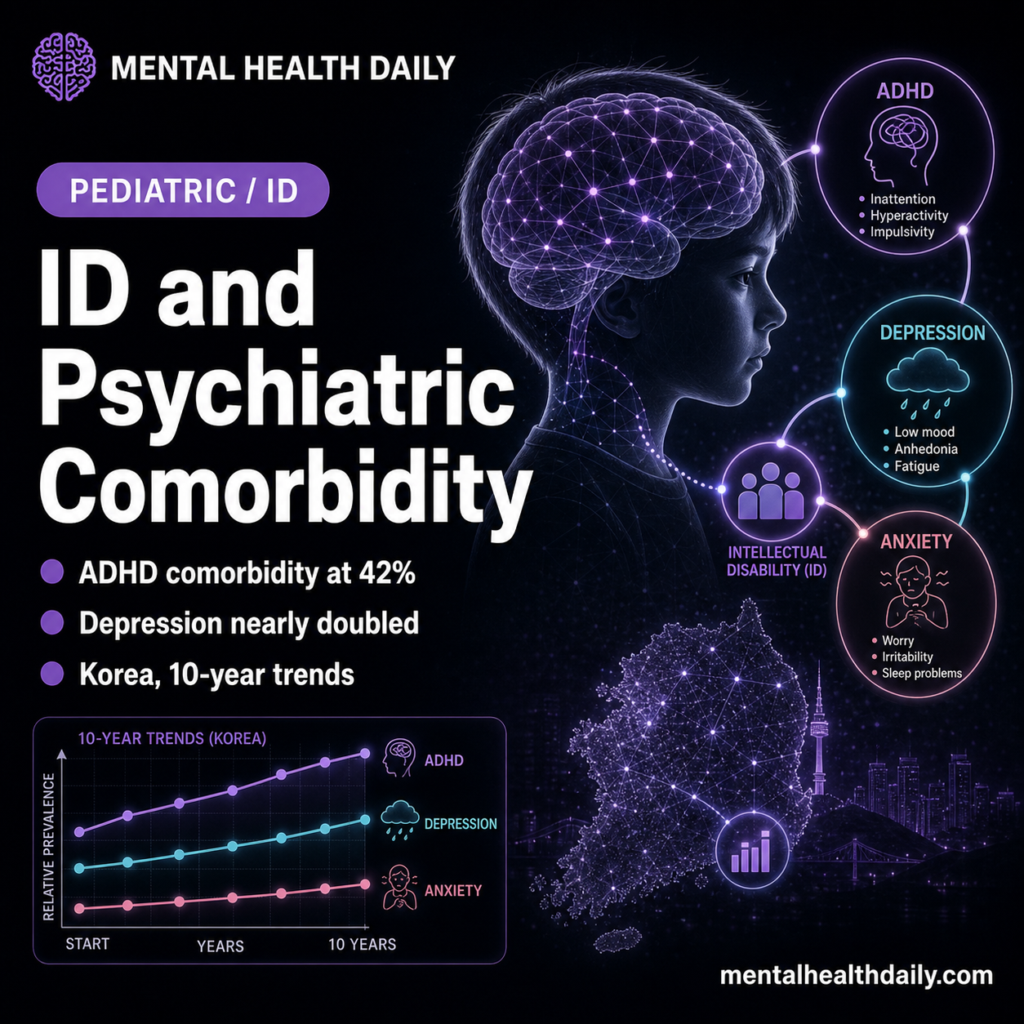
Intellectual Disability in Korean Children and Psychiatric Disorders (ADHD 42%, Depression 19%)

Photoreal illustration of a child interacting with cognitive and developmental motifs, representing intellectual disability and psychiatric comorbidity.

Children with intellectual disability are 3–4x more likely to have a comorbid psychiatric disorder than peers without ID. A 2026 nationwide Korean study by Joo and colleagues tracks how those rates changed across a decade.1 Research Highlights Korean children and adolescents (ages 2–18) with intellectual disability had ADHD comorbidity rise from 30.2% in 2012 to …

Read more

Abnormal Glutamate Biomarkers in ADHD: CDK5, MAP2, GKAP, PSD95 (2023 Study)

Attention-Deficit Hyperactivity Disorder (ADHD) is a complex neurodevelopmental condition that has puzzled researchers and clinicians for decades. Recent studies have begun to unravel the intricate relationship between ADHD and the glutamatergic system, a major neurotransmitter pathway in the brain. A newer study evaluated the roles of cyclin-dependent kinase 5 (CDK5), microtubule-associated protein-2 (MAP2), guanylate kinase-associated …

Read more

ADHD Genetics Linked to Autism & Schizophrenia But Not Other Psychiatric Conditions (2024 Study)

Attention Deficit Hyperactivity Disorder (ADHD) is a complex neurodevelopmental condition that significantly impacts individuals’ lives. Recent advancements in genetic research, particularly Mendelian Randomization (MR) studies, have begun to unravel the intricate genetic associations between ADHD and other psychiatric disorders, offering new insights into their comorbidities. By leveraging data from genome-wide association studies (GWAS), this research …

Read more

Genetics & Early Language Development: Vocabulary, Literacy, Cognition, ADHD (2023 Study)

Recent advancements in genetics have illuminated the complex interplay between genetic factors and early vocabulary development in children. A comprehensive meta-genome-wide association study (meta-GWAS) delves into how genetic variations influence the acquisition of vocabulary in infancy and toddlerhood. This research not only enhances our understanding of language development but also sheds light on its genetic …

Read more

Ketogenic Diet for ADHD Treatment via Gut Microbiome Modulation (2023 Study)

Attention deficit hyperactivity disorder (ADHD) is a behavioral disorder commonly found in children, characterized by symptoms such as inattention, hyperactivity, and impulsivity. Recent research has revealed a connection between gut microbiota and neuropsychiatric disorders like ADHD. A new study suggests that the ketogenic diet could provide therapeutic benefit in ADHD by modulating gut bacteria and …

Read more