hit counter

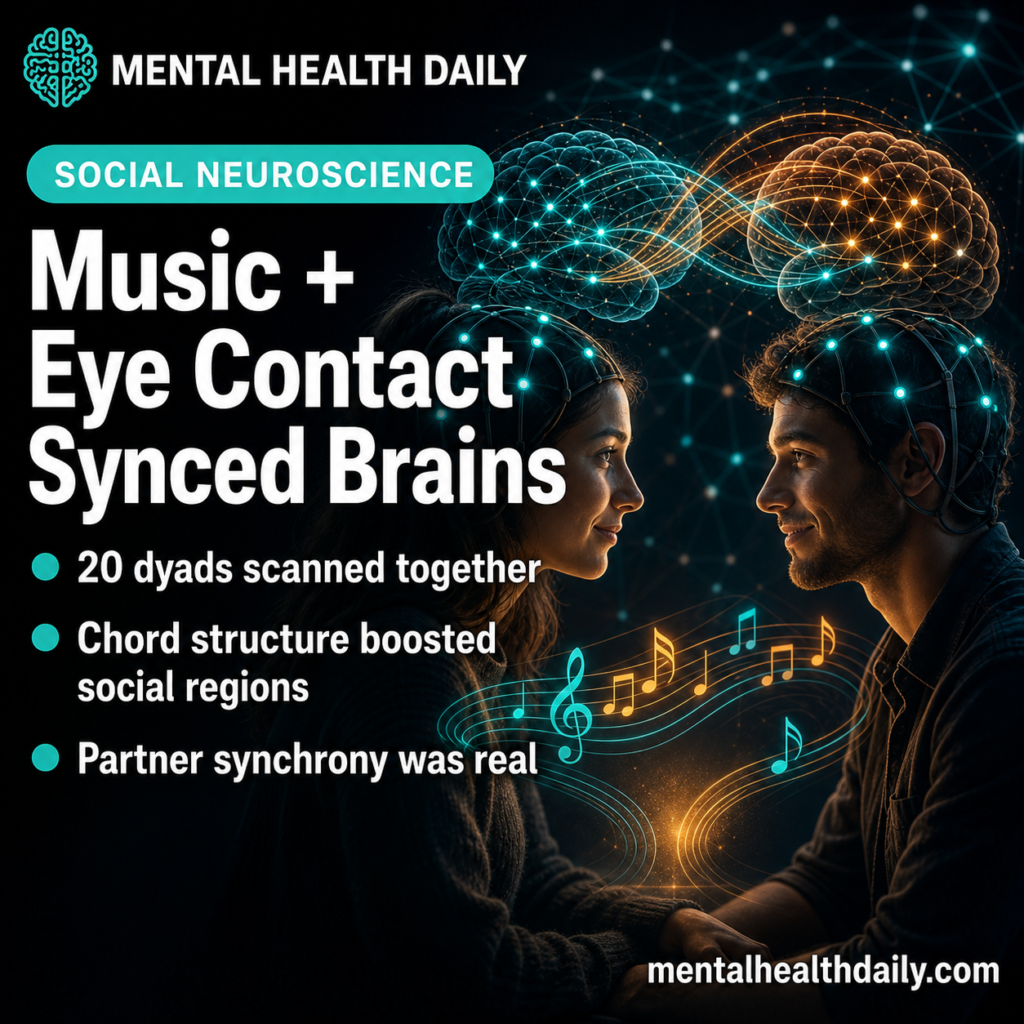
Chord Progressions and Eye Contact Boost Brain Synchrony in 20 Dyads

Editorial card showing two people listening to music while neural synchrony lines connect across a dark social-neuroscience scene.

A 2026 fNIRS hyperscanning study involving 20 dyads found that structured chord progressions paired with live eye contact increased activity in social-brain regions and produced partner-specific neural synchrony more than scrambled-note control music.1 The result supports a plausible mechanism for music-supported connection, but it does not prove that chord progressions treat loneliness or replace clinical …

Read more

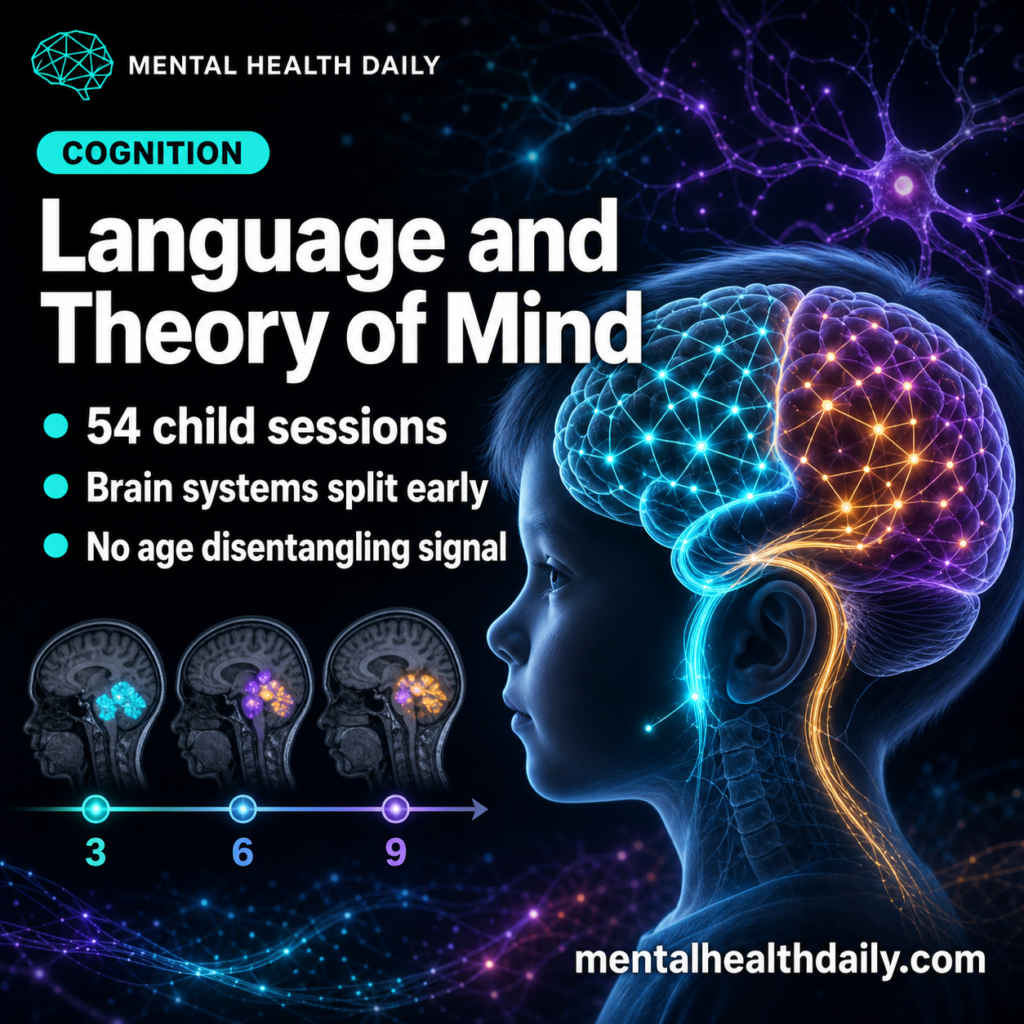
Language and Theory of Mind Separate by Age 3 in Child Brain Scans

MHD featured image for language and theory of mind brain development in children.

A 2026 fMRI study found language and theory-of-mind activation already separated in 54 child sessions from ages 3-9, with strict child overlap near zero in the left superior temporal lobe (Dice 0.015) and no evidence that the 2 systems disentangled with age.1 The result pushes against a simple developmental story in which language grows out …

Read more

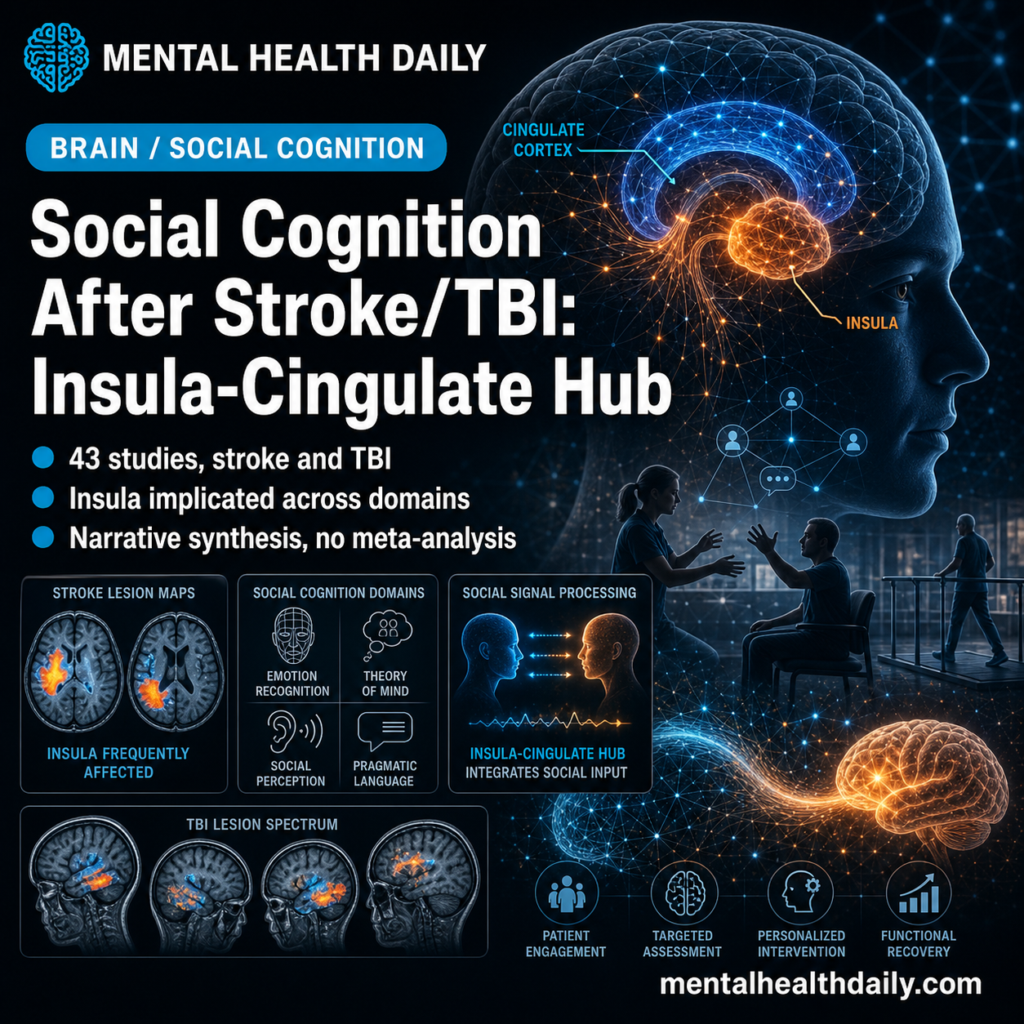
Social Cognition After Stroke/TBI: Insula-Cingulate Hub

Editorial card showing a stylized brain with the insula, cingulate, middle frontal gyrus, and corpus callosum highlighted, representing the convergent neural substrates of social cognition after acquired brain injury.

A 2026 PRISMA systematic review by Cavallo et al. in Cognitive, Affective, & Behavioral Neuroscience aggregates 43 neuroimaging studies of social cognition in adults with stroke or traumatic brain injury and finds the same handful of regions implicated again and again: the insula, cingulate cortex, middle frontal gyrus, and corpus callosum.1 Research Highlights Stroke/TBI social-cognition …

Read more