hit counter

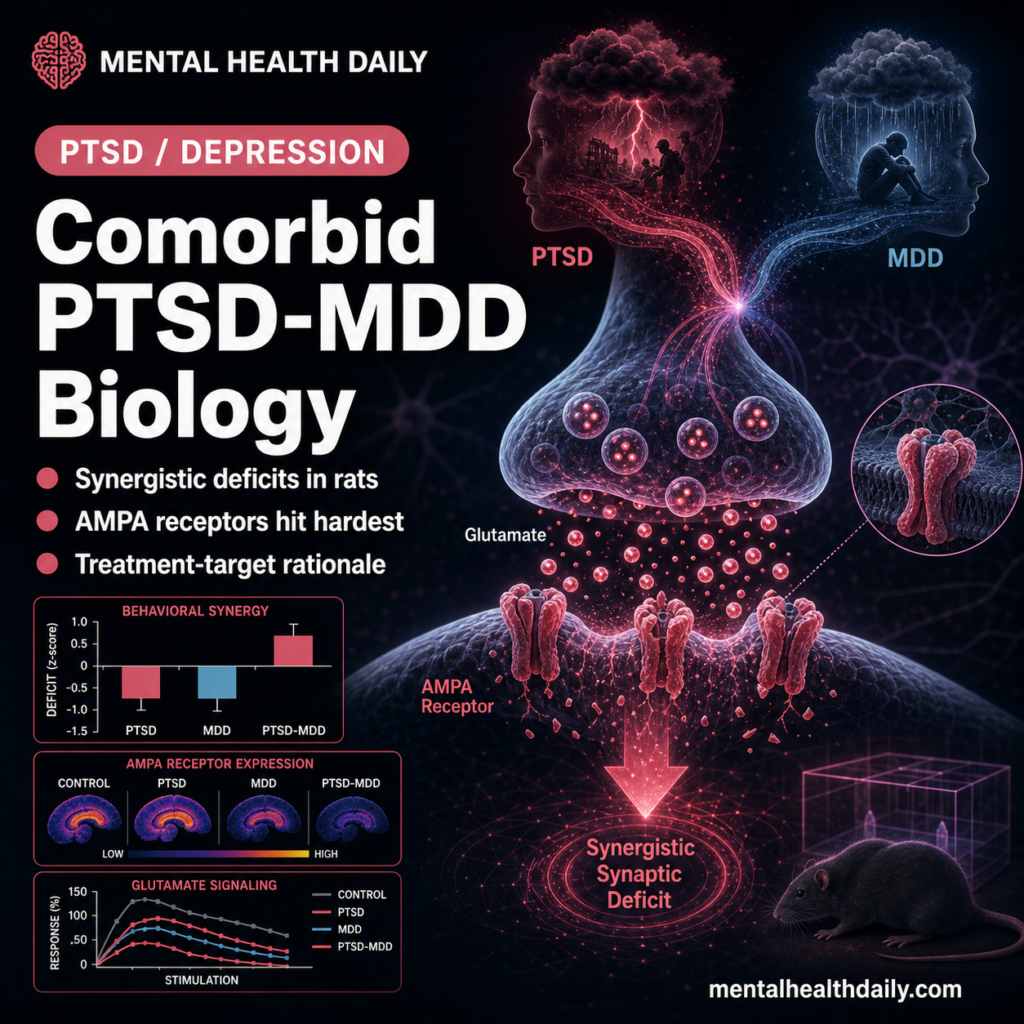
PTSD With Depression Hits AMPA Receptors Harder in Rat Models

Photoreal illustration of synaptic AMPA receptors and stressed neuron, conveying glutamate-system dysregulation in PTSD-MDD comorbidity.

PTSD and major depressive disorder co-occur in roughly half of patients with either diagnosis, and the comorbid presentation is more severe than either alone. The mechanistic question has been whether comorbidity reflects synergistic biology or simple symptom additivity. A 2026 rat-model study by Jiang and colleagues tests this directly, finding that PTSD-MDD comorbid rats show …

Read more

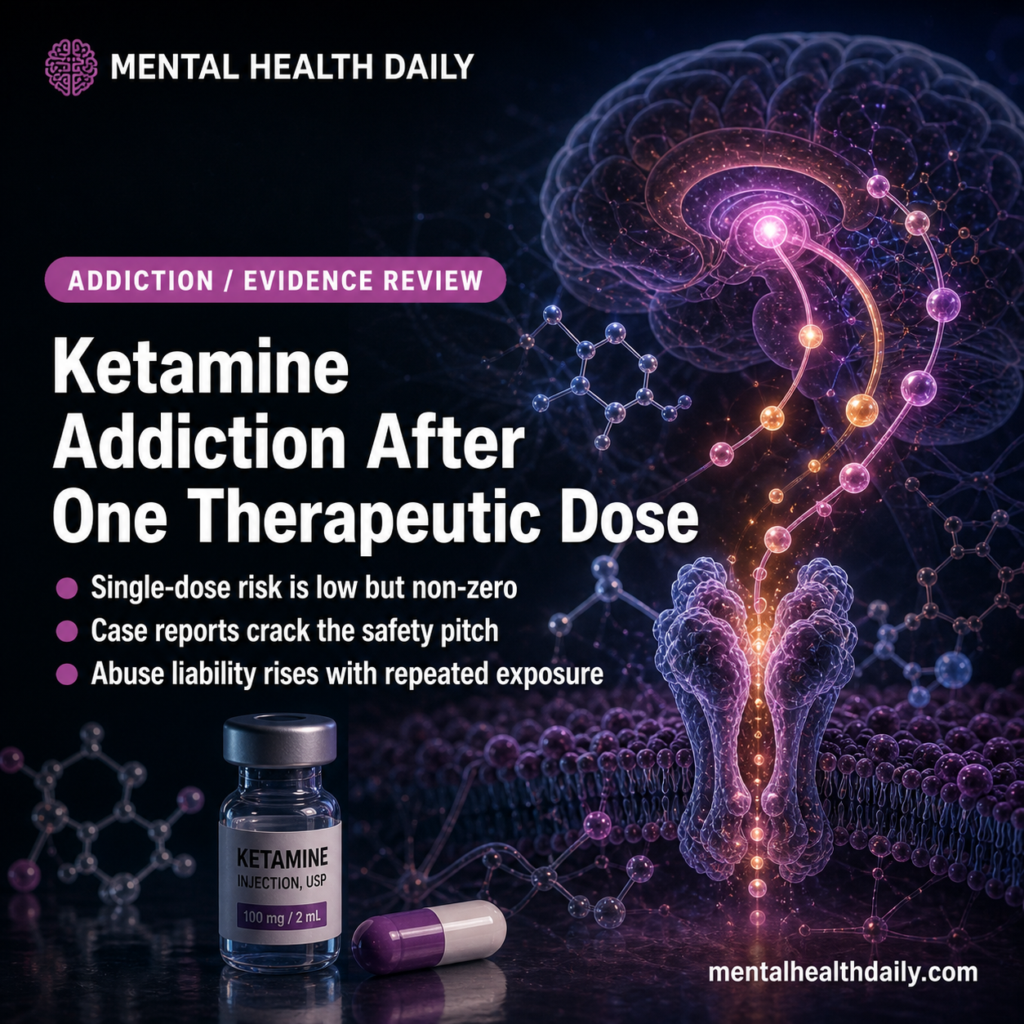
Ketamine Addiction After One Therapeutic Dose: How Rare Is It?

Stylized illustration evoking the tension between ketamine's clinical promise for depression and its abuse liability, framed in muted rose and amber tones for the addiction topic.

Ketamine and its S-enantiomer esketamine (sold as Spravato) are now established treatments for treatment-resistant depression and acute suicidality. The standard safety pitch from sponsors and clinics: at single sub-anesthetic doses, in supervised settings, addiction risk is minimal. A new case report in BJPsych Open documents a patient for whom that pitch failed catastrophically — and …

Read more

Are Mystical Experiences Required for the Antidepressant Effects of Ketamine & Psychedelics?

The intersection of mental health treatment and pharmacology is witnessing a remarkable shift with the growing interest in ketamine and classic psychedelics like psilocybin for their rapid and sustained antidepressant effects. Unlike traditional antidepressants, these substances offer hope for those with treatment-resistant depression by potentially transforming treatment paradigms. However, it remains somewhat unclear as to …

Read more

Ketamine Increases Amygdala Volume in Treatment-Resistant Depression (TRD) (2024 MRI Study)

Depression is a complex mental health condition that significantly affects an individual’s emotional and physical well-being. Recent advances in neuroimaging have provided deeper insights into how major depressive disorder (MDD) alters brain structures, particularly the hippocampus and amygdala, and how treatments like ketamine can potentially reverse these changes. A new study using 3T and 7T …

Read more

Psychedelics vs. Epilepsy & Seizures: Effective Treatment or Exacerbation? (2023 Review)

Psychedelic compounds, long associated with the fringes of medicine and spirituality, are now at the forefront of a radical shift in neurology and psychiatry. Decades of clinical trials have begun to unravel the therapeutic potentials of these substances, revealing promising outcomes in the treatment of various psychiatric disorders. However, a notable gap in this burgeoning …

Read more

Esketamine Nasal Spray Effective Last Resort for Treatment-Resistant Depression (TRD)? (2023 Study)

Treatment-resistant depression (TRD) represents a significant challenge in mental health care, often leaving patients and clinicians in a difficult position after traditional treatments fail. Recent studies, including a prospective, observational study at a leading medical center, have brought new hope in the form of esketamine, a novel antidepressant. Highlights: Esketamine’s Mechanism: Esketamine, the S-enantiomer of …

Read more

Lateral Habenula & Depression: The Anti-Reward Center (Mechanisms & Antidepressant Treatments)

Depression is a complex and multifaceted disorder affecting millions worldwide. Emerging evidence suggests the lateral habenula, a small brain region, plays a crucial role in depression’s development and persistence. By influencing neurotransmitter systems and interacting with stress pathways, the lateral habenula’s dysfunction may lead to the classic symptoms of depression. Highlights: The lateral habenula is …

Read more