hit counter

Generalized Anxiety Disorder Affects 1 in 5 Psychiatric Outpatients in Japan
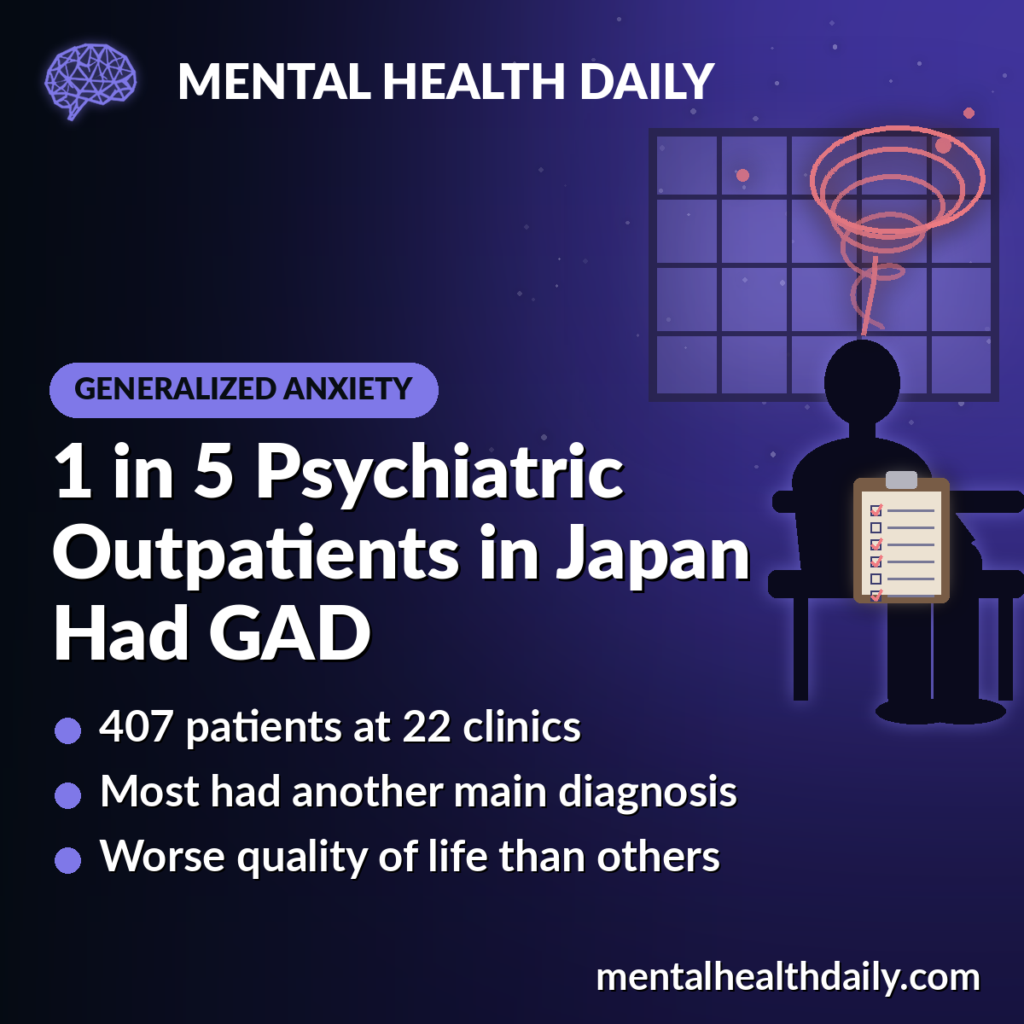
MHD card showing a patient silhouette in a dim clinic waiting room holding a clipboard questionnaire, with a red worry spiral above the head, illustrating a Japanese study in which 1 in 5 psychiatric outpatients had generalized anxiety disorder.

About 1 in 5 adults receiving outpatient psychiatric care for mood or anxiety-related conditions in Japan met full diagnostic criteria for generalized anxiety disorder, a 2026 study at 22 clinics found. Most of them had a different main diagnosis on file, usually depression.1 Research Highlights 20.4% had GAD: 83 of 407 outpatients met DSM-5 criteria …
Read more

Antidepressants Did Not Shift Facial Emotion Recognition in Depression

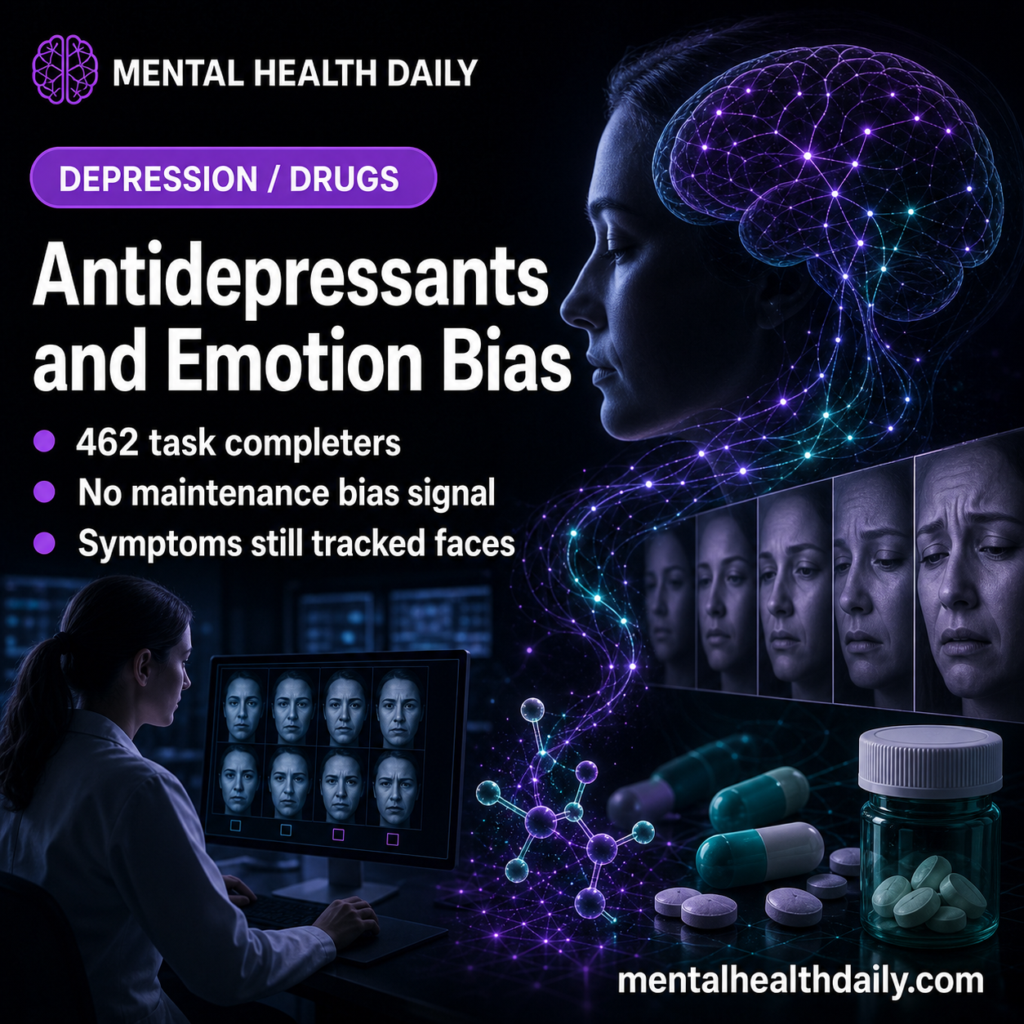
MHD featured image for antidepressant maintenance and facial emotion recognition in recurrent depression.

A 2026 ANTLER mechanistic analysis found no evidence that maintaining antidepressants preserved a happier facial-emotion recognition pattern compared with placebo substitution at 12 weeks (adjusted mean difference 0.23, 95% CI −0.5 to 1.0, p = 0.5) or 52 weeks (0.29, 95% CI −0.5 to 1.2, p = 0.5). Research Highlights No 12-week maintenance advantage: discontinuation …

Read more

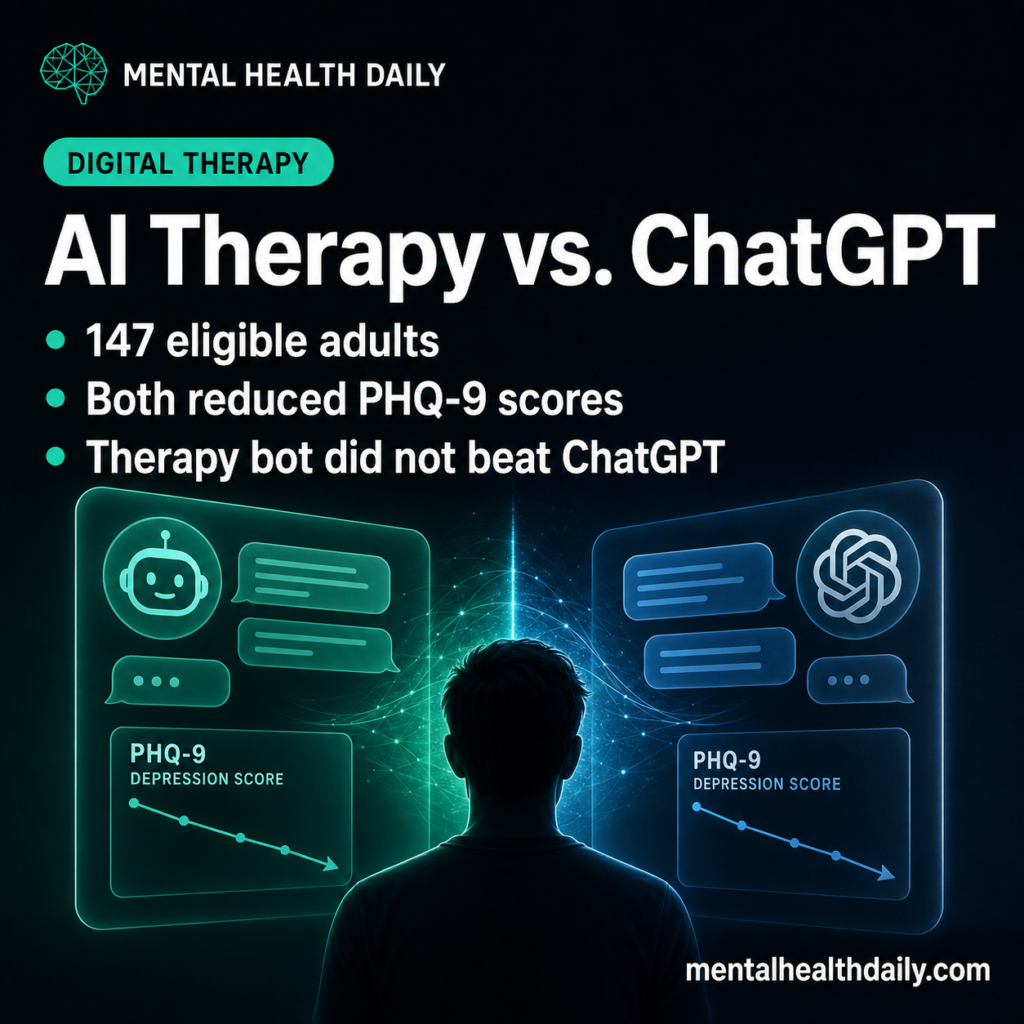
AI Therapy Chatbot and ChatGPT Both Reduced PHQ-9 Depression Scores

MHD featured image for AI therapy chatbot versus ChatGPT depression trial.

A 147-person feasibility randomized trial found that both a structured AI therapy chatbot and general ChatGPT reduced PHQ-9 depression scores compared with assessment-only control, with effect sizes of d = −0.47 and d = −0.44.1 The purpose-built therapy bot did not significantly outperform ChatGPT on depression, anxiety, impairment, or wellbeing. Research Highlights Both chatbots reduced …

Read more

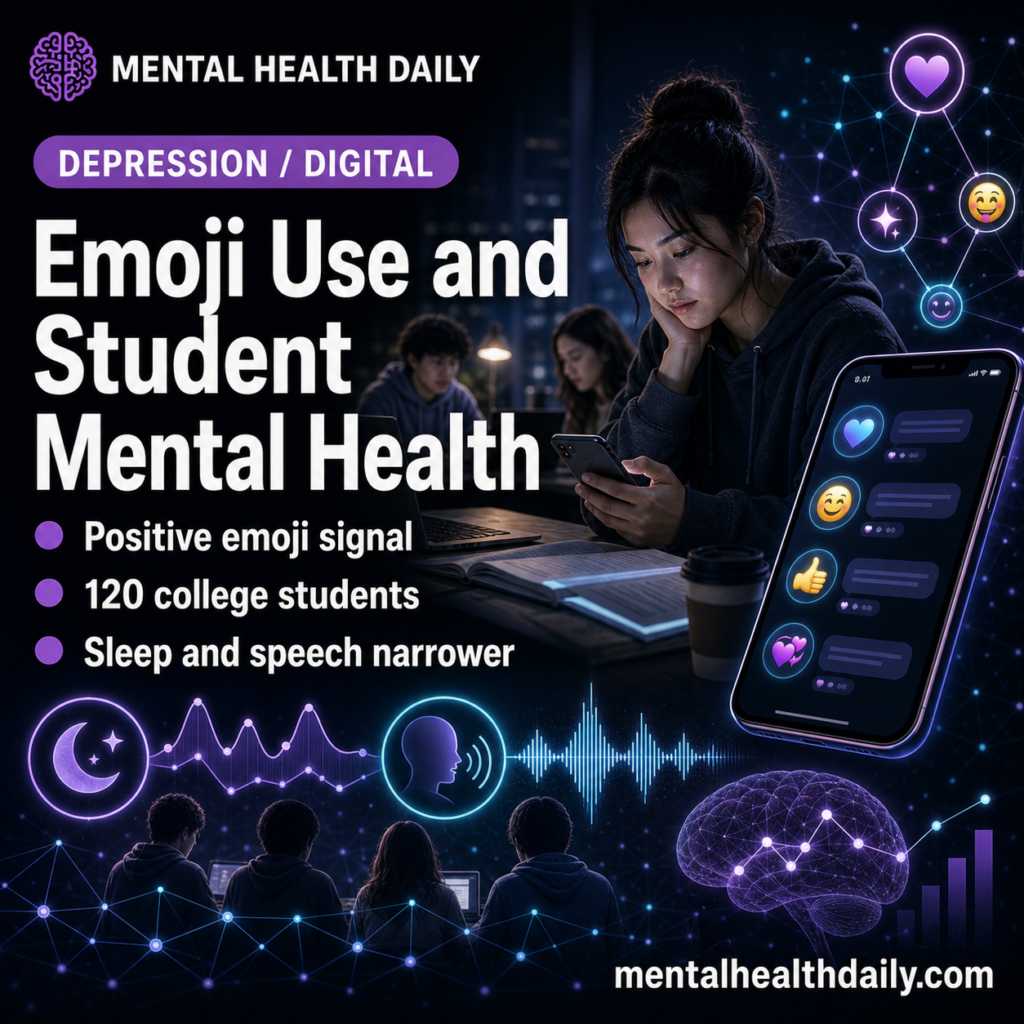
Positive Emoji Use Tracked Lower Depression in 120 Students

Low-burden digital phenotyping is appealing because college students already leave daily traces in phones, messages, sleep logs, and voice samples. In Henry et al.’s 120-student study, positive emoji use was the clearest signal compared with GPS and complex voice biomarkers: higher positive emoji use tracked lower depression and anxiety, while speech rate and sleep added …

Read more

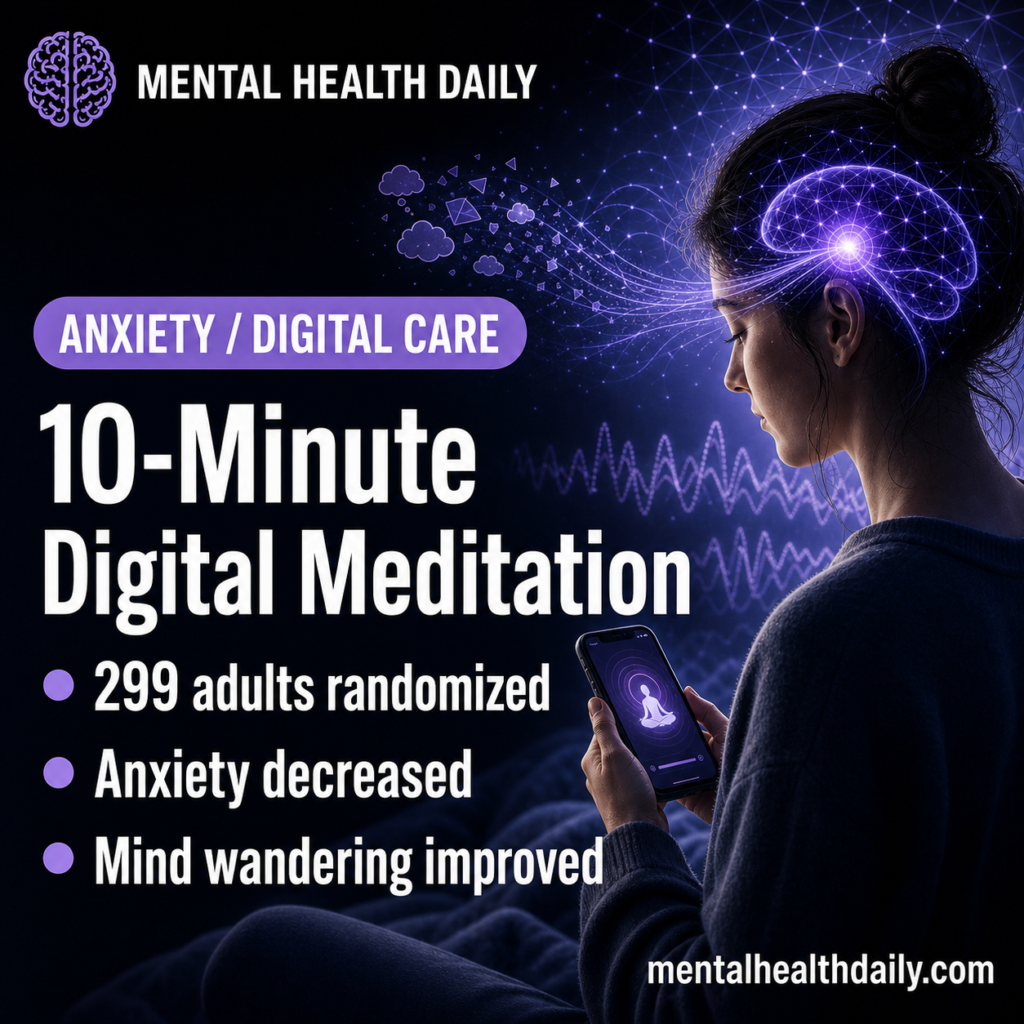
10-Minute Digital Meditation Reduced Anxiety, Mind Wandering

A 299-person remote randomized trial found that 10 min of daily focused-attention meditation reduced anxiety and mind wandering more than waitlist control, with the strongest gains among adults who started with higher internalizing symptoms. Research Highlights Anxiety improved in the randomized phase: Glick et al. randomized 299 meditation-naive adults and found greater 8-week Generalized Anxiety …

Read more

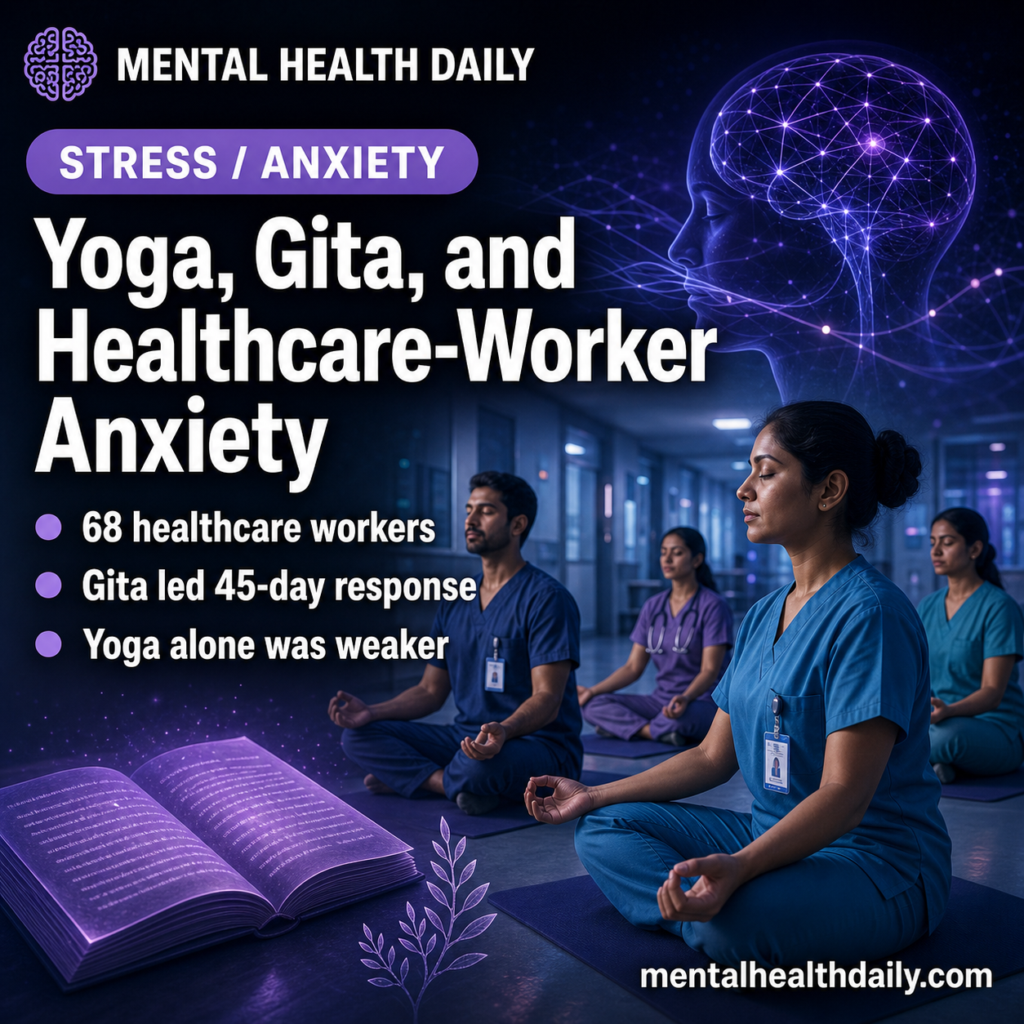
Bhagavad Gita and Yoga Reduced Healthcare-Worker Anxiety in 68-Person Trial

MHD featured image for yoga, Bhagavad Gita teaching, and healthcare-worker anxiety.

A 68-person randomized trial in Indian healthcare workers found a narrow but useful pattern: combined yoga plus Bhagavad Gita teaching beat usual care immediately on GAD-7 anxiety scores (p = 0.009), while Gita teaching alone beat usual care at 45 days (p = 0.047).1 Yoga alone improved within its own arm, but it did not …

Read more