hit counter

Esketamine Can Trigger Trauma Re-Experiencing in PTSD

Photoreal illustration of a patient receiving nasal spray with overlay of trauma memory imagery, conveying esketamine + PTSD interaction.

A 2026 retrospective case series of 22 adults with treatment-resistant depression and comorbid PTSD found that trauma re-experiencing during intranasal esketamine disappeared over later sessions in 72.7% of patients, while 27.3% stopped esketamine because the flashbacks persisted.1 Research Highlights Flashbacks usually faded, but not always: In 16 of 22 patients (72.7%), esketamine-related trauma re-experiencing disappeared …

Read more

Chronic Pain Plus Depression Alters Brain Structure

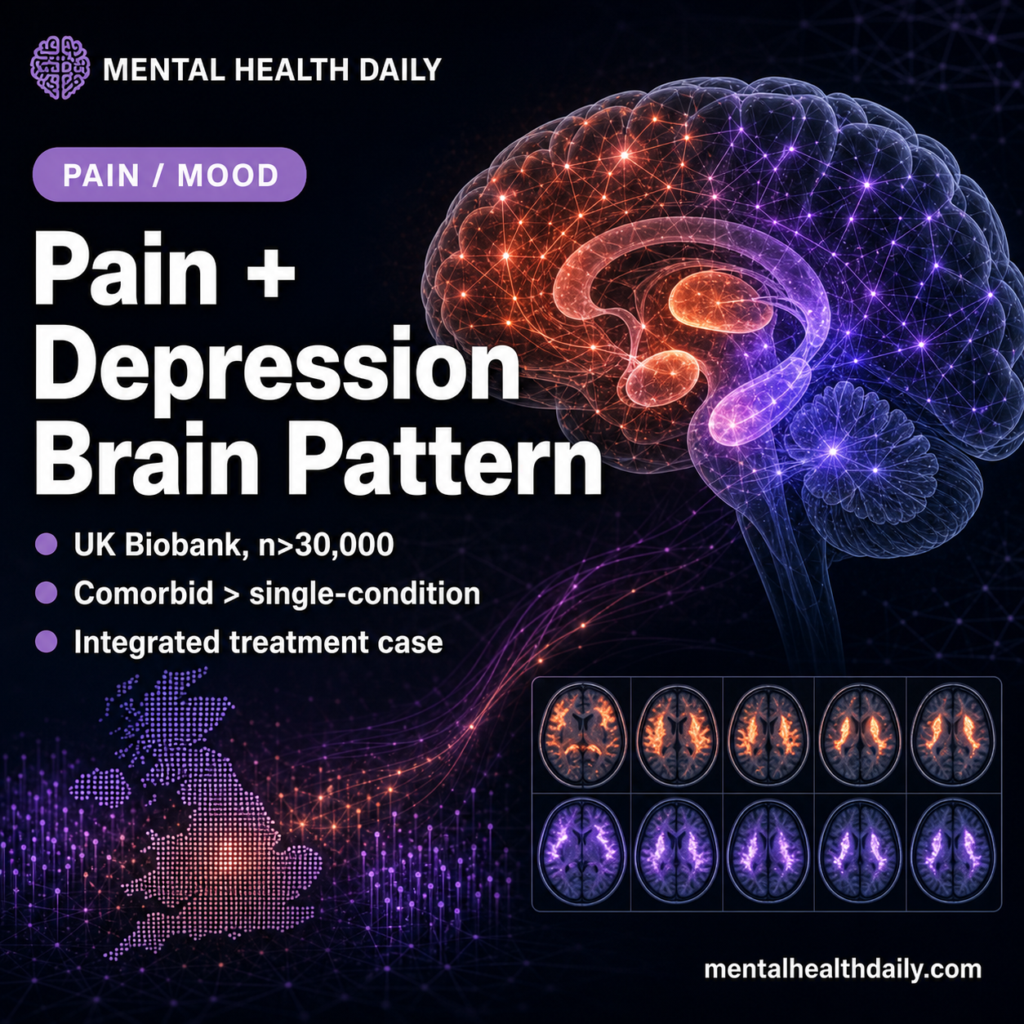
Photoreal illustration of brain regions affected by overlapping pain and depression networks, conveying comorbid neural signature.

A 2026 UK Biobank MRI preprint involving 71,214 adults found that chronic pain plus current depression had a structural brain profile that was more than chronic pain plus depression pasted together. The 1,377-person comorbid group showed widespread lower cortical volume, lower bilateral thalamic and hippocampal volume, lower left accumbens volume, and broad white-matter microstructure differences …

Read more

Intellectual Disability in Korean Children and Psychiatric Disorders (ADHD 42%, Depression 19%)

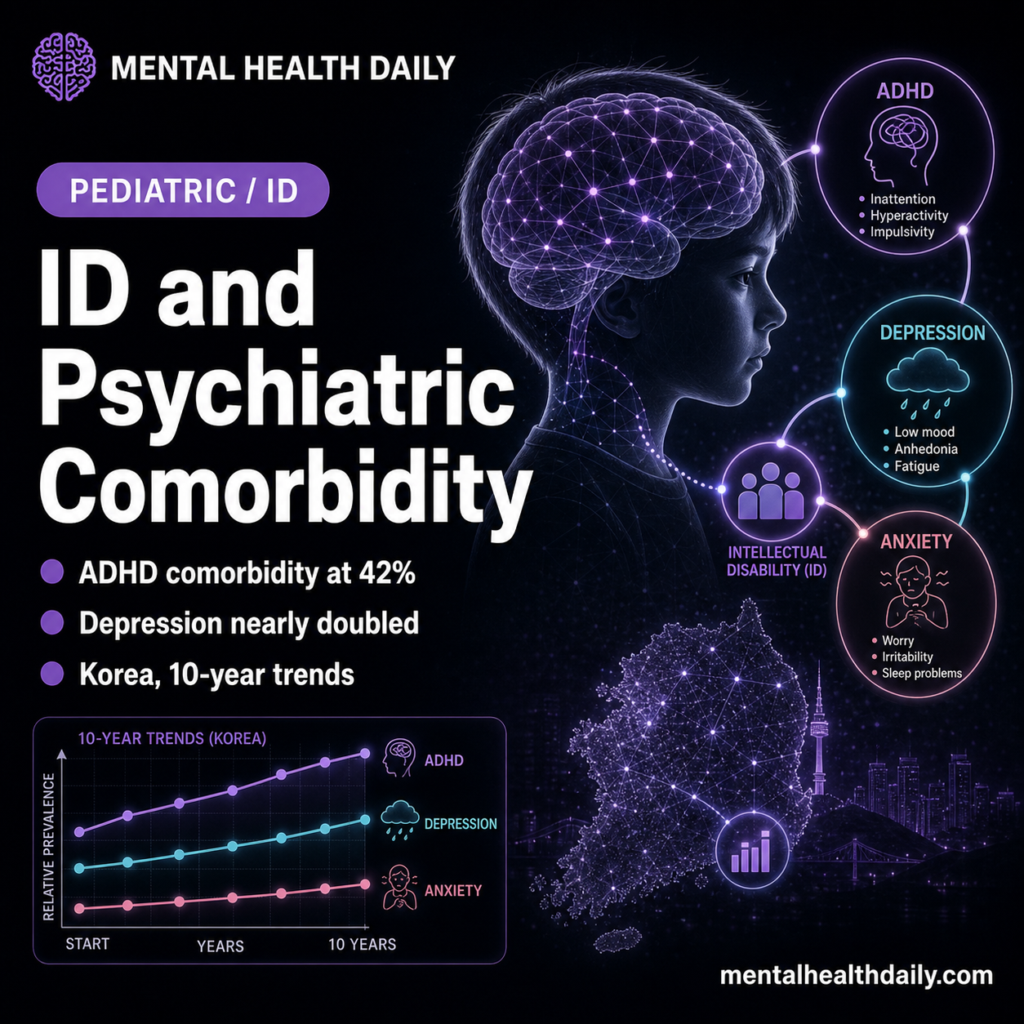
Photoreal illustration of a child interacting with cognitive and developmental motifs, representing intellectual disability and psychiatric comorbidity.

Children with intellectual disability are 3–4x more likely to have a comorbid psychiatric disorder than peers without ID. A 2026 nationwide Korean study by Joo and colleagues tracks how those rates changed across a decade.1 Research Highlights Korean children and adolescents (ages 2–18) with intellectual disability had ADHD comorbidity rise from 30.2% in 2012 to …

Read more

PTSD With Depression Hits AMPA Receptors Harder in Rat Models

Photoreal illustration of synaptic AMPA receptors and stressed neuron, conveying glutamate-system dysregulation in PTSD-MDD comorbidity.

PTSD and major depressive disorder co-occur in roughly half of patients with either diagnosis, and the comorbid presentation is more severe than either alone. The mechanistic question has been whether comorbidity reflects synergistic biology or simple symptom additivity. A 2026 rat-model study by Jiang and colleagues tests this directly, finding that PTSD-MDD comorbid rats show …

Read more