hit counter

Scarcity Mindset Study Reanalyzed: Game Rules, Not Tunnel Vision, Explained the Results

MHD card with receding teal tunnel rings and a narrow spotlight falling on three gold coins beside a small target, illustrating a reanalysis finding that the scarcity tunneling effect came from game rules.

The landmark experiment behind the “scarcity mindset” idea that poverty narrows attention does not show that narrowing, a 2026 reanalysis finds. The game’s rules, not a shift in players’ attention, explained why “poor” players aimed better and borrowed more.1 Research Highlights The accuracy edge disappeared on matched shots: “poor” players scored 2.31 vs. 1.67 points …
Read more

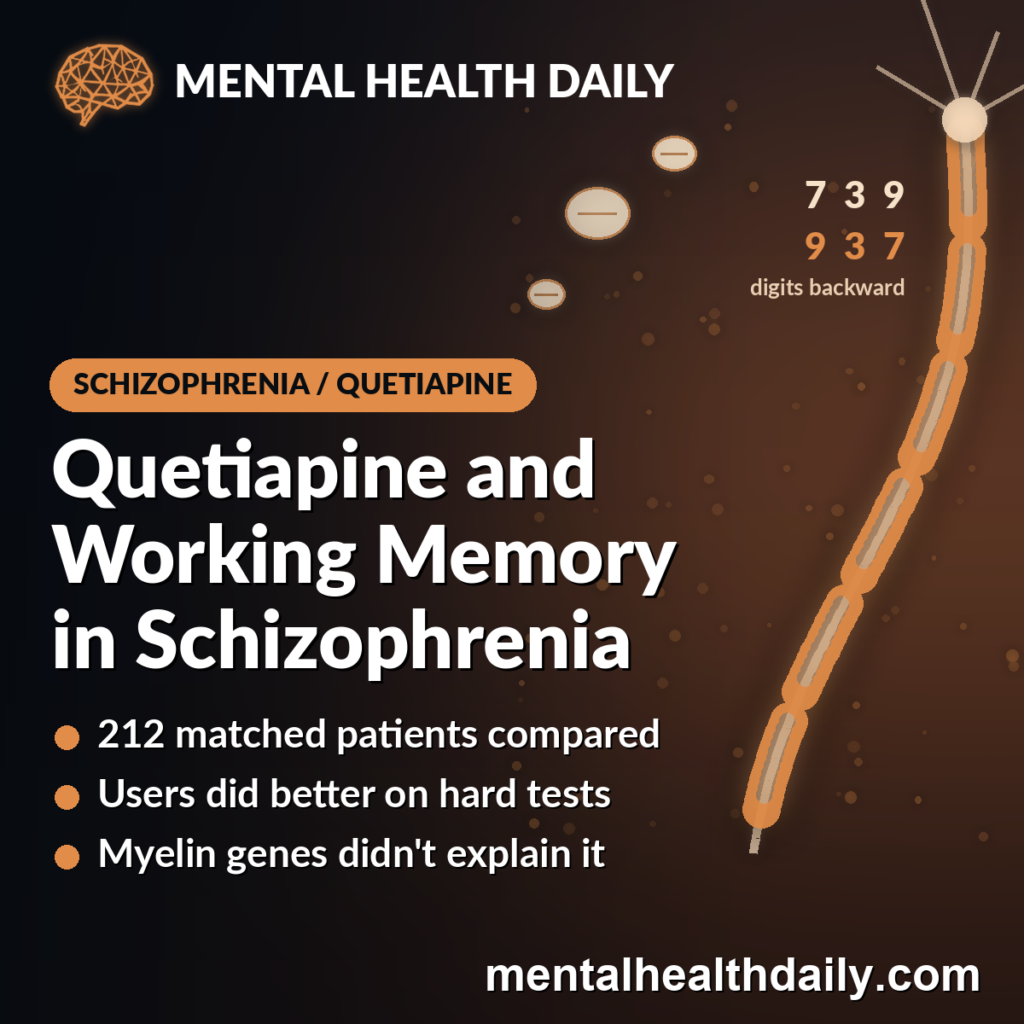
Quetiapine Linked to Better Working Memory Scores in Schizophrenia

MHD card with an amber myelinated nerve fiber, quetiapine tablets, and a digits-backward memory sequence: quetiapine users with schizophrenia scored higher on hard working-memory tests, but myelin genes did not explain it.

A 2026 German-Austrian cohort analysis found that people with schizophrenia who were taking quetiapine scored modestly higher on demanding working-memory tests than sex- and age-matched patients who were not, with the largest gap at doses of 300 mg a day or less.1 Because patients were not randomized to quetiapine, this is an association; the advantage …

Read more

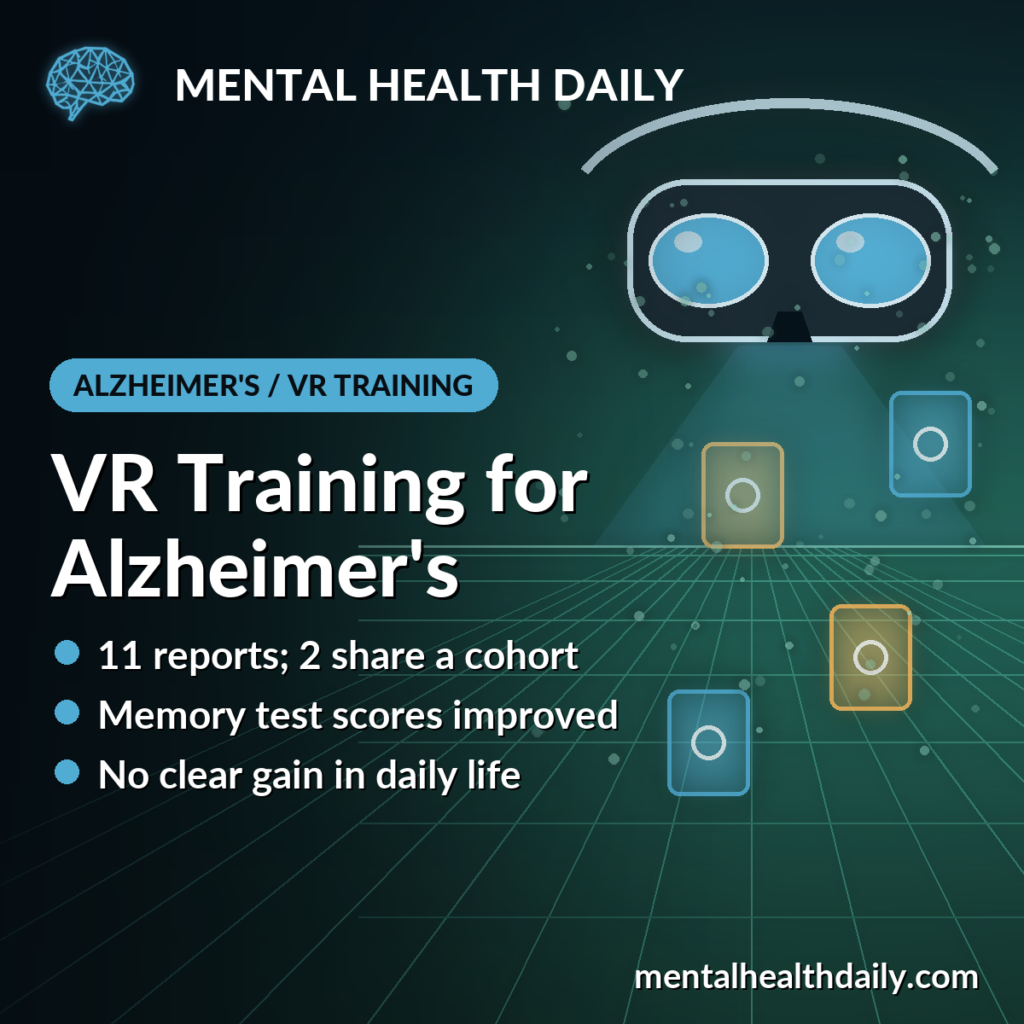
VR Training for Alzheimer’s Improved Memory Tests, Not Daily Function

MHD card with a VR headset and memory tiles: 11 study reports include 2 from the same cohort; memory test scores improved, with no clear gain in daily life.

A 2026 meta-analysis of 11 reports from small randomized trials found that virtual reality (VR) training modestly improved thinking-test scores in people with Alzheimer’s dementia (standardized effect 0.44), but it did not produce a clear benefit for everyday functioning, quality of life, or mood.1 The studies were small, several had design problems, and the researchers …

Read more

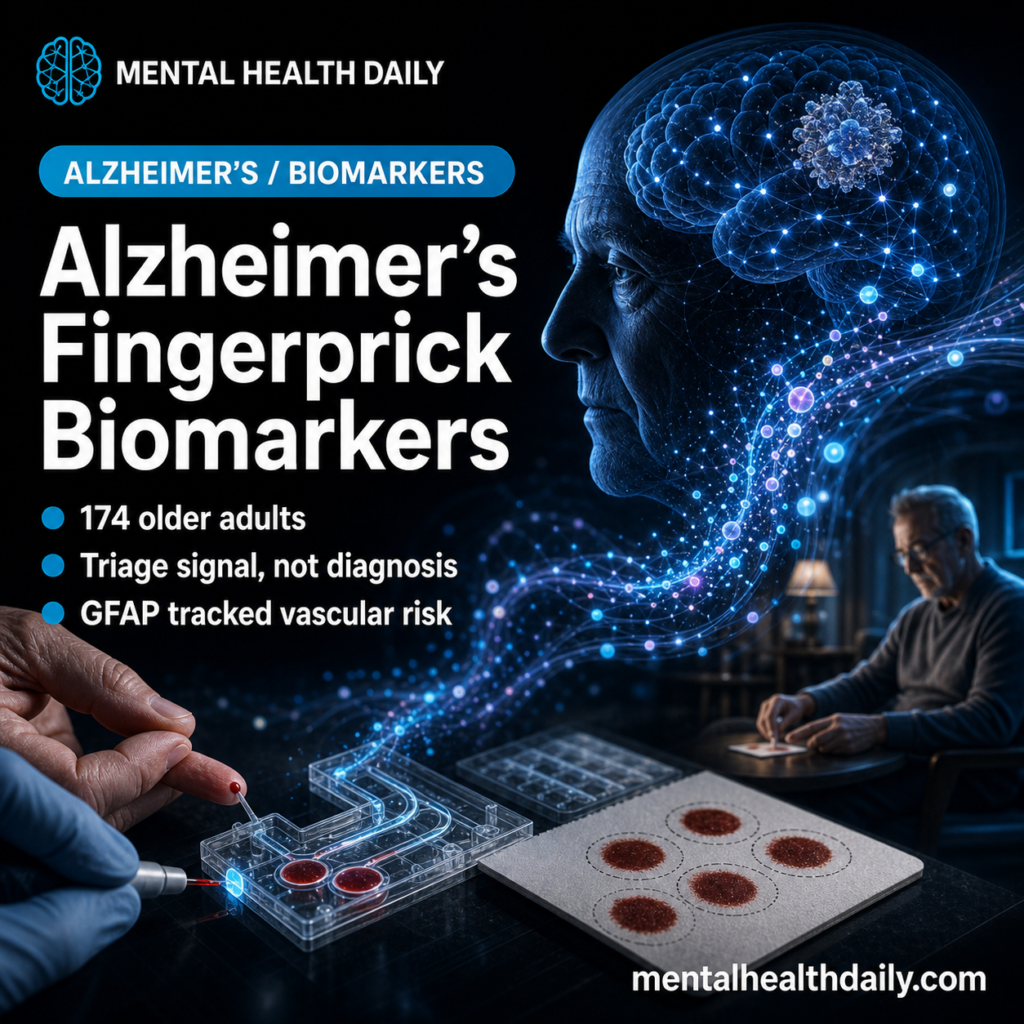
Alzheimer’s Fingerprick Blood Biomarkers: p-tau217 and GFAP Track Cognition

MHD featured image for Alzheimer’s disease fingerprick blood biomarkers p-tau217 and GFAP.

A 2026 PROTECT study involving 174 older adults found that self-administered fingerprick p-tau217 correlated with episodic memory (r = 0.299, p < 0.001) and GFAP correlated with working memory (r = 0.183, p = 0.034), supporting remote Alzheimer's risk triage rather than a stand-alone dementia diagnosis. Research Highlights Fingerprick sampling reached 77% completion: 174 of …

Read more

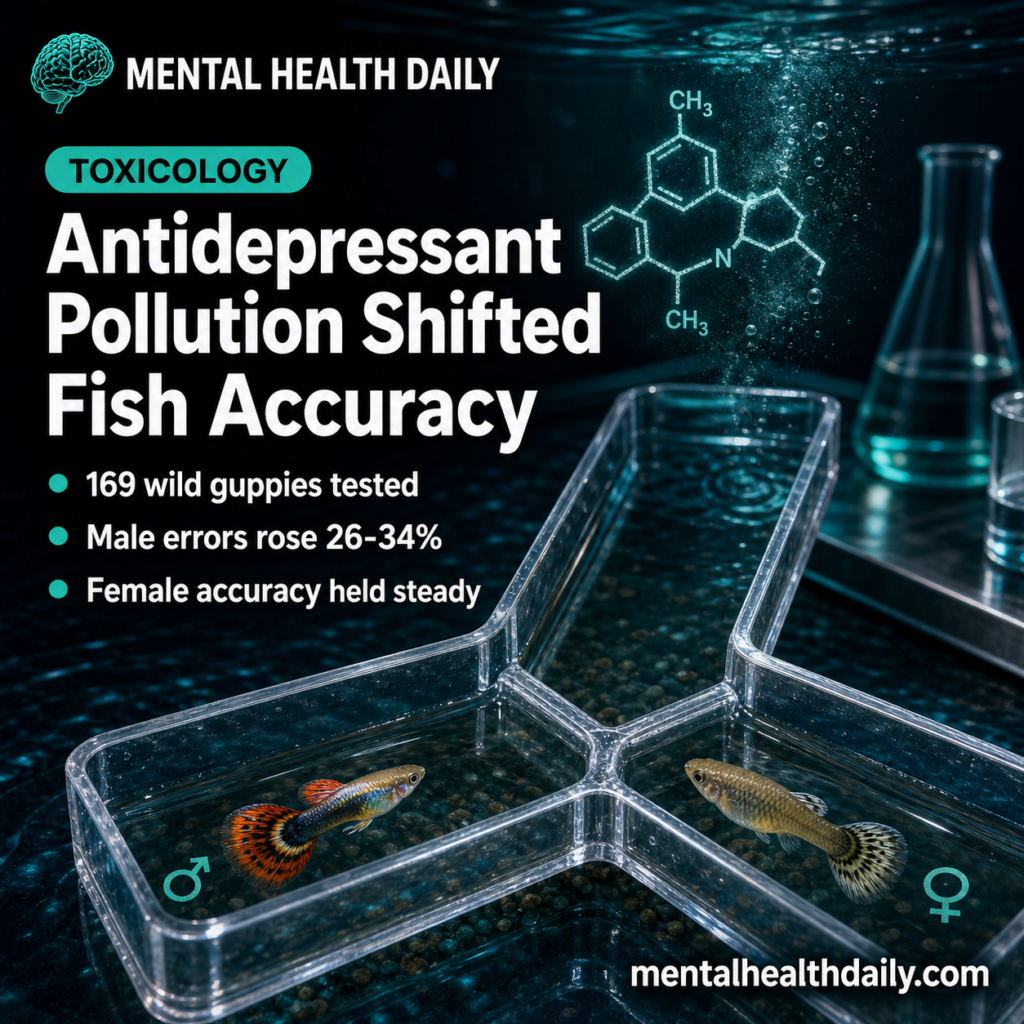
Amitriptyline Water Pollution Impaired Male Guppy Spatial Accuracy

MHD featured image for amitriptyline water pollution and guppy spatial cognition.

A 2026 Environmental Science & Technology experiment found that wild guppies still reduced maze solve times with practice after 11-day exposure to environmentally motivated amitriptyline concentrations, but exposed males made 26.35% to 34.21% more navigation errors than control males.1 The result is a sex-specific accuracy signal, not a blanket claim that antidepressant pollution erased learning. …

Read more

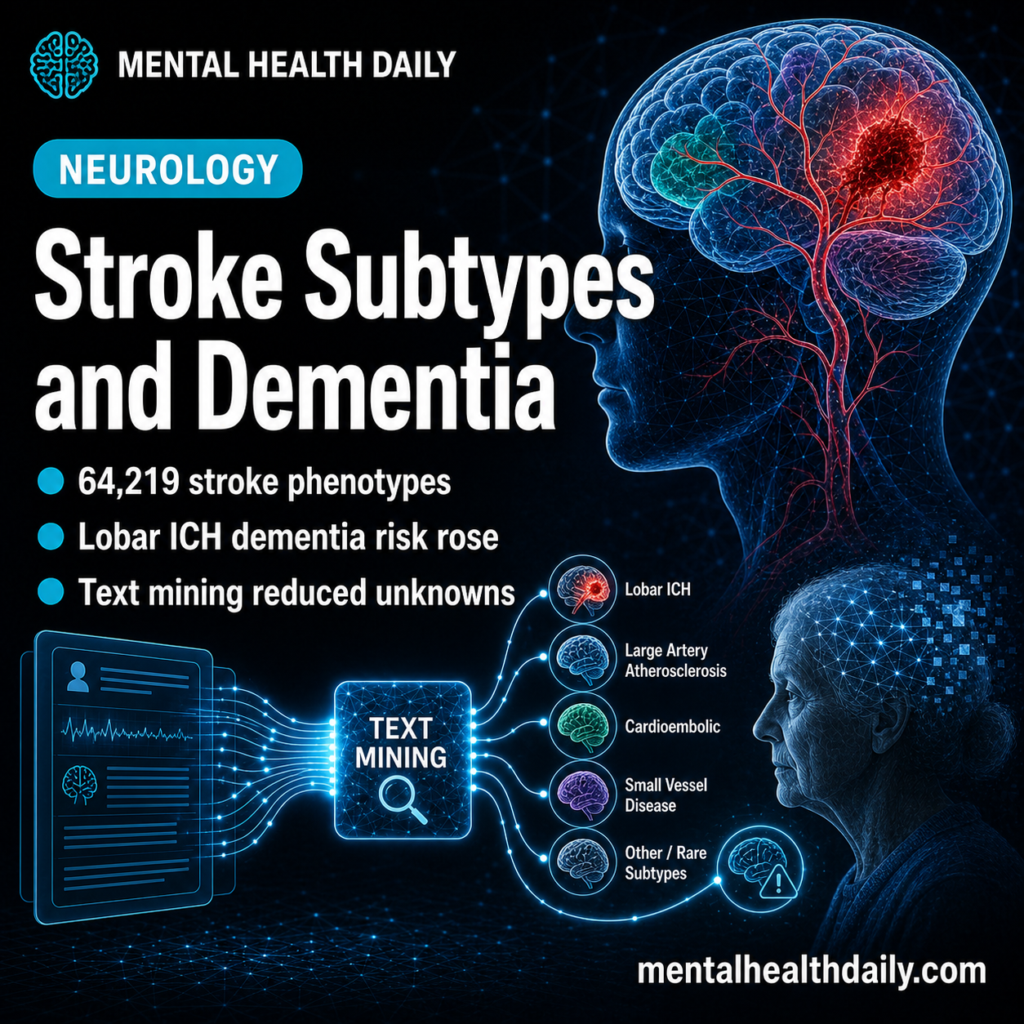
Lobar Brain Bleeds Carried 3.49x Dementia Risk in NLP Stroke-Subtype Study

MHD featured image for stroke subtypes and dementia risk.

A 2026 Scottish health-system preprint used natural language processing of CT and MRI reports to subtype stroke and found that lobar intracerebral hemorrhage carried a higher dementia risk beyond 6 months, aHR 3.49 vs matched controls.1 The method reduced unspecified stroke coding from 26.1% to 3.4%, making location-specific prognosis easier to see. Research Highlights Lobar …

Read more