Cannabis vs. Teen Cognition: Flattened, Not Diminished
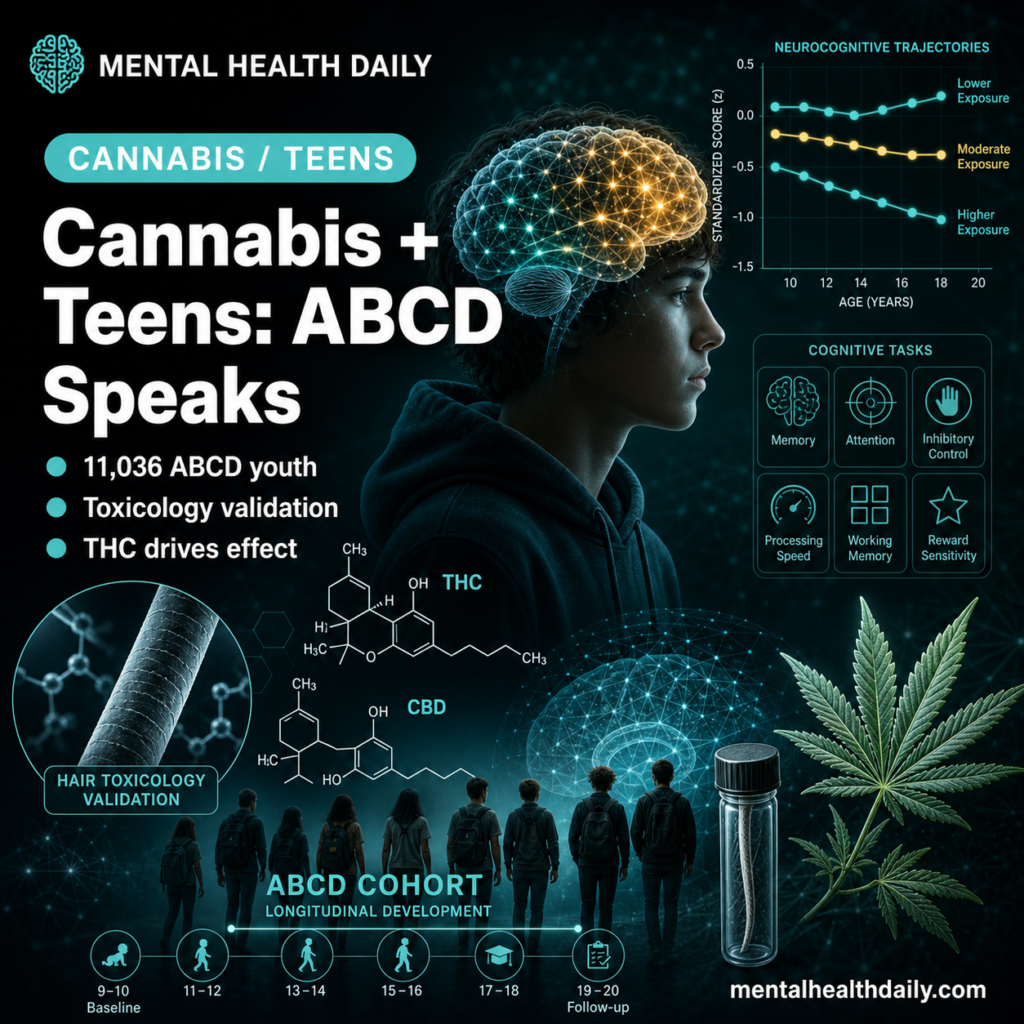
ABCD’s 11,036-youth study finds flattened cognitive trajectories in teen cannabis users, not absolute decline. THC drives the signal; CBD doesn’t.
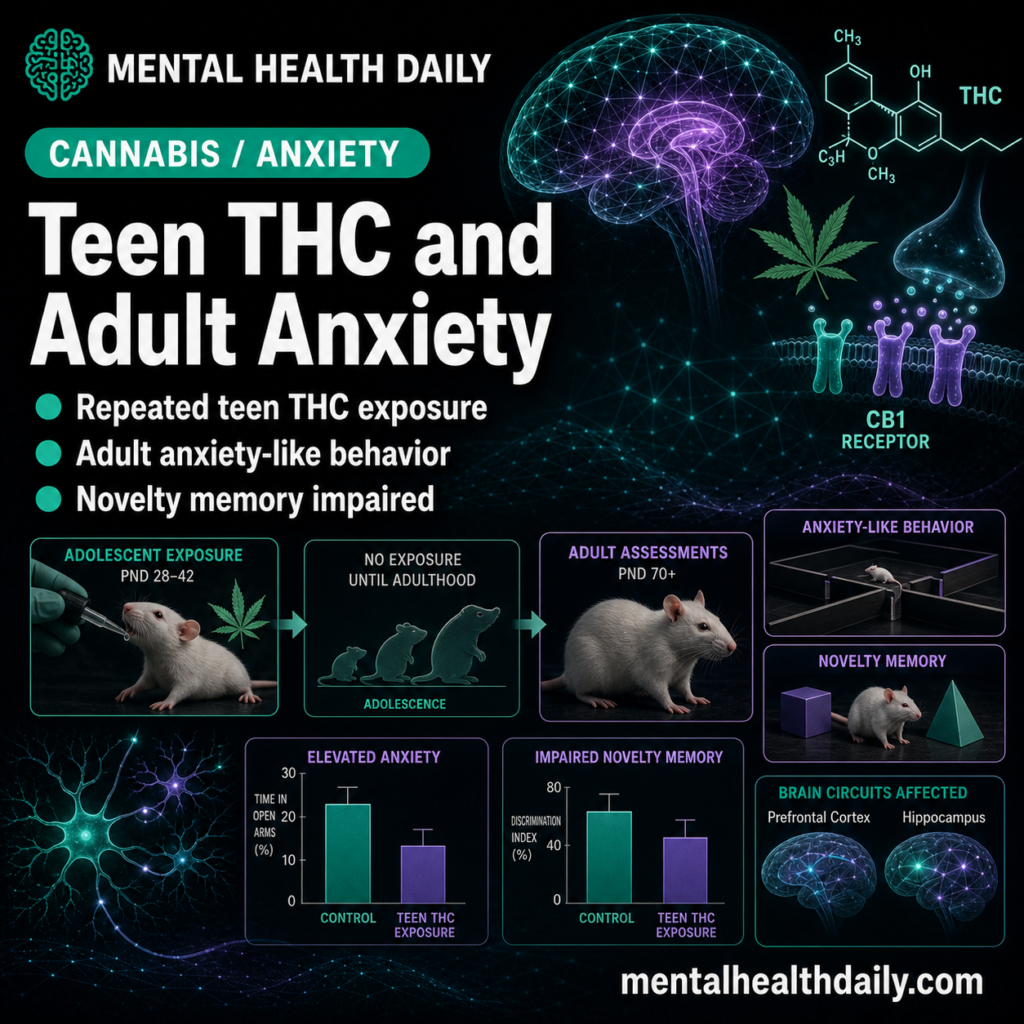
The relationship between cannabis use (CU) and anxiety disorders (AD) is a topic of ongoing debate and research within the scientific community. While some studies suggest cannabis can have anxiolytic (anxiety-reducing) effects, others point to anxiogenic (anxiety-inducing) outcomes, especially with habitual use. This nuanced interplay between cannabis and anxiety highlights the importance of understanding individual …
The relationship between cannabis (marijuana) use and psychosis has been a topic of considerable scientific interest and public health concern. With changing legal statuses and societal attitudes towards cannabis use in many countries, understanding this relationship is more critical than ever. Highlights: Systematic reviews and meta-analyses show a consistent association between cannabis use and increased …
Recent research has shed light on the potential benefits of cannabis-based medicinal products (CBMPs) in treating Generalized Anxiety Disorder (GAD), especially in patients with sleep disturbances. Recent research explored the effectiveness of CBMPs on GAD, the role of sleep quality in treatment outcomes, and the incidence of adverse events. Highlights: CBMPs Show Promise in Treating …
Cannabis use is associated with neurological and psychiatric side effects, but the risks of highly potent forms like “moon rocks” are not fully characterized. This case report describes psychosis and new-onset seizures in a 20-year-old following the first-time use of this THC-concentrated preparation. Key Facts: Moon rock cannabis contains high levels of THC, which acts …
Niacin, also referred to as nicotinic acid and “vitamin B3” is a colorless, hydrophilic organic compound derived from pyridine that was initially documented by chemist Hugo Weidel in 1873 while investigating the properties of nicotine. In 1937, biochemist named Conrad Elvehjem successfully extracted niacin from the liver and dubbed the compound “pellagra-preventing factor” on the …
Cannabidiol (CBD) is just one of over 85 scientifically-identified cannabinoids (or chemical compounds) derived from the flowering plant cannabis. Each of the cannabinoids within cannabis elicit unique neurophysiological effects. Most people are well-aware of THC (tetrahydrocannabinol), the predominant cannabinoid within cannabis that is ingested by upwards of 230 million people per year as a psychoactive …