hit counter

Low-Level Lead Linked to Infant Neurodevelopment Through DNA Methylation

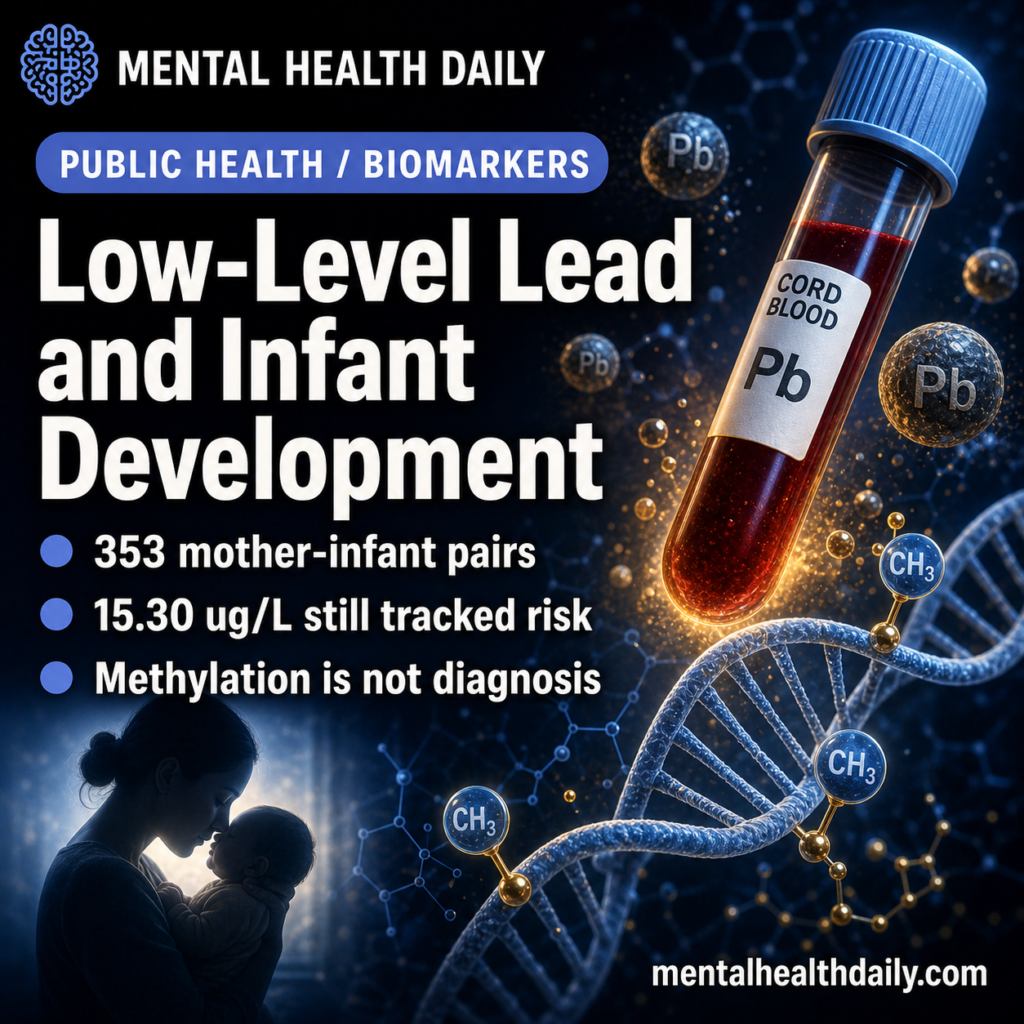
MHD featured image for low-level lead exposure, infant neurodevelopment, and FAM50B/PTCHD3 DNA methylation.

A 2026 prospective birth-cohort study in southern China linked mean cord-blood lead of 15.30 μg/L to lower infant neurodevelopmental scores across all 5 Ages and Stages Questionnaire domains, even though only 1.13% of samples exceeded 50 μg/L.1 A second finding was mechanistic: part of the lead-development association statistically ran through FAM50B/PTCHD3 DNA methylation, an epigenetic …

Read more

Childhood Anxiety Linked to DNA Methylation and DMN-Limbic Development

MHD featured image for childhood anxiety, DNA methylation, and DMN-limbic network development.

A 2026 Singapore birth-cohort preprint found a conditional childhood-anxiety signal: the cord-blood DNA methylation component predicted less age-13 anxiety only in boys in the low DMN-limbic trajectory group from ages 4.5 to 10.5 years. The paper is useful for mapping developmental risk biology, but it is not a screening test and it does not show …

Read more

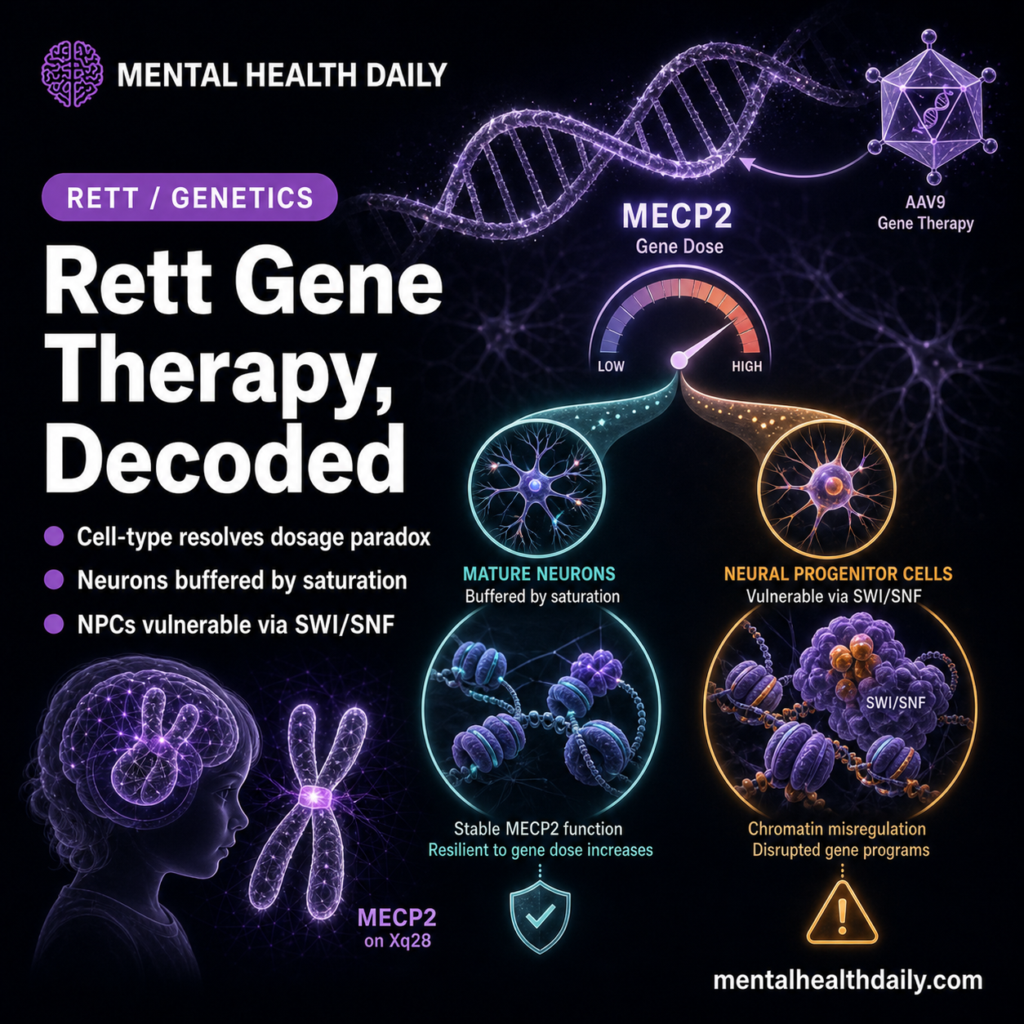
MeCP2 Overexpression Hit 5,000 Progenitor Genes but Spared Neurons

Photoreal illustration of two neural cell types displaying differential response to MeCP2 dosage, conveying cell-type-specific vulnerability.

A 2026 Nature Communications study found that Mecp2 overexpression deregulated approximately 5,000 genes in mouse neural progenitor cells but only approximately 500 mostly small-change genes in mature neurons, with the same progenitor-vs-neuron split reproduced in human iPSC-derived cells.1 For Rett syndrome gene therapy, that is the useful calibration: extra MeCP2 is most dangerous when it …

Read more

Oxycodone vs. Other Opioids: Distinct Epigenetic Effects & Molecular Adaptations (2023 Review)

The opioid crisis, particularly in North America, has spotlighted oxycodone as a central figure due to its significant role in addiction and overdose deaths. A recent review analyzed the genomic and epigenetic mechanisms behind oxycodone’s effects compared to other opioids, shedding light on its unique impact on addiction pathways. Highlights: Oxycodone, a semi-synthetic opioid derived …

Read more

Air Pollution Increases Genetic Risk of Autism: Fine Particulate Matter (PM2.5) Most Problematic (2024 Study)

Air pollution is a global concern with far-reaching impacts on human health, including its potential role in the development of Autism Spectrum Disorder (ASD). Recent studies, including Mendelian randomization analyses, provide compelling evidence that particulate matter, specifically PM2.5, may increase the risk of ASD, offering new insights into the environmental factors contributing to the condition. …

Read more

T2943 Treats Depression via Epigenetics: HDAC5 Inibitor in Hippocampus (2024 Study)

Depression remains one of the most pervasive and challenging mental health conditions, affecting millions worldwide with a significant number not responding to traditional treatments. Emerging research underscores the role of histone modifications in depression, pointing towards epigenetic mechanisms as potential targets for novel antidepressants. Specifically, a compound known as T2943 (a histone deacetylase-5 (HDAC5) inhibitor), …

Read more

Combo of Neuroimaging, Transcriptome, Epigenetics to Understand Gray Matter Abnormalities in Major Depression (2024 Study)

Major depressive disorder (MDD) affects millions worldwide, yet its underlying causes remain largely enigmatic. A new study integrated neuroimaging, transcriptomic, and epigenetic data to better understand the genetic underpinnings of MDD. This comprehensive approach revealed a complex interplay between brain structure, gene expression, and DNA methylation, offering new insights into this debilitating condition. Highlights: Integrative …

Read more