hit counter

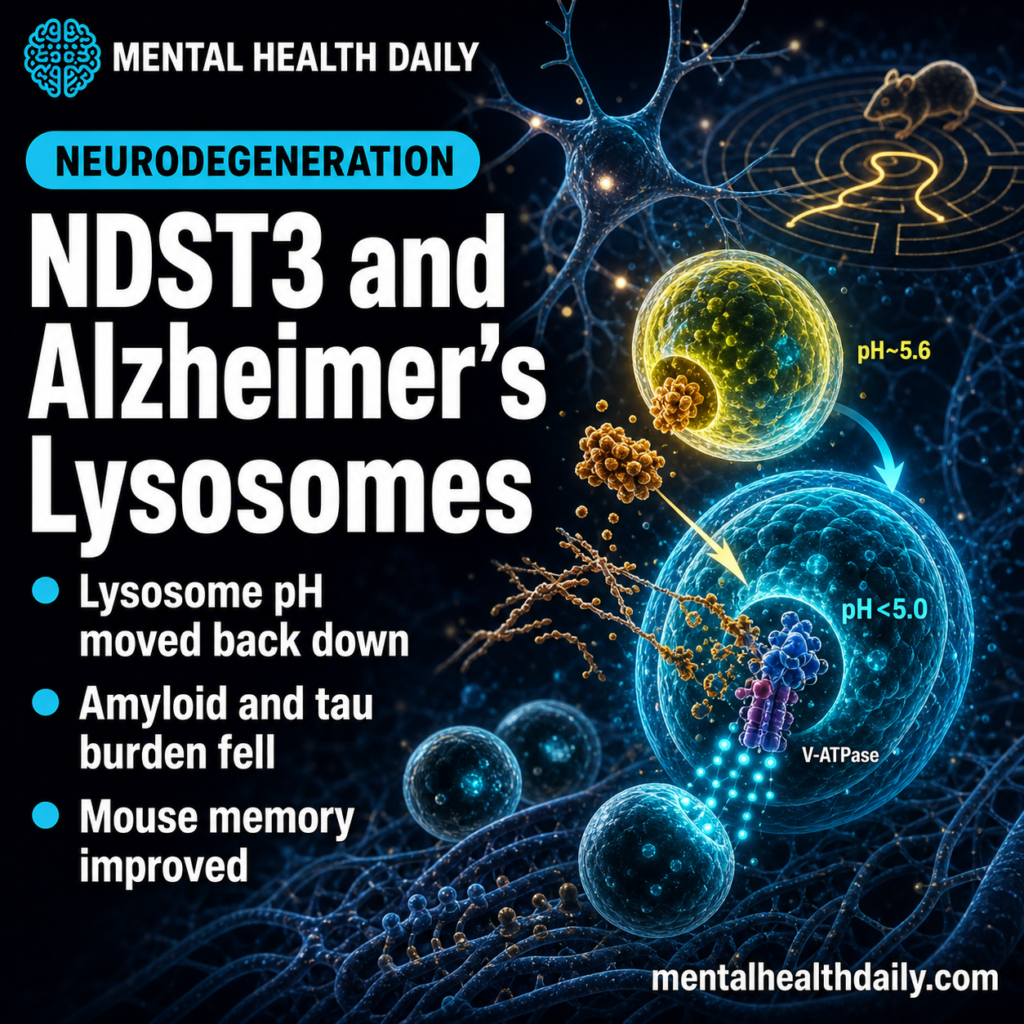
NDST3 Suppression Restores Lysosome Acidity in Alzheimer’s Mouse Models

MHD featured image for NDST3 suppression and lysosomal acidification in Alzheimer's disease models.

A 2026 mechanistic Alzheimer’s study found that suppressing NDST3 shifted lysosomal pH in APP695Swe neuronal cells from 5.6 back below 5.0, then reduced amyloid-β, MAPT/tau pathology, neuronal injury, and memory deficits in 3xTg-AD mice.1 Research Highlights Lysosome pH moved back down: APP695Swe-overexpressing HT22 cells had lysosomal pH around 5.6, while NDST3 knockdown re-acidified lysosomes to …

Read more

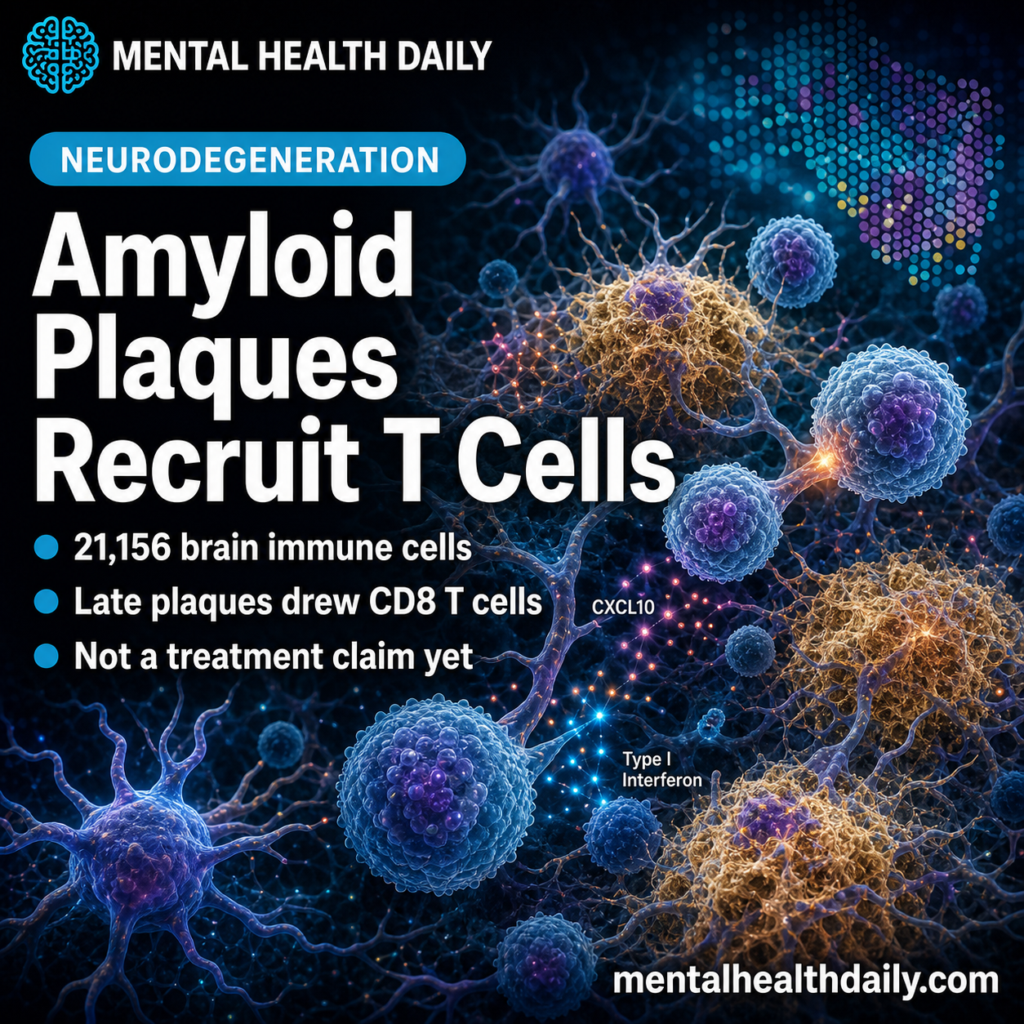
Alzheimer’s Amyloid Plaques Recruit CD8 T Cells Through Type I Interferon

MHD featured image for Alzheimer's amyloid plaques, CD8 T cells, type I interferon, and CXCL10 signaling.

A 2026 single-cell and spatial-transcriptomics study of 21,156 brain immune cells found that late amyloid disease shifted interferon-driven neuroinflammation from microglia toward plaque-associated CD8 T cells, with T-cell frequency strongly tracking total amyloid deposits (Spearman rho = 0.844, p < 0.0001).1 The result does not turn Alzheimer’s disease into an autoimmune disease, but it makes …

Read more

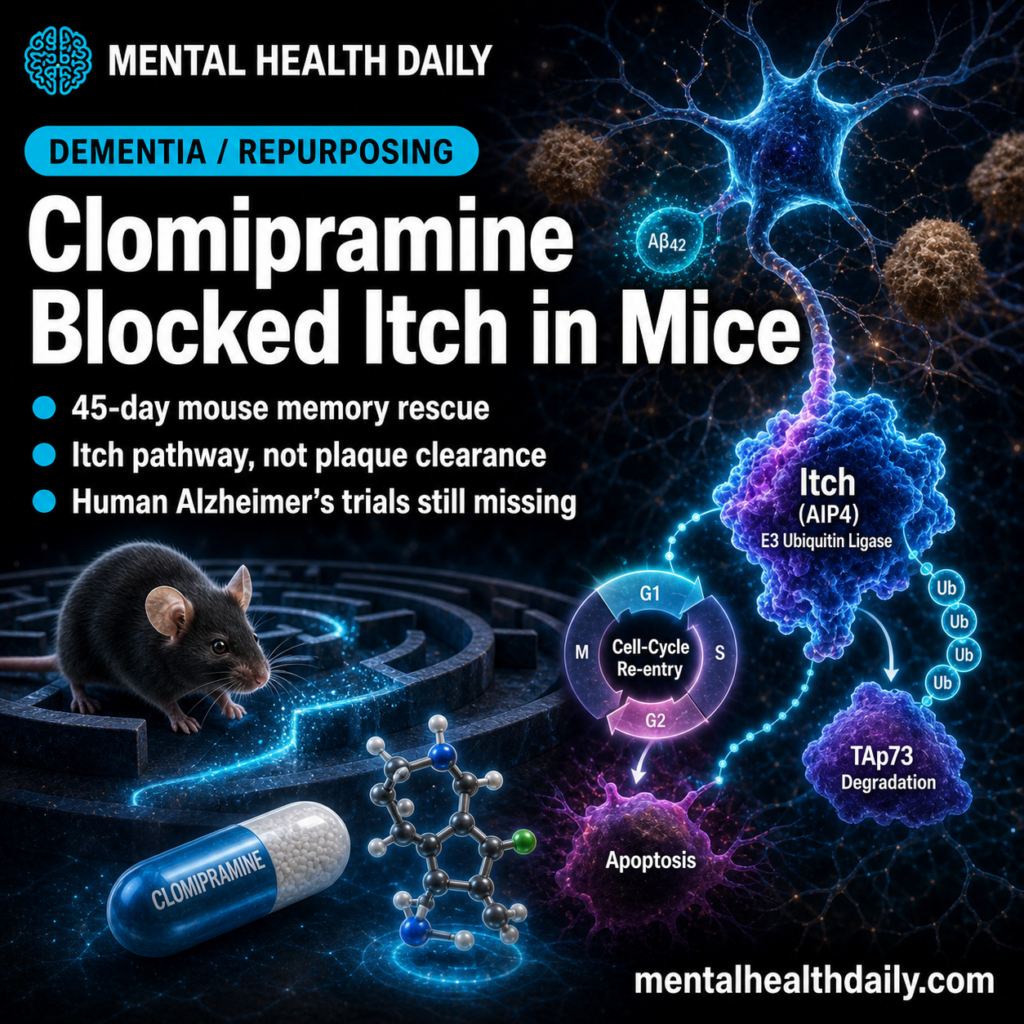
Clomipramine Improved Alzheimer’s Mouse Memory by Blocking Itch in 45 Days

Editorial card showing clomipramine, Itch signaling, and Alzheimer's mouse-memory rescue with a molecular neuroscience background.

A 2026 iScience study found that 45 days of clomipramine improved spatial, working, and reference memory in female APP/PS1 Alzheimer’s-model mice, apparently by blocking the E3 ubiquitin ligase Itch rather than by clearing amyloid plaques.1 Research Highlights 45-day clomipramine signal: 6-month female APP/PS1 mice received 25 mg/kg clomipramine every other day for 45 days, then …

Read more