hit counter

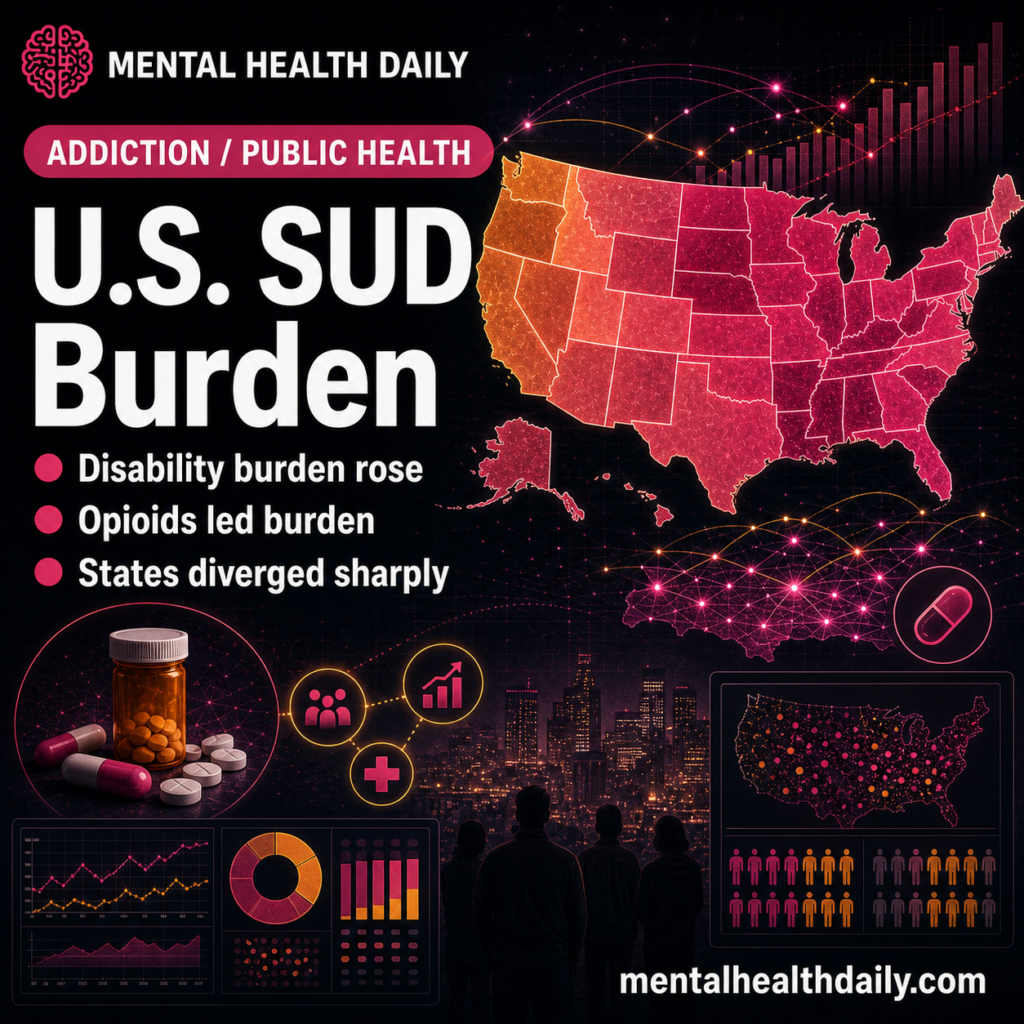
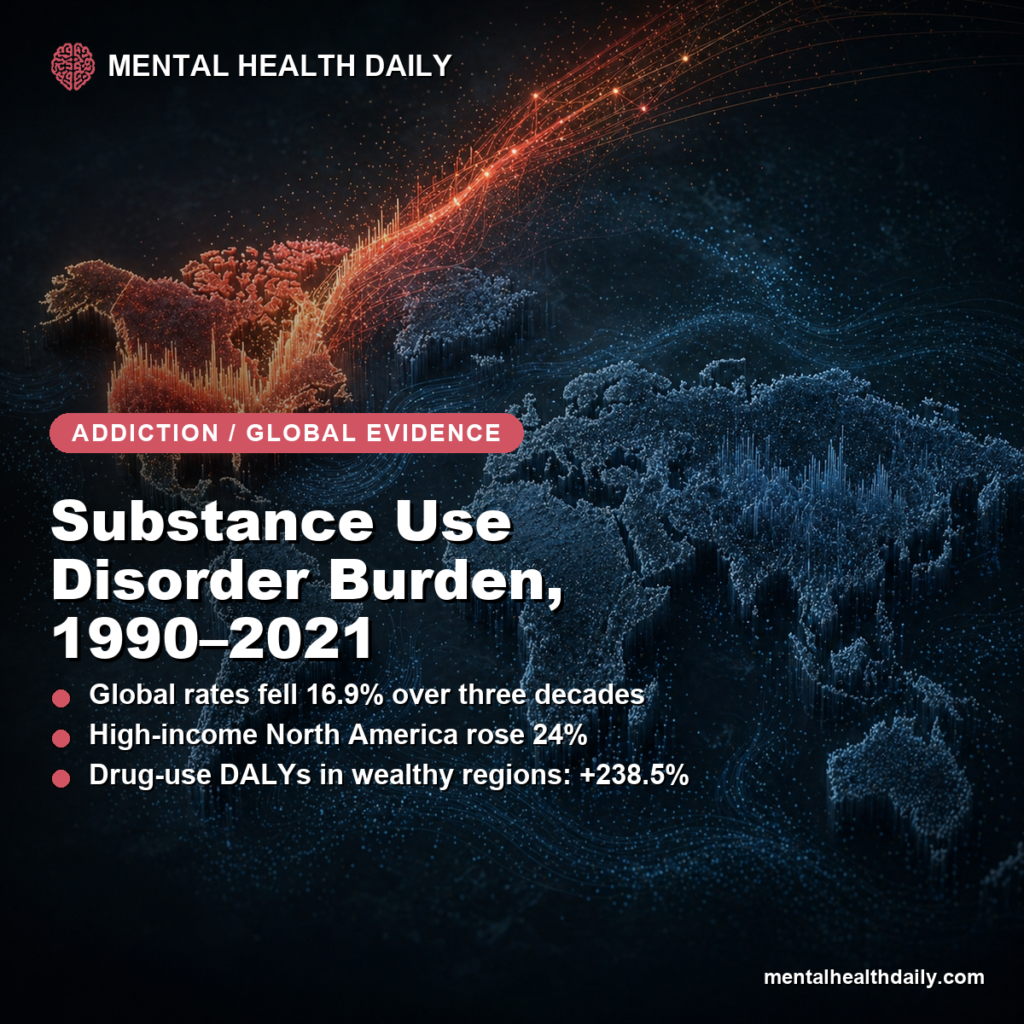
U.S. Substance-Use Disorder DALYs Rose 213.5%: Opioids Led

A Global Burden of Disease analysis estimated that U.S. age-standardized substance-use disorder disability-adjusted life-year rates rose 213.5% from 1990 to 2019, with opioid use disorders producing the steepest increase and the largest state-level burden.1 Research Highlights U.S. cases rose sharply: prevalent substance-use disorder cases increased from 12.6 million in 1990 to 19.5 million in 2019.1 …

Read more

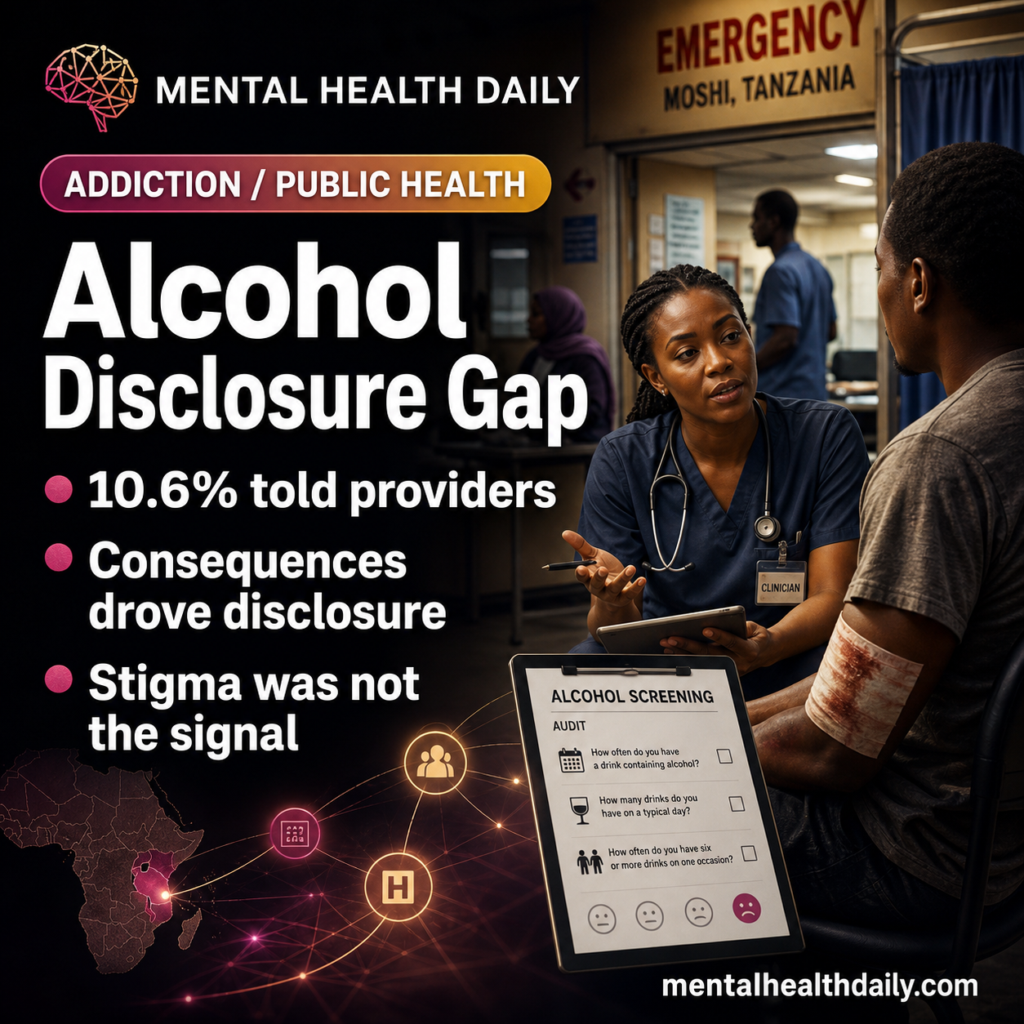
Alcohol Use Disclosure in Tanzania: 10.6% Told Providers

A 2026 cross-sectional study in Moshi, Tanzania found that only 26 of 246 injury patients who drank alcohol, or 10.6%, had ever told a healthcare provider about their alcohol use.1 The calibration result was contrary to the prediction: measured alcohol stigma did not track disclosure, while alcohol-related consequences did. Research Highlights Disclosure was rare: among …

Read more

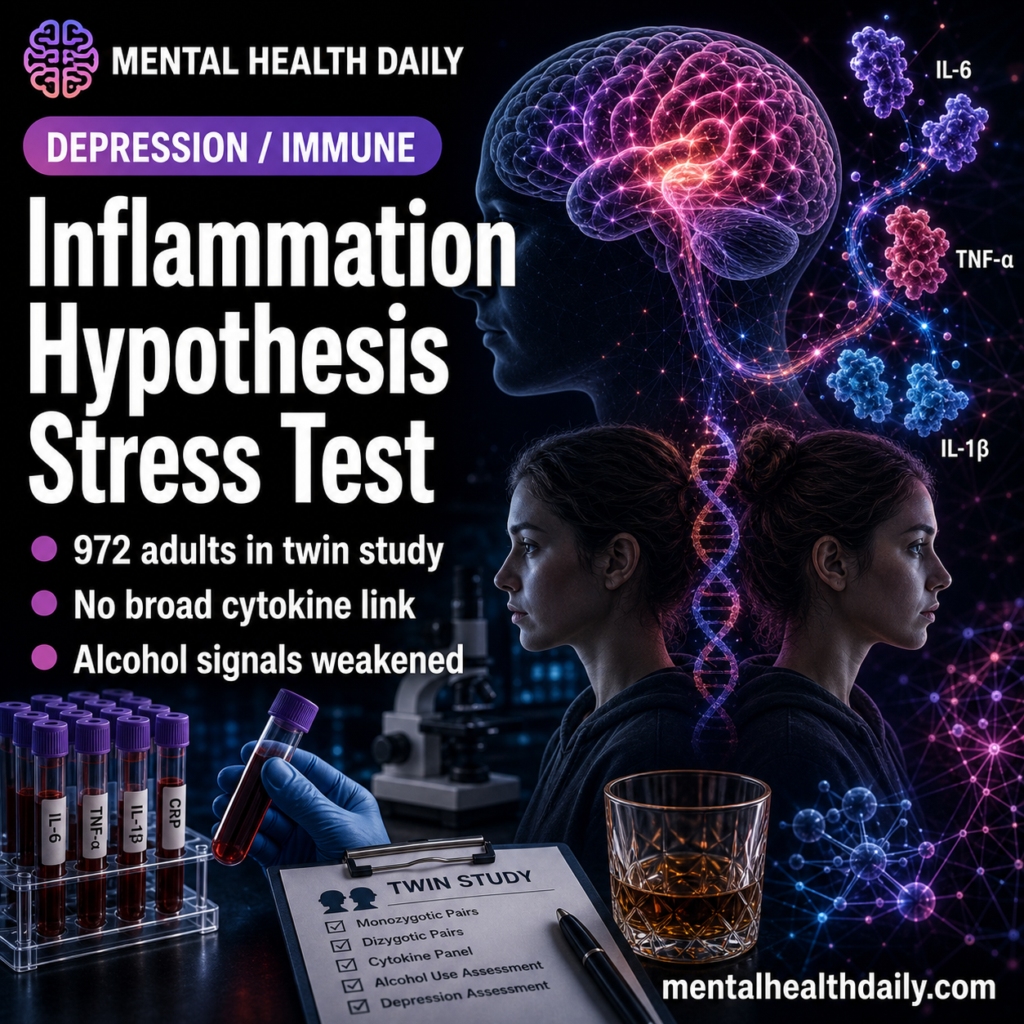
Twin Study Finds No Broad Cytokine Link to Depression or Alcohol Use Disorder

Photoreal illustration of cytokine molecules and brain imagery, conveying inflammation-depression hypothesis under scrutiny.

The broad cytokine story failed its most direct community test: in 972 adults, depression, alcohol use, and alcohol use disorder (AUD) were not associated with C-reactive protein (CRP) or a pre-registered pro-inflammatory cytokine index. The only multiple-testing-corrected cytokine hits ran opposite the hypothesis — AUD was linked to lower IL-1β, IL-4, IL-10, and IL-12 — …

Read more

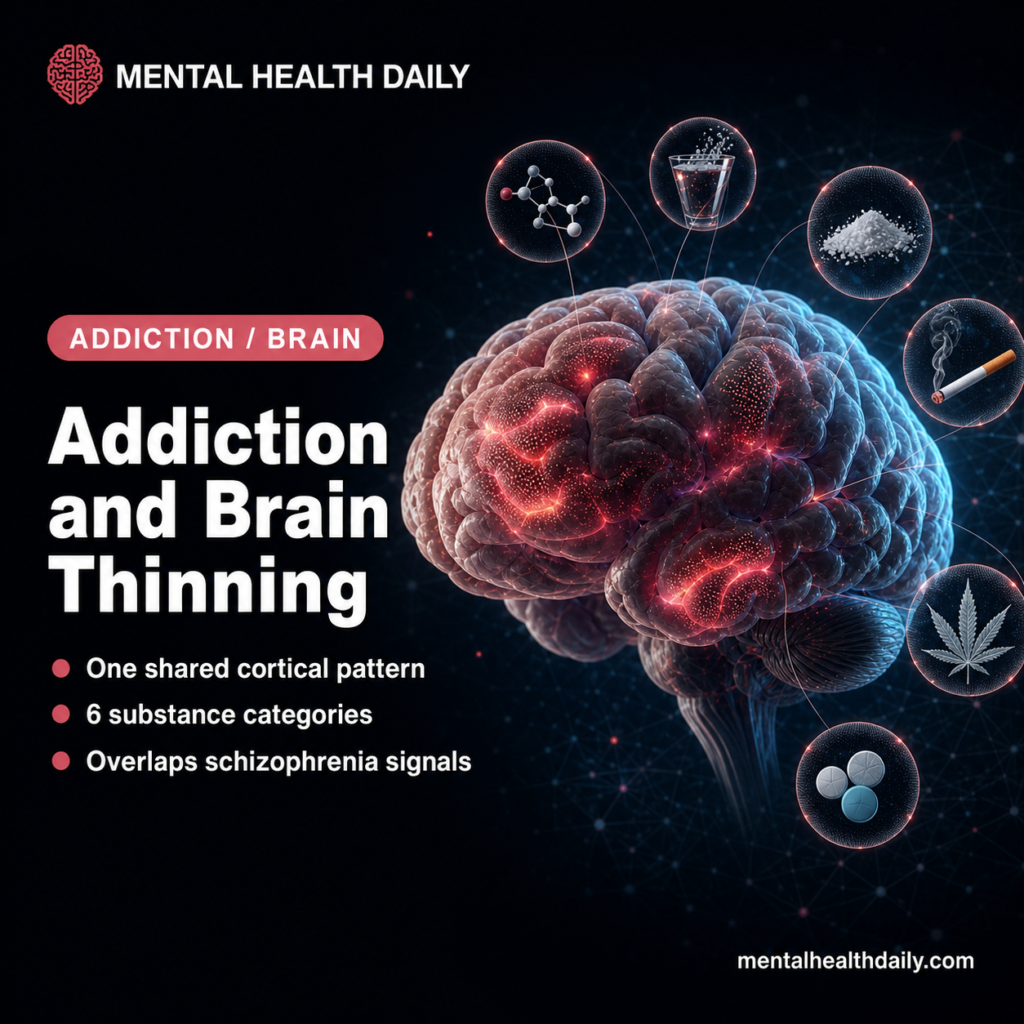
Drug Addiction Linked to Cortical Thinning in 65 of 68 Brain Regions

Photoreal illustration of a human brain with cortical regions highlighted across substance categories, representing the cross-substance morphometric pattern in addiction.

Whether alcohol, cocaine, nicotine, and cannabis damage the same brain regions or different brain regions has been hard to settle in the addiction-imaging literature. A 2026 ENIGMA Addiction analysis by Georgiadis et al. — pooling 4,733 brains across 51 sites — now has an answer. Research Highlights Across 2,782 people with substance use disorder (SUD) …

Read more