hit counter

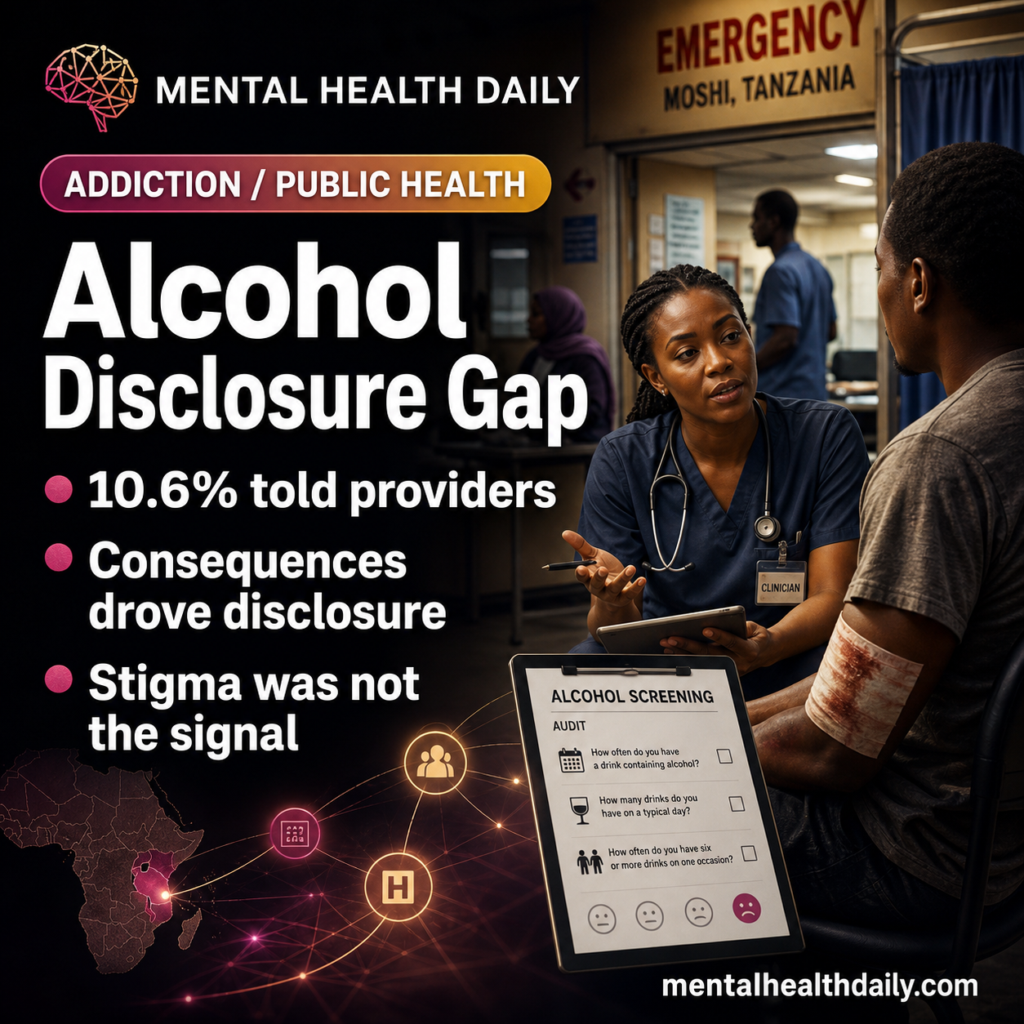
Alcohol Use Disclosure in Tanzania: 10.6% Told Providers

A 2026 cross-sectional study in Moshi, Tanzania found that only 26 of 246 injury patients who drank alcohol, or 10.6%, had ever told a healthcare provider about their alcohol use.1 The calibration result was contrary to the prediction: measured alcohol stigma did not track disclosure, while alcohol-related consequences did. Research Highlights Disclosure was rare: among …

Read more

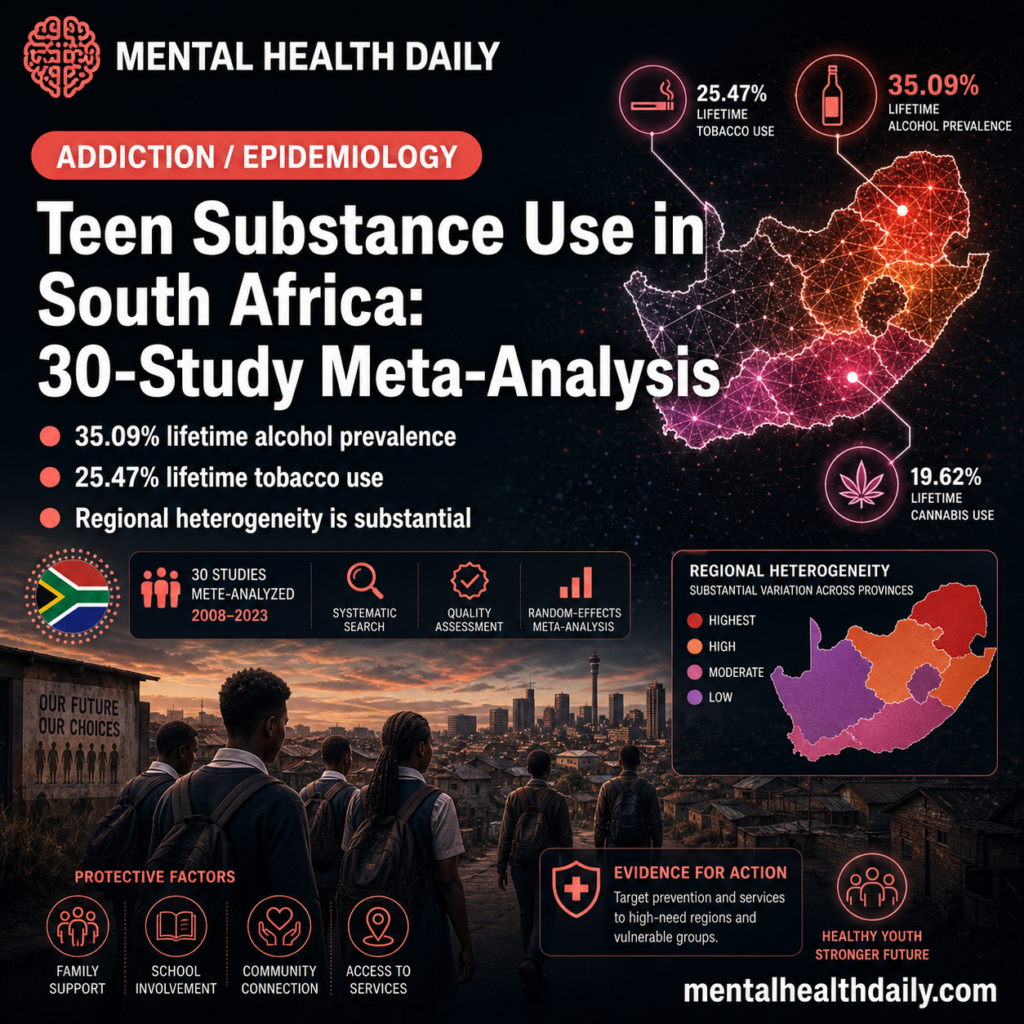
Teen Substance Use in South Africa: 30-Study Meta-Analysis

A 2026 PRISMA-compliant systematic review and meta-analysis in Drug and Alcohol Review consolidated 30 publications covering 202 prevalence estimates from 120,041 South African adolescents: pooled lifetime prevalence was 35.09% for alcohol use, 25.47% for tobacco use, and 10.47% for cannabis use.1 Research Highlights 30 publications, 202 estimates: pooled data covered 120,041 South African adolescents. Alcohol …

Read more

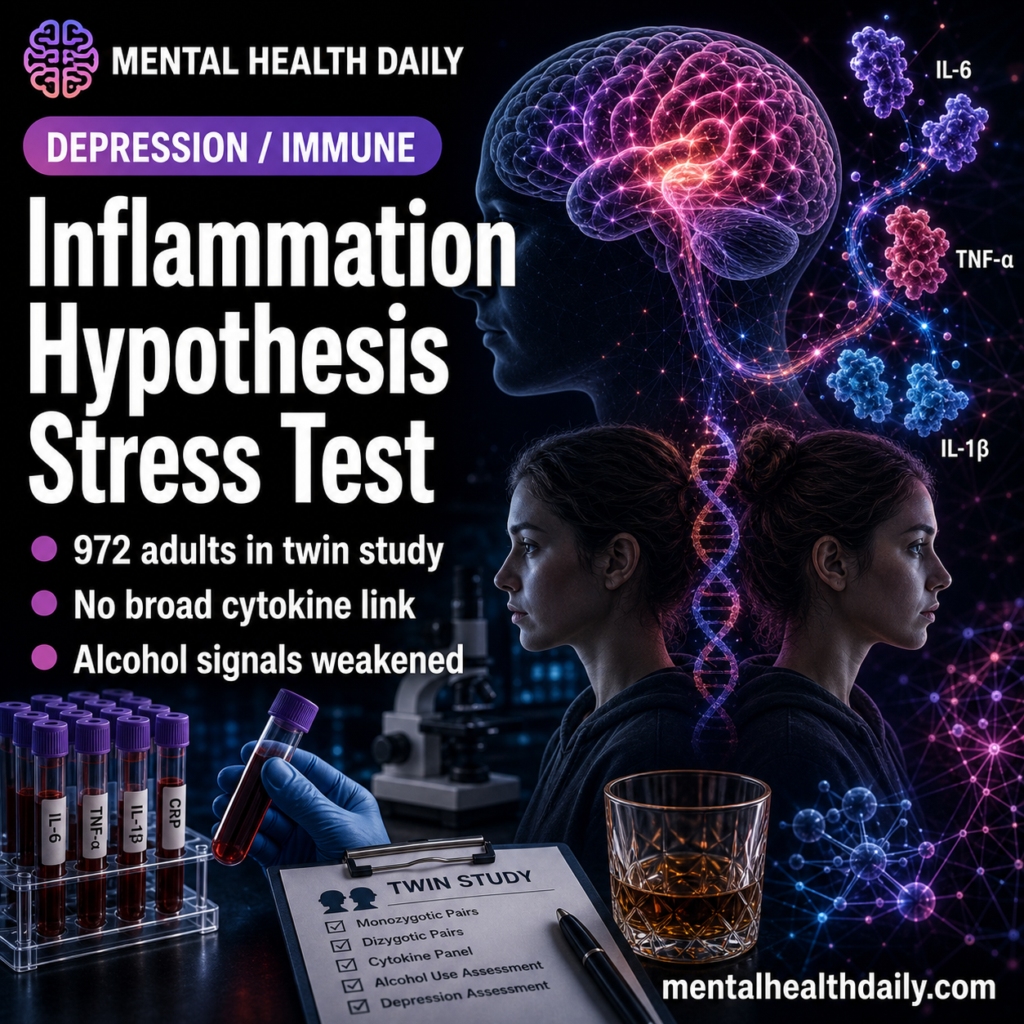
Twin Study Finds No Broad Cytokine Link to Depression or Alcohol Use Disorder

Photoreal illustration of cytokine molecules and brain imagery, conveying inflammation-depression hypothesis under scrutiny.

The broad cytokine story failed its most direct community test: in 972 adults, depression, alcohol use, and alcohol use disorder (AUD) were not associated with C-reactive protein (CRP) or a pre-registered pro-inflammatory cytokine index. The only multiple-testing-corrected cytokine hits ran opposite the hypothesis — AUD was linked to lower IL-1β, IL-4, IL-10, and IL-12 — …

Read more

Methamphetamine Treatment Access: 78% Had Never Sought Care

MHD featured image for methamphetamine treatment access, stigma, and barriers to care in Australia.

A 2026 Australian interview study involving 27 adults with methamphetamine use problems found that 21 participants, or 77.8%, had never previously sought treatment for methamphetamine use. Research Highlights Most had never sought treatment: Peart et al. interviewed 27 adults and found that 77.8% had not previously sought methamphetamine treatment before entering the parent trial.1 3 …

Read more

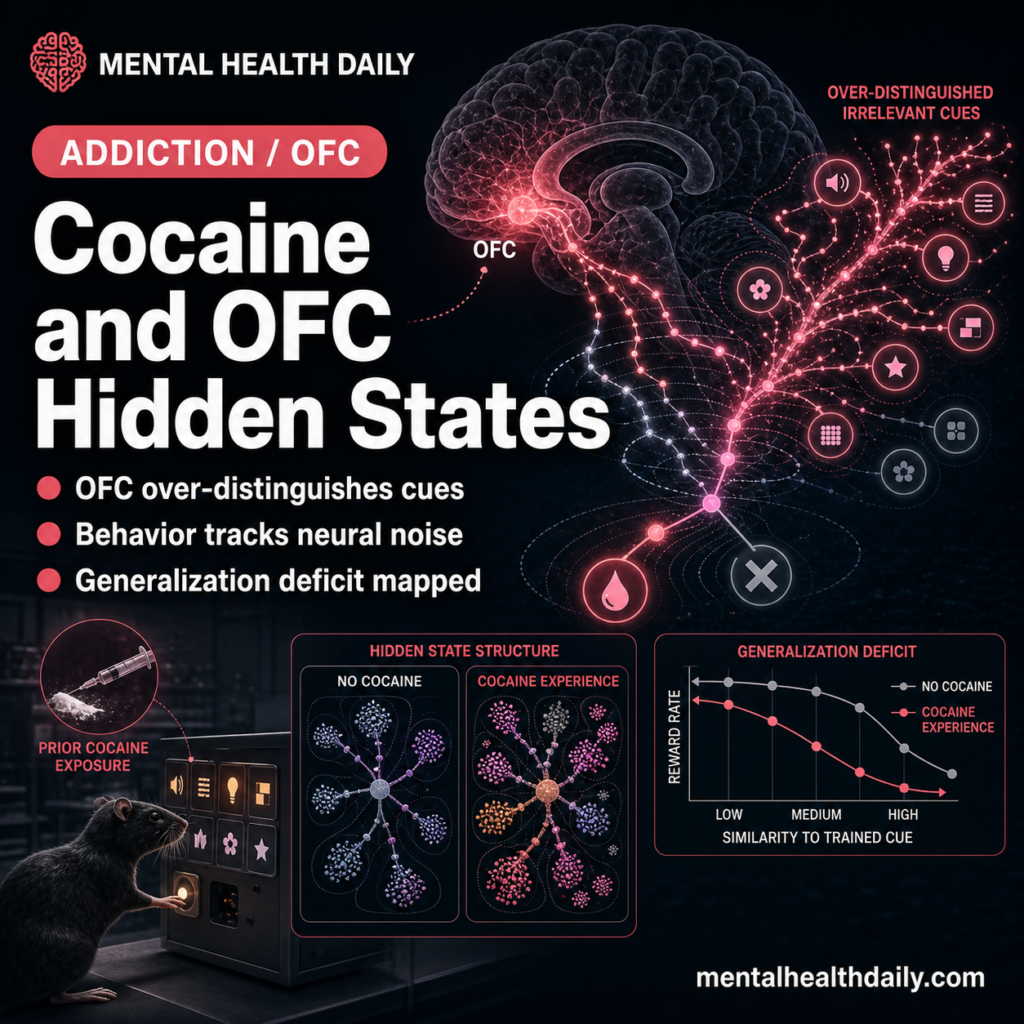
Prior Cocaine Use Disrupts Orbitofrontal Hidden-State Coding

MHD featured image for Prior Cocaine Use Disrupts Orbitofrontal Hidden-State Coding.

A 2026 eLife study recorded 3,881 lateral orbitofrontal cortex units in rats and found that prior cocaine use made the OFC over-distinguish task positions that controls treated as functionally equivalent. The headline result was not gross task failure: cocaine-experienced rats still performed the odor task, but their OFC ensembles showed higher S1-vs.-S2 decoding than sucrose …

Read more

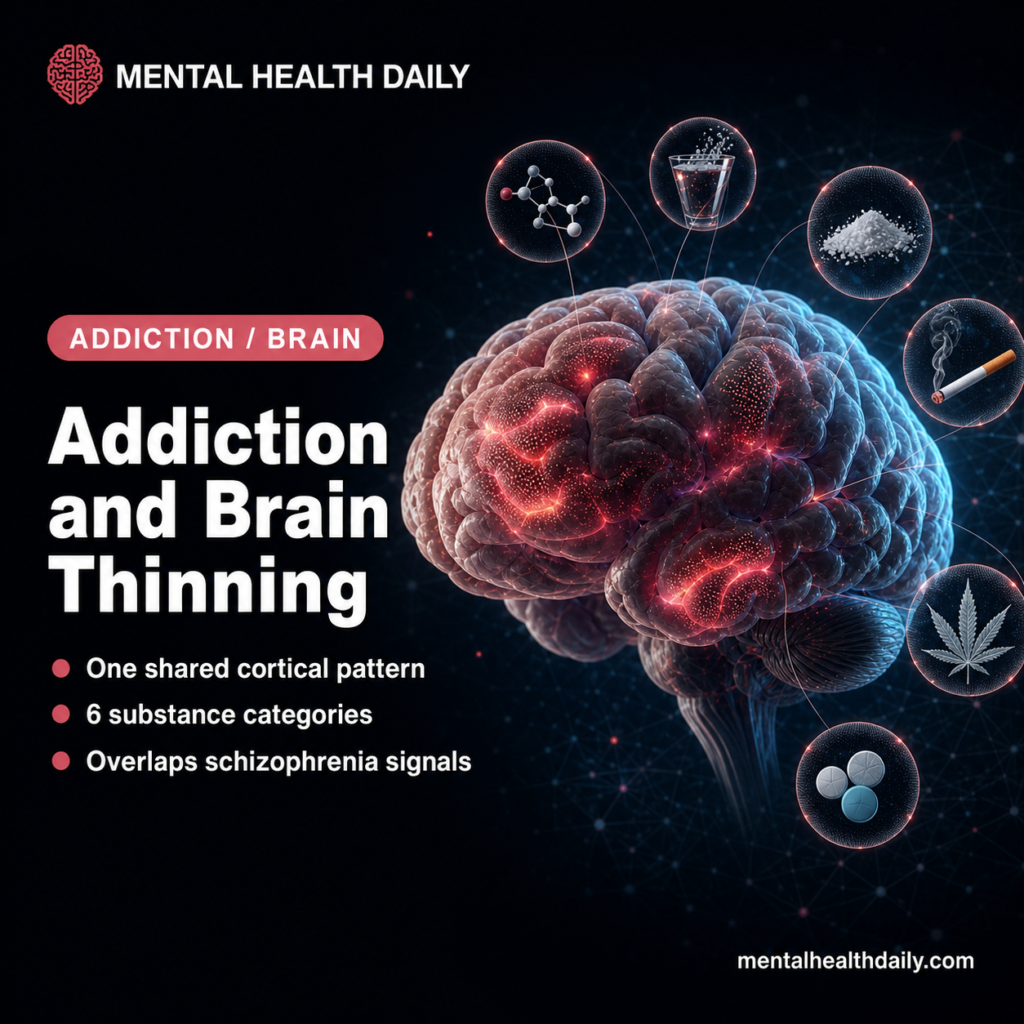
Drug Addiction Linked to Cortical Thinning in 65 of 68 Brain Regions

Photoreal illustration of a human brain with cortical regions highlighted across substance categories, representing the cross-substance morphometric pattern in addiction.

Whether alcohol, cocaine, nicotine, and cannabis damage the same brain regions or different brain regions has been hard to settle in the addiction-imaging literature. A 2026 ENIGMA Addiction analysis by Georgiadis et al. — pooling 4,733 brains across 51 sites — now has an answer. Research Highlights Across 2,782 people with substance use disorder (SUD) …

Read more

Cannabis After Pregnancy Did Not Increase Hypertension Risk in nuMoM2b

Photoreal illustration of a postpartum woman with stethoscope and cannabis imagery, conveying cardiovascular implications of postpartum cannabis use.

A 2026 nuMoM2b Heart Health Study analysis tested whether urine-confirmed cannabis exposure 2–7 years after a first pregnancy predicted incident stage II hypertension; it did not: adjusted odds ratio (AOR) 1.05, 95% CI 0.63–1.76, with 216 of 4,079 participants developing hypertension.1 Research Highlights The headline result was null: cannabis exposure at the 2–7 year postpartum …

Read more