mouse model
Published research on mouse model.

A 2026 humanized P301S tauopathy mouse study found that syntaxin-6 knockout partly rescued early motor impairment from months 1 to 4, protected gait at 5.5 months, reduced frailty (p = 0.005…
Read article →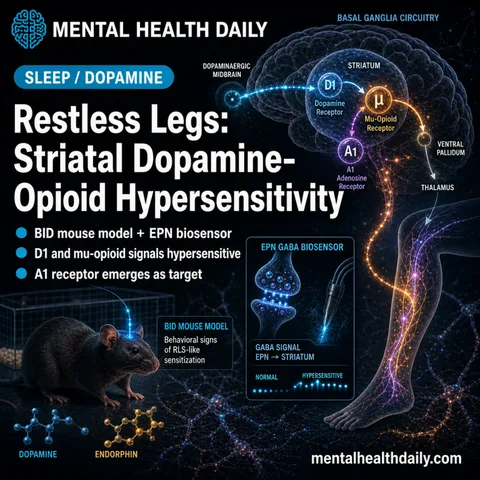
Restless legs syndrome (RLS) and opioid-withdrawal restlessness both produce night-worsening urges to move. A 2026 npj Parkinson’s Disease mouse study tied that overlap to hypersensitive str…
Read article →
One-pronuclear biparental zygotes may be less biologically normal than they look. In a 2026 Nature mouse study, forcing maternal and paternal genomes into 1 enlarged pronucleus disrupted ear…
Read article →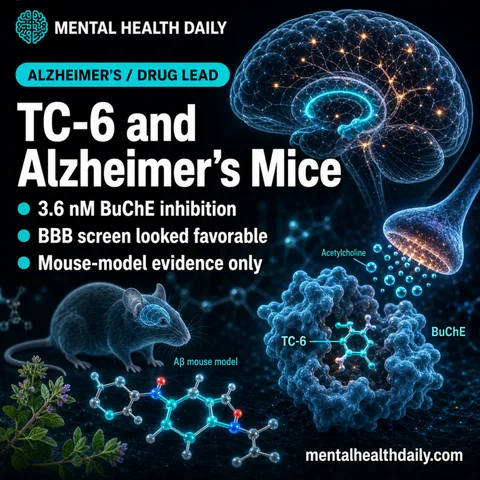
A 2026 medicinal-chemistry study found that thymol carbamate TC-6 inhibited human butyrylcholinesterase at 3.6 nM, showed more than 2,500-fold selectivity over human acetylcholinesterase, cr…
Read article →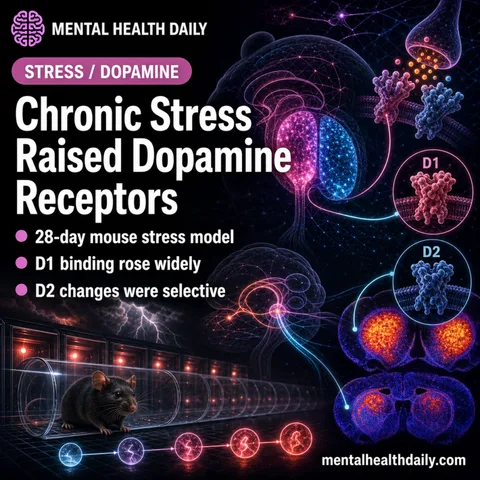
Chronic stress is a candidate mechanism for both depression and addiction risk. A 2026 mouse study found that 28 days of unpredictable chronic mild stress increased striatal dopamine D1 rece…
Read article →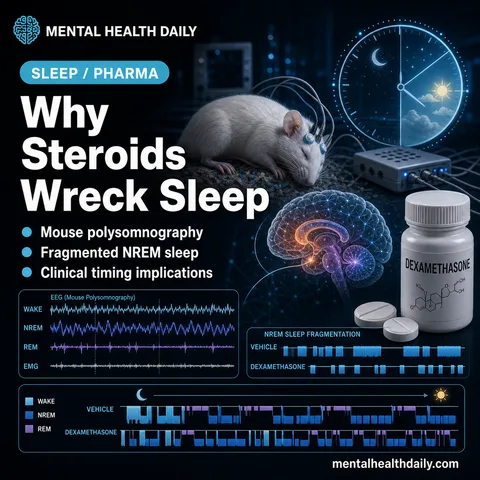
A 2026 male-mouse study found that 30 mg/kg dexamethasone for 5 days increased light-phase wakefulness (t13 = 4.122, p = 0.0012), decreased NREM sleep (t13 = 4.412, p = 0.0007), and amplifie…
Read article →