hit counter

Parkinson’s DBS Impulse Risk: Diffusion MRI Prediction

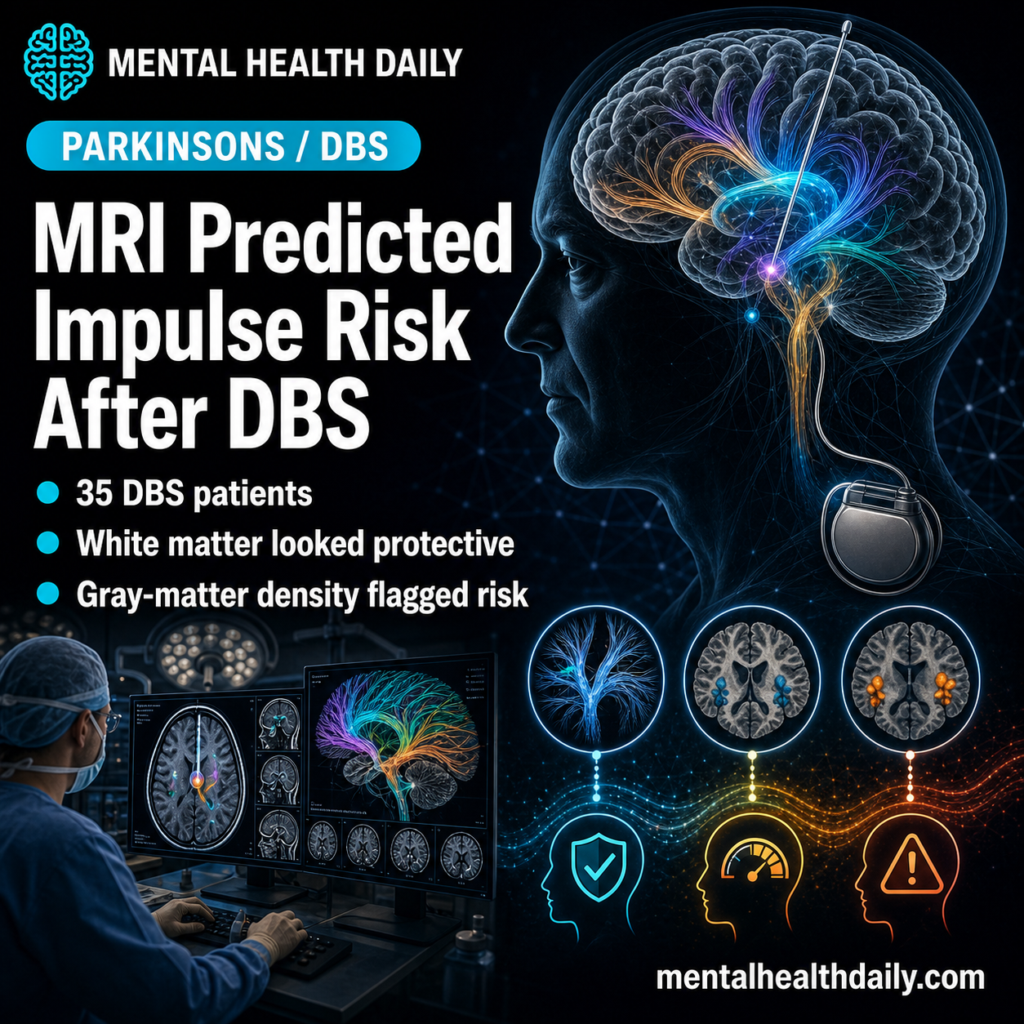
Stylized illustration of a Parkinson's patient brain with overlaid diffusion-MRI tractography showing frontolimbic and executive control fiber bundles, alongside a DBS lead, representing the imaging biomarker question for post-DBS impulse control.

Subthalamic deep brain stimulation (STN-DBS) gives most patients with advanced Parkinson’s disease meaningful motor relief, but a subset develops new or worsened impulse control disorders — pathological gambling, compulsive shopping, hypersexuality, binge eating — while others see preexisting symptoms improve. A 2026 prospective preprint from Loehrer et al. used pre-surgical diffusion MRI to identify microstructural …

Read more

Friedreich Ataxia MRI Study Finds 3 Progression Subtypes

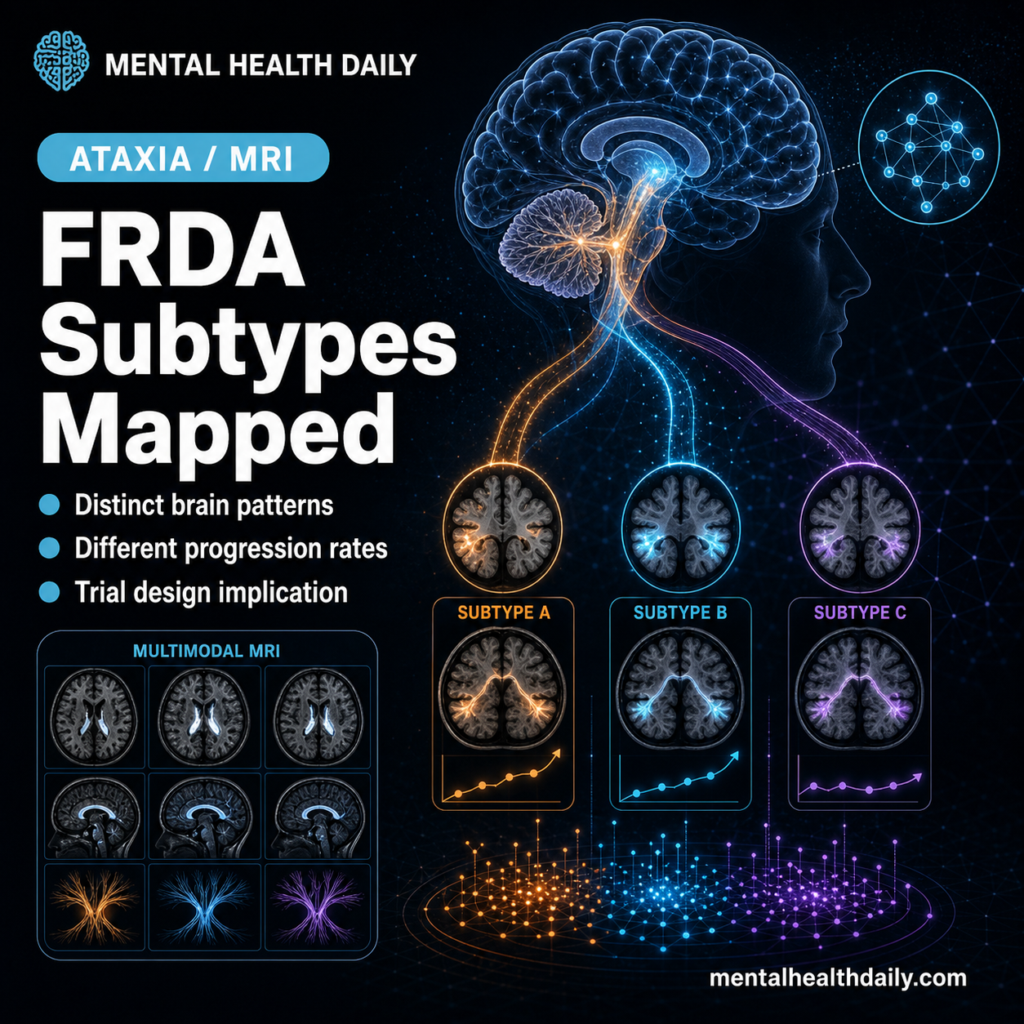
Photoreal illustration of brain regions affected in Friedreich ataxia with overlay of MRI imaging modalities, conveying multi-pattern subtypes.

A 2026 longitudinal MRI preprint involving 54 people with Friedreich ataxia and 57 controls found 3 biologically interpretable progression subtypes: microstructure-dominant, macrostructure-dominant, and minimal/no progression.1 The clusters make biomarker heterogeneity visible at the research level, while the classifier remains too early to assign individual patients to treatment paths. Research Highlights 3 MRI progression subtypes emerged: …

Read more

Resting Brain Connectivity Predicts Fear Extinction Learning

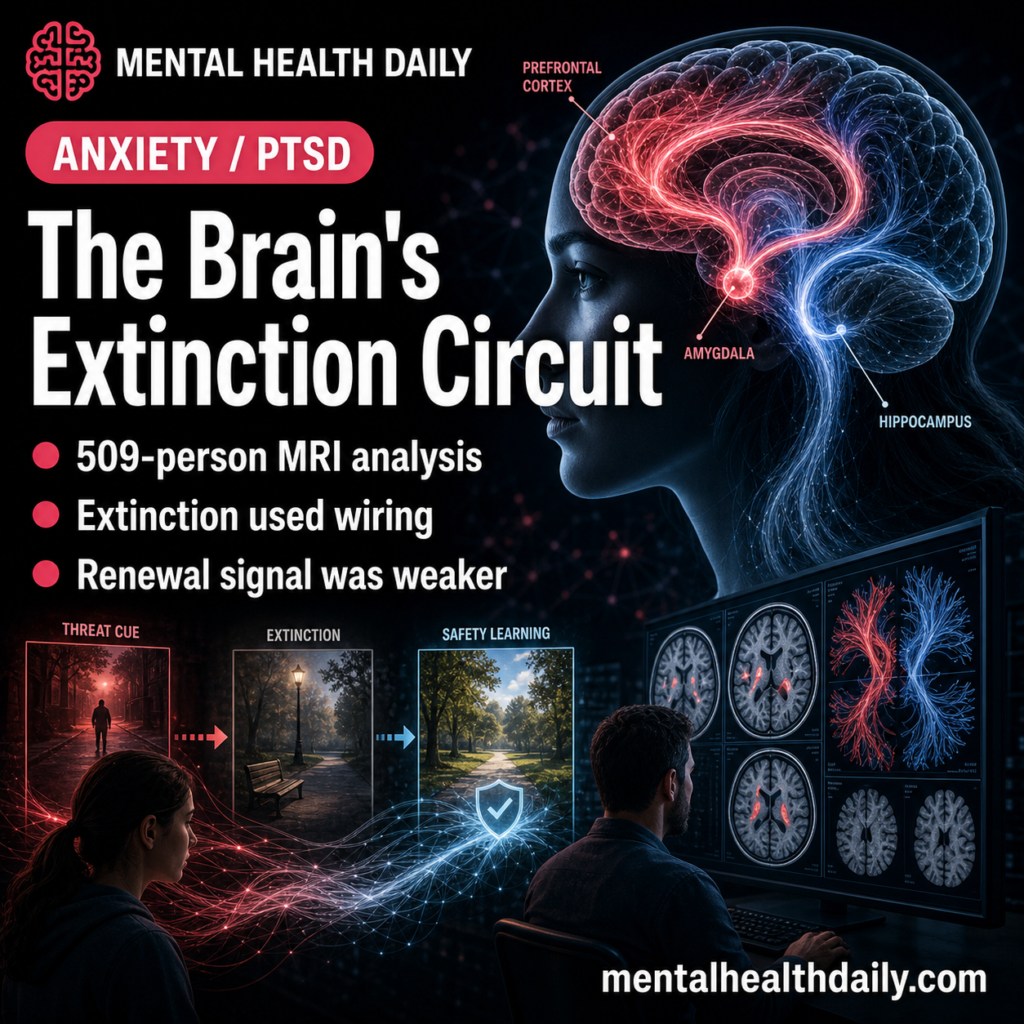
Photoreal illustration of brain network connections in the fear-extinction circuitry, with imagery linking amygdala and prefrontal regions.

A 2026 multimodal MRI analysis of 509 healthy adults found that fear acquisition, extinction learning, and renewal were not predicted by one generic “fear circuit” score: functional connectivity predicted acquisition, structural connectivity predicted extinction, and effective connectivity was the only renewal signal.1 The extinction result is the clinically interesting piece because exposure therapy depends on …

Read more

Brain Imaging Techniques (Neuroimaging)

Brain imaging (neuroimaging) was invented in the 1880s by Angelo Mosso, who devised a technique referenced as the “human circulation balance.”  This technique was able to assess how blood was redistributed throughout the brain as an individual experienced emotion and/or engaged in intellectual tasks.  It wasn’t until the early 1900s that a newer, improved brain …

Read more