Celecoxib for Depression: 7 Trials, Add-On Benefit Unclear
A 7-trial review favored adding celecoxib to antidepressants for depression, but its benefit was not confirmed after 3 high-risk trials were excluded.
A 7-trial review favored adding celecoxib to antidepressants for depression, but its benefit was not confirmed after 3 high-risk trials were excluded.
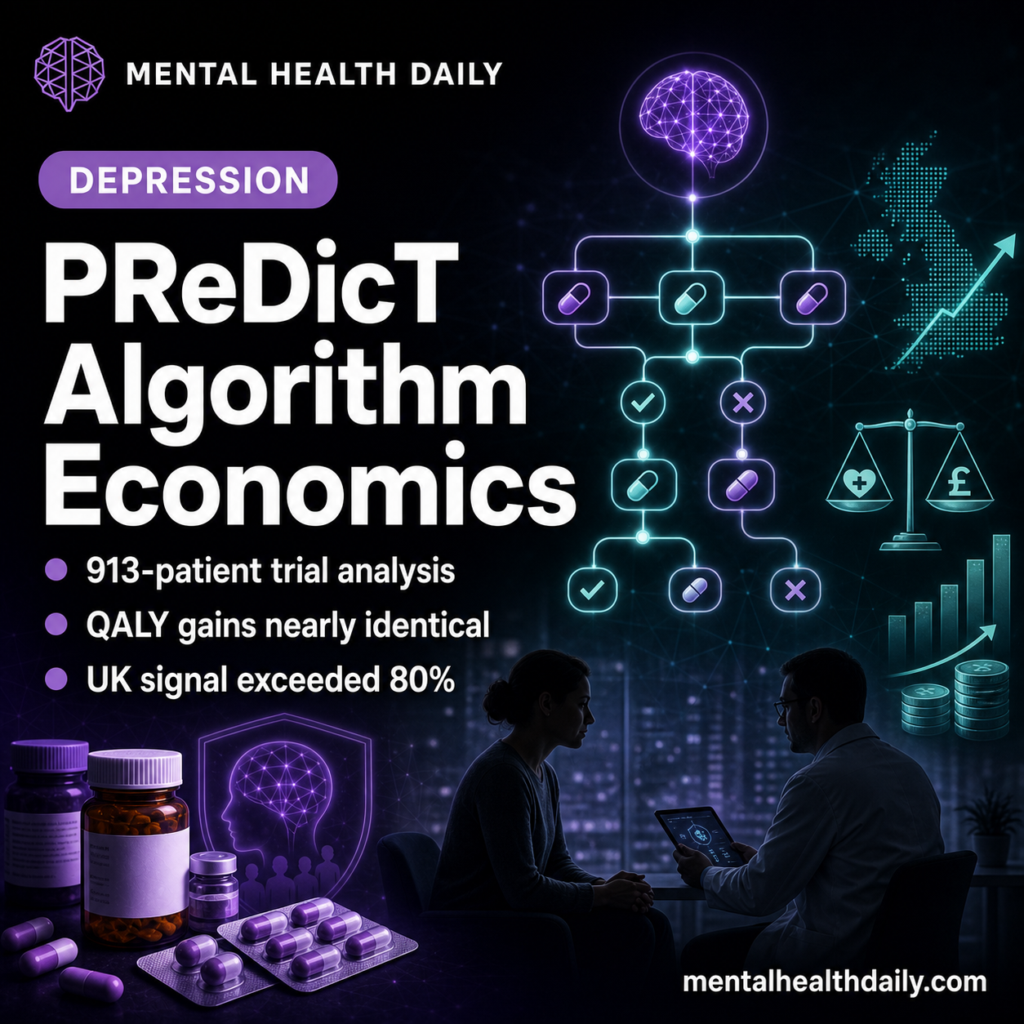
A 913-person economic evaluation of the PReDicT antidepressant algorithm found nearly identical EQ-5D quality-of-life gains vs. treatment as usual (+0.139 vs. +0.140) and nearly identical societal cost reductions (−€2,589 vs. −€2,602), while cost-effectiveness probabilities were only 46% to 59% at trial level but exceeded 80% in the UK.1 The algorithm signal was country-specific and capability-weighted, …
A 2026 review of electroacupuncture for depression found a familiar split: mechanistic evidence is rich, but clinical proof remains uneven because representative trials ranged from 65 to 270 participants, used different sham or drug comparators, and often failed to connect stimulation parameters with biological endpoints.1 Electroacupuncture is plausible as a subtype-matched neuromodulation strategy, but it …

Most antidepressant pharmacovigilance data come from high-income countries, leaving prescribing patterns and adverse-effect profiles in low- and middle-income countries underdocumented. A 2026 cross-sectional study by Riaz and colleagues describes antidepressant use in Pakistan, with patient-reported adverse effects mapped against prescription patterns.1 Research Highlights Antidepressant use in low- and middle-income countries (LMICs) has grown substantially but …

In a new study, researchers discovered the synergistic antidepressant-like effects of xylopic acid (XA), a natural compound extracted from the dried fruits of Xylopia aethiopica, when combined with conventional antidepressants in mice. The study meticulously explored the interaction between XA and antidepressants like fluoxetine, sertraline, imipramine, and ketamine, revealing a promising potential for enhancing antidepressant …

Depression is a multifaceted mental health condition that presents significant challenges in both diagnosis and treatment. Recent studies have explored the potential of electroencephalography (EEG) as a predictive tool for treatment outcomes in major depressive disorder (MDD), with particular focus on the response to antidepressants like escitalopram. Highlights: EEG Abnormalities & Antidepressant Response: Contrary to …

In the quest to find more effective treatments for depression, particularly the challenging symptom of anhedonia, Transcranial Direct Current Stimulation (tDCS) emerges as a promising option. This non-invasive brain stimulation technique targets specific brain regions to modulate activity and potentially alleviate symptoms. A recent study has shed light on the efficacy and safety of targeting …