hit counter

Blood microRNAs Linked to Hippocampal Atrophy in Rhineland Study
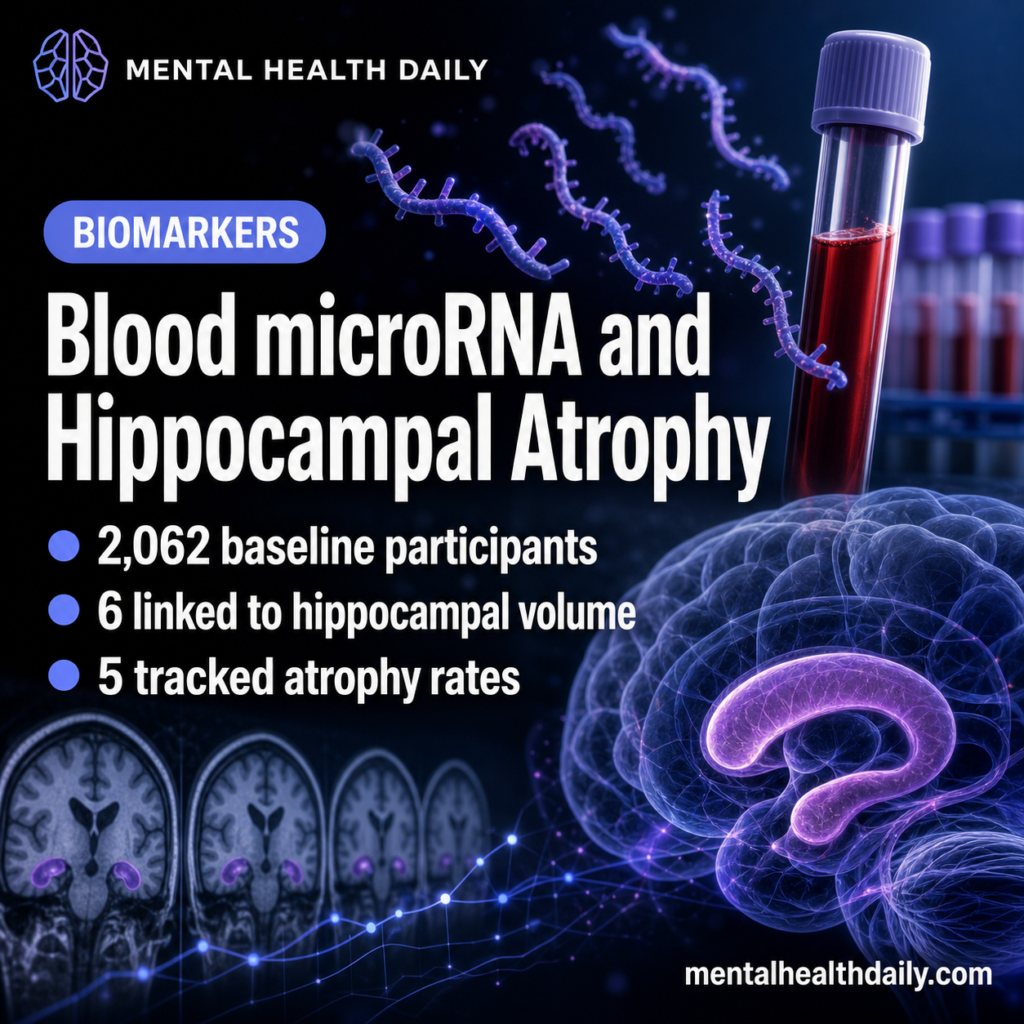
MHD featured image for blood microRNA signatures and hippocampal atrophy.

A 2026 Molecular Psychiatry analysis from the Rhineland Study found that blood-derived microRNA signatures were associated with hippocampal brain structure: 6 microRNAs linked cross-sectionally to left hippocampal volume, and 5 different microRNAs linked longitudinally to hippocampal atrophy rates.1 The result is biomarker-discovery evidence for brain aging, not a ready dementia blood test. Research Highlights Baseline …


Read more

Alzheimer’s PET Imaging Now Gates Anti-Amyloid Therapy Eligibility

MHD featured image for Alzheimer's PET imaging and anti-amyloid therapy eligibility.

A 2026 review in the Japanese Journal of Radiology argued that amyloid PET has moved from an optional Alzheimer’s disease biomarker to a practical eligibility gate for anti-amyloid antibody therapy, while tau PET and FDG-PET answer different questions in the same clinical workflow.1 The key shift is not that every memory complaint needs PET; it …

Read more

Alzheimer’s Neurovascular Unit Dysfunction May Start Before Amyloid

MHD featured image for neurovascular unit dysfunction and Alzheimer's disease.

A 2026 review argues that neurovascular-unit dysfunction may precede amyloid-beta generation in Alzheimer’s disease and then synergize with amyloid deposition, tau pathology, inflammation, and neuronal loss.1 The model is vascular biology plus amyloid biology: blood vessels, barrier integrity, and amyloid deposition can amplify each other early enough to affect dementia risk and progression. Research Highlights …

Read more

Olfactory MRI Radiomics Link pTau217 to Alzheimer’s Cognition

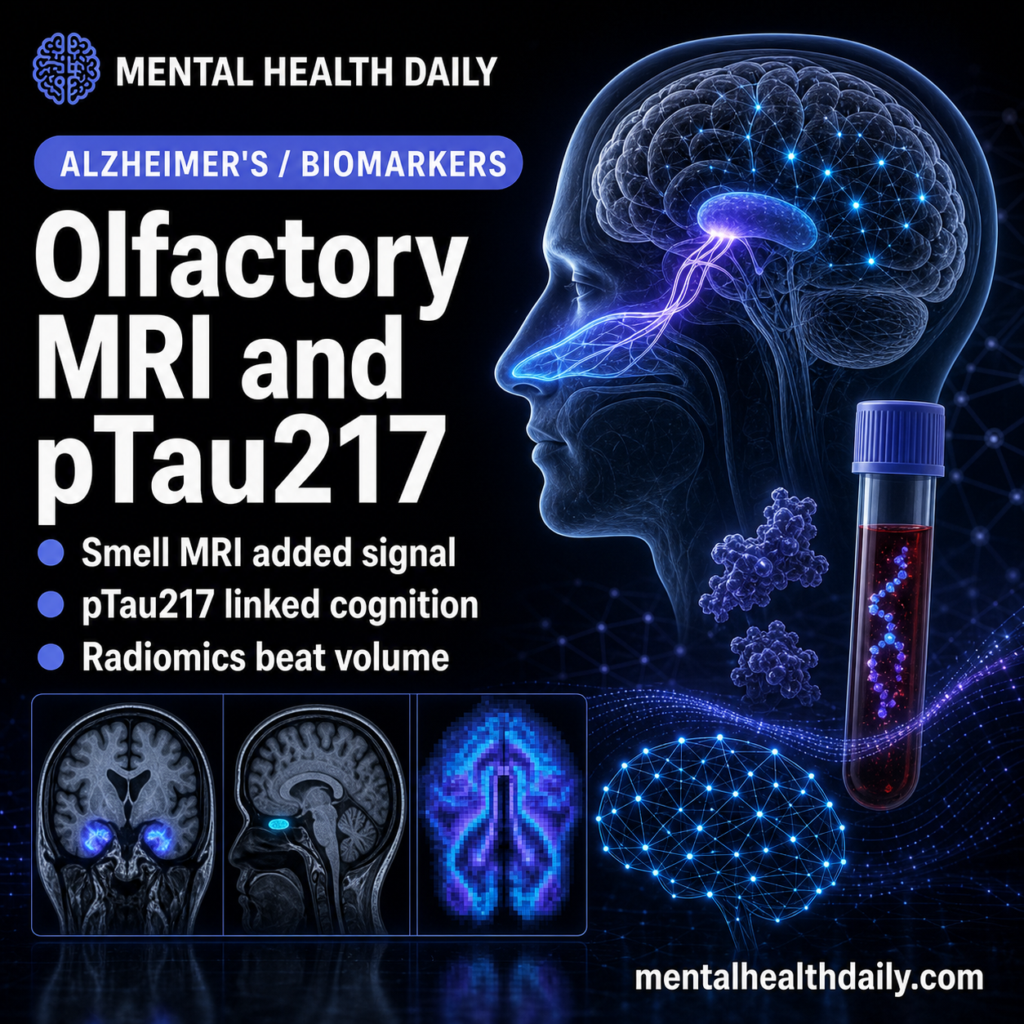
MHD featured image for olfactory MRI radiomics, pTau217, and Alzheimer's disease cognitive impairment.

A 2026 multi-cohort Alzheimer’s disease study found that MRI radiomics from the hippocampus and amygdala linked plasma pTau217 and smell identification to cognitive impairment — with more added cognitive signal than simple regional volume. The result is useful because it points to a possible bridge between blood biomarkers and brain-circuit damage, but it is still …

Read more