hit counter

Prior Cocaine Use Disrupts Orbitofrontal Hidden-State Coding
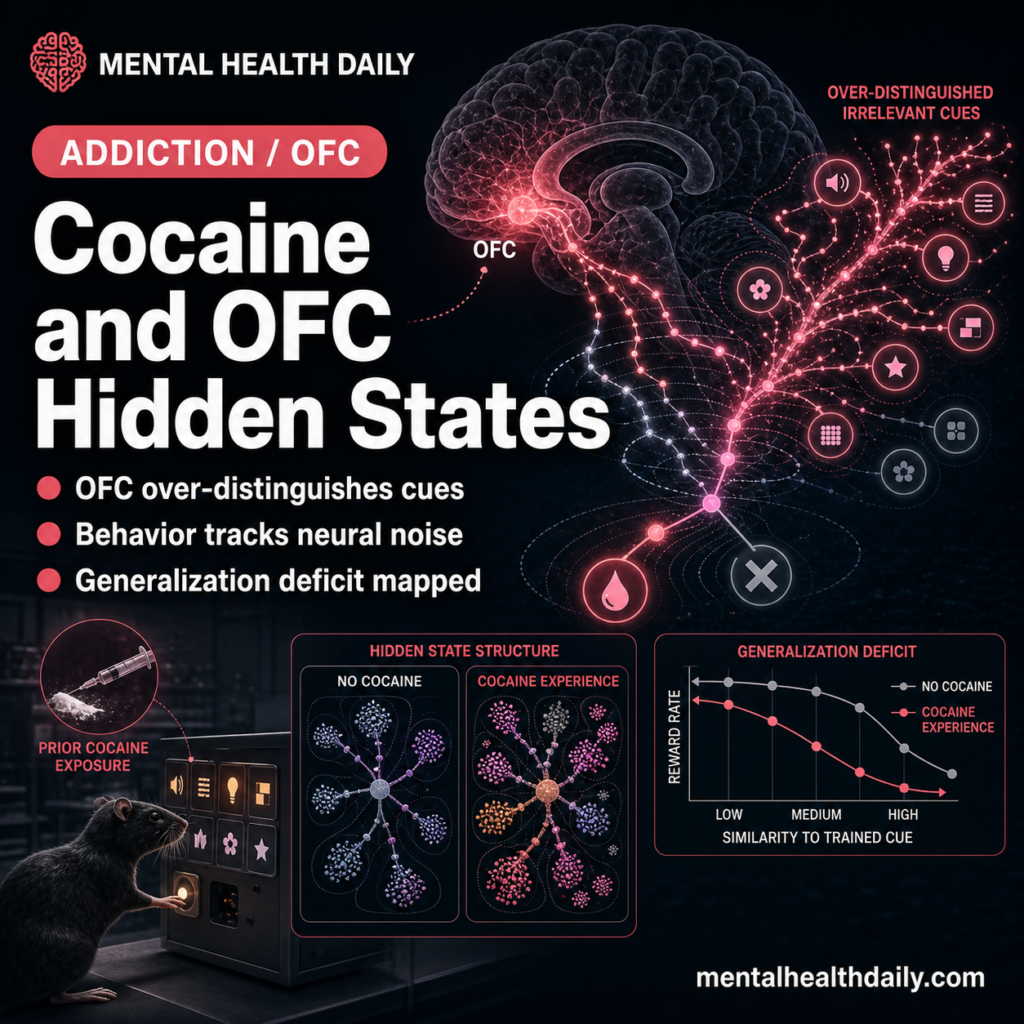
MHD featured image for Prior Cocaine Use Disrupts Orbitofrontal Hidden-State Coding.

A 2026 eLife study recorded 3,881 lateral orbitofrontal cortex units in rats and found that prior cocaine use made the OFC over-distinguish task positions that controls treated as functionally equivalent. The headline result was not gross task failure: cocaine-experienced rats still performed the odor task, but their OFC ensembles showed higher S1-vs.-S2 decoding than sucrose …
Read more

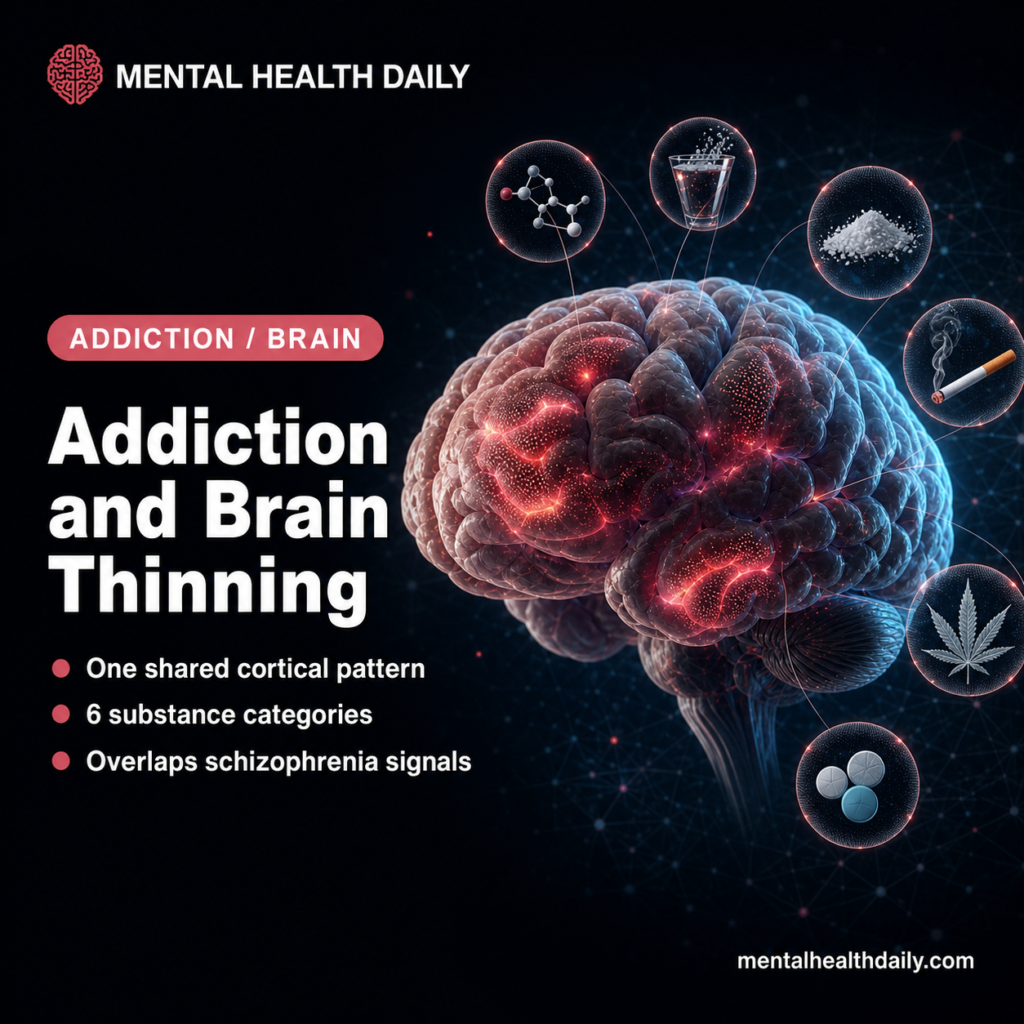
Drug Addiction Linked to Cortical Thinning in 65 of 68 Brain Regions

Photoreal illustration of a human brain with cortical regions highlighted across substance categories, representing the cross-substance morphometric pattern in addiction.

Whether alcohol, cocaine, nicotine, and cannabis damage the same brain regions or different brain regions has been hard to settle in the addiction-imaging literature. A 2026 ENIGMA Addiction analysis by Georgiadis et al. — pooling 4,733 brains across 51 sites — now has an answer. Research Highlights Across 2,782 people with substance use disorder (SUD) …

Read more

tDCS for the Treatment of Cravings in Drug Addiction (2023 Review)

Transcranial direct current stimulation (tDCS) emerges as a promising, noninvasive treatment for reducing cravings in substance addiction. This technique involves the use of scalp electrodes to modulate neural activity, influencing cravings associated with drug addiction or substance dependence. Despite its promise, further research is needed to standardize protocols and understand long-term efficacy. Highlights: tDCS significantly …

Read more

How Long Does Cocaine Stay In Your System?

Cocaine (benzoylmethylecgonine) is considered to be among the world’s most addictive drugs and is most often used on a recreational basis to achieve a dopaminergic euphoria.  Those that use cocaine feel an increased sense of pleasure, attain a pro-social effect (wanting to socialize), and quicker conversational wit (due to enhanced thought speed; beta waves).  These effects …

Read more

Excited Delirium Syndrome: Causes, Symptoms, Treatment

Excited delirium is considered a relatively uncommon health condition characterized by severe agitation, aggression, distress, and is often fatal.  In many cases of excited delirium, individuals will have displayed noticeable increases in body temperature (fever), utilized drugs that altered dopaminergic functioning, and exhibit overtly bizarre behavior.  Although the condition is rare, those with excited delirium …

Read more

Long Term Effects of Cocaine on the Brain and Body

Most people are aware that cocaine is a highly addictive psychostimulant drug associated with increases in energy and feelings of euphoria. Cocaine functions by flooding the brain with the neurotransmitter dopamine, leading to feelings of pleasure and euphoria. Some consider the “crack” format of cocaine to be among the most addictive drugs in the world. …

Read more

Oreos As Addictive As Cocaine and Morphine in Rats

Are there certain foods that you are unable to stop eating? Research conducted by Connecticut College shed some light on the addictive nature of sugary foods. For their particular study, they decided to use “America’s Favorite Cookie,” the Oreo. Their findings weren’t that surprising to people who already know the fact that Oreos and other …

Read more