hit counter

Falling Dementia Rates Linked to Generational Memory Gains

Photoreal illustration representing generational gains in memory across older adults, with imagery of overlapping age trajectories and hippocampal motifs.

Dementia rates in the US, UK, Netherlands, Sweden, France, and several other high-income countries have been falling for decades, despite population aging. The standard explanation — improved cardiovascular care, more education, and less smoking in later-born cohorts — is real but incomplete. Research Highlights Dementia incidence has been falling about 13% per decade in Western …
Read more

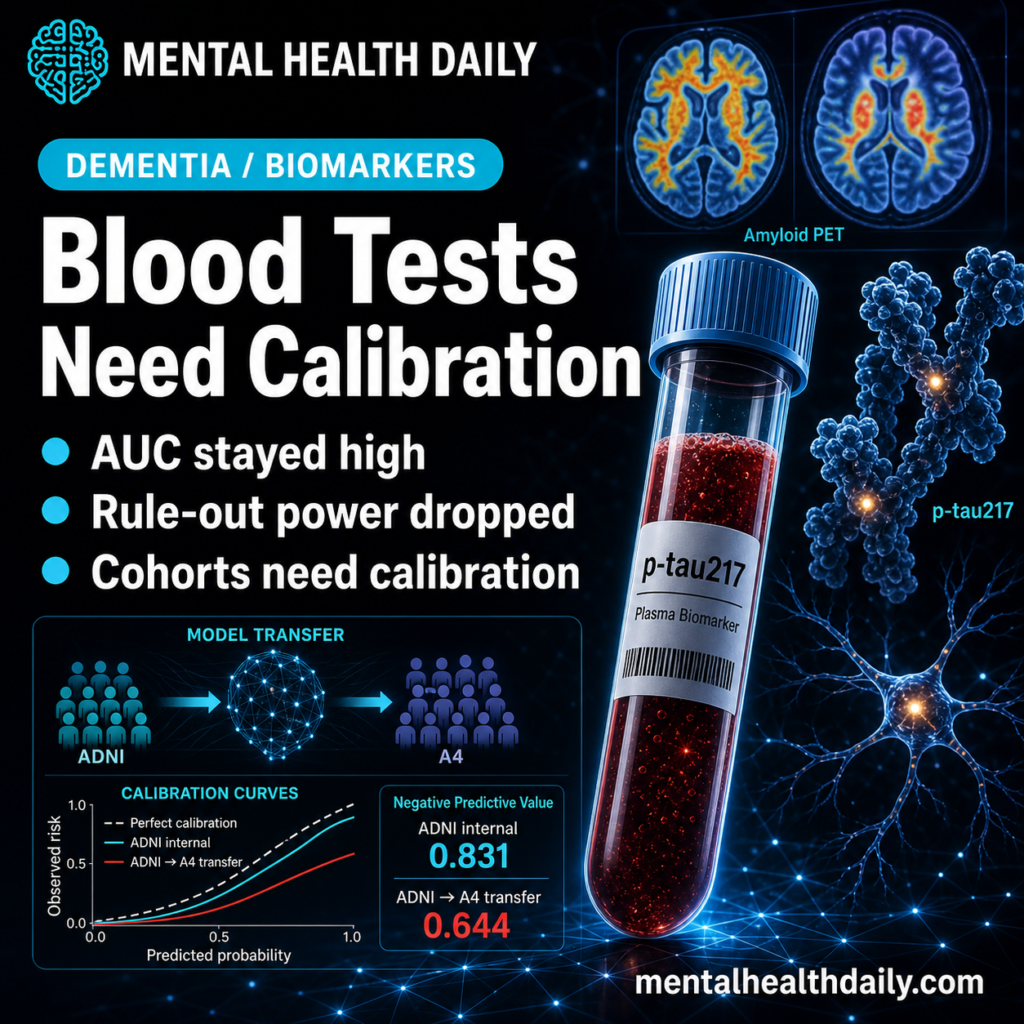
Alzheimer’s Blood Biomarker Models Lose Rule-Out Power Across Cohorts

Editorial card showing Alzheimer's blood biomarker model transfer across cohorts with PET scan and blood assay imagery.

A 2026 ADNI/A4 validation study found that Alzheimer’s plasma-biomarker machine-learning models still ranked amyloid PET status well across cohorts, but the practical rule-out number moved hard: negative predictive value fell from 0.831 inside ADNI to 0.644 when the ADNI-trained model was applied to A4.1 Research Highlights 1,707-person ADNI/A4 test: researchers trained amyloid PET prediction models …

Read more

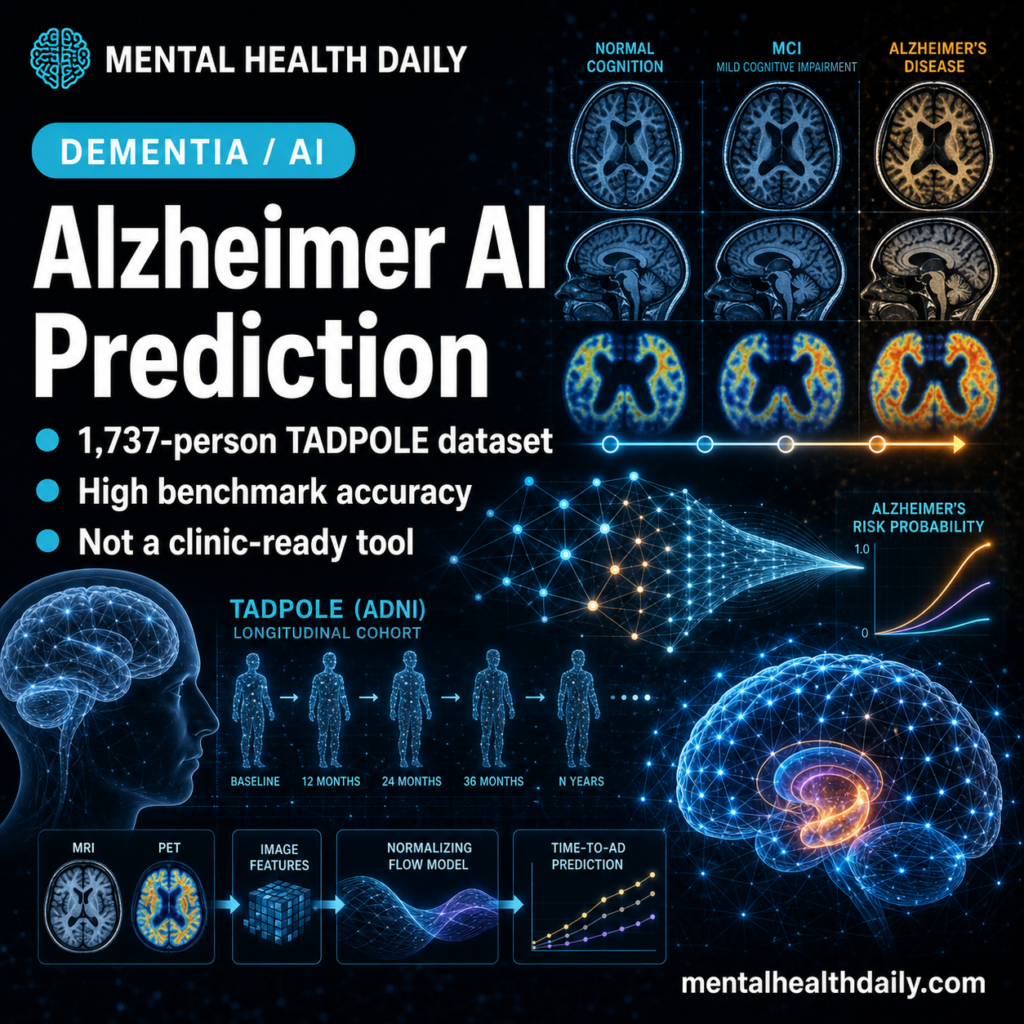
Alzheimer’s Progression AI Model Reaches 0.965 mAUC in TADPOLE Dataset

Editorial card showing Alzheimer progression prediction with longitudinal brain scans, model uncertainty, and TADPOLE cohort data.

A 2026 TADPOLE modeling study reported that a sequential neural process with normalizing flows predicted future Alzheimer diagnostic stage with mAUC 0.965 ± 0.006, ahead of the authors’ earlier sequential-neural-process model at 0.937 ± 0.014.1 The result is a strong benchmark signal for uncertainty-aware disease-progression AI, but it is still retrospective modeling evidence rather than …

Read more

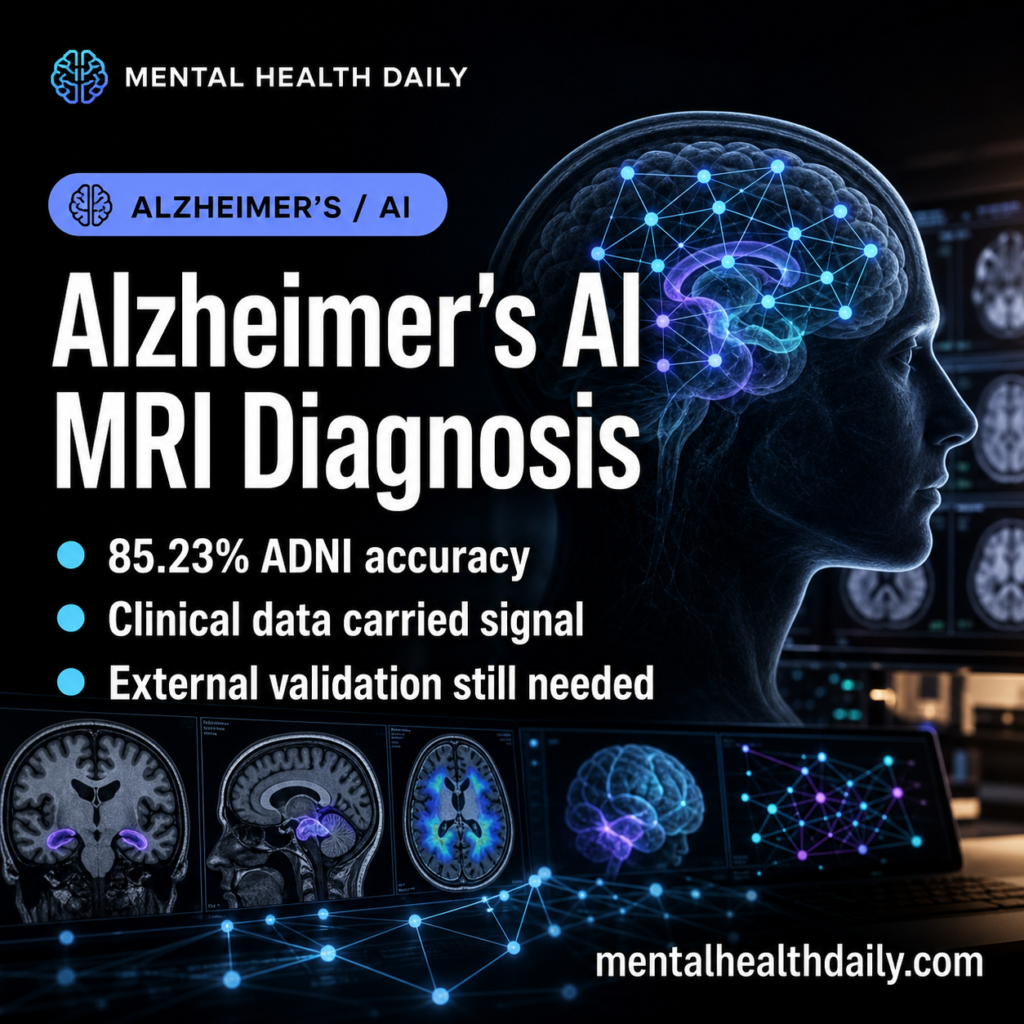
Alzheimer’s AI MRI Diagnosis: ANA-GNN Reaches 85.23% Accuracy in ADNI

MHD featured image for ANA-GNN Alzheimer's AI MRI diagnosis in the ADNI cohort.

A 2026 ADNI study reported 85.23% accuracy for ANA-GNN, a graph neural network that combined structural MRI regional features with clinical variables to classify cognitively normal controls, mild cognitive impairment, and Alzheimer’s disease.1 The result is useful, but the clinical-feature ablation dropped accuracy to 68.35%, so the model should be read as multimodal decision-support research, …

Read more

Alzheimer’s RVI-AD MRI Score Predicted Dementia Conversion With 0.70 AUC

A 2026 Molecular Psychiatry study found that RVI-AD, a structural-MRI score measuring how closely a person’s brain anatomy matches an Alzheimer’s disease pattern, predicted mild-cognitive-impairment conversion to dementia most strongly over the next 3 years: OR 2.16, 95% CI 1.81-2.57, p < 2e-16, AUC 0.70.1 Research Highlights Short-term conversion signal: in 965 ADNI participants with …

Read more

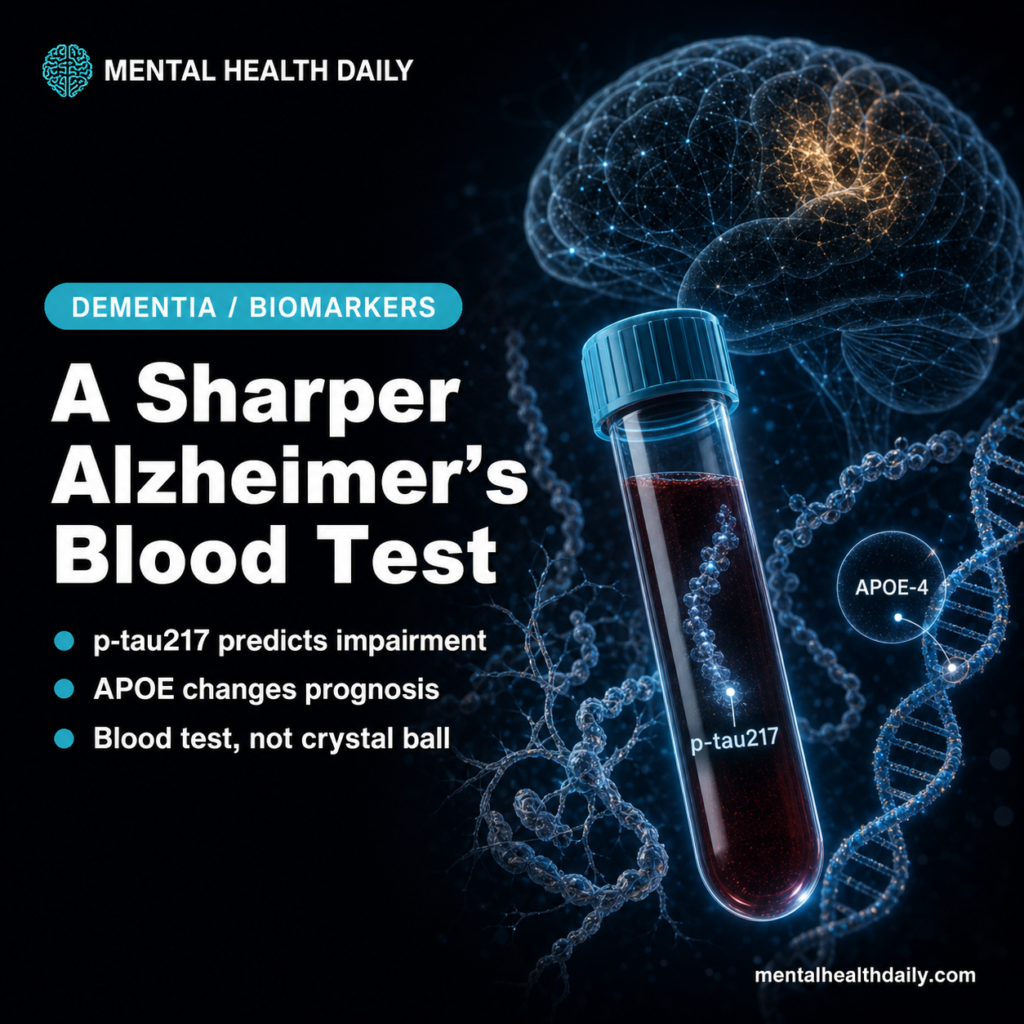
Plasma p-tau217 Blood Test Predicts Alzheimer’s Risk 1.5x Stronger in APOE-e4

Photoreal illustration representing a blood biomarker test for Alzheimer's disease with imagery of blood vials, neurons, and APOE genetic motifs.

Until recently, Alzheimer’s pathology could only be confirmed in living patients via PET imaging or lumbar puncture. Plasma p-tau217 changed that calculus — but how to interpret a positive result depends substantially on APOE genotype.1 Research Highlights Plasma p-tau217 is a blood biomarker that rises years before Alzheimer’s symptoms. The 2024 Alzheimer’s Association revised criteria …

Read more