hit counter

Closed-Loop Subgaleal ISP Reduced Epilepsy Seizure Incidence 80%
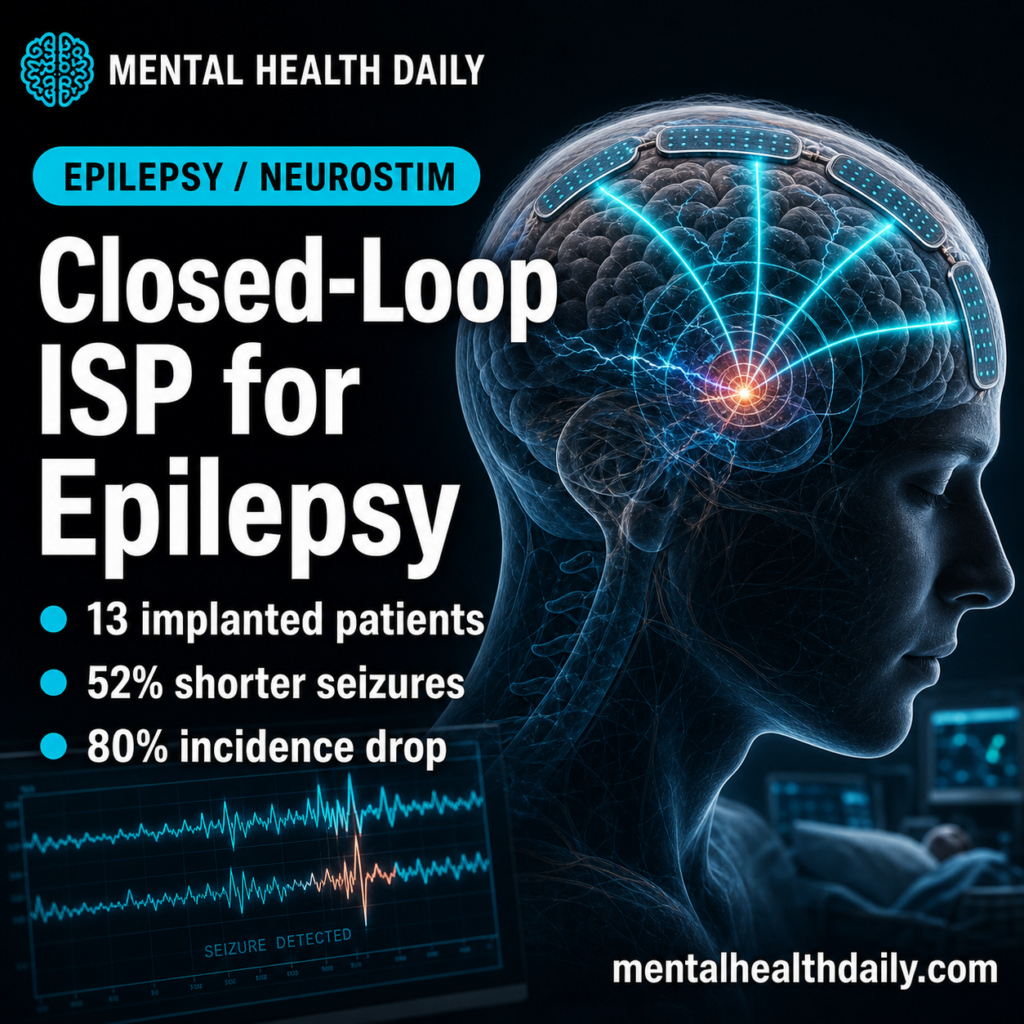
Editorial card showing subgaleal electrode strips, closed-loop seizure detection, and focused neurostimulation for therapy-resistant epilepsy.

A 2026 first-in-human medRxiv preprint reported that closed-loop subgaleal intersectional short-pulse stimulation shortened stimulated seizures by 52% on average and reduced seizure incidence by 80.9% after 48 hours in 5 high-frequency therapy-resistant epilepsy patients. The signal is promising because it combines responsive seizure detection with electrode strips placed under the scalp rather than electrodes implanted …

Read more

VNS After Failed Epilepsy Surgery Reduced Seizures 76% at 36 Months

Photoreal illustration showing an implanted vagus nerve stimulator and brain pathways, representing neuromodulation for drug-resistant epilepsy.

A 2026 CORE-VNS registry analysis found that implanted vagus nerve stimulation still produced large 36-month seizure reductions after failed intracranial epilepsy surgery: median all-seizure reduction was 76.3% with prior surgery vs. 76.6% without prior surgery.1 Research Highlights Prior surgery did not blunt the main VNS signal: CORE-VNS reported 76.3% median all-seizure reduction at 36 months …

Read more

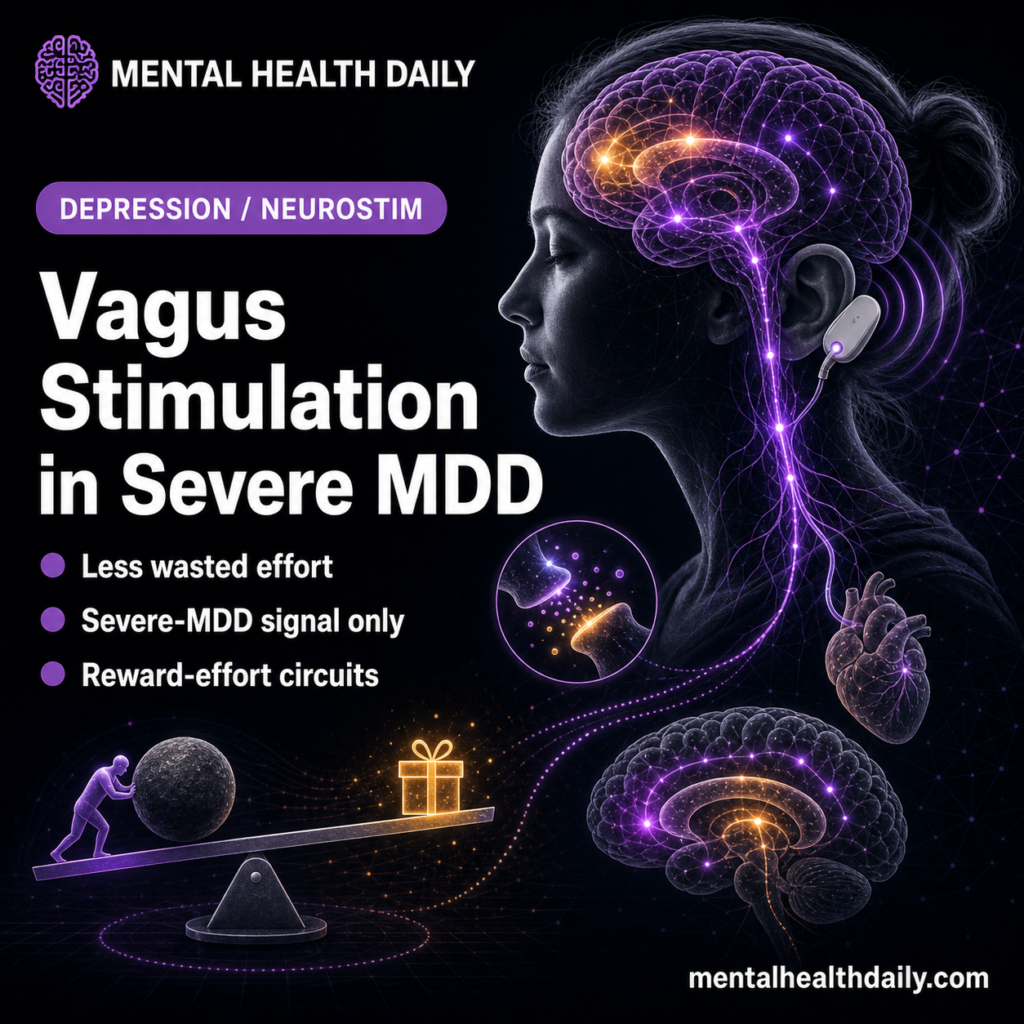
tVNS Alters Effort and Reward Decisions in Severe Depression

Photoreal illustration of an ear-clip vagus nerve stimulation electrode, with neural pathway motifs representing reward-effort circuits.

An ear-clip that modulates mood by stimulating the vagus nerve has obvious appeal — but the evidence base for non-invasive tVNS in depression has been mixed for a decade. A 2026 cross-over RCT by Forbes et al. sharpens what specifically tVNS does well.1 Research Highlights Transcutaneous vagus nerve stimulation (tVNS) is a non-invasive ear-electrode version …

Read more