hit counter

Esketamine Failed Cost-Effectiveness vs. Cheaper TRD Options at $50K/QALY
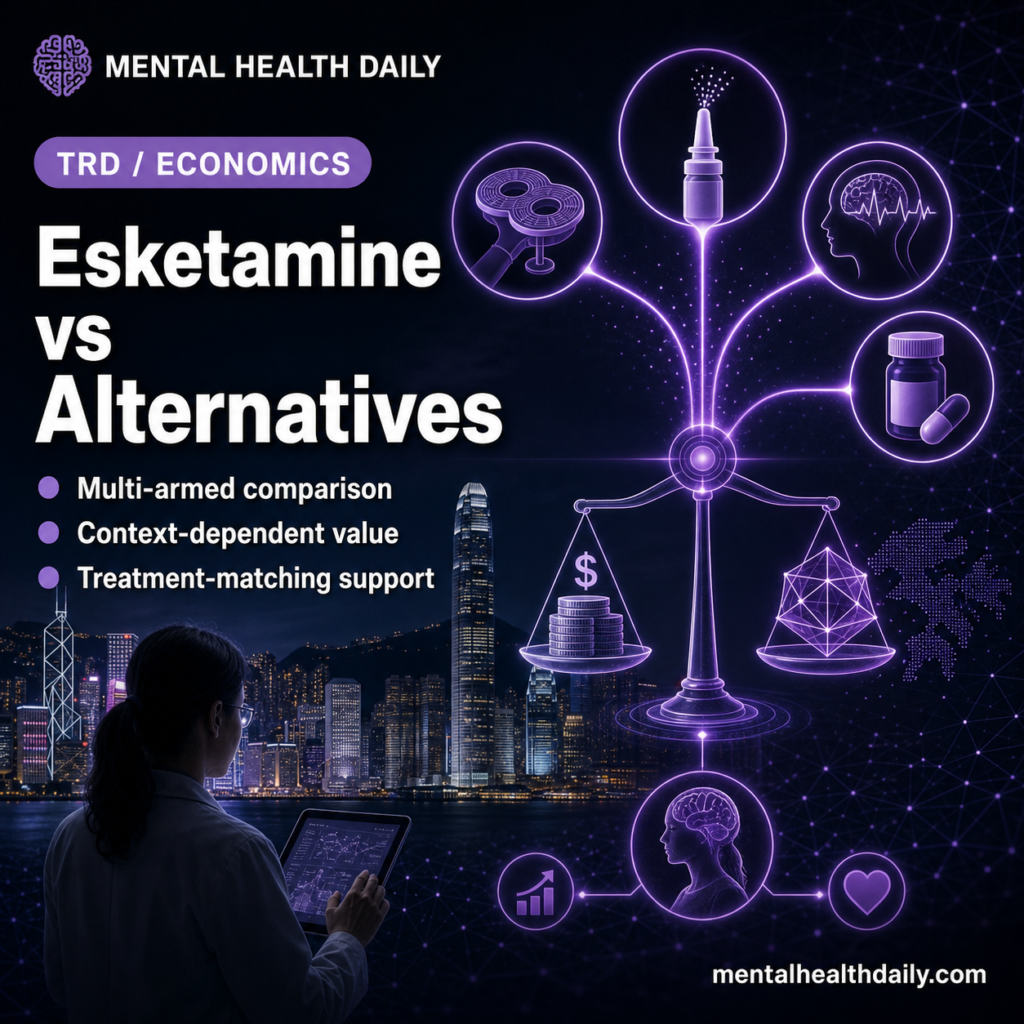
Photoreal illustration of a depression-treatment decision with cost and outcome imagery, conveying healthcare-economic decision-making.

Intranasal esketamine — FDA-approved for treatment-resistant depression in 2019 — failed cost-effectiveness benchmarks against four cheaper third-line options in a 2026 Hong Kong modeling study, with incremental cost-effectiveness ratios (ICERs) of US$134,127 to US$312,750 per quality-adjusted life-year (QALY) at a US$50,000/QALY willingness-to-pay (WTP) threshold.1 Combination antidepressant therapy was the most cost-effective strategy modeled. Research Highlights …
Read more

Esketamine Can Trigger Trauma Re-Experiencing in PTSD

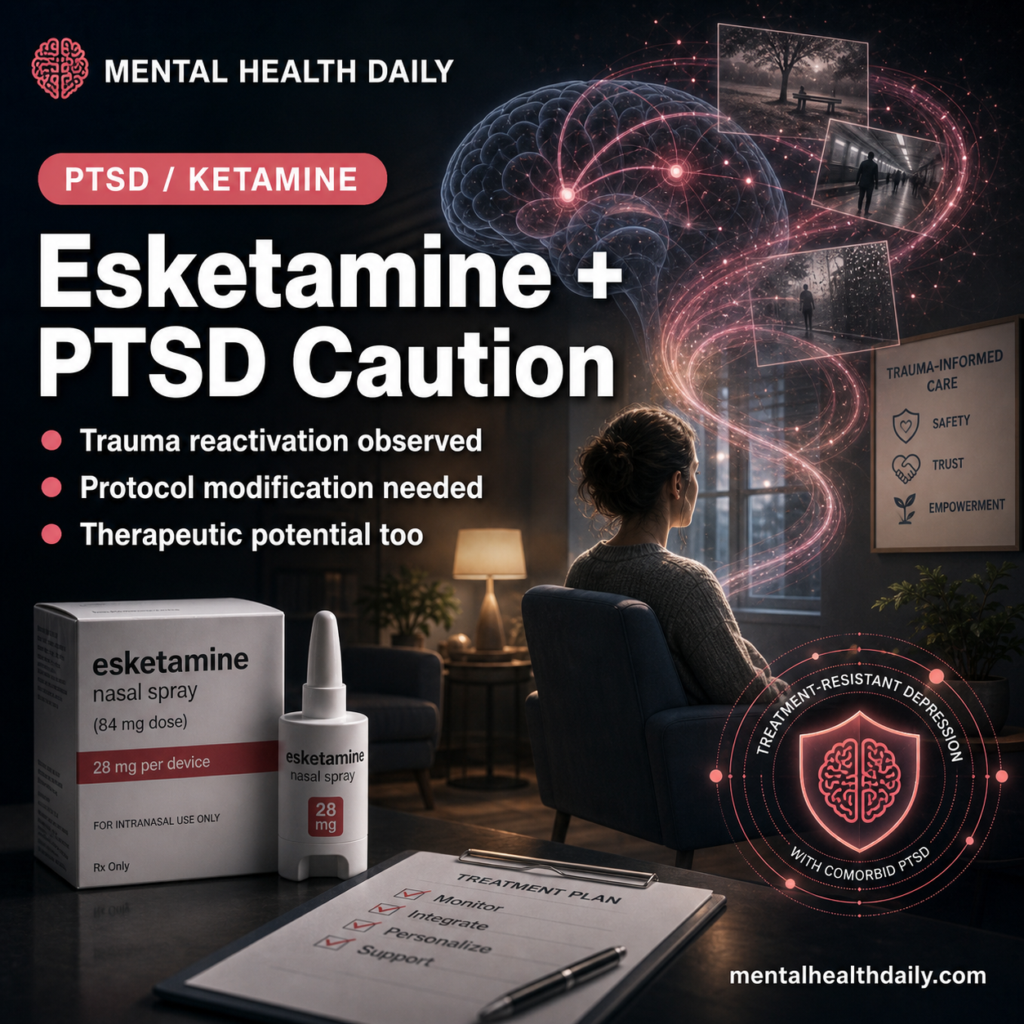
Photoreal illustration of a patient receiving nasal spray with overlay of trauma memory imagery, conveying esketamine + PTSD interaction.

A 2026 retrospective case series of 22 adults with treatment-resistant depression and comorbid PTSD found that trauma re-experiencing during intranasal esketamine disappeared over later sessions in 72.7% of patients, while 27.3% stopped esketamine because the flashbacks persisted.1 Research Highlights Flashbacks usually faded, but not always: In 16 of 22 patients (72.7%), esketamine-related trauma re-experiencing disappeared …

Read more

Ketamine Addiction After One Therapeutic Dose: How Rare Is It?

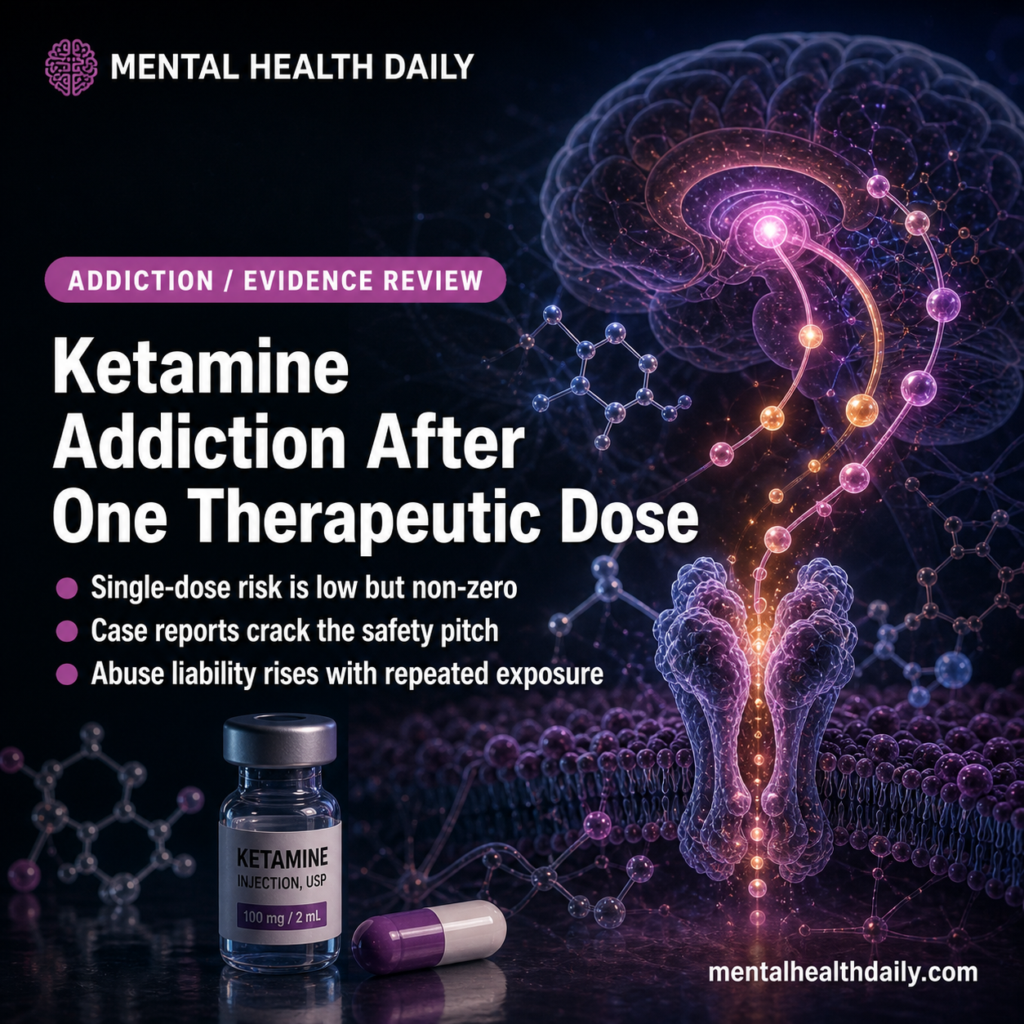
Stylized illustration evoking the tension between ketamine's clinical promise for depression and its abuse liability, framed in muted rose and amber tones for the addiction topic.

Ketamine and its S-enantiomer esketamine (sold as Spravato) are now established treatments for treatment-resistant depression and acute suicidality. The standard safety pitch from sponsors and clinics: at single sub-anesthetic doses, in supervised settings, addiction risk is minimal. A new case report in BJPsych Open documents a patient for whom that pitch failed catastrophically — and …

Read more