hit counter

PINK1 and Parkin Link Parkinson’s Disease to Failed Mitochondrial Cleanup
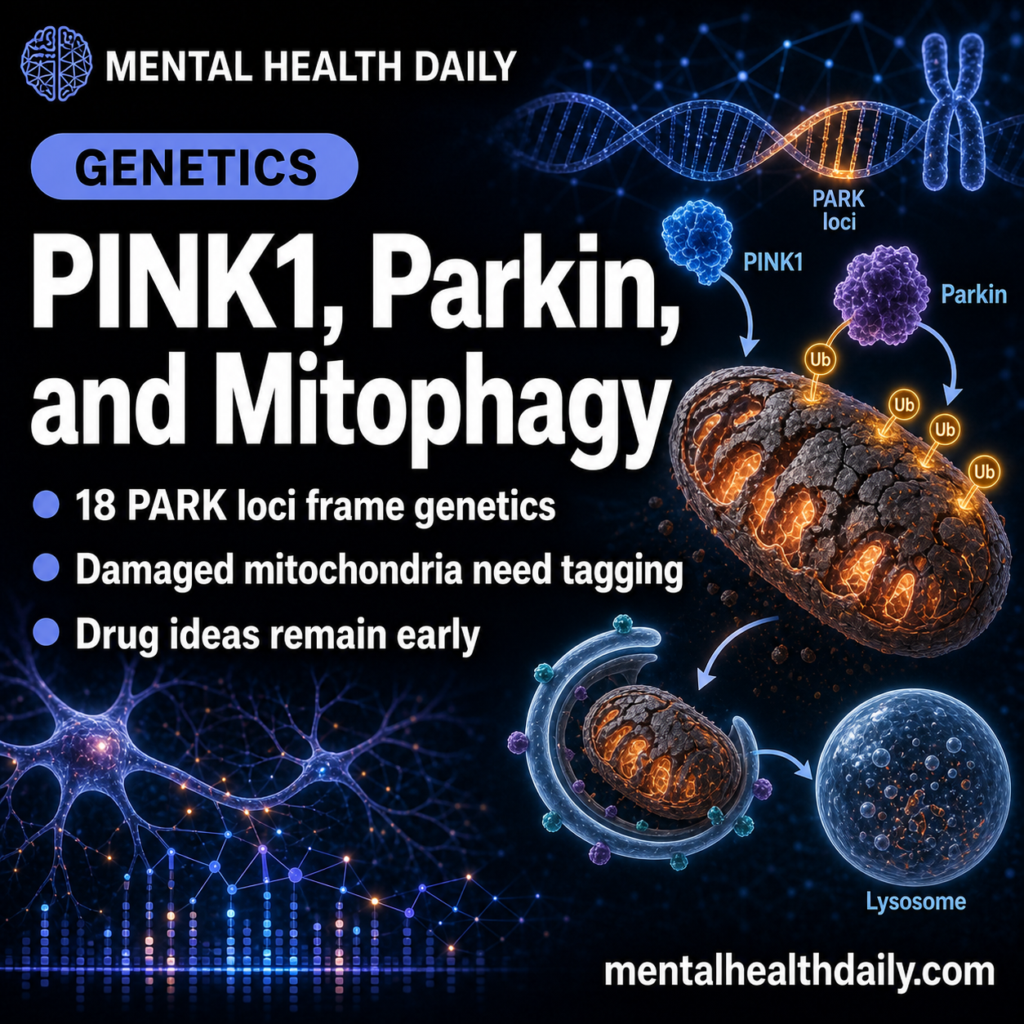
MHD featured image for PINK1, parkin, mitophagy, and mitochondrial cleanup in Parkinson's disease.

A 2026 review ties the Parkinson’s disease genes PINK1 and parkin to damaged-mitochondria cleanup, from damage sensing and ubiquitin tagging to autophagy recruitment and lysosomal degradation.1 That shifts “mitochondrial dysfunction” into specific failure points: tagging, extraction, transport, autophagosome recruitment, and degradation. Research Highlights 18 PARK loci frame inherited risk: PARK2 encodes parkin and PARK6 encodes …
Read more

TMEM175 Proton Channel Finding Clarifies Parkinson’s Lysosome Risk

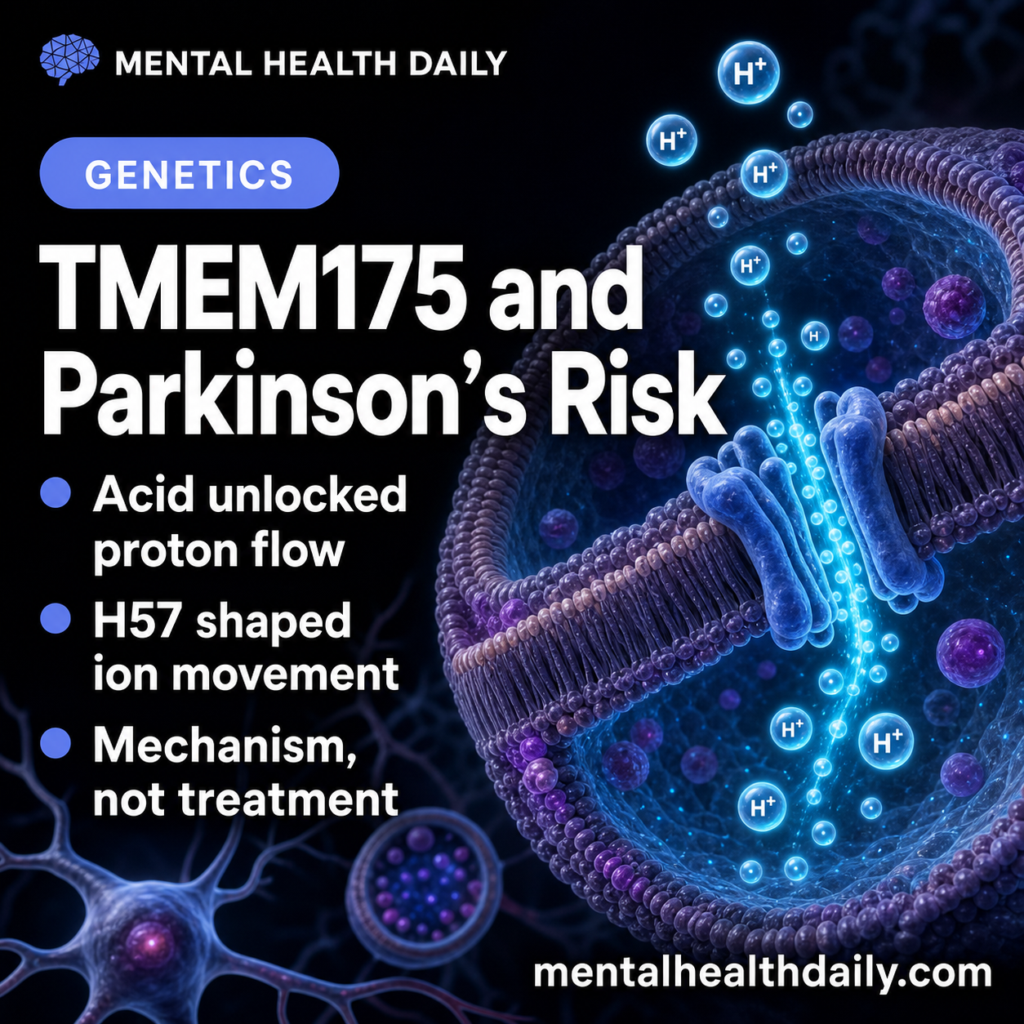
MHD featured image for TMEM175 proton conductance and Parkinson's disease lysosome risk.

A 2026 PNAS study found that TMEM175 behaves as a pH-sensitive lysosomal channel relevant to Parkinson’s risk biology.1 Acidifying the luminal side from pH 7.4 to 4.7 activated proton conductance, shifted reversal potential, and tied H57 to H+ and K+ flux. Research Highlights Acidification activated TMEM175: lowering luminal-side pH from 7.4 to 4.7 increased inward …

Read more

NDST3 Suppression Restores Lysosome Acidity in Alzheimer’s Mouse Models

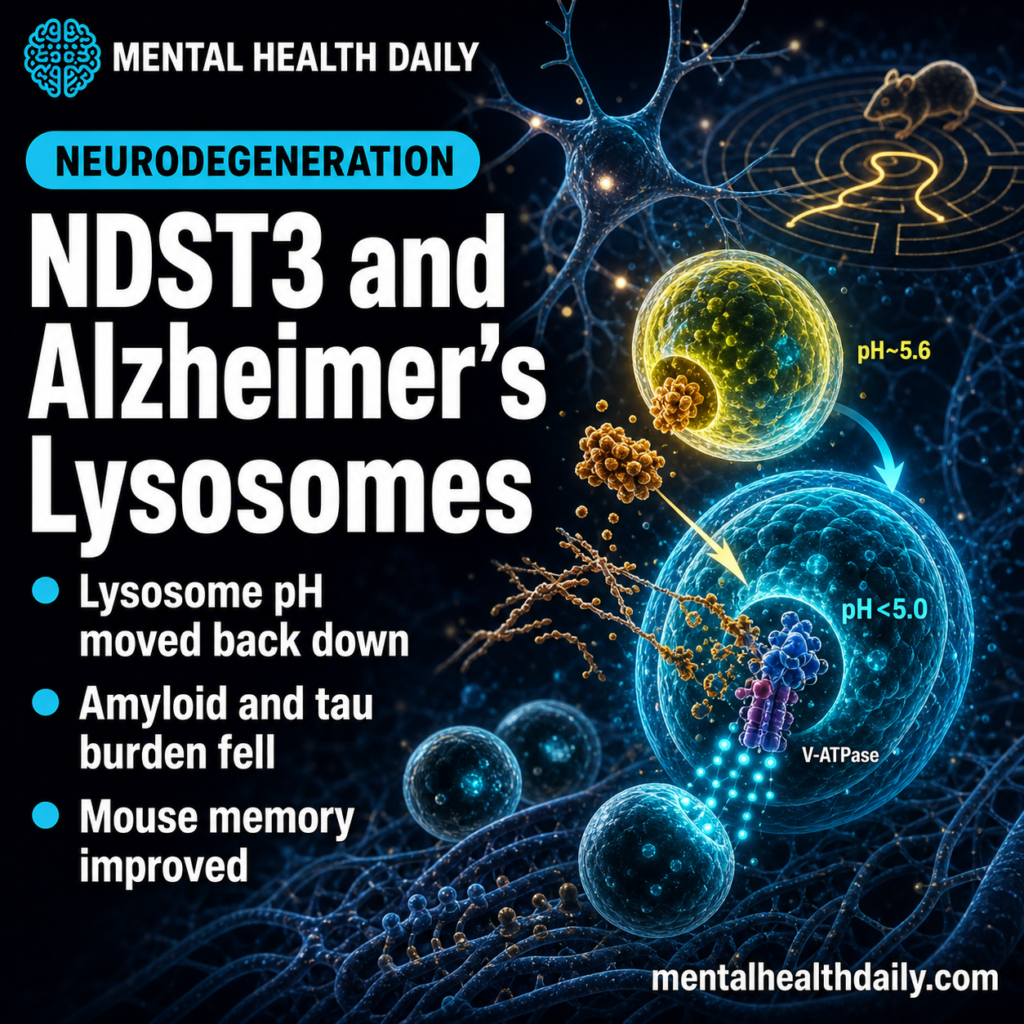
MHD featured image for NDST3 suppression and lysosomal acidification in Alzheimer's disease models.

A 2026 mechanistic Alzheimer’s study found that suppressing NDST3 shifted lysosomal pH in APP695Swe neuronal cells from 5.6 back below 5.0, then reduced amyloid-β, MAPT/tau pathology, neuronal injury, and memory deficits in 3xTg-AD mice.1 Research Highlights Lysosome pH moved back down: APP695Swe-overexpressing HT22 cells had lysosomal pH around 5.6, while NDST3 knockdown re-acidified lysosomes to …

Read more