hit counter

GLP-1 Drugs Suppress Reward Feeding Through an Amygdala-Dopamine Circuit

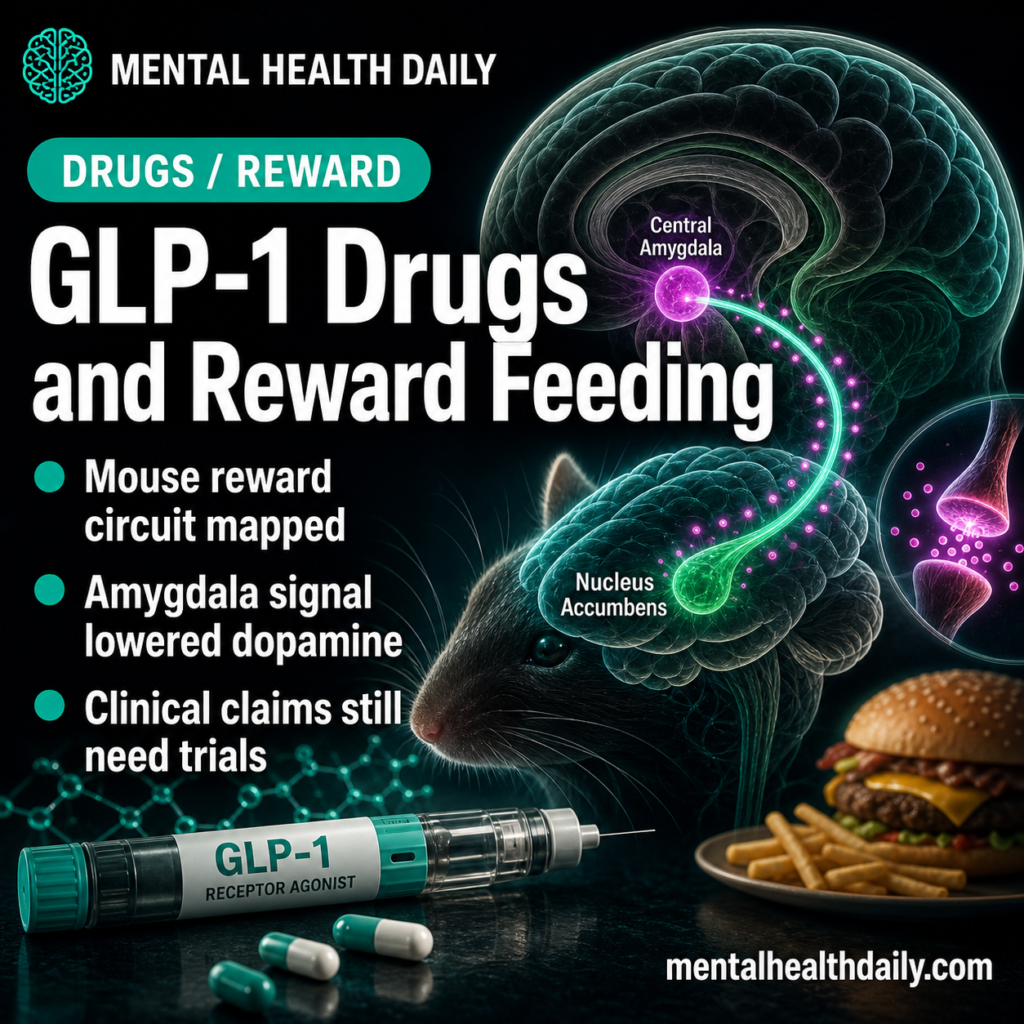
MHD featured image for GLP-1 drugs, reward feeding, amygdala signaling, and dopamine circuitry.

GLP-1 drugs are usually described as appetite drugs, but a 2026 Nature mouse study mapped a more specific reward circuit: small-molecule GLP-1 receptor agonists suppressed palatable-food intake through Glp1r-expressing central-amygdala neurons that reduced dopamine release in the nucleus accumbens during high-fat-food retrieval.1 That mechanism makes binge-eating and substance-use hypotheses more plausible without turning an animal …

Read more

GLP-1 Weight-Loss Drugs Triggered Effort-Based Stigma in 4 Studies

MHD featured image for GLP-1 weight-loss medication stigma and effort moralization.

A 2026 Scientific Reports paper involving 1,205 participants found that people using GLP-1-style weight-loss medication were judged as less effortful, less moral, less competent, less warm, less deserving, and less attractive as cooperation partners after the same 20 kg weight loss described for a diet-and-exercise-only comparator. Research Highlights Same weight loss, harsher judgment: Tissot et …

Read more

GLP-1 Drugs for Parkinson’s: Lixisenatide Signal, Exenatide Miss

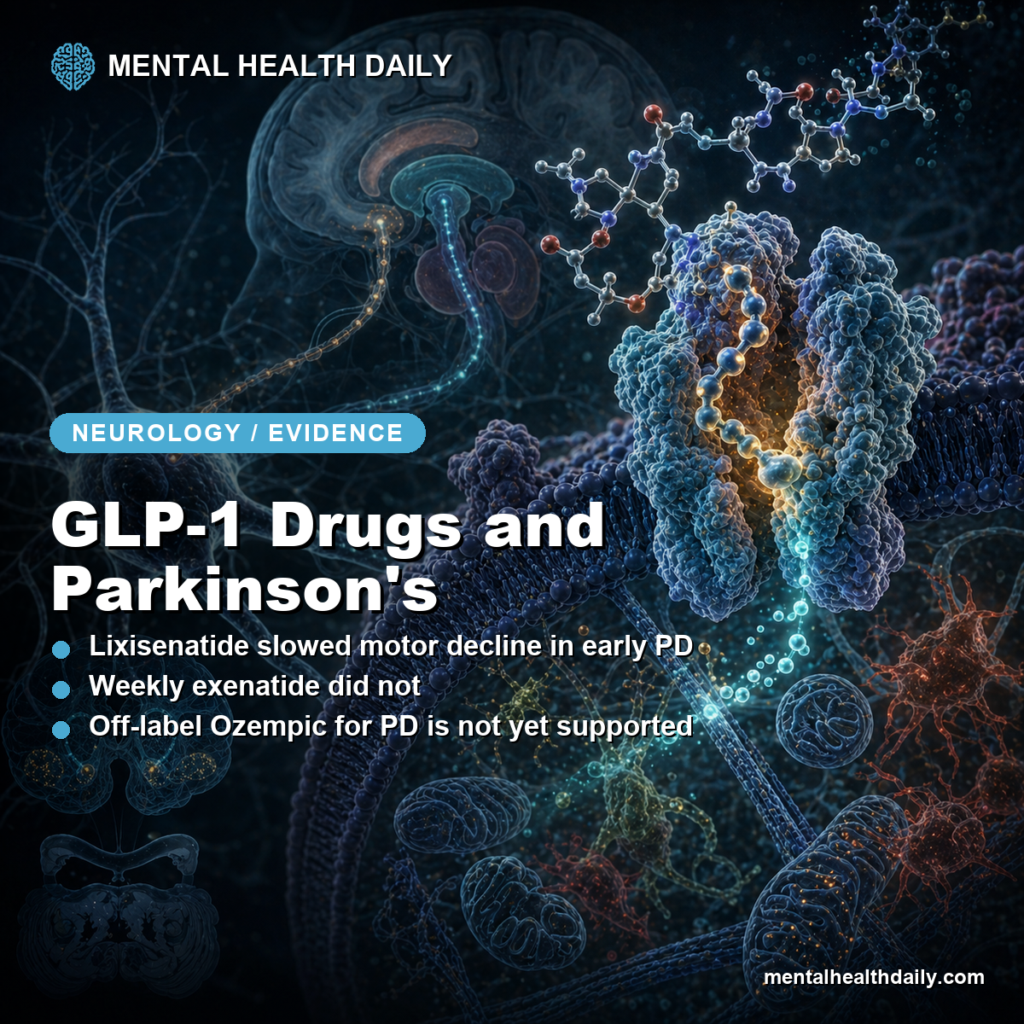
Stylized illustration representing GLP-1 receptor agonists being investigated as potential disease-modifying treatments for Parkinson's disease.

Parkinson’s disease is the second most common neurodegenerative disorder, affecting around 10 million people worldwide. The mental-health burden is heavy: depression affects 40-50% of patients9, anxiety 30-40%, sleep disorders most patients eventually, and dementia about a third of long-duration cases. Standard treatment with levodopa controls motor symptoms but doesn’t slow the underlying neurodegeneration. The clinical …

Read more