hit counter

Early Clozapine in Schizophrenia: 34% Lower Relapse Risk

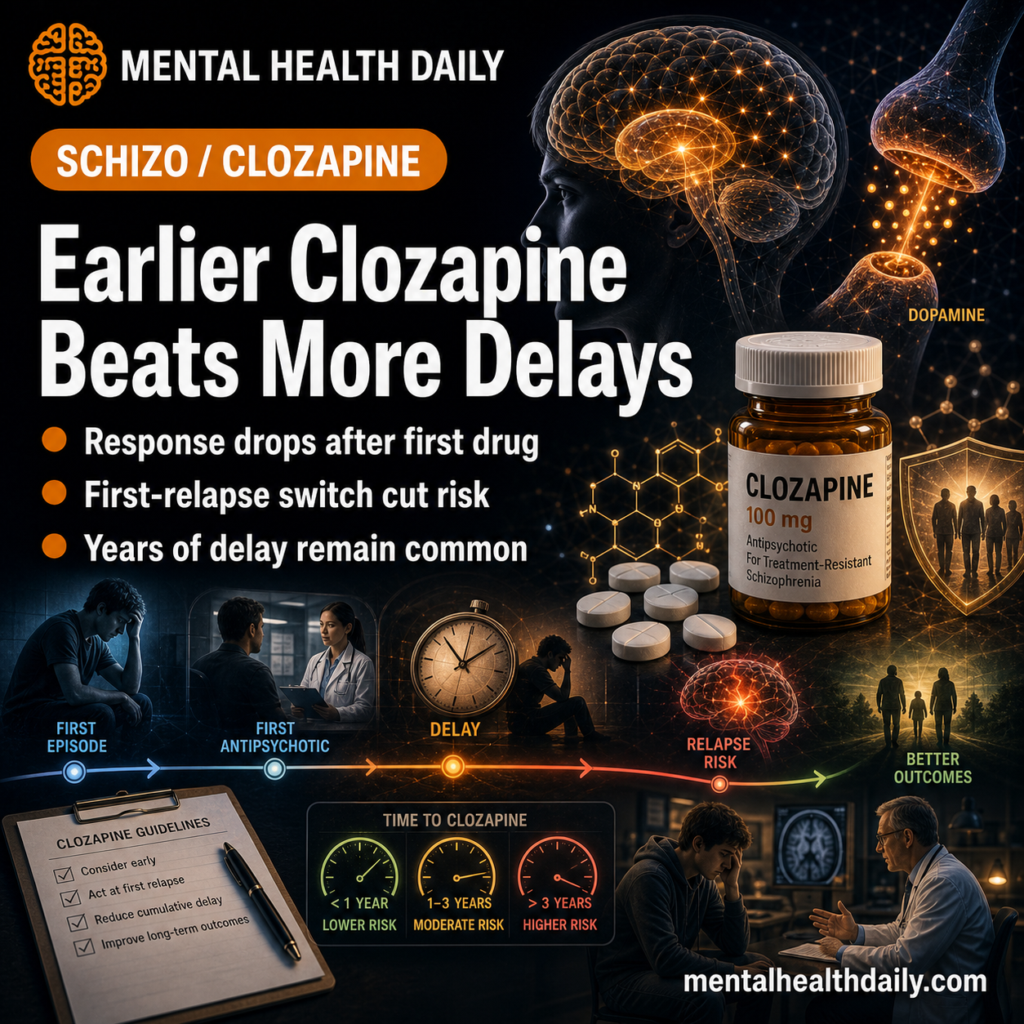
Stylized illustration of a stopwatch overlaying schizophrenia treatment-stage icons, representing the multi-year delay before clozapine is offered to patients who already meet treatment-resistance criteria.

Clozapine has been the most effective antipsychotic in schizophrenia for almost 40 years, yet it is still routinely held back until patients have failed multiple alternatives over many years — a “third-line, after years of failure” default that a 2026 Current Opinion review by Davani et al. argues is no longer supported by the evidence.1 …

Read more

Cognitive Reserve in First-Episode Psychosis: Education PRS Adds 4.2%

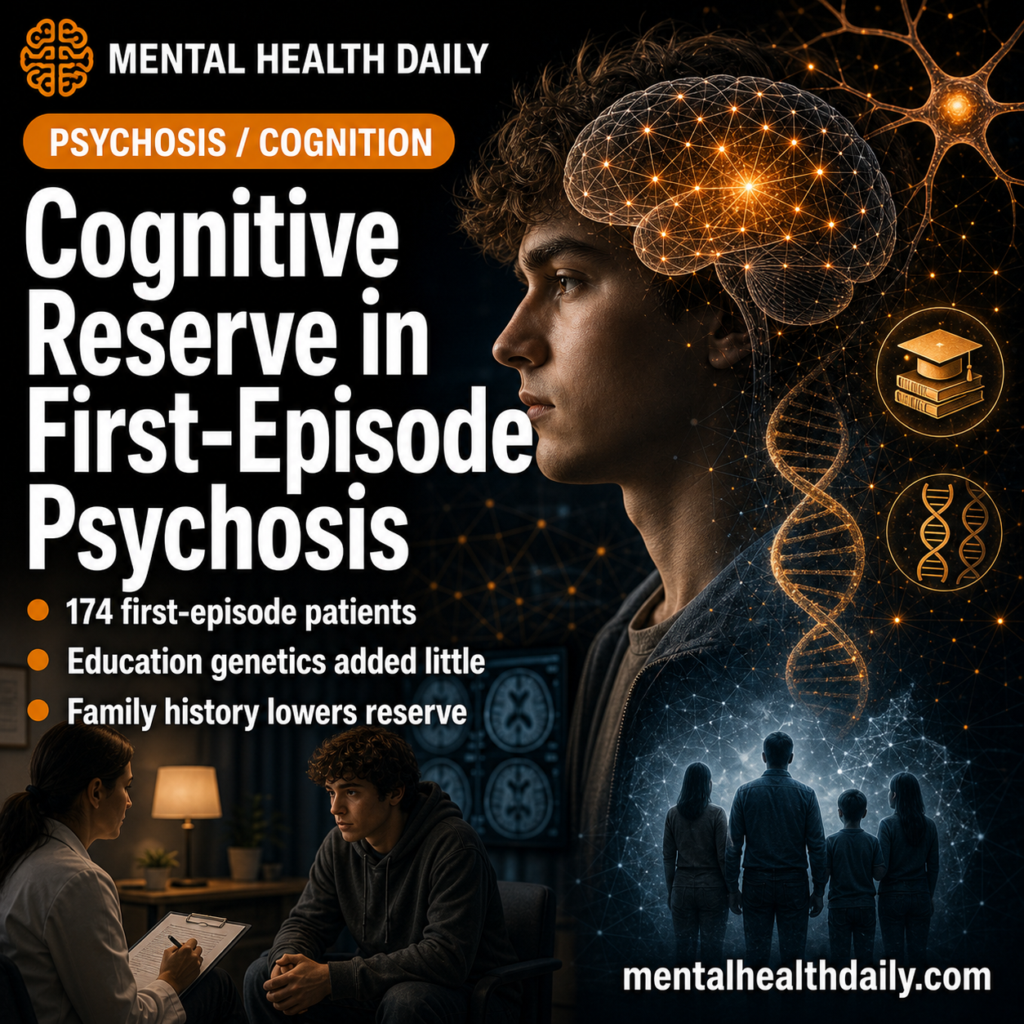
Photoreal illustration of brain with strengthening neural networks suggesting reserve and protection against cognitive decline.

A 2026 analysis of 174 people with non-affective first-episode psychosis found that cognitive reserve was tied to 3 signals available near illness onset: age at onset, family history of psychosis, and polygenic liability for educational attainment. Adding the education polygenic score raised the model’s adjusted R² from 13.5% to 17.7%, a real but modest gain …

Read more

Lupus Psychosis: 4.5% Prevalence and Antibody Predictors

Stylized illustration of autoantibodies and immune complexes crossing a disrupted blood-brain barrier, evoking the immune-mediated mechanism by which lupus produces psychosis.

Psychosis is one of 19 neuropsychiatric syndromes the American College of Rheumatology recognizes as attributable to systemic lupus erythematosus (SLE), an autoimmune disease that disproportionately affects young women.2 A 2026 systematic review and meta-analysis from Parperis and colleagues in Lupus pooled 65 studies and 31,495 patients.1 The synthesis matters less for the headline 4.5% prevalence …

Read more