hit counter

Esketamine Failed Cost-Effectiveness vs. Cheaper TRD Options at $50K/QALY
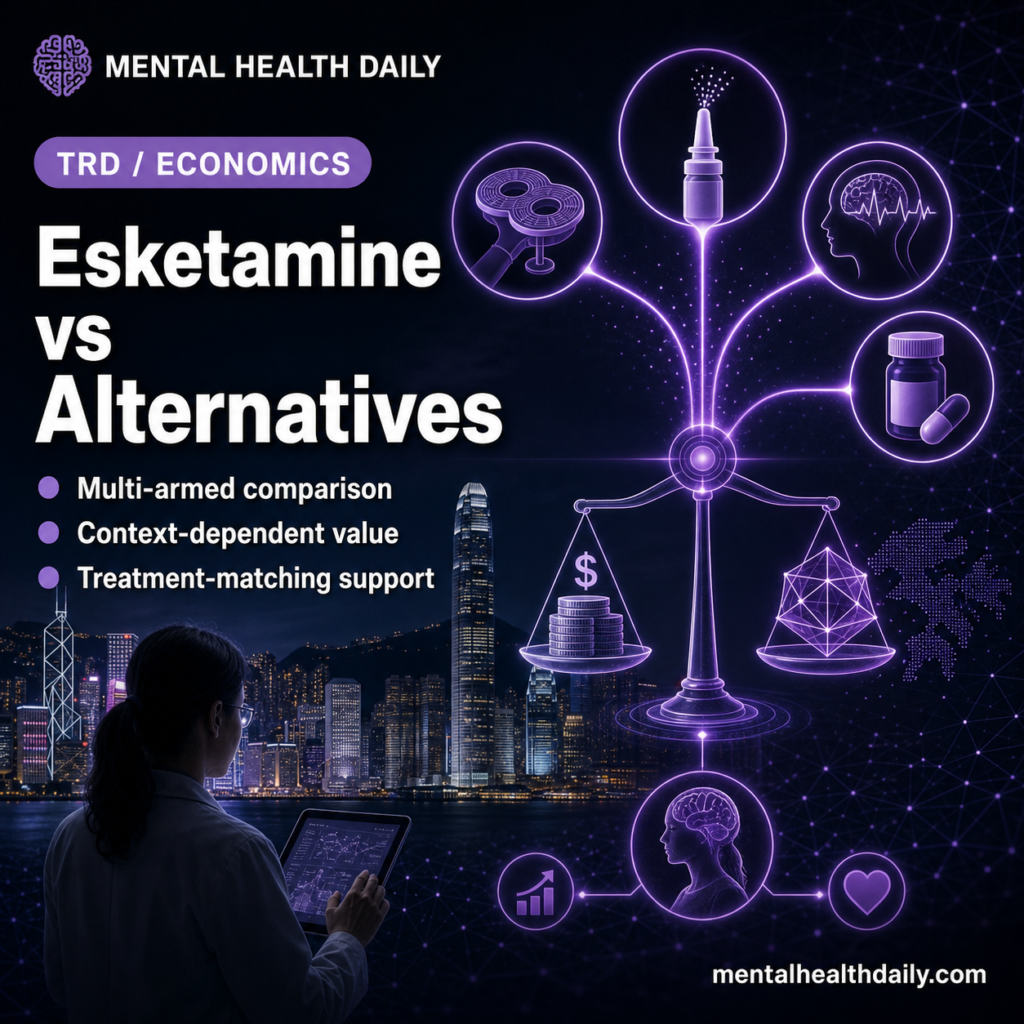
Photoreal illustration of a depression-treatment decision with cost and outcome imagery, conveying healthcare-economic decision-making.

Intranasal esketamine — FDA-approved for treatment-resistant depression in 2019 — failed cost-effectiveness benchmarks against four cheaper third-line options in a 2026 Hong Kong modeling study, with incremental cost-effectiveness ratios (ICERs) of US$134,127 to US$312,750 per quality-adjusted life-year (QALY) at a US$50,000/QALY willingness-to-pay (WTP) threshold.1 Combination antidepressant therapy was the most cost-effective strategy modeled. Research Highlights …
Read more

Catatonia Linked to Lower Left Paracingulate Sulcus Rate (28% vs 53%)

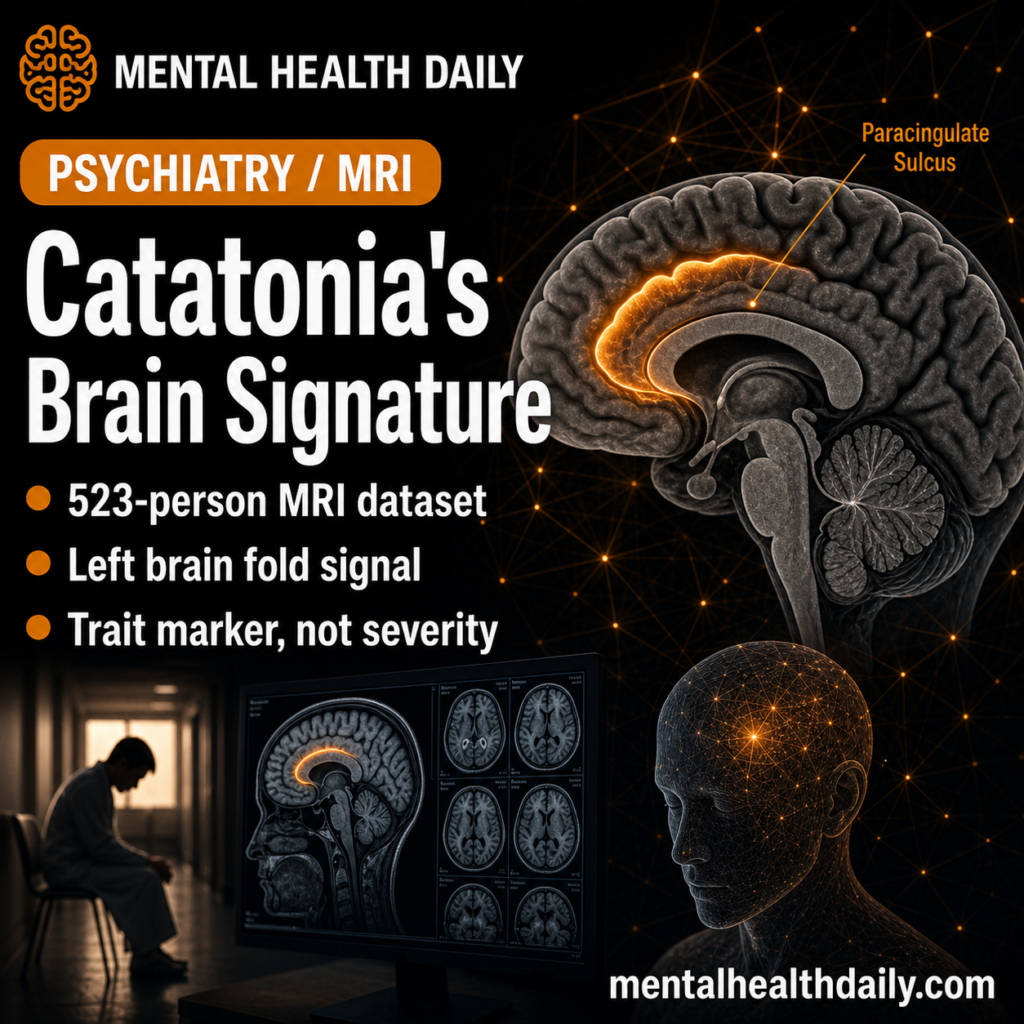
Photoreal illustration of a brain with the anterior cingulate cortex highlighted, representing transdiagnostic structural markers of catatonia.

A 2026 hospital MRI study found that the left paracingulate sulcus was present in 31 of 109 catatonia patients (28%) vs. 171 of 323 psychiatric controls without catatonia (53%), a left-hemisphere group effect that survived adjustment for age, sex, scanner, brain volume, benzodiazepines, and antipsychotics.1 Research Highlights Left PCS signal: left paracingulate sulcus (PCS) presence …

Read more