hit counter

Rats Beat Humans in 2-Second Temporal Error Monitoring Study

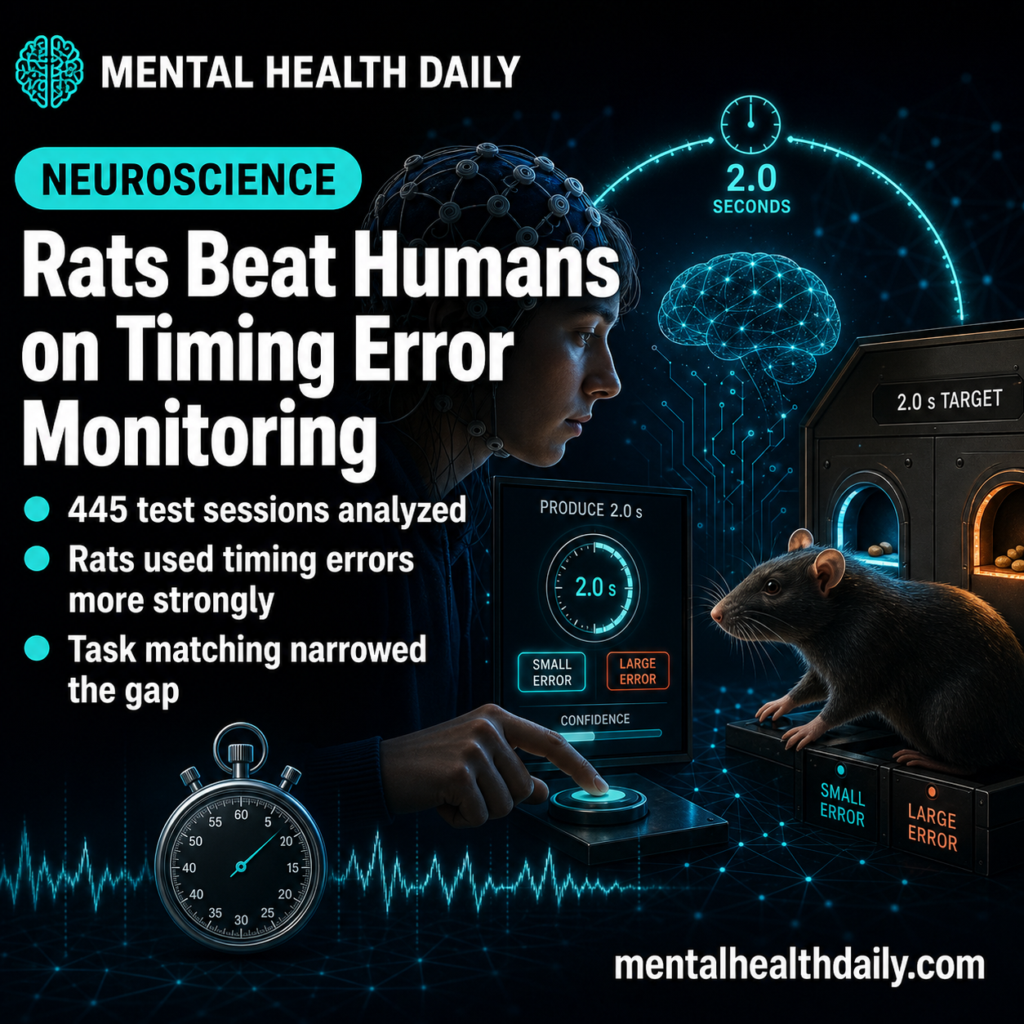
MHD featured image for temporal error monitoring and timing metacognition.

A 2026 iScience study found that both humans and rats could report whether their own 2-second timing responses were small-error or large-error trials, but rats were more accurate on test choices: human accuracy was 55%-57%, rat accuracy was 65%-67%, and the species gap remained significant before task-variable matching.1 Research Highlights Both species monitored timing errors: …

Read more

Anterior Cingulate Sulcus Asymmetry Linked to Lower Delay Discounting

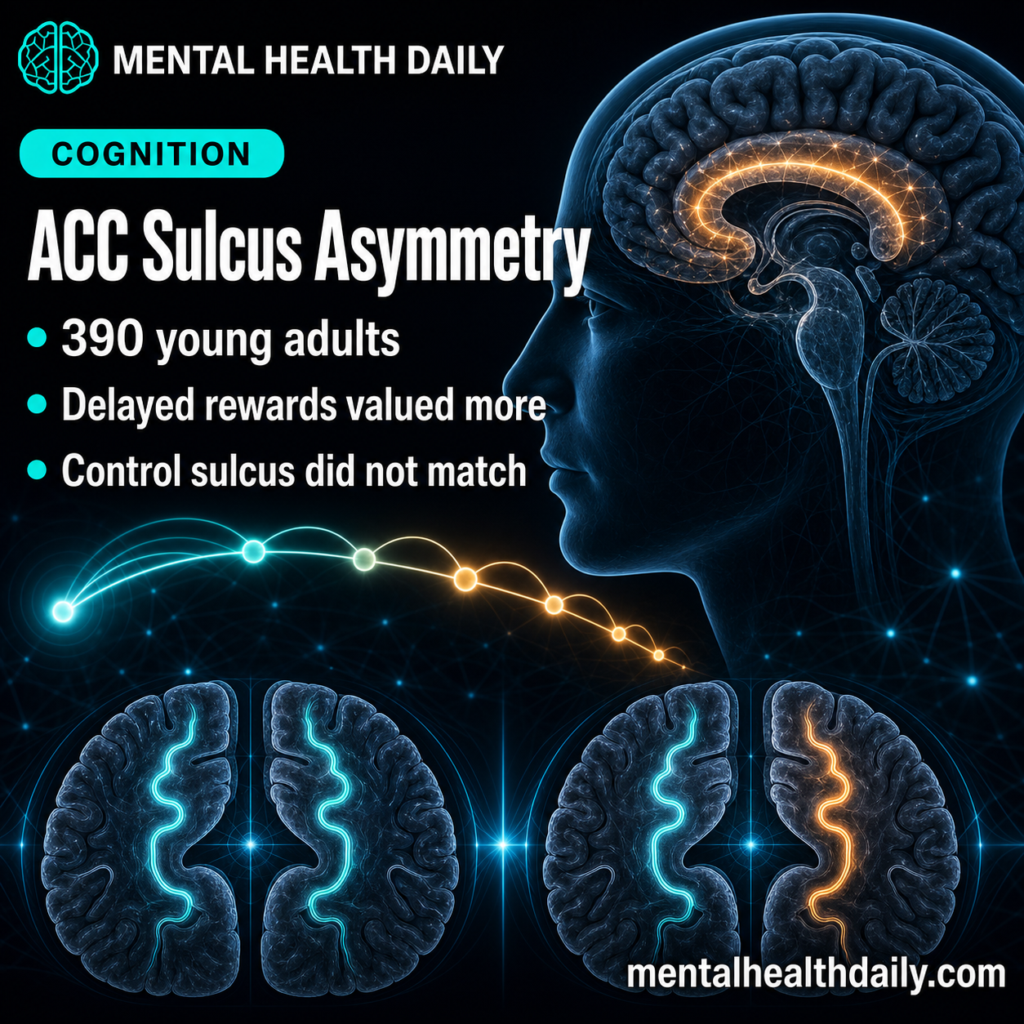
MHD featured image for anterior cingulate sulcus asymmetry and delay discounting.

A 2026 Human Connectome Project MRI study linked asymmetric anterior cingulate cortex sulcal pattern to lower delay discounting in 390 healthy young adults: asymmetric ACC morphology predicted a higher delay-discounting area under the curve, meaning delayed rewards lost less value.1 The finding is not a diagnostic scan for impulsivity, but it puts an early-formed cortical-folding …

Read more

Group fMRI Misread Cognitive Control in 4,423 Youth

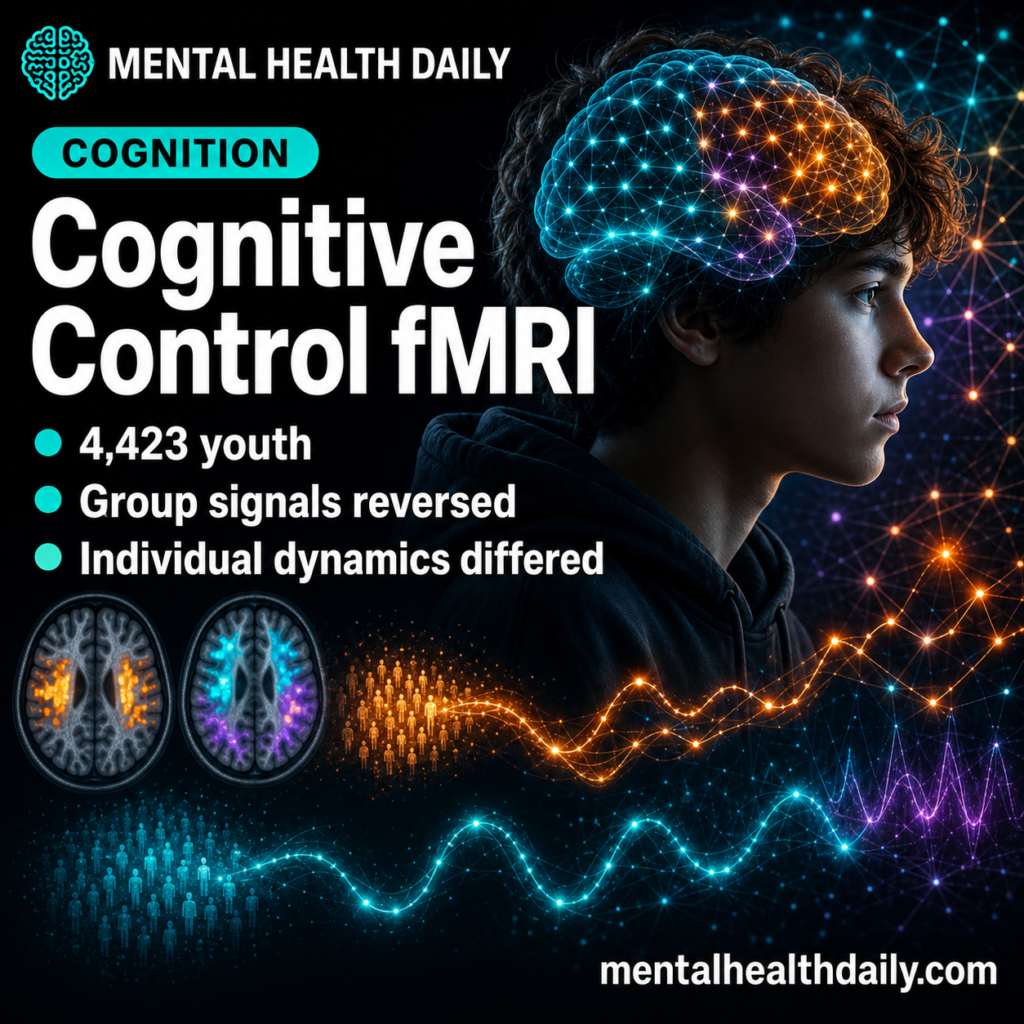
MHD featured image for group fMRI and individual cognitive-control brain signals.

A 2026 ABCD stop-signal fMRI study found that group-level cognitive-control brain signals often failed to describe within-person brain dynamics: across 16 comparisons, between-person and within-person associations diverged, and several reversed direction.1 The practical warning is narrow but sharp: a brain pattern that separates people in a group may be the wrong map for explaining how …

Read more

Negative Emotionality Reduces Frontal Midline Theta in 106 Recruits

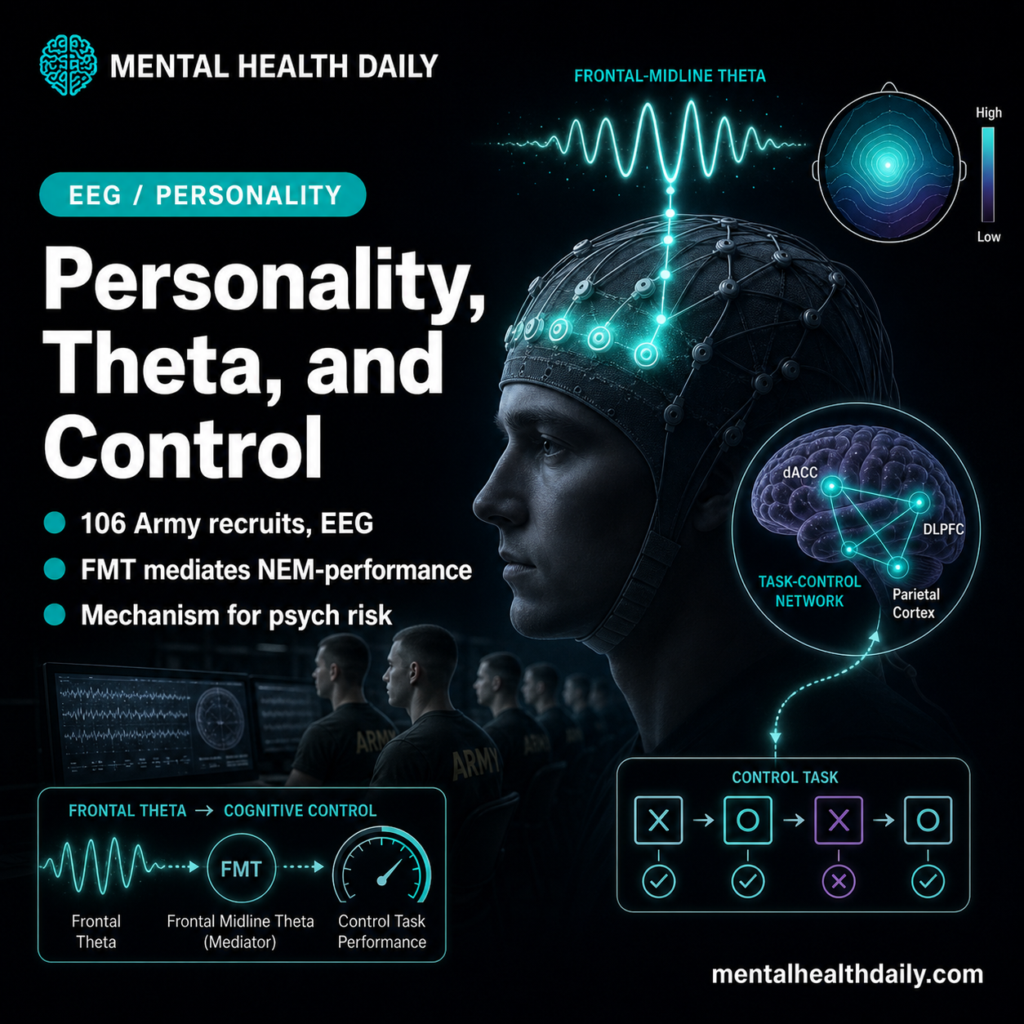
Photoreal illustration of frontal-midline brain activity overlaid on a stylized portrait, conveying personality-brain link in cognitive control.

A 2026 EEG study of 106 Army National Guard recruits found that higher negative emotionality predicted poorer Go/No-Go discrimination (β = −.234, 95% CI −.392 to −.076) and lower frontal midline theta (β = −.149, 95% CI −.290 to −.001). The key result was not a vague personality-brain link: frontal midline theta, not occipital alpha, …

Read more

Abnormal EEG Microstates Linked to Major Depression & Related Cognitive Impairment (2024 Study)

In the quest to understand the enigmatic nature of depression, scientists are turning to the intricate patterns of brain activity, seeking clues hidden within the electrical storm of thoughts and emotions. By examining electroencephalography (EEG) microstates—brief, recurring patterns of brain activity—researchers have begun to piece together how depression alters the fundamental dynamics of the brain. …

Read more