hit counter

DBS for Cerebellar Ataxia: 27 Patients, Weak Evidence

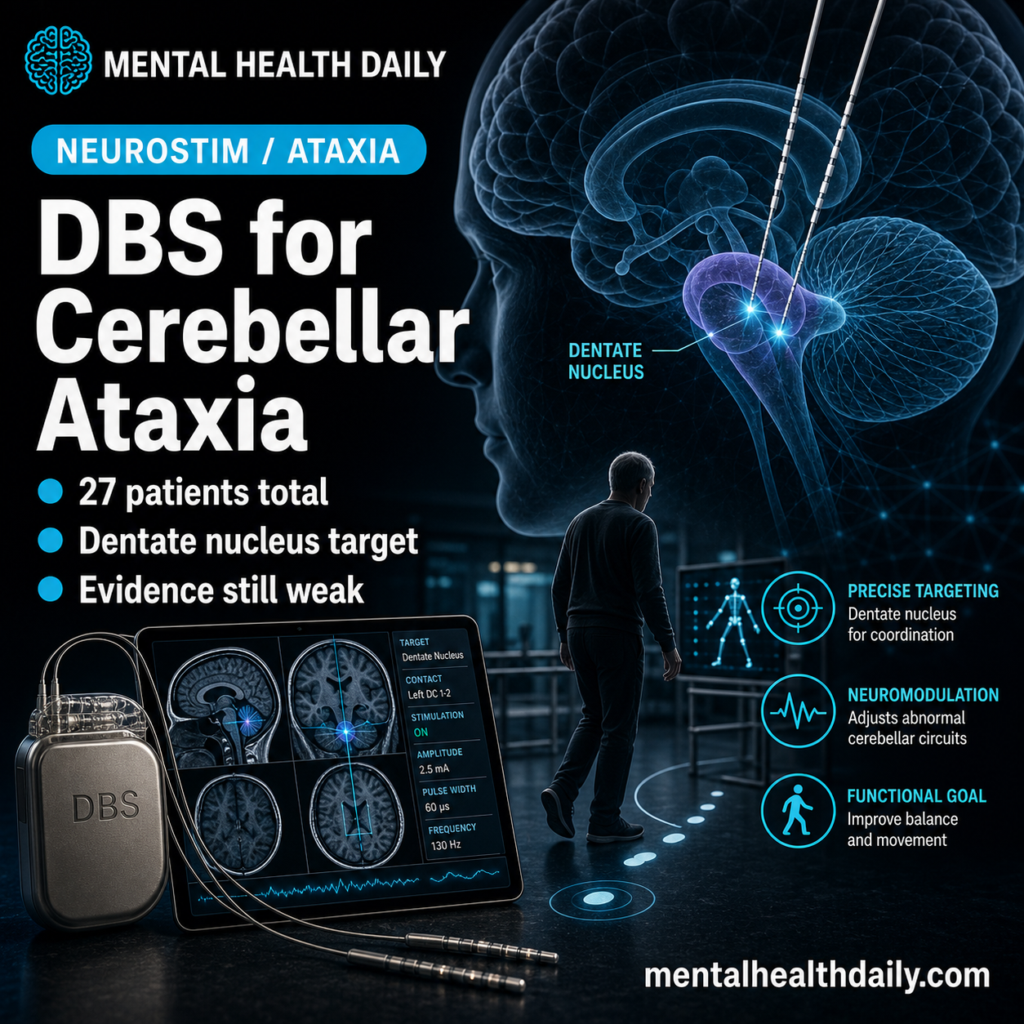
MHD featured image for deep brain stimulation, the dentate nucleus, and cerebellar ataxia.

A 2026 systematic review found 15 clinical reports of deep brain stimulation for cerebellar ataxia, covering only 27 human patients across heterogeneous targets, causes, and outcome measures. Research Highlights The human evidence base was tiny: the review found 27 patients across 15 clinical studies, including 10 case reports, 4 case series, and 1 randomized trial. …

Read more

Late Chronotype MRI Signal Vanishes After Strict Correction

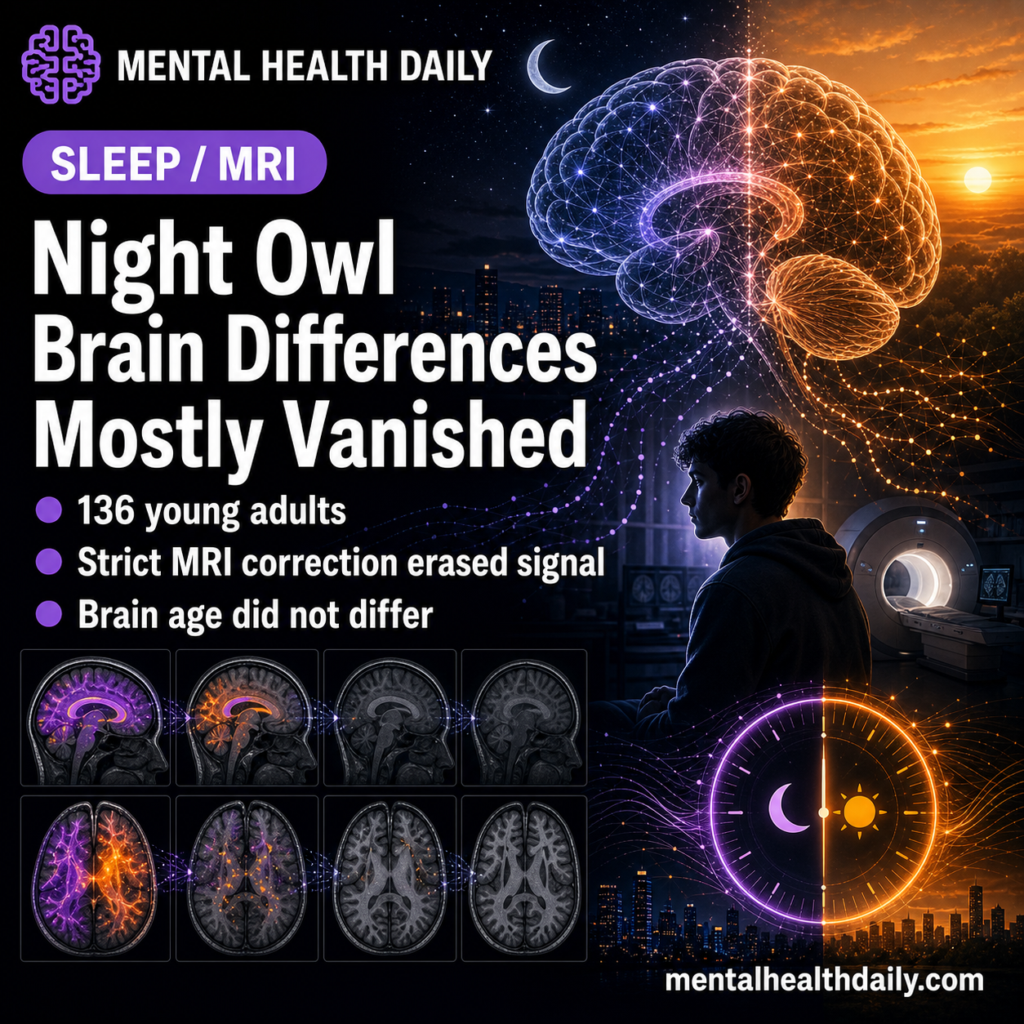
Stylized illustration of an early-morning sky and a late-night sky meeting over a brain in profile, representing the structural neuroimaging question about chronotype in healthy young adults.

Popular coverage of chronotype neuroimaging usually claims that late chronotypes (evening types, often called “night owls”) show smaller cortical regions and faster brain aging than early chronotypes (morning types). A 2026 multimodal structural MRI analysis from Beheshti and Elkana ran the comparison in 136 healthy young adults using strict whole-brain correction, and the group differences …

Read more

Friedreich Ataxia MRI Study Finds 3 Progression Subtypes

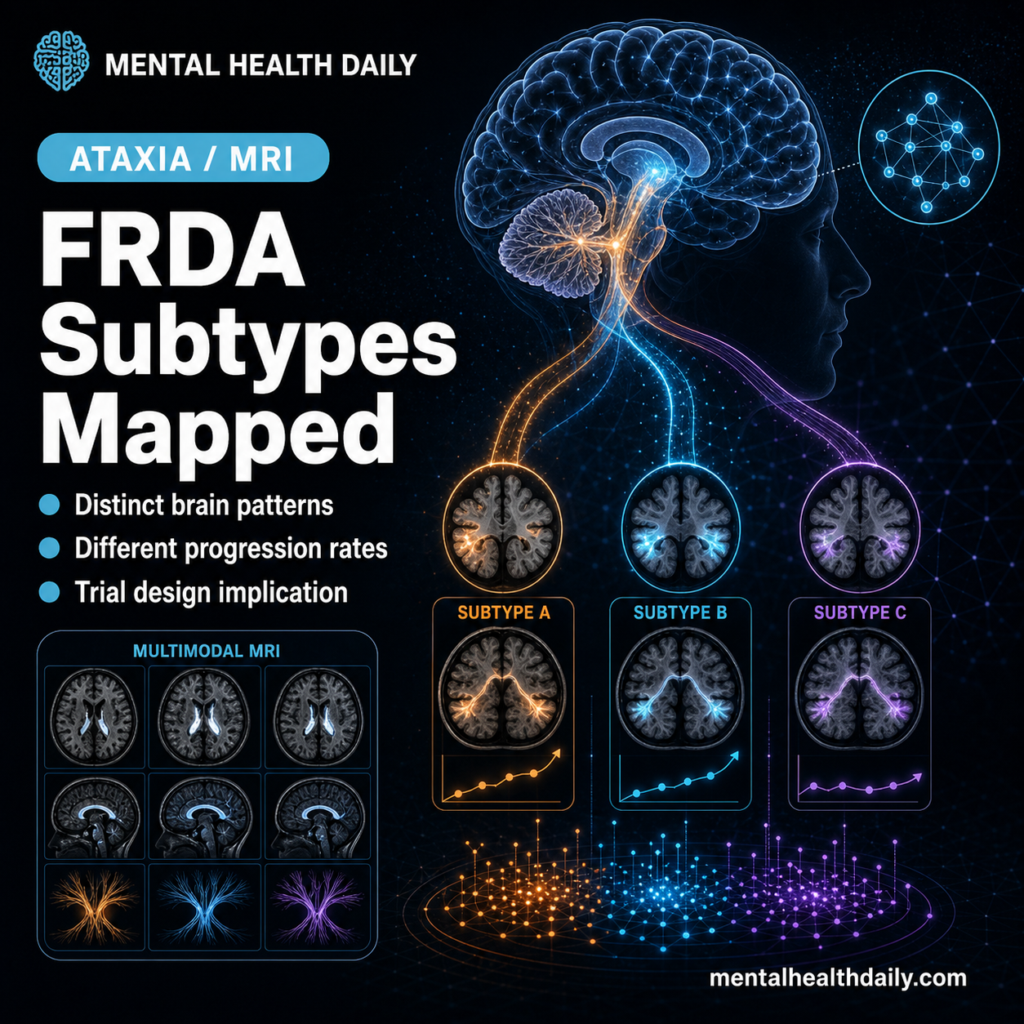
Photoreal illustration of brain regions affected in Friedreich ataxia with overlay of MRI imaging modalities, conveying multi-pattern subtypes.

A 2026 longitudinal MRI preprint involving 54 people with Friedreich ataxia and 57 controls found 3 biologically interpretable progression subtypes: microstructure-dominant, macrostructure-dominant, and minimal/no progression.1 The clusters make biomarker heterogeneity visible at the research level, while the classifier remains too early to assign individual patients to treatment paths. Research Highlights 3 MRI progression subtypes emerged: …

Read more

Cerebellum Activity Predicts Euthymia (Stable Mood) vs. Depression in Bipolar Disorder (2024 Study)

Bipolar disorder (BD), a complex and multifaceted mental illness, manifests through various mood states including depression, mania/hypomania, and euthymia. Recent advances in neuroimaging, particularly resting-state functional magnetic resonance imaging (fMRI), have shed light on the intricate dynamics of brain activity underlying these mood states. A new study employing dynamic fractional amplitude of low-frequency fluctuations (dfALFF) …

Read more