hit counter

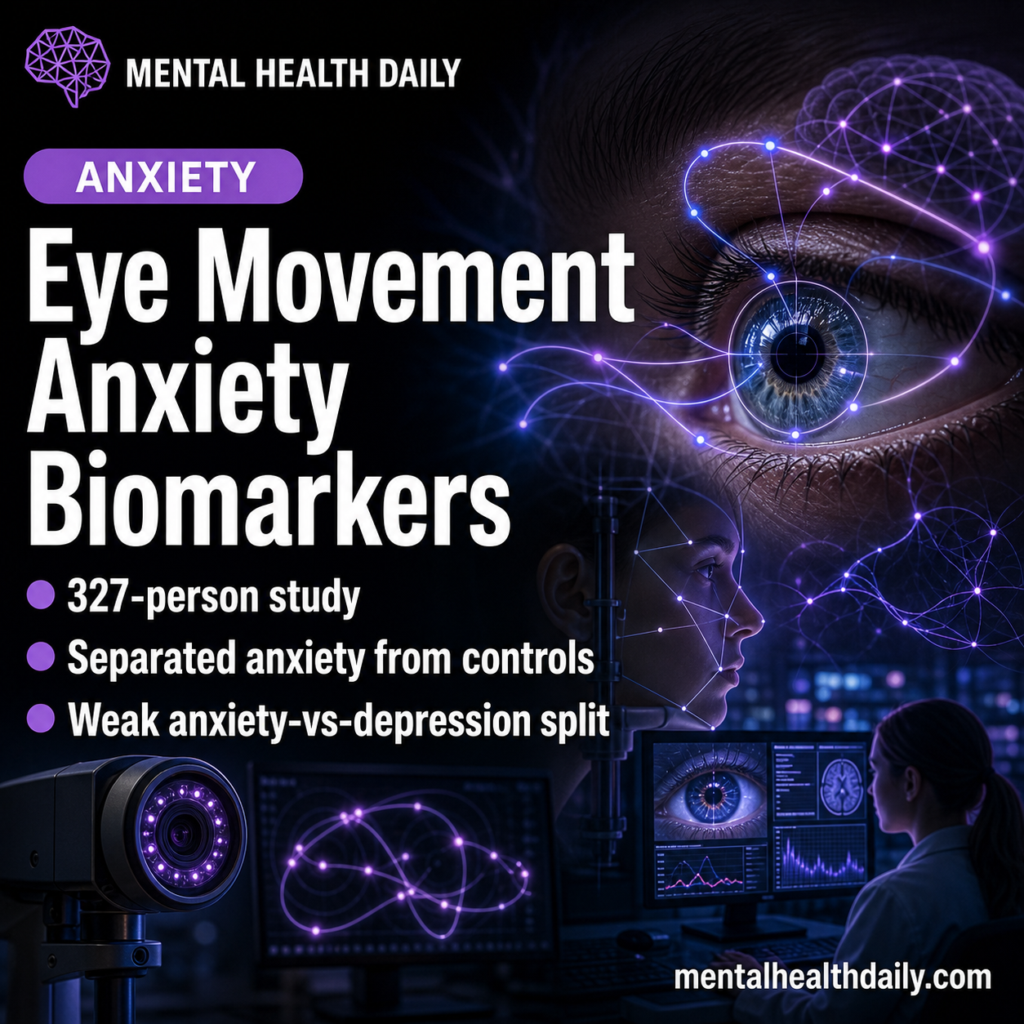
Eye Movement Biomarkers Separated Anxiety from Controls With AUC 0.82

MHD featured image for anxiety eye movement biomarker research.

A 327-person eye-tracking study found that anxiety disorders carried a hyper-scanning and hyper-pursuit signature, separating anxiety patients from healthy controls with AUC 0.82.1 The same eye-movement data separated anxiety from depression poorly, so the result is better read as a behavioral arousal marker than as a ready diagnostic test. Research Highlights Anxiety vs controls separated …

Read more

Apple Cider Vinegar for Psychotropic Weight Gain: 11 Cases

MHD featured image for apple cider vinegar capsules, psychotropic weight gain, metabolic side effects, and gut microbiome changes.

An 11-person case series tested delayed-release apple cider vinegar capsules in young adults who had gained weight while taking psychotropic medications, and metabolic markers carried more signal than weight loss. Research Highlights Feasibility was the strongest result: 11 of 12 enrolled participants completed the study, 10 of 11 completers missed 5 or fewer doses, and …

Read more

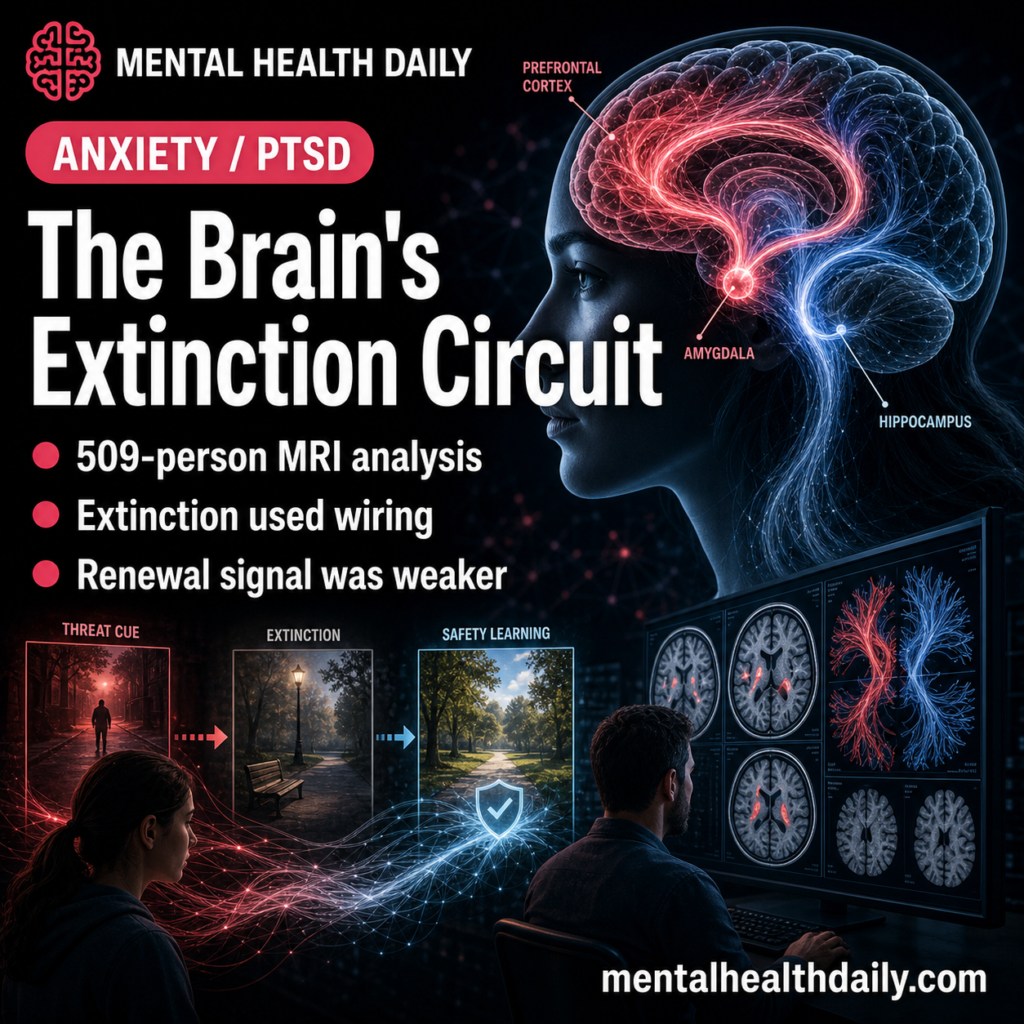
Resting Brain Connectivity Predicts Fear Extinction Learning

Photoreal illustration of brain network connections in the fear-extinction circuitry, with imagery linking amygdala and prefrontal regions.

A 2026 multimodal MRI analysis of 509 healthy adults found that fear acquisition, extinction learning, and renewal were not predicted by one generic “fear circuit” score: functional connectivity predicted acquisition, structural connectivity predicted extinction, and effective connectivity was the only renewal signal.1 The extinction result is the clinically interesting piece because exposure therapy depends on …

Read more

Cannabis Use Linked to Increased Risk of Anxiety Disorders (2024 Review)

The relationship between cannabis use (CU) and anxiety disorders (AD) is a topic of ongoing debate and research within the scientific community. While some studies suggest cannabis can have anxiolytic (anxiety-reducing) effects, others point to anxiogenic (anxiety-inducing) outcomes, especially with habitual use. This nuanced interplay between cannabis and anxiety highlights the importance of understanding individual …

Read more

Psychotherapy for Anxiety Disorders: Decreases Negative Mood But Fails to Increase Positive Mood (2024 Study)

Anxiety-related disorders, characterized by heightened negative affect (NA) and sometimes diminished positive affect (PA), pose significant challenges for mental health treatment. Despite the prevalence of these disorders, the efficacy of psychotherapies in improving PA versus NA remains underexplored. Highlights: Psychotherapeutic interventions demonstrate a significantly larger effect on reducing negative affect (NA) than on enhancing positive …

Read more

Heart Rate Variability (HRV) Reduced in Anxiety Disorders (2024 Study)

In the quest to understand anxiety disorders more profoundly, scientists have turned to the rhythms of the heart, specifically heart rate variability (HRV), for answers. By employing wearable technology in a novel study design, researchers have uncovered intriguing insights into how the variability in our heartbeats might be linked to anxiety disorders. This approach not …

Read more

Can Lifestyle Factors Modify Risk of Psychiatric Disorders? (2024 Study)

Psychiatric disorders have increasingly become a significant public health concern, affecting a growing number of people globally. A study in focus utilized MR (Mendelian randomization), a method that leverages genetic data to explore causal relationships, to analyze the impact of 45 lifestyle factors on 13 psychiatric disorders. This extensive research involved GWAS summary statistics from …

Read more