hit counter

NDST3 Suppression Restores Lysosome Acidity in Alzheimer’s Mouse Models
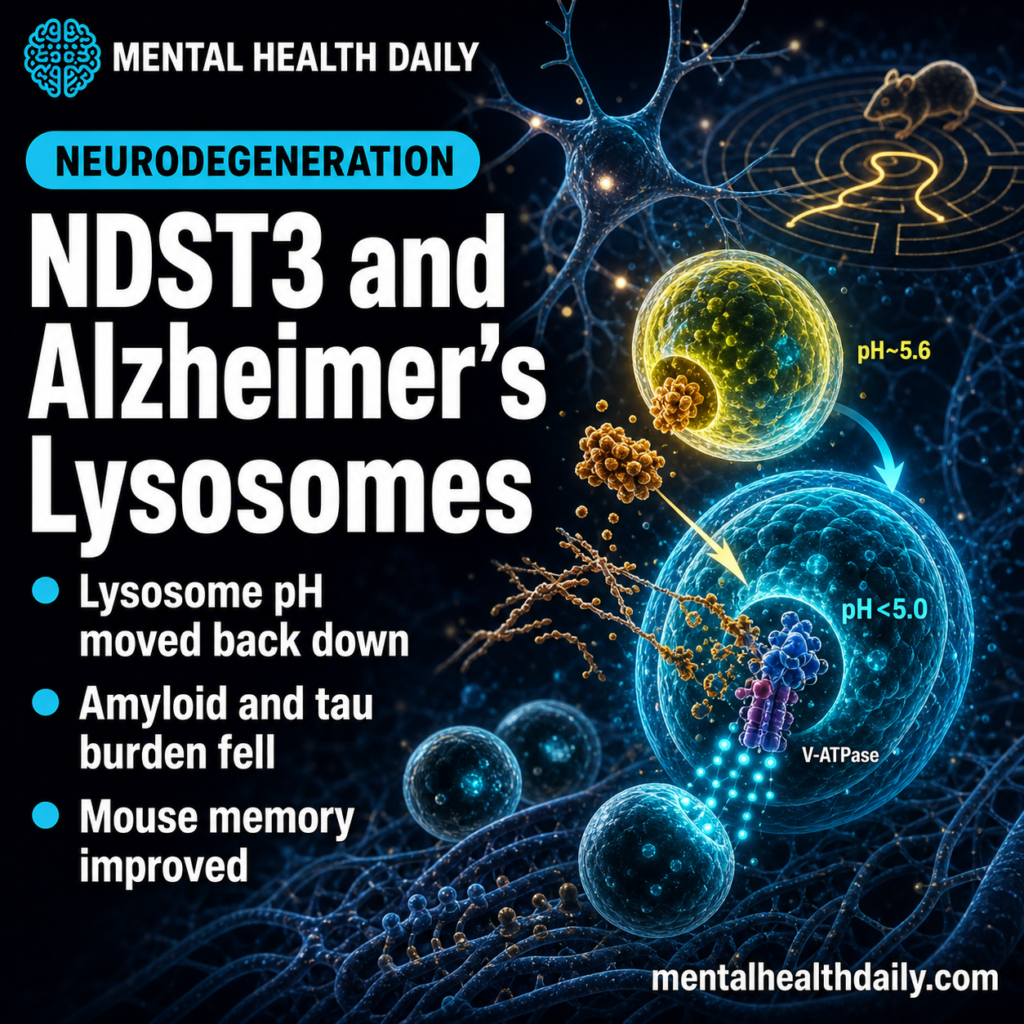
MHD featured image for NDST3 suppression and lysosomal acidification in Alzheimer's disease models.

A 2026 mechanistic Alzheimer’s study found that suppressing NDST3 shifted lysosomal pH in APP695Swe neuronal cells from 5.6 back below 5.0, then reduced amyloid-β, MAPT/tau pathology, neuronal injury, and memory deficits in 3xTg-AD mice.1 Research Highlights Lysosome pH moved back down: APP695Swe-overexpressing HT22 cells had lysosomal pH around 5.6, while NDST3 knockdown re-acidified lysosomes to …
Read more

Total-Body Tau PET Links Brain-Organ Coupling to Alzheimer’s Cognition

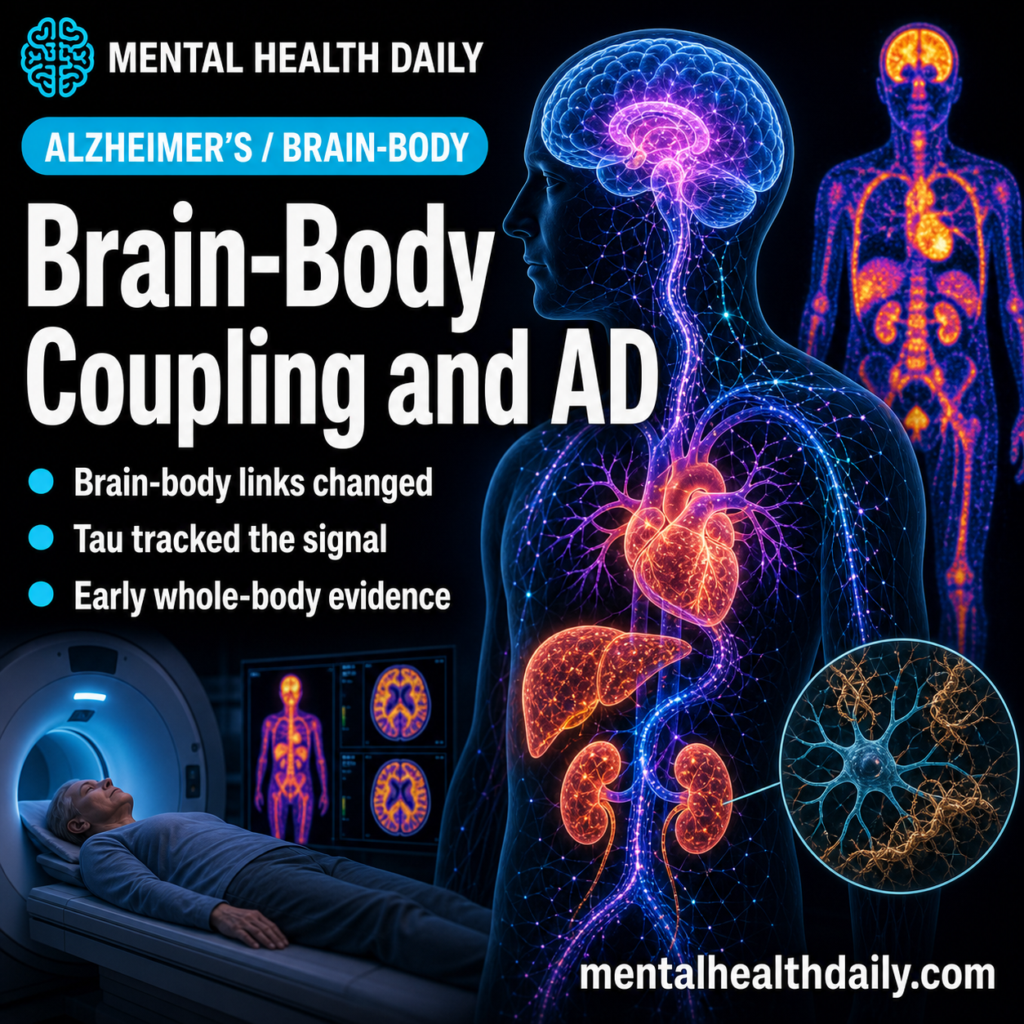
Photoreal illustration of brain with cardiac and respiratory rhythm overlays, conveying brain-body coupling and AD pathology.

A 2026 total-body tau-PET study of 28 people with Alzheimer’s disease and 23 biomarker-negative controls found stronger brain-organ network connectivity in Alzheimer’s disease than in biomarker-negative controls: 35 altered connections, including 21 brain-body edges, plus AD-only links between brain-organ coupling, cortical tau burden, MRI-derived glymphatic markers, and cognition.1 The result is best read as a …

Read more