hit counter

ME/CFS Memorial Entries: 505 Death Narratives Show Suicide Risk Gaps

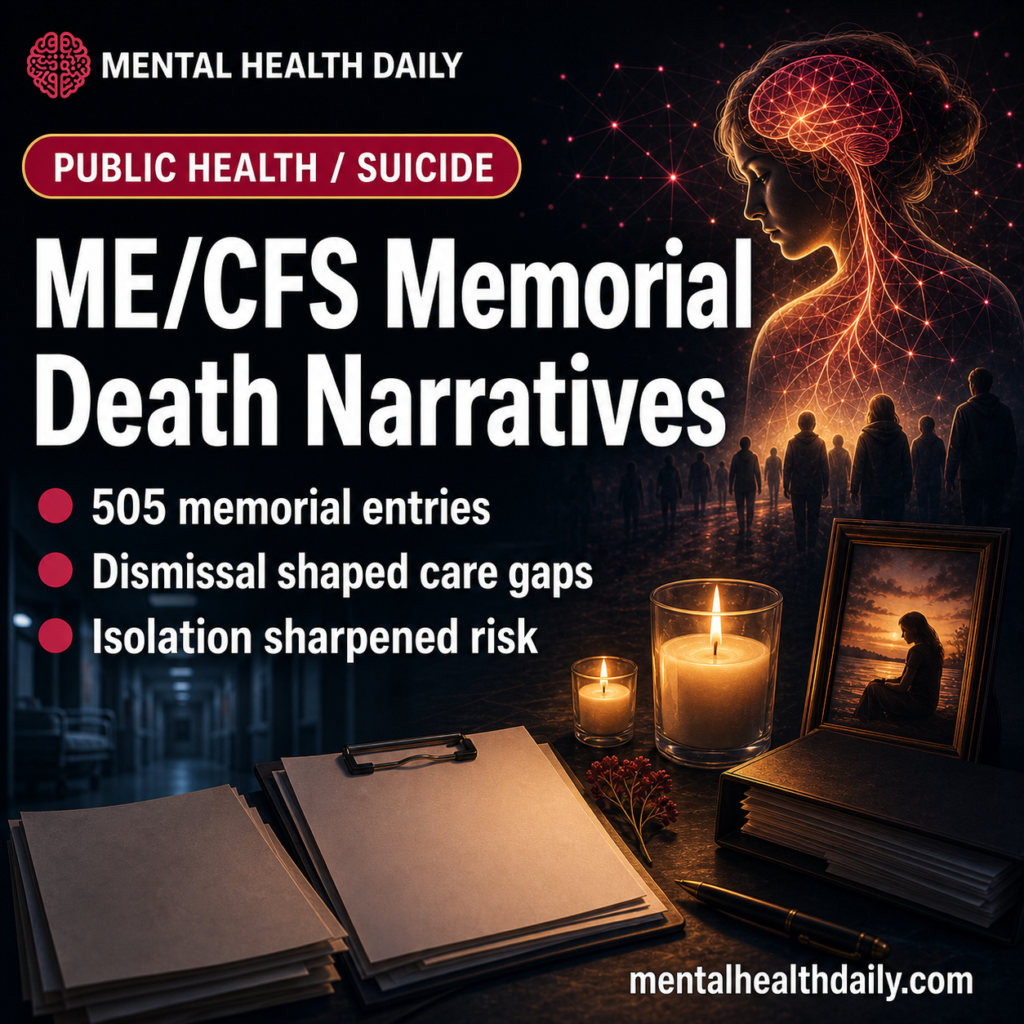
MHD featured image for ME/CFS memorial entries, systemic neglect, and suicide risk.

Myalgic encephalomyelitis/chronic fatigue syndrome (ME/CFS) is a disabling multisystem illness marked by post-exertional malaise, cognitive dysfunction, pain, sleep disruption, and autonomic symptoms; a 2026 PLOS One qualitative analysis of 505 memorial entries found that bereaved accounts repeatedly placed death inside 4 overlapping contexts: systemic neglect, clinical dismissal, social disconnection, and personal functional collapse.1 Research Highlights …

Read more

XGBoost Suicide Risk Model Reached 96% PPV at Top 0.1% Threshold

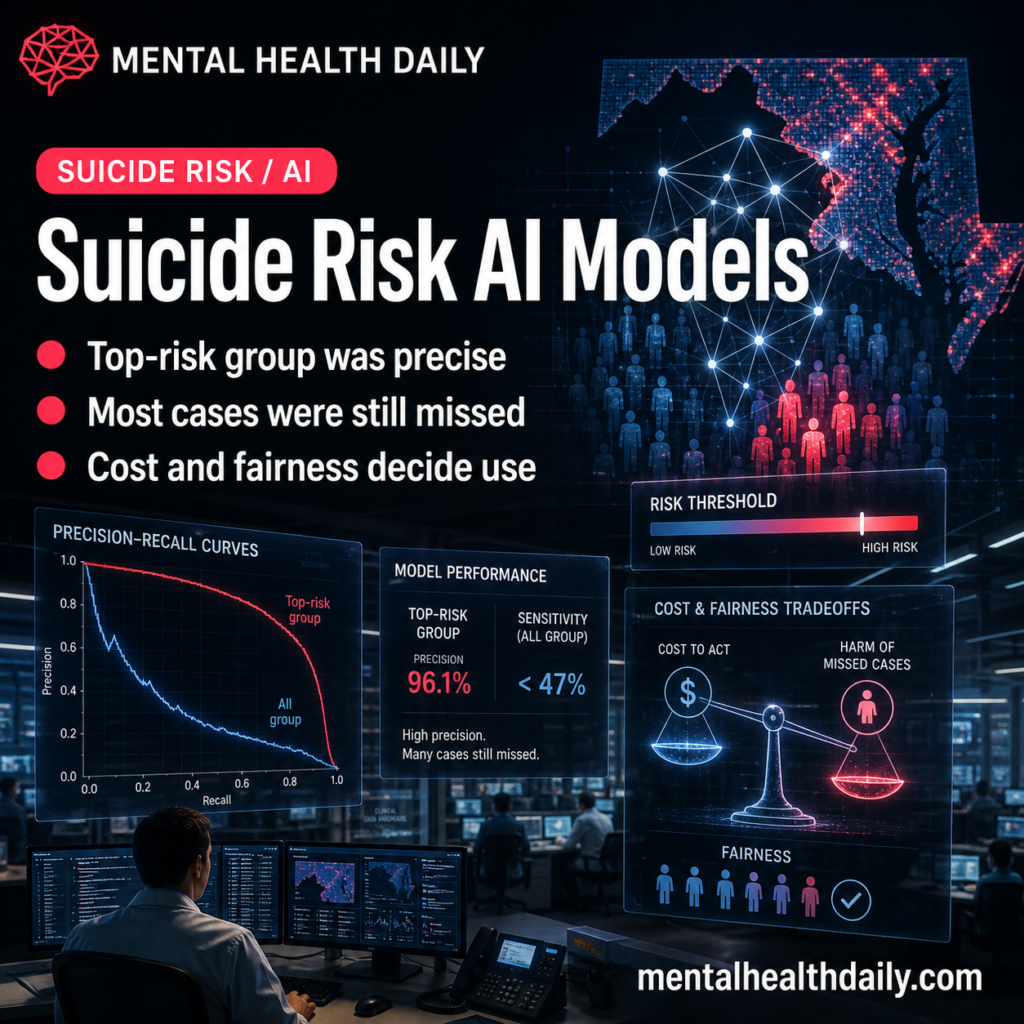
MHD featured image for suicide-risk machine learning, precision, cost, and fairness.

A 2026 Scientific Reports study of Maryland suicide-death records found that an XGBoost machine-learning model could reach 96.1% positive predictive value in hospital-discharge data at the top 0.1% risk threshold, but it still detected only 46.7% of suicide deaths in that cohort. Research Highlights Precision improved at the narrowest threshold: XGBoost reached PPV 0.961 in …

Read more

Peripheral Inflammatory Biomarkers vs. Suicide Risk in Major Depression (2024 Study)

Major Depressive Disorder (MDD) is not just a mental health concern; it’s a complex interplay of psychological, environmental, and biological factors, where the most tragic outcome can be suicide. Recent research has unveiled a potential link between the immune system’s inflammatory response and the increased risk of suicide among those suffering from MDD. By examining …

Read more

Circadian Rhythm Disruption vs. Major Depression & Suicide Risk (2024 Study)

Circadian rhythms, the natural cycles of physiological and behavioral processes occurring within a 24-hour period, play a crucial role in our overall well-being. Recent research highlights the significant impact of these rhythms on the severity of major depressive disorder (MDD) and, crucially, on the intensity of suicidal ideation among those affected. A new study analyzed …

Read more

Genetics Predict Suicide Risk in U.S. Army Soldiers (2024 Polygenic Analysis)

Suicide remains a leading cause of death worldwide, with its prevention a top priority for both public health initiatives and individual care strategies. Recent research in the US Army offers new insights into the genetic underpinnings of suicide attempts, suggesting that polygenic risk scores (PRS) could become a valuable tool in identifying individuals at risk. …

Read more