hit counter

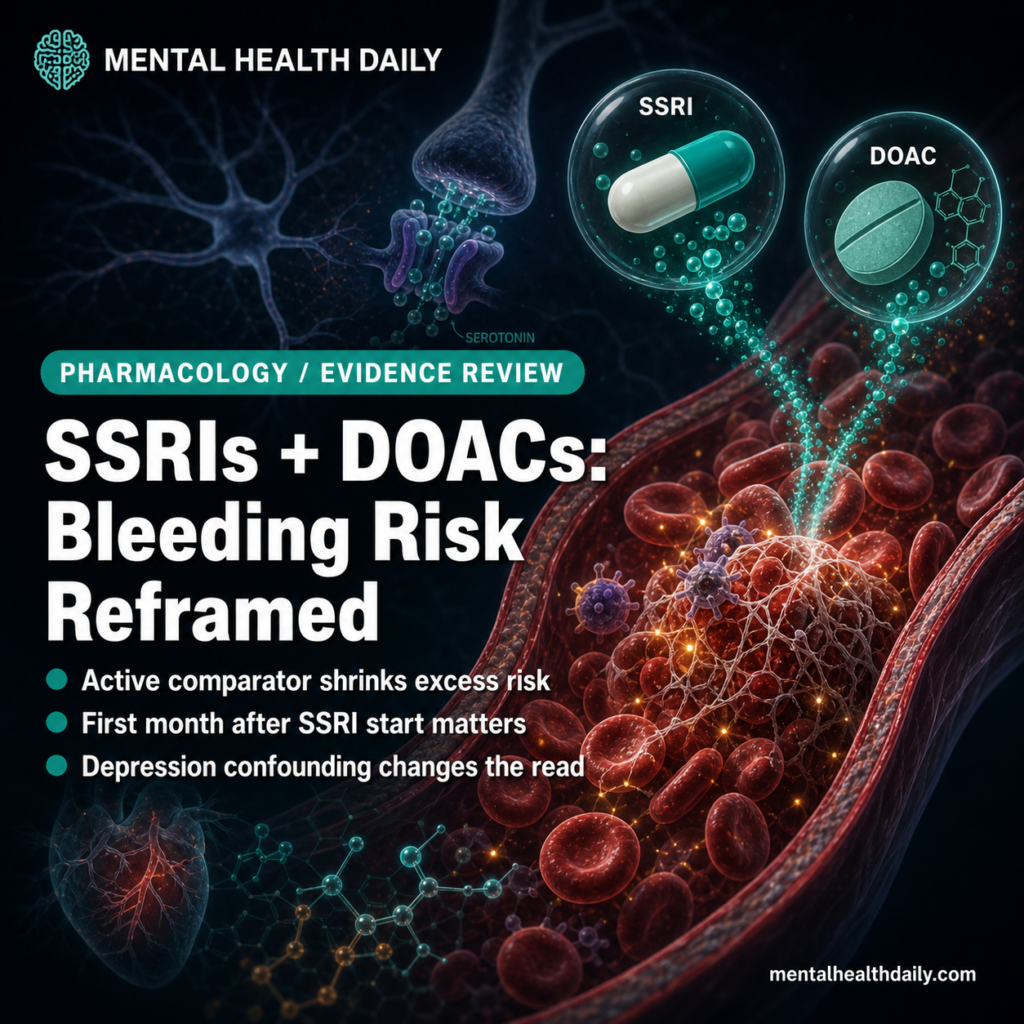
SSRIs + DOACs: No Excess Bleeding vs. Other Antidepressants

Stylized illustration of an SSRI capsule alongside a DOAC tablet against a vascular network background, representing the bleeding-interaction question in primary care.

SSRIs raise bleeding risk on their own. DOACs (direct oral anticoagulants — apixaban, rivaroxaban, dabigatran, edoxaban) raise it more. The intuitive worry is that combining them stacks the two effects. A new BJGP Open analysis from Chau and colleagues argues the stacking is smaller than most popular framings claim, and that the real safety question …

Read more

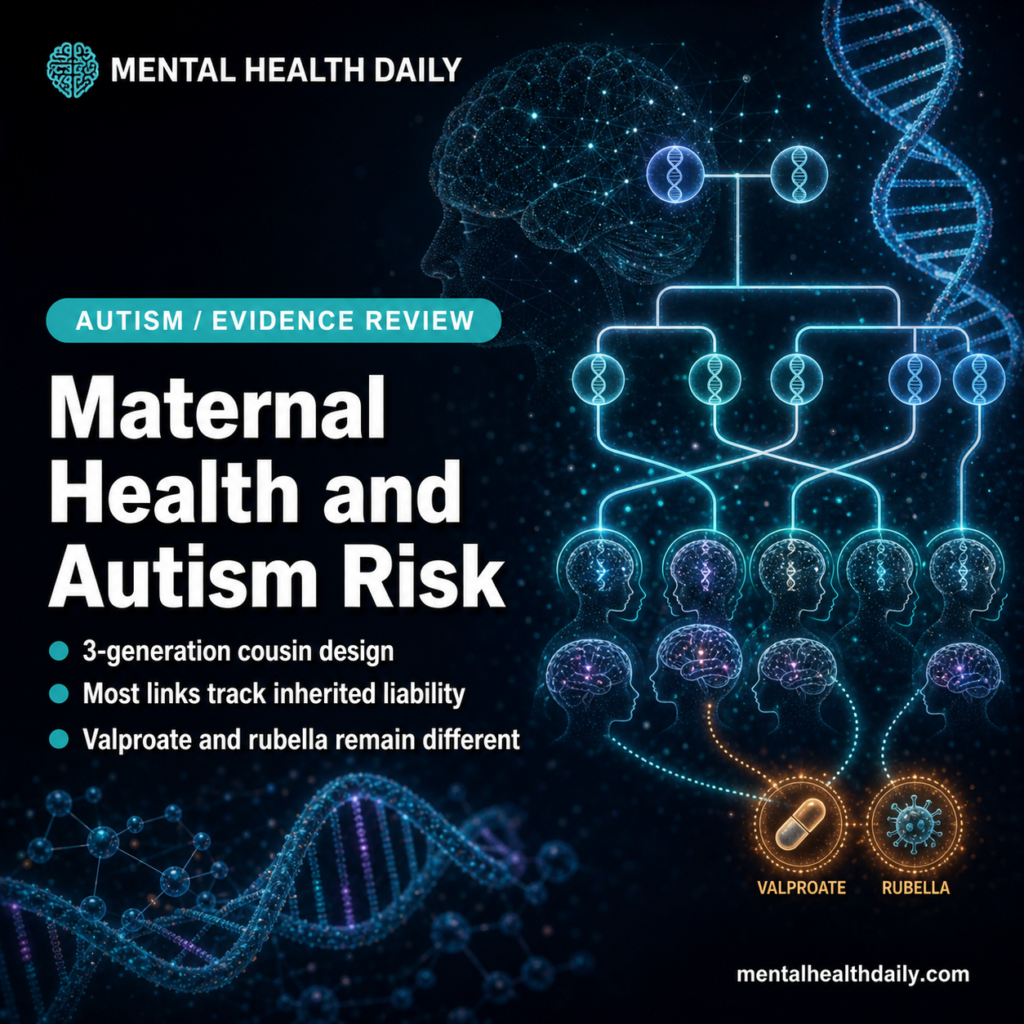
Maternal Health and Autism Risk: Most Links Are Genetic, Not Prenatal

Stylized illustration of a multi-generation family tree branching into cousin pairs, representing the 3-generation registry design used to separate inherited from in-utero genetic effects on autism risk.

For two decades, headlines have linked autism to maternal obesity, depression, anxiety, gestational diabetes, infection, autoimmune disease, and antidepressant use. The studies behind those headlines are well-replicated registry associations. A new design from the Aarhus University iPSYCH group offers the most careful answer yet to what they mean for an individual pregnancy. Most “maternal X …

Read more

SSRI-Induced Sexual Dysfunction Reversed with “Drug Holidays” on Weekends (2024 Study)

Selective serotonin reuptake inhibitors (SSRIs) are a mainstay in the treatment of various mental disorders but often come with the unwelcome side effect of sexual dysfunction. This issue can significantly affect patients’ adherence to their medication regime, often leading to treatment discontinuation. A recent clinical trial offers a new perspective, suggesting that ‘drug holidays’ – …

Read more

Antidepressants & Dementia Risk in Elderly Users: SSRIs vs. TCAs (2024 Study)

Recent research has uncovered connections between the use of antidepressants and the risk of developing dementia in the elderly. This complex relationship, marked by varying results and considerations, is becoming a critical area of study in geriatric medicine and mental health. In light of these findings, it is crucial to delve into the nuances of …

Read more

Evening Chronotype & Lower Efficacy of SSRI Antidepressants (2024 Study)

Recent research in the Australian Genetics of Depression Study reveals a fascinating connection between an individual’s chronotype and the efficacy of antidepressants. A study, focusing on selective-serotonin reuptake inhibitors (SSRIs) and serotonin-norepinephrine reuptake inhibitors (SNRIs), suggests that evening chronotypes may experience poorer responses to these medications. Highlights: Chronotype Impact: Individuals with an evening chronotype reported …

Read more

Analyzing Cardiovascular Effects & Risks of Newer Antidepressants

Depression is a prevalent and serious condition in older adults and those with cardiovascular disease. Serotonin reuptake inhibitors (SSRIs) are commonly used to treat depression, but when they’re ineffective, alternative antidepressants must be considered. Key Facts: Depression in Older Adults and Cardiovascular Patients: Affects 15-20% of patients with coronary heart disease. Limitations of SSRIs: While …

Read more

Long-Term Antidepressant (SSRI) Use Increasing: Overprescription & Withdrawal Hesitancy

The rise in antidepressant prescribing, especially selective serotonin reuptake inhibitors (SSRIs) since the 1980s, is a complex phenomenon with broad implications for public health. While these medications are crucial for many, the increase in long-term use has raised concerns about overprescription, side effects, and withdrawal challenges. Key Facts: Rising Prescriptions: Antidepressant prescriptions, particularly SSRIs, have …

Read more