hit counter

Positive Emoji Use Tracked Lower Depression in 120 Students

Low-burden digital phenotyping is appealing because college students already leave daily traces in phones, messages, sleep logs, and voice samples. In Henry et al.’s 120-student study, positive emoji use was the clearest signal compared with GPS and complex voice biomarkers: higher positive emoji use tracked lower depression and anxiety, while speech rate and sleep added …

Read more

Preschool Sleep Under 9 Hours Linked to Anxiety in 1,589 Children

MHD featured image for preschool sleep duration and anxiety symptoms.

A 2026 Shanghai study of 1,589 preschoolers found that children sleeping ≤9 hours at night had higher parent-rated anxiety scores than children sleeping >10 hours. The effect sizes were small, but the pattern appeared across total anxiety, physical injury fears, social phobia, obsessive-compulsive symptoms, and generalized anxiety symptoms.1 Research Highlights 1,589 preschoolers were analyzed: Zhang …

Read more

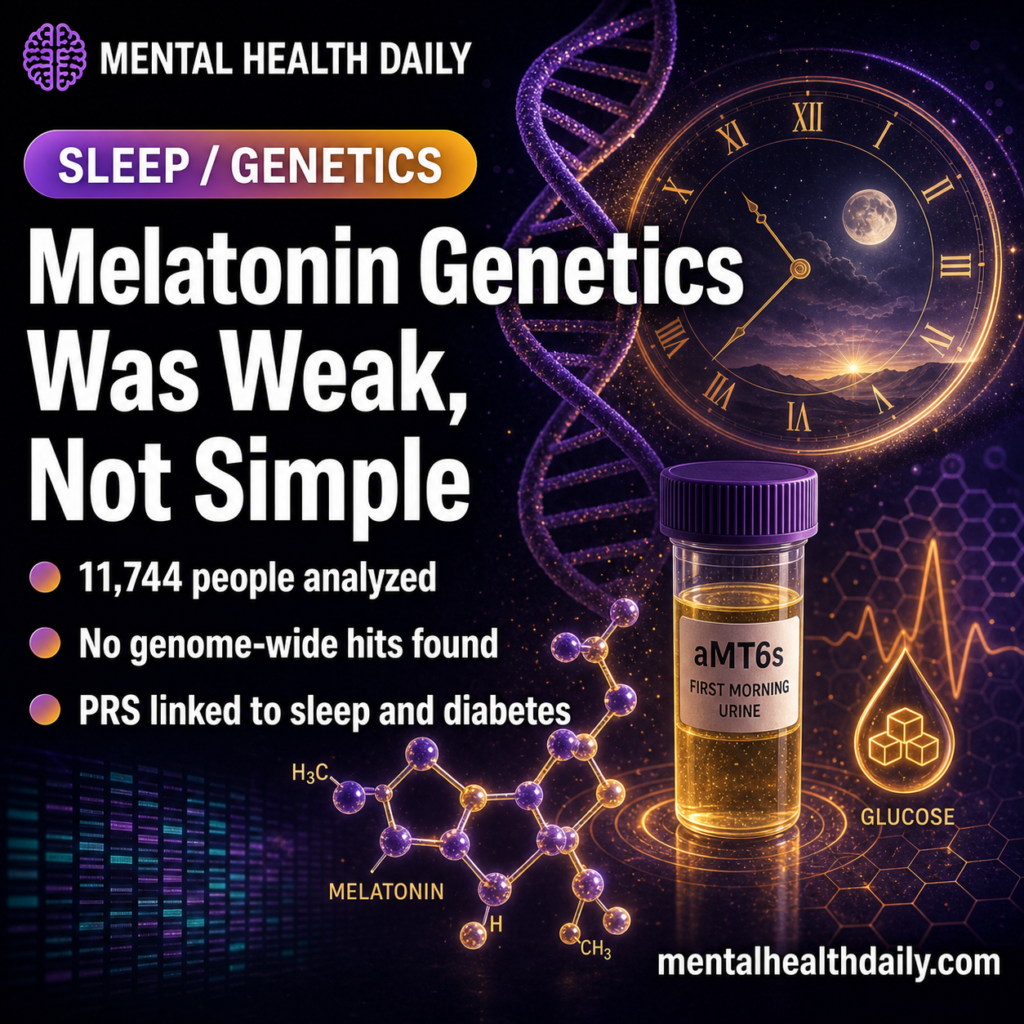
Melatonin aMT6s GWAS Found No Hits, PRS Linked to Sleep and Diabetes

MHD featured image for melatonin metabolite genetics, sleep duration, and type 2 diabetes signals.

A 2026 multi-ancestry genome-wide association study of urinary aMT6s, a melatonin metabolite used as a proxy for overnight melatonin secretion, found 0 genome-wide significant loci in 11,744 people, even though 23 variants reached suggestive significance and 8 were supported by 2 analytic methods. Research Highlights No common variant dominated: the 2026 GWAS meta-analysis involving 11,744 …

Read more

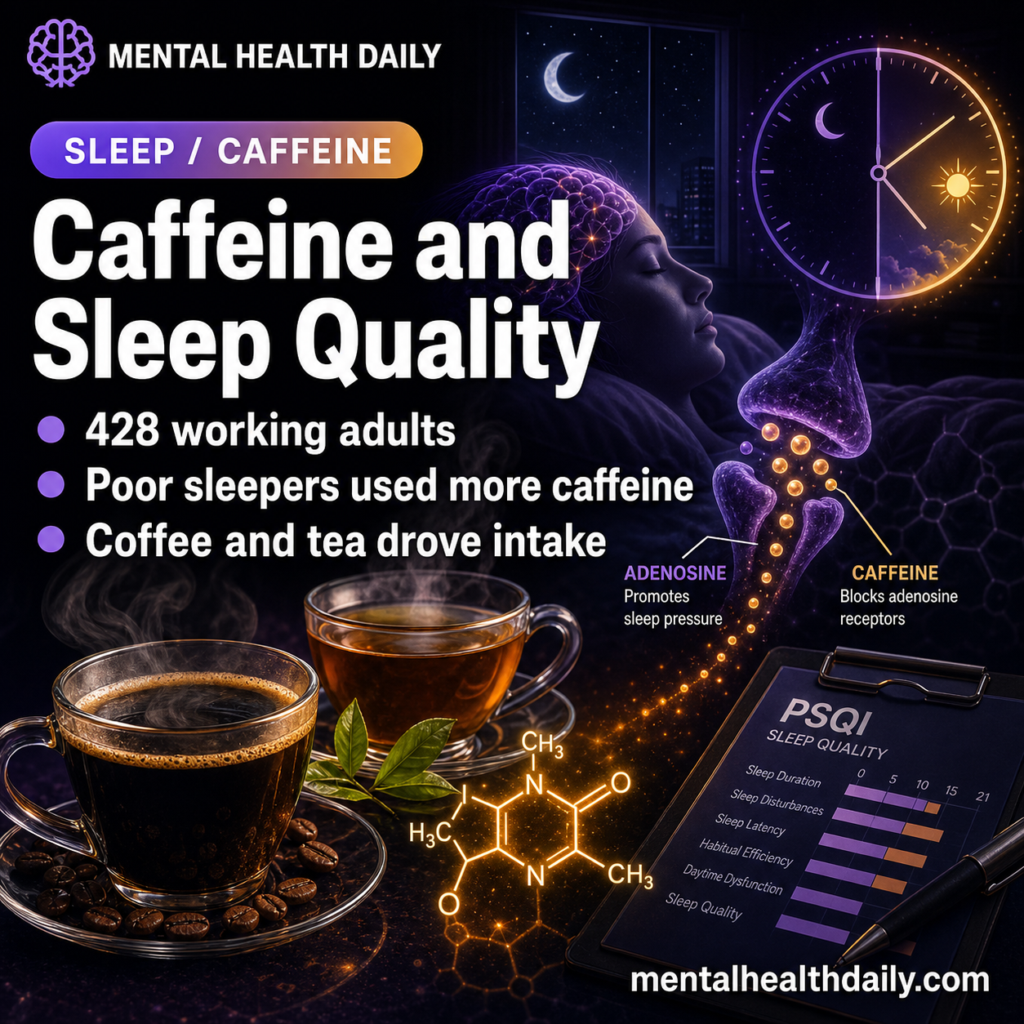
Caffeine Intake and Sleep Quality: 428 Working Adults, Source by Source

MHD featured image for caffeine intake, coffee and tea sources, and sleep quality in working adults.

A 2026 cross-sectional study involving 428 employed adults found that poor sleepers reported a median 292.8 mg/day of caffeine, compared with 176.1 mg/day among good sleepers, and total caffeine intake still predicted higher Pittsburgh Sleep Quality Index scores after adjustment (β = 0.147, p = 0.003). The source breakdown is the useful part: black coffee, …

Read more