hit counter

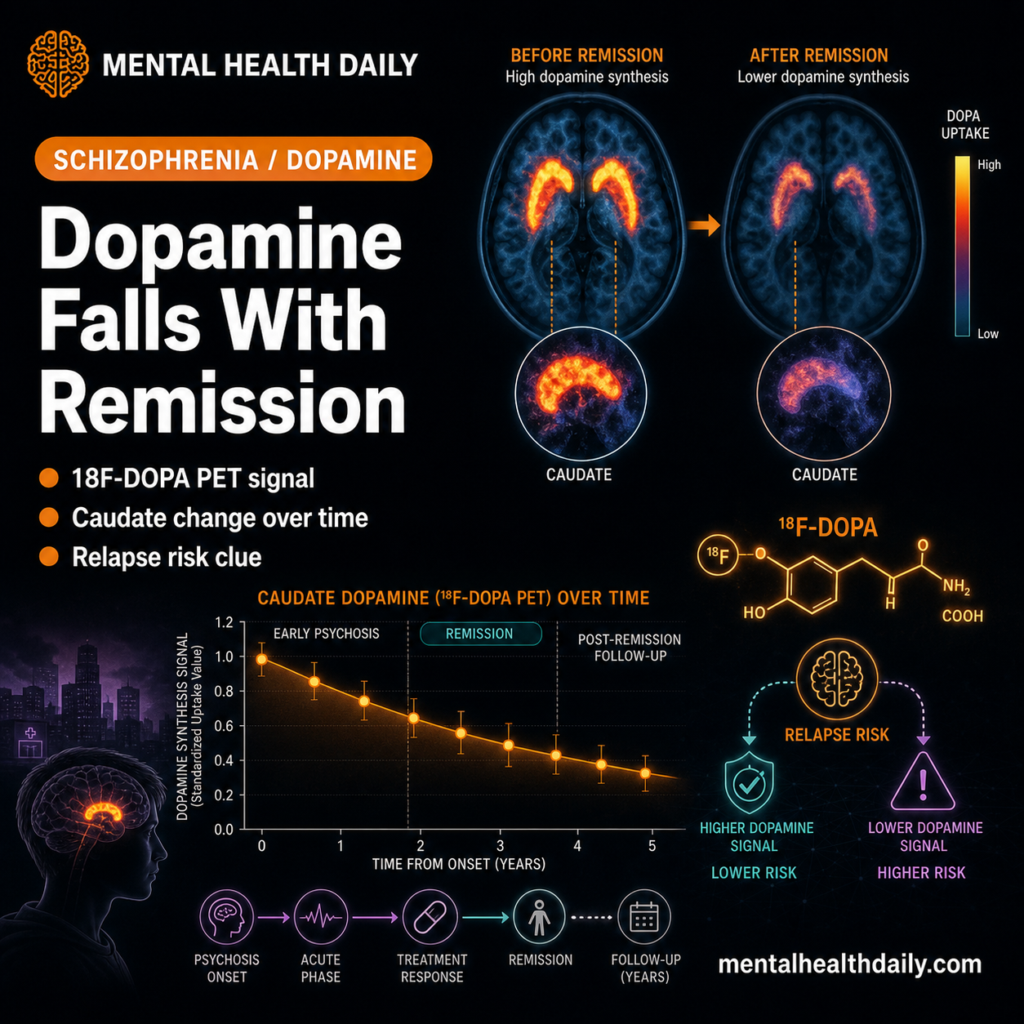
Striatal Dopamine Drops From Psychosis to Schizophrenia Remission

Photoreal illustration of a brain with the striatum highlighted and dopamine synthesis pathways visualized, representing longitudinal PET imaging in schizophrenia.

The dopamine hypothesis of schizophrenia is the field’s longest-running mechanistic story, and most of its supporting evidence has been cross-sectional. A 2026 longitudinal PET study by Schulz and colleagues followed the same 28 patients across psychosis and early remission.1 Research Highlights The dopamine hypothesis of schizophrenia is the field’s longest-running mechanistic story. Cross-sectional 18F-DOPA PET …

Read more

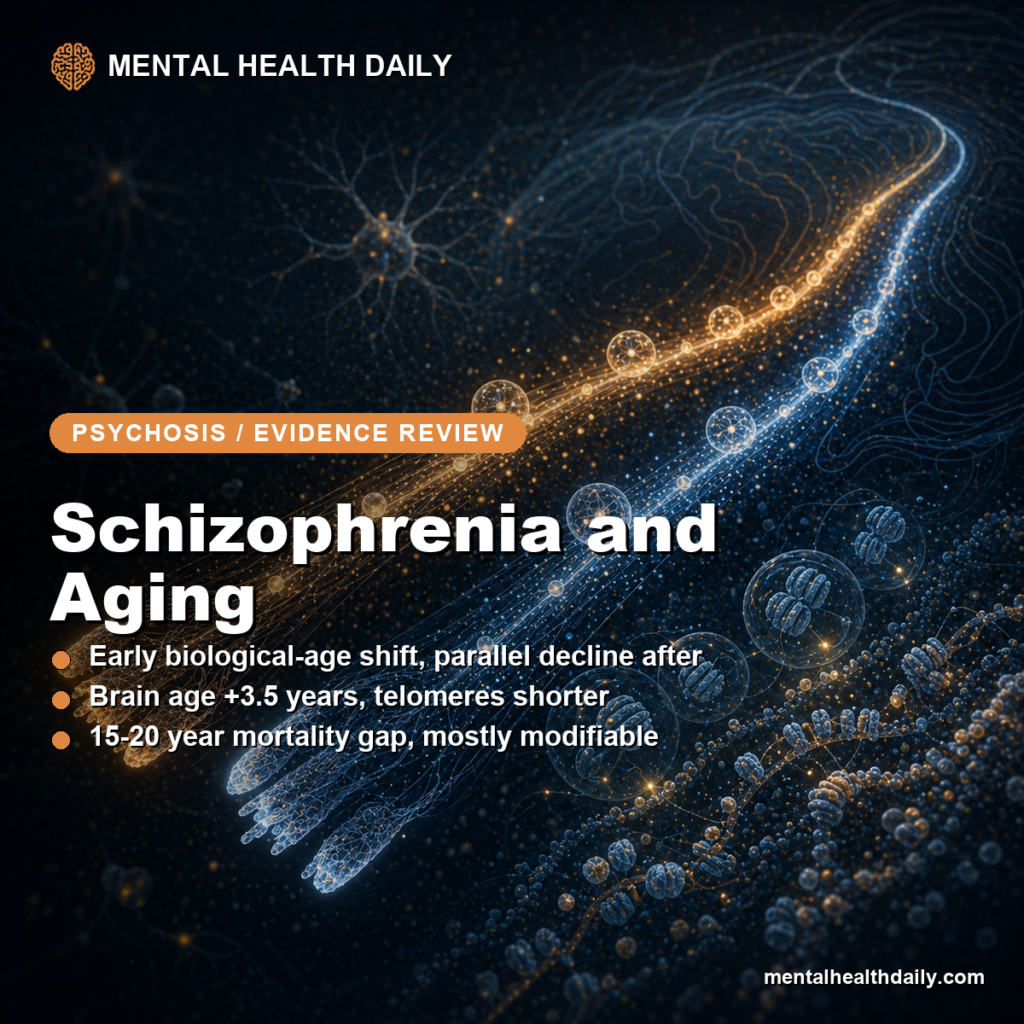
Schizophrenia and Accelerated Aging: What The Latest Research Suggests In 2026

Two parallel timelines representing chronological vs. biological age in schizophrenia: an early offset at first episode, then parallel trajectories afterward — illustrating advanced rather than accelerated aging.

“Schizophrenia ages you faster” is the headline that gets repeated whenever a new biomarker study lands. The 2026 Fernandez-Egea, Garcia-Rizo and Kirkpatrick review — covering 170 studies across mortality, brain imaging, telomeres, epigenetic clocks, and metabolic markers — pushes back on that framing.2 The aging signal is genuine. “Accelerated” is the part that overshoots for …

Read more

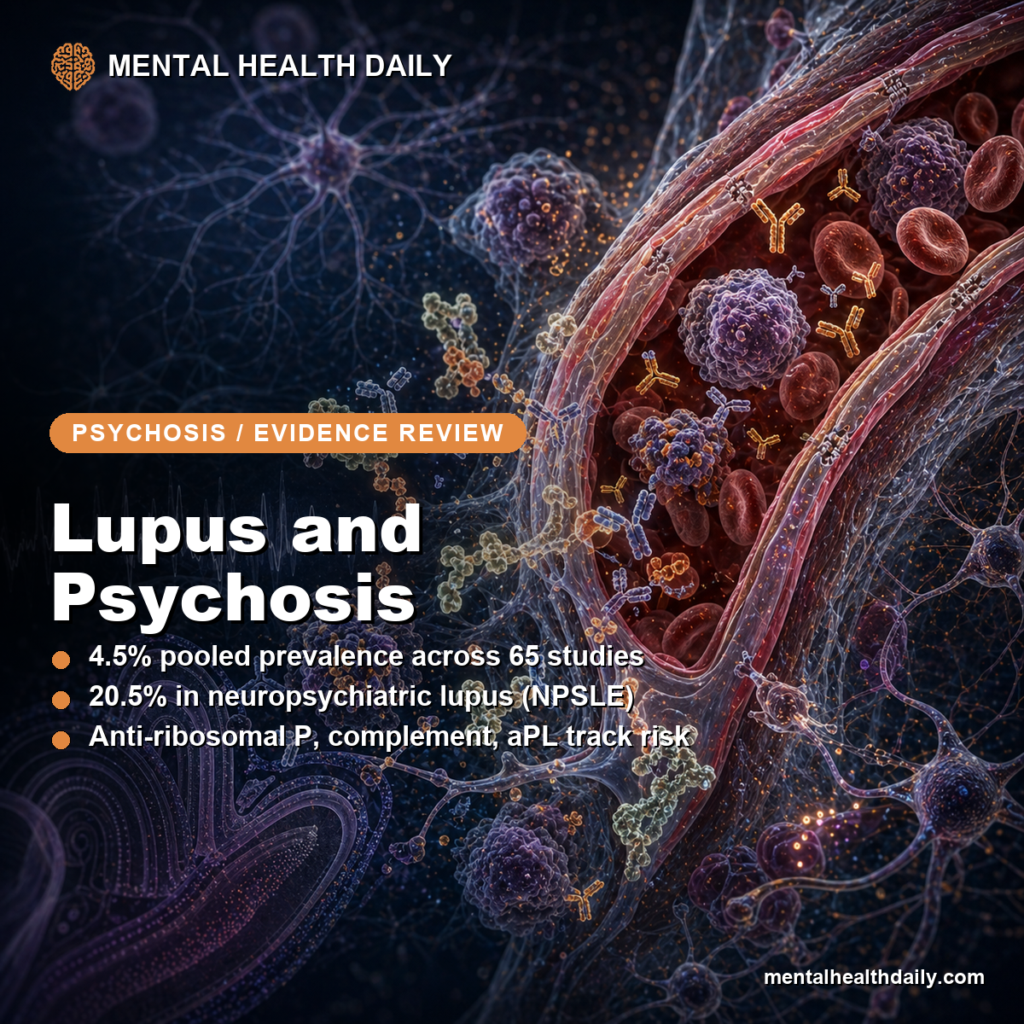
Lupus Psychosis: 4.5% Prevalence and Antibody Predictors

Stylized illustration of autoantibodies and immune complexes crossing a disrupted blood-brain barrier, evoking the immune-mediated mechanism by which lupus produces psychosis.

Psychosis is one of 19 neuropsychiatric syndromes the American College of Rheumatology recognizes as attributable to systemic lupus erythematosus (SLE), an autoimmune disease that disproportionately affects young women.2 A 2026 systematic review and meta-analysis from Parperis and colleagues in Lupus pooled 65 studies and 31,495 patients.1 The synthesis matters less for the headline 4.5% prevalence …

Read more

Toxoplasma gondii Infection in Schizophrenia Linked to High Glucocorticoid Levels in Hair (2024 Study)

The intricate dance between parasites, mental health, and stress hormones is a subject of growing scientific inquiry, offering fascinating insights into how microscopic organisms might influence human behavior and psychiatric conditions. A recent study delves into the relationship between Toxoplasma gondii (TG), a common protozoan parasite, and its potential impact on individuals with schizophrenia, focusing …

Read more

Low Hypothalamus Volume Linked to Violence, Aggression, Psychopathy (2024 Study)

The complex interplay between the human brain and behavior has long fascinated scientists and laypeople alike, particularly when it comes to understanding the roots of violence. A recent study showcases the hypothalamus, a small but crucial brain region, revealing its significant role in aggression and violent behavior. Highlights: Hypothalamic Volume Reductions Linked to Violence: Studies …

Read more

Quetiapine-Induced Psychosis: A Rare Adverse Effect (2024 Case Report)

Quetiapine, a second-generation antipsychotic medication, is renowned for its efficacy in managing a spectrum of psychiatric conditions, including schizophrenia, bipolar disorder, and major depressive disorder (MDD). Despite its broad therapeutic utility and a generally favorable side effect profile, quetiapine’s role in rare instances of inducing psychotic symptoms warrants a closer examination. Highlights: Quetiapine’s Mechanism of …

Read more