hit counter

Effects of Coffee & Caffeine on Brain Connectivity in Habitual Drinkers (2023 Study)

Coffee, one of the world’s most consumed beverages, is often lauded for its ability to enhance alertness and cognitive performance. Recent studies utilizing advanced neuroimaging techniques like resting-state functional magnetic resonance imaging (fMRI) have begun to unravel the intricate ways in which coffee, and its key component caffeine, modulate brain activity. This exploration into the …

Read more

Customized Transcranial Magnetic Stimulation (TMS) Protocols for Depression & Psychiatric Disorders Based on Personalized Neuroimaging (2023 Evidence)

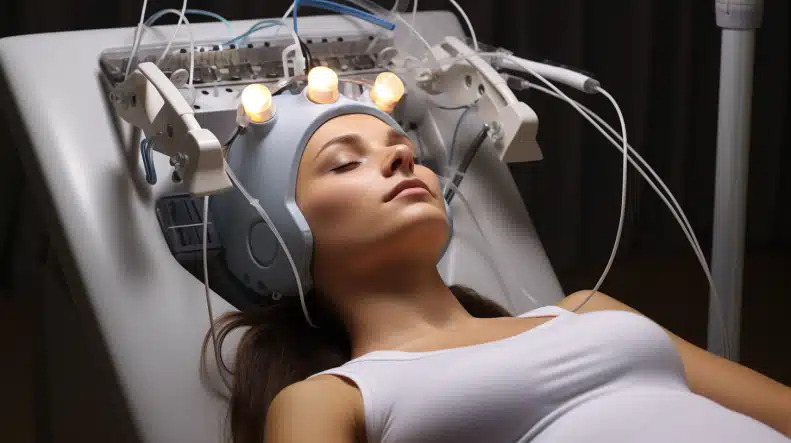
Recent advancements in neuroimaging and brain stimulation techniques, particularly Transcranial Magnetic Stimulation (TMS), are revolutionizing the treatment of psychiatric disorders. These technologies, leveraging our understanding of individual brain network architectures, offer the potential for highly personalized treatments. Highlights: Personalization of Treatment: Neuroimaging advancements allow for the personalization of brain stimulation targets, particularly in Transcranial Magnetic …

Read more

Lifetime Major Depression Linked to Increased Activation of Amygdala & DLPFC (2024 Study)

Major depressive disorder (MDD) is a prevalent mental health condition marked by significant social and economic impacts. Recent research has advanced our understanding of MDD, particularly its association with brain activity and connectivity. A new study examined the relationship between lifetime MDD (LMDD) and brain activation in response to fearful faces, focusing on the amygdala …

Read more

At-Home TDCS (Transcranial Direct Current Stimulation) for Depression: A Convenient Treatment

A new study provides promising evidence that delivering transcranial direct current stimulation (tDCS) remotely in people’s homes could be an effective treatment approach for major depressive disorder. The key facts are: tDCS is a form of non-invasive brain stimulation that uses electrical currents to modulate activity in targeted brain regions. When applied to the left …

Read more

Transcranial Photobiomodulation For Depression: Near-Infrared Light & Laser Therapy

Photobiomodulation involves the targeted administration of light frequencies to modulate biological function for the treatment of medical conditions and/or to expedite healing in the aftermath of a physical injury.  It was Niels Ryberg Finsen who was among the first to showcase the potential of photobiomodulation when he proved that sunlight rays were capable of killing …

Read more

HEG (Hemoencephalography) Neurofeedback: The Research & Potential Benefits

HEG (Hemoencephalography) is a specific neurofeedback technique that trains users to consciously regulate cortical blood flow.  The practice is based off of the idea that with enough “neurological feedback” (provided by an HEG device) a person becomes able to consciously control an unconscious process (blood flow).  Normally it would be impossible to detect whether blood …

Read more

Guanfacine For ADHD: An Effective Treatment & Adjunct

Guanfacine is a drug that was developed primarily for the treatment of hypertension (high blood pressure).  It has been proven as an effective medication to reduce both systolic and diastolic blood pressure via its effect on Alpha-2 adrenergic autoreceptors.  It functions by stimulating these receptors (as an agonist) and reducing activation of the sympathetic nervous …

Read more