hit counter

Social Anxiety: Prefrontal Connectivity Differs but Amygdala-PFC Doesn’t

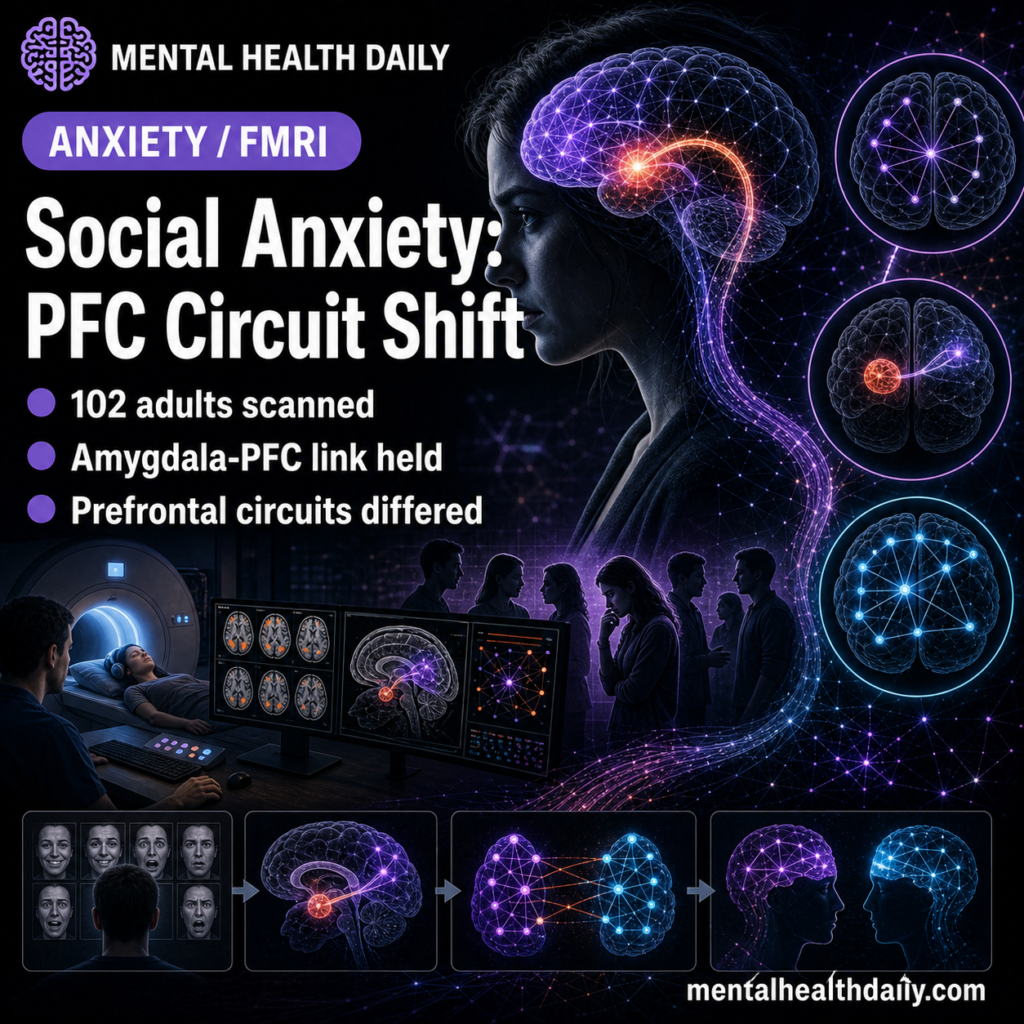
Stylized fMRI connectivity map showing prefrontal and amygdala circuits during emotion regulation in social anxiety disorder.

The textbook story of social anxiety disorder is broken amygdala-prefrontal regulation — an overactive threat system the prefrontal cortex can’t calm down. A 2026 effective-connectivity study of 102 adults found something different: amygdala-prefrontal connectivity didn’t differ between social anxiety patients and controls, but connectivity between prefrontal regions did, particularly involving the pre-supplementary motor area.1 Research …

Read more

Substance Use Disorder Brain Connectivity in 53 Studies

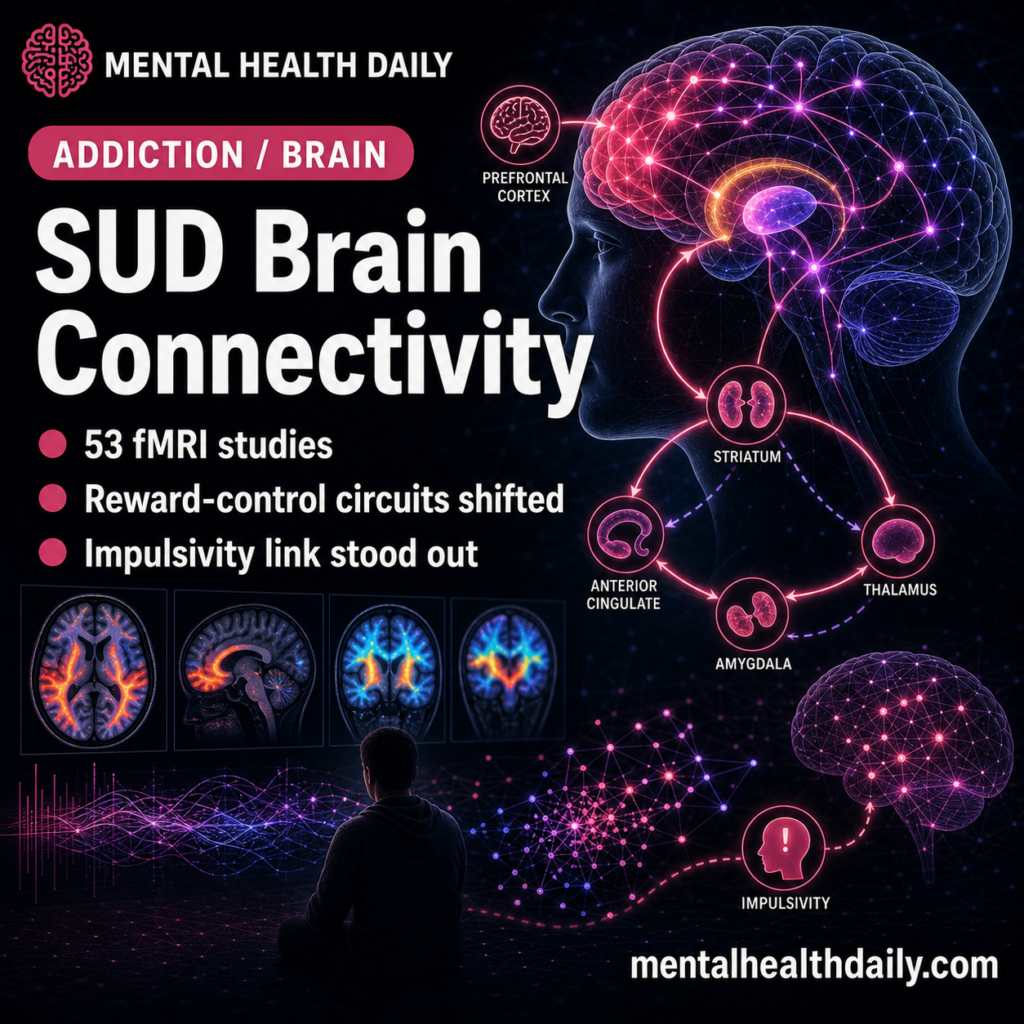
MHD featured image for substance use disorder, resting-state fMRI, reward circuitry, and brain connectivity meta-analysis.

A 53-study resting-state functional magnetic resonance imaging (fMRI) meta-analysis found substance use disorder (SUD) linked to altered connectivity across prefrontal, striatal, thalamic, cingulate, and amygdala circuits. The most clinically relevant finding was an impulsivity correlation, not a diagnostic brain signature. Research Highlights Meta-analysis scale was meaningful: Zhang et al. pooled 53 whole-brain resting-state functional magnetic …

Read more

Trauma Disrupts Parent-Child Fear Extinction in Youth With PTSD Symptoms

MHD featured image for parent-child trauma, fear extinction, and PTSD symptoms.

A 97-dyad adolescent fMRI study found that trauma-exposed youth with high posttraumatic stress symptoms did not use parent-observed safety learning in the usual way: their arousal rose to a safety cue during vicarious extinction, F(1,159) = 4.81, p = 0.029, and parent-child physiological synchrony no longer predicted lower skin conductance during early safety learning.1 The …

Read more

Resting Brain Connectivity Predicts Fear Extinction Learning

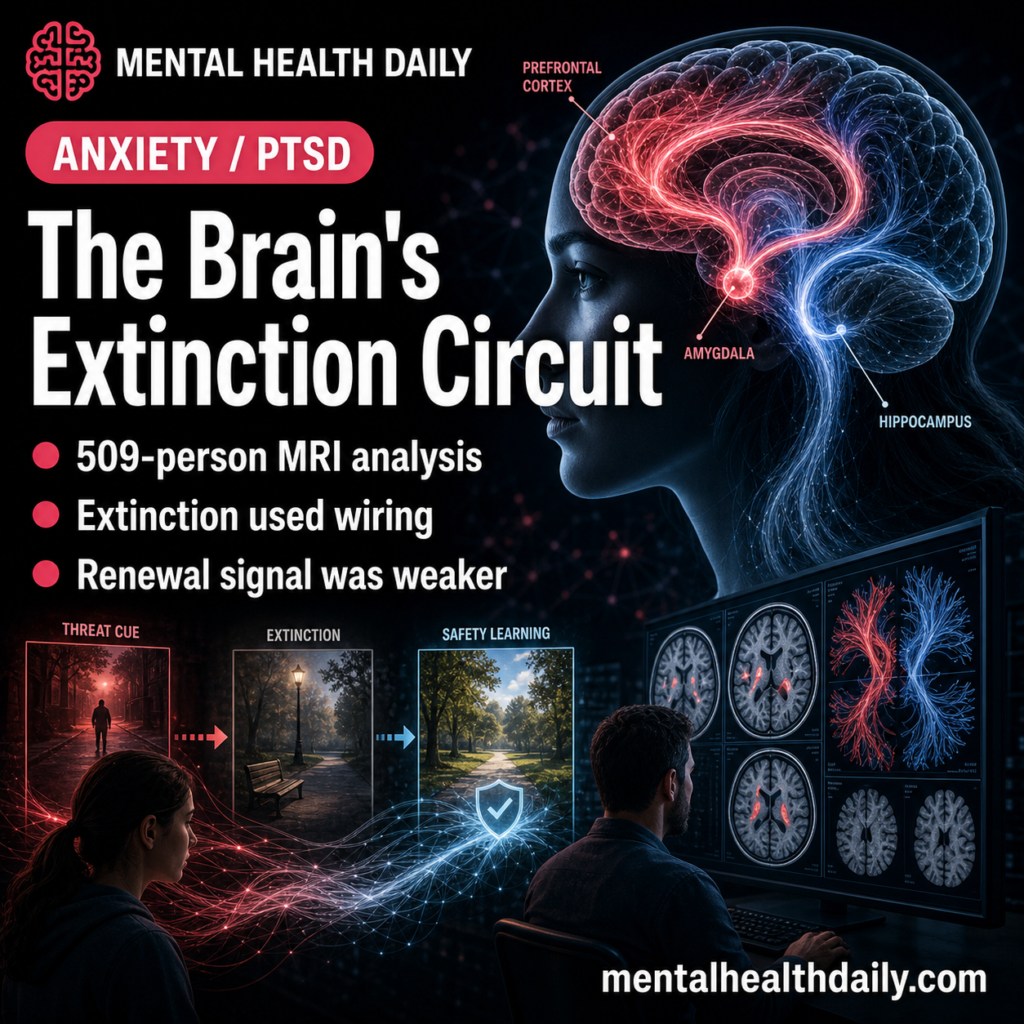
Photoreal illustration of brain network connections in the fear-extinction circuitry, with imagery linking amygdala and prefrontal regions.

A 2026 multimodal MRI analysis of 509 healthy adults found that fear acquisition, extinction learning, and renewal were not predicted by one generic “fear circuit” score: functional connectivity predicted acquisition, structural connectivity predicted extinction, and effective connectivity was the only renewal signal.1 The extinction result is the clinically interesting piece because exposure therapy depends on …

Read more

Alcohol & Brain Volume in Older Adults: Cortical Thinning & White Matter Loss in Heavy Drinkers (250g/Week) (2023 Study)

Alcohol’s effects on the brain, especially among the elderly, have long been a subject of scientific inquiry. A recent study from Gothenburg, Sweden, provides new insights into how varying levels of alcohol consumption impact brain structure in individuals aged 70 and over. This research sheds light on the relationship between alcohol intake and the aging …

Read more

PGAM5 Genetics & Depression via ATP Levels in the Prefrontal Cortex (2023 Mouse Study)

Major depressive disorder (MDD) is a complex and prevalent psychiatric condition that affects millions worldwide, yet its underlying mechanisms remain only partially understood. Recent research sheds light on the critical roles of phosphoglycerate mutase family member 5 (PGAM5) and adenosine triphosphate (ATP) in the brain, offering new insights into how disruptions in energy metabolism can …

Read more

tDCS for Insomnia & Sleep Disturbances: Targeting the Infralimbic Cortex to Ventrolateral Preoptic Area Pathway (2024 Study)

In the quest to effectively treat insomnia, a condition plaguing millions worldwide, scientists are exploring innovative treatments beyond traditional medication. Transcranial Direct Current Stimulation (tDCS) emerges as a promising intervention, offering a non-invasive method to modulate brain activity and enhance sleep quality. A recent study suggests tDCS may treat stress-related sleep disturbances and highlights the …

Read more