Germany
Published research on Germany.
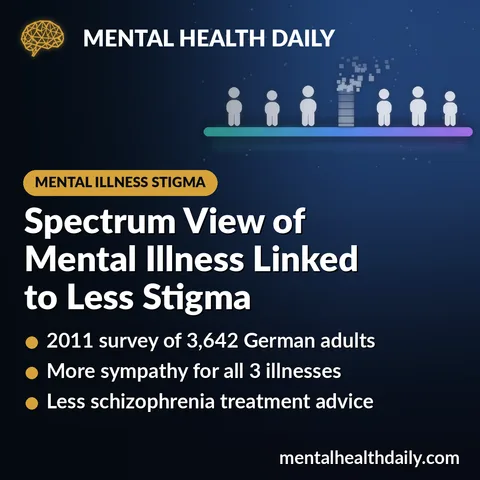
In a 2011 survey of 3,642 German adults, seeing mental illness as a spectrum was linked to more sympathy for all 3 conditions studied, but fewer treatment recommendations for schizophrenia a…
Read article →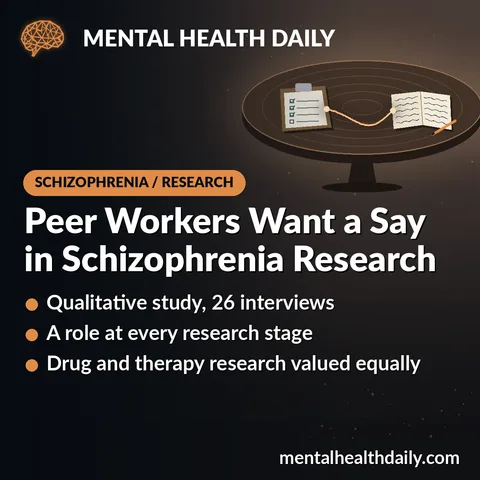
Peer support workers and people diagnosed with schizophrenia want a real say in how mental health research is chosen and run, according to a 2026 German interview study. They valued medicati…
Read article →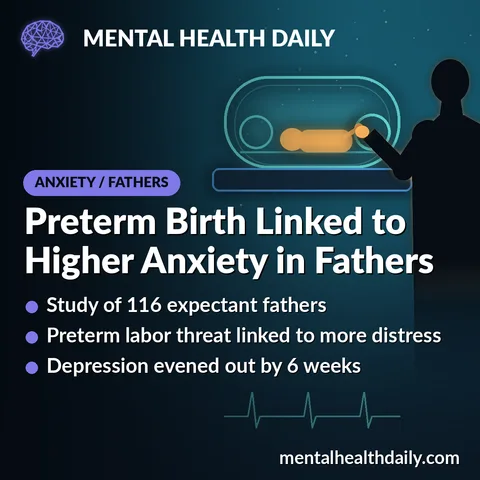
Expectant fathers whose partners were hospitalized for threatened preterm labor reported more distress during pregnancy, and when the baby did arrive early, their anxiety was still higher 6 …
Read article →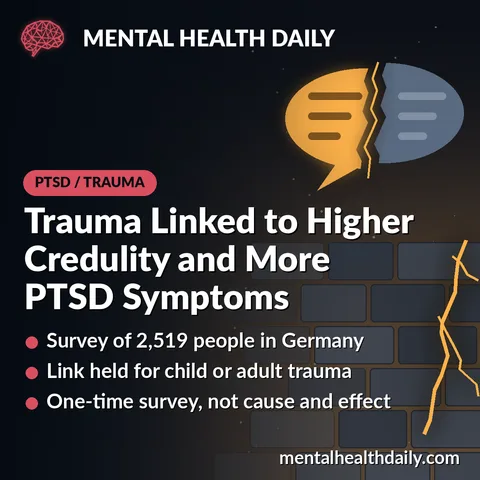
People who reported a traumatic event were more credulous — quicker to take others’ word without checking — than people who reported none, according to a 2026 survey of 2,519 people in Germa…
Read article →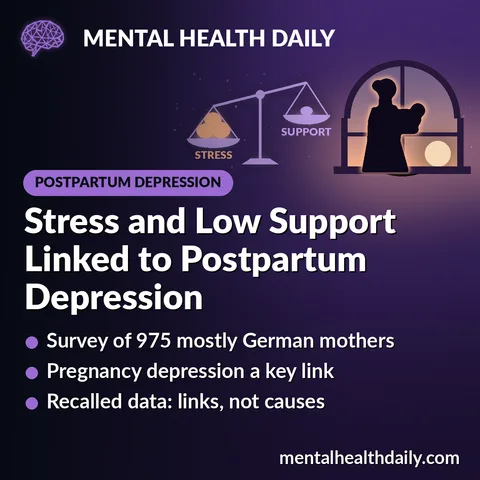
Stress, low support, loneliness and depression during pregnancy were the factors most strongly linked to postpartum depression in a 2026 survey of 975 mothers from German-speaking countries.…
Read article →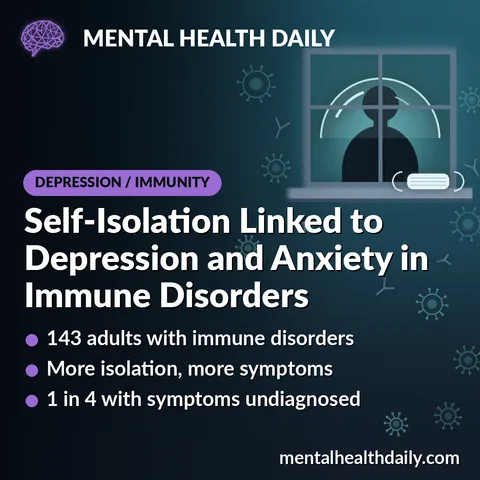
Adults with inborn errors of immunity, also called primary immunodeficiency, who cut back social contact to avoid infections reported more depression and anxiety symptoms. A 2026 German clin…
Read article →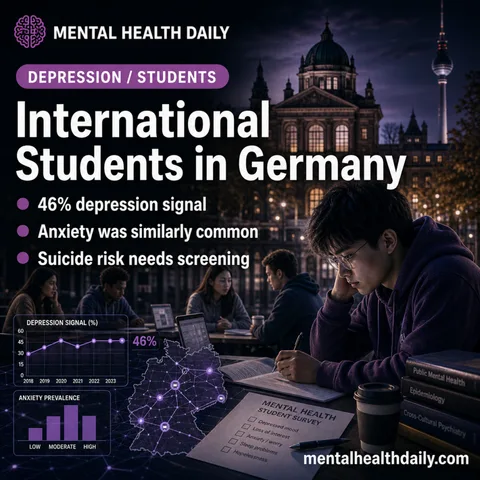
A 2026 survey of 327 international students in Germany found high symptom burden: 46.5% screened positive for moderate-to-severe depression, 46.8% for moderate-to-severe anxiety, and 31.2% e…
Read article →