Parasite Gut-Brain Study Links Tuft Cells to Serotonin Appetite Signal
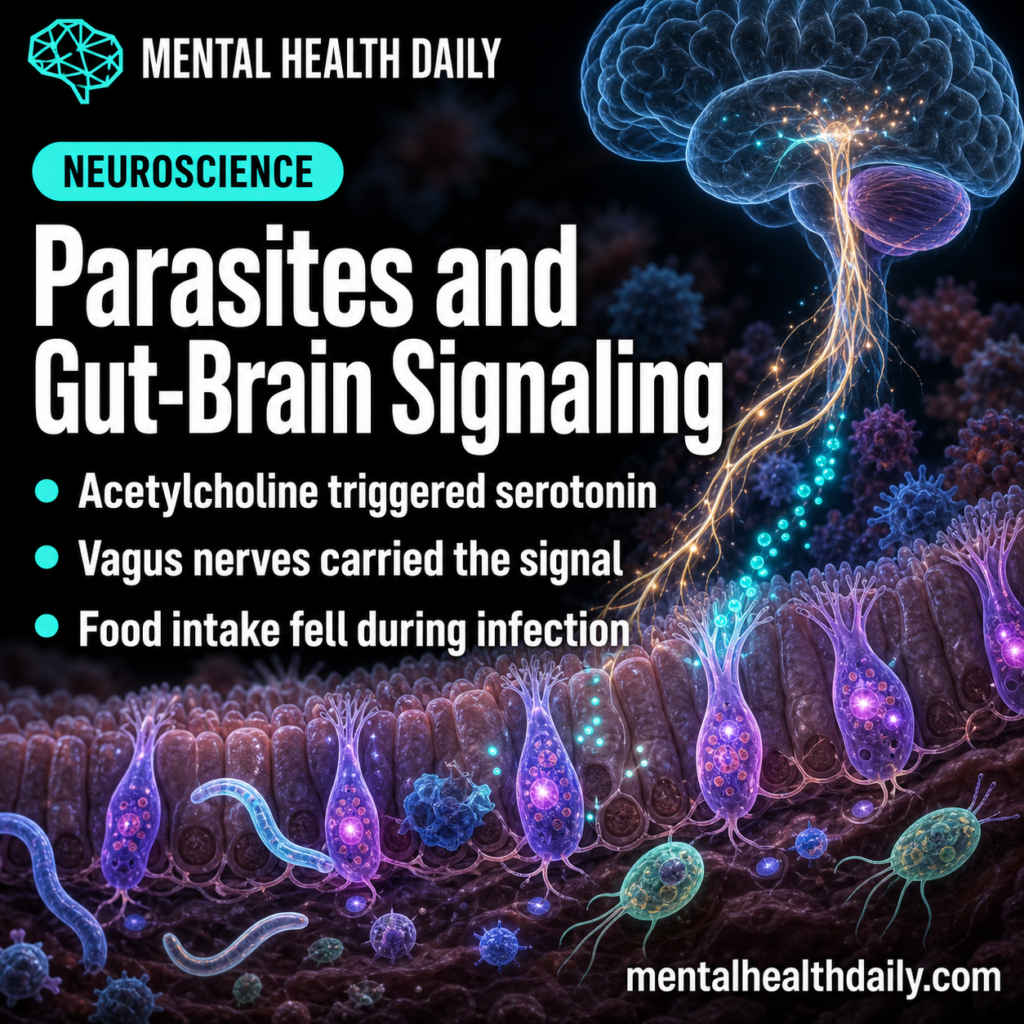
A 2026 Nature study found that parasite-sensing tuft cells can release acetylcholine, activate crypt enterochromaffin cells through muscarinic receptors, trigger serotonin release, stimulate vagal afferent neurons, and suppress food intake during established infection.1 The finding is a precise gut-defense circuit, not a generic claim that the gut-brain axis explains every mood or appetite problem. Research …