hit counter

ER Bad-News Training Tracks Staff Confidence, Not Family Outcomes
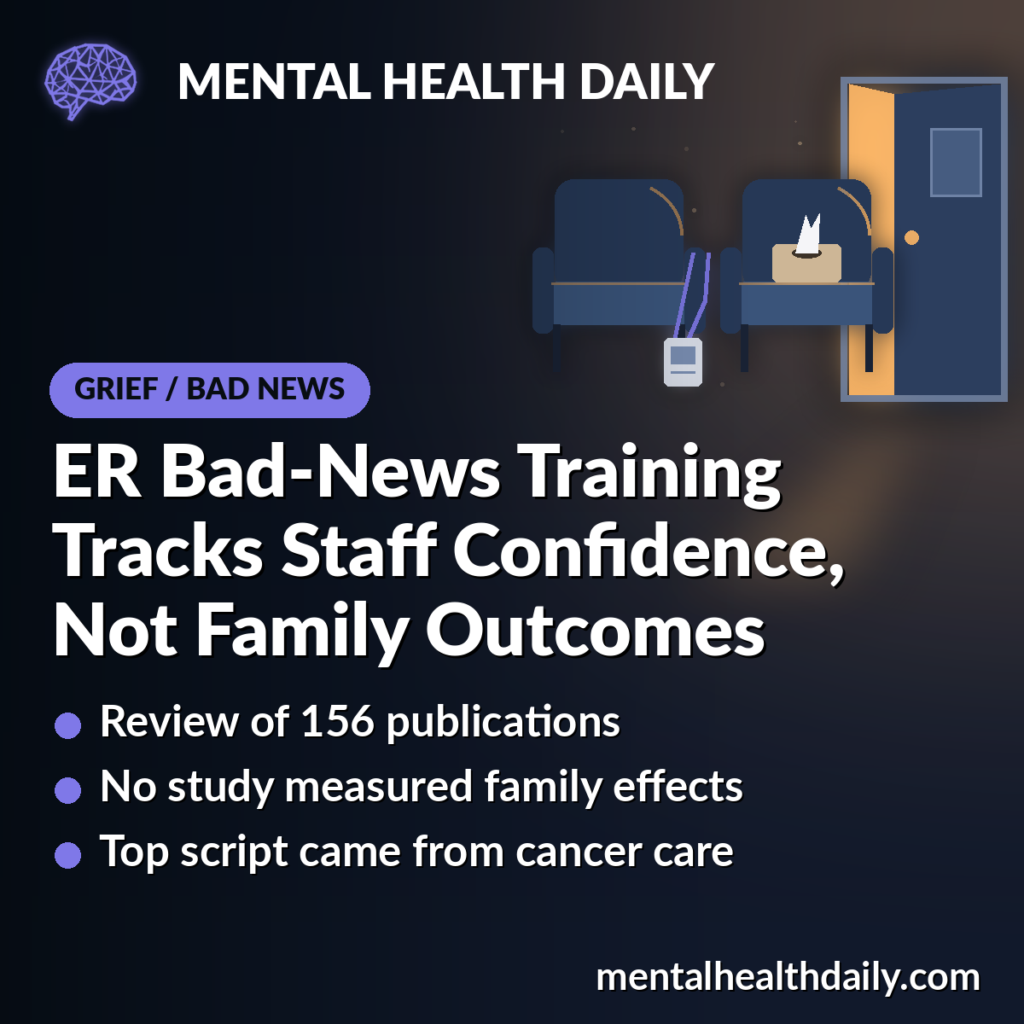
MHD card showing a quiet emergency department family room with 2 chairs, a box of tissues, a clinician's lanyard and a door open to warm light, illustrating a review that found bad-news training in emergency departments was judged by staff confidence rather than family outcomes.

Research on how emergency departments break bad news mostly measures how confident staff feel, not how patients and grieving families fare afterward, according to a 2026 scoping review of 156 publications.1 Research Highlights Training was judged by staff confidence: of 36 evaluations of bad-news training, 23 measured confidence or comfort, mostly by self-report. None measured …
Read more

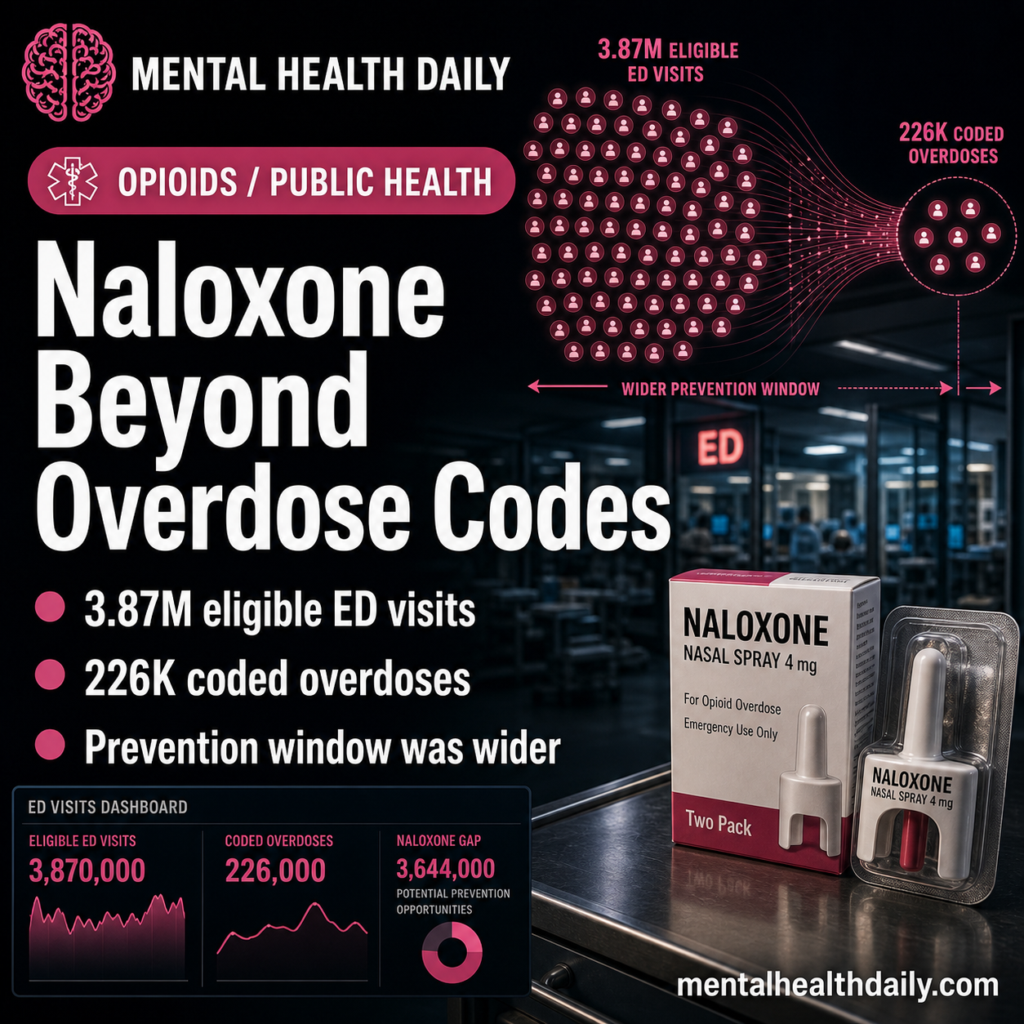
ED Naloxone Need: 3.87M At-Risk Visits vs. 226K Overdoses

MHD featured image for emergency department naloxone distribution and opioid overdose prevention.

A 2026 emergency department claims analysis estimated 3.87 million United States ED visits in 2021 where take-home naloxone could have been clinically relevant, compared with 226,453 ED-treated opioid-overdose visits in the same database.1 The finding reframes naloxone distribution as an emergency-care workflow for overdose risk, polysubstance exposure, long-term opioid use, and patients who arrive after …

Read more

Droperidol vs. Midazolam for Extreme Agitation in Dutch EDs

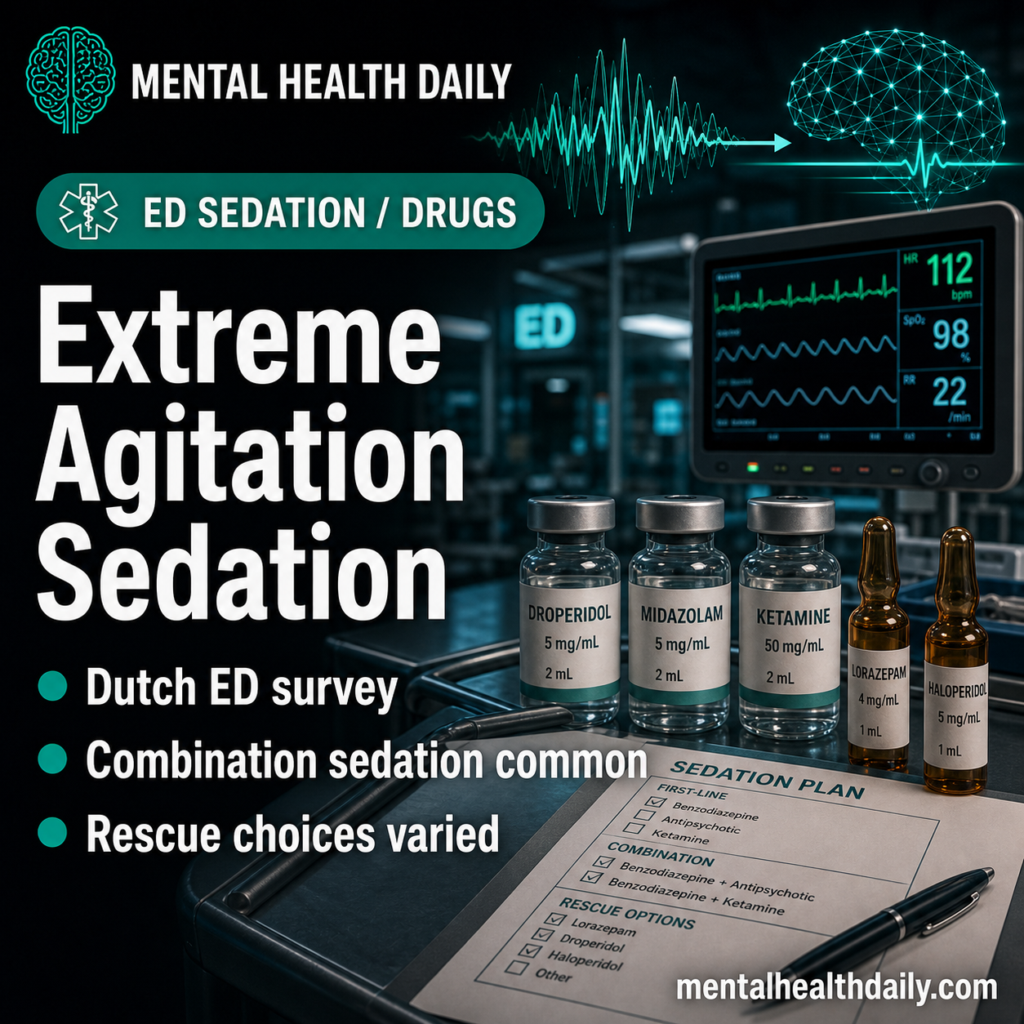
MHD featured image for droperidol, midazolam, and emergency sedation for extreme agitation.

A 2026 national survey of Dutch emergency physicians found wide variation in first-line medication choices for extreme agitation: without intravenous access, 34.7% preferred midazolam, 23.1% preferred droperidol, 14.3% preferred droperidol plus midazolam, and 10.4% preferred esketamine.1 The result is a practice map, not an outcome trial, but it shows how emergency clinicians are balancing rapid …

Read more

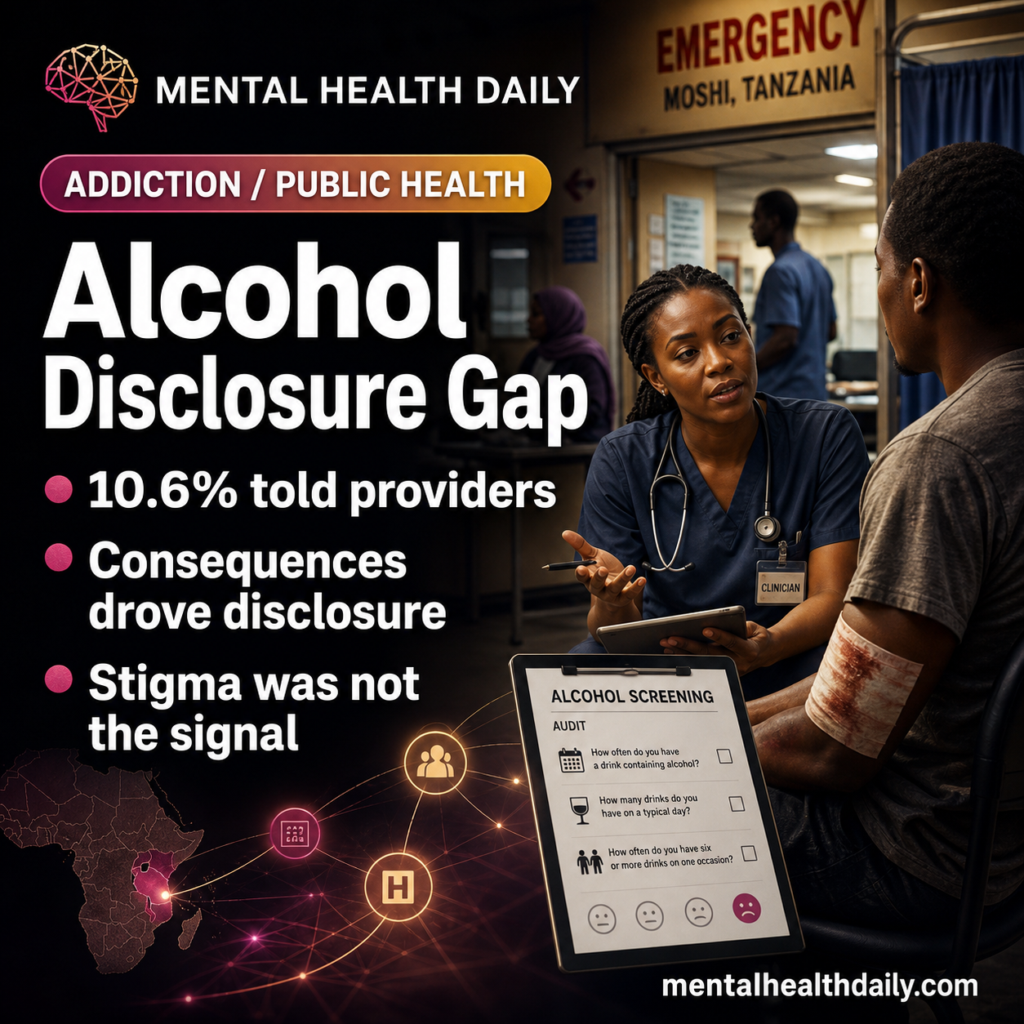
Alcohol Use Disclosure in Tanzania: 10.6% Told Providers

A 2026 cross-sectional study in Moshi, Tanzania found that only 26 of 246 injury patients who drank alcohol, or 10.6%, had ever told a healthcare provider about their alcohol use.1 The calibration result was contrary to the prediction: measured alcohol stigma did not track disclosure, while alcohol-related consequences did. Research Highlights Disclosure was rare: among …

Read more