hit counter

Ultra-Processed Foods Linked to Lower Attention in 2,192 Adults
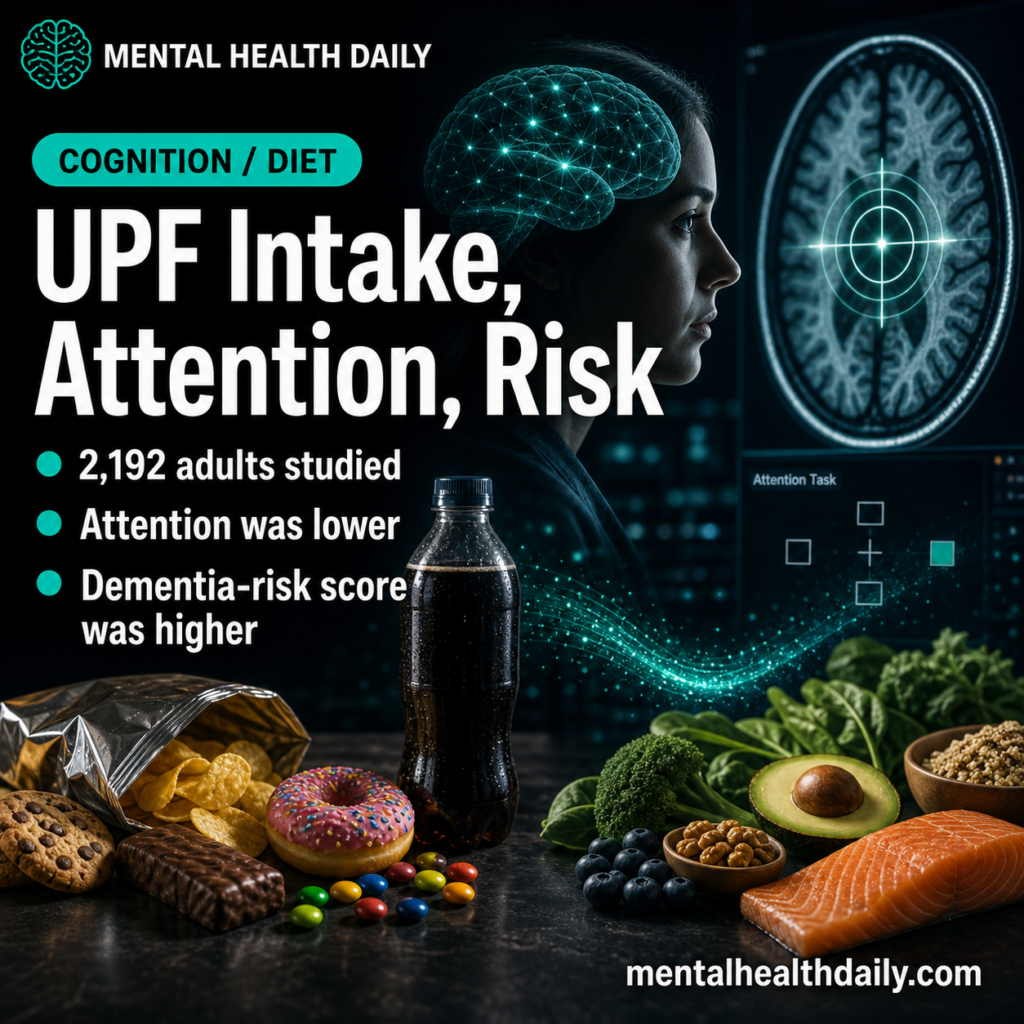
MHD featured image for ultra-processed foods, attention, and dementia-risk scores.

A 2026 Australian study involving 2,192 dementia-free adults found that each 10% higher ultra-processed food intake was associated with 0.05-point lower attention and 0.24-point higher modified CAIDE dementia-risk score.1 The memory result was not significant, so the honest read is attention and risk-score signal, not global cognitive collapse. Research Highlights Attention was lower: Each 10% …

Read more

Lifestyle & Health Habits of People with OCD: Lack of Exercise, Poor Diets, Bad Sleep (2024 Study)

Obsessive-compulsive disorder (OCD) is more than a mental health issue; it’s a condition that can influence the physical health and lifestyle habits of those it affects. A recent international survey shed light on the intricate relationship between OCD and various health-related issues, highlighting the importance of addressing lifestyle habits alongside mental health treatment. By exploring …

Read more

Ultra-Processed Foods (UPF) Linked to Increased Alzheimer’s Disease Risk (2023 Review)

In the modern dietary landscape, ultra-processed foods (UPFs) have become a staple in many diets, celebrated for their convenience and palatability. However, emerging research reveals a concerning association between UPF consumption and increased risk of Alzheimer’s disease (AD), a leading cause of dementia. Highlights: Strong Link: Recent systematic reviews indicate a strong link between high …

Read more

Top 12 Antidepressant Nutrients & Foods for Depression Treatment

Depression is a growing public health concern, but nutrition may offer a pathway for prevention and treatment. A new research study identified the most nutrient-dense foods for brain health to inform dietary recommendations. Key Facts: 12 nutrients have evidence supporting a role in preventing and treating depression, including omega-3s, B vitamins, minerals like magnesium, and …

Read more

Niacin & Depression: Moderate Vitamin B3 Intake May Be Optimal for Mood

New research suggests a U-shaped relationship between dietary niacin and depression risk, with the lowest risk around 36 mg/day. Key Facts: Moderate niacin intake was associated with a 24-32% lower odds of depression compared to the lowest intake. The relationship was U-shaped – higher and lower intakes were associated with higher depression risk. 36 mg/day …

Read more